REVIEW · STRATFORD UPON AVON
Shakespeare’s Schoolroom and Guildhall Entrance Tickets
Book on GetYourGuide →Operated by Shakespeare's Schoolroom & Guildhall · Bookable on GetYourGuide
Shakespeare was taught in here.
That thought alone makes Shakespeare’s Schoolroom and Guildhall a fun ticket—because it recreates the setting of Stratford-upon-Avon in the 1570s and connects it to a real surviving medieval building. You’ll step into a space designed to help you understand what a schoolboy like Shakespeare might have studied, hear the teaching methods of the day, and then shift into the Guildhall’s world of medieval ceremony and surviving wall art.
I especially like the hands-on parts: the Tudor lesson with Master Thomas Jenkins and the quill writing practice. They turn history into something you do, not just something you watch. I also like that the visit is guided, so you’re not left guessing what you’re looking at in a small, older space.
One thing to keep in mind: the experience is tightly timed and the building is compact. A three-floor layout can make it feel smaller than the ticket photos suggest, so if you want lots of slow, self-guided wandering, you might wish you had more time.
In This Review
- Key takeaways before you go
- A one-hour visit that actually has momentum
- Getting your bearings at the Shakespeare’s Schoolroom & Guildhall entrance
- The Stratford schoolroom: sitting with a young Shakespeare’s story
- The Tudor lesson with Master Thomas Jenkins
- Quill writing at the desks
- Dressing up and playing Tudor games
- Medieval Guildhall rooms: priest’s chapel and wall paintings
- The short film by Michael Wood
- How guides shape the experience (and why it matters)
- Price and value for a $20, one-hour ticket
- Who should book Shakespeare’s Schoolroom and Guildhall tickets
- Should you book this ticket for your Stratford trip?
- FAQ
- How long does Shakespeare’s Schoolroom and Guildhall take?
- Where is the meeting point for the tickets?
- What does the ticket include?
- Is there a film during the visit?
- Do you get to do hands-on activities like quill writing or costumes?
- Is the experience suitable for all ages?
- What languages are the tours in?
- Is it wheelchair accessible?
- Is the booking flexible if plans change?
Key takeaways before you go
- A one-hour package that mixes guided tour, a short film, and a Tudor-style lesson
- Master Thomas Jenkins as the schoolmaster voice that brings the Tudor lesson to life
- Quill writing practice at desks that help you picture how lessons worked
- A preserved priest’s chapel with rare medieval wall paintings in the Guildhall
- Costumes and Tudor games, so kids and adults get to play along
- Built for all ages, with a format that works even if your group has mixed interests
A one-hour visit that actually has momentum
This is the kind of attraction that respects your time. With a total duration of about 1 hour, the ticket is designed like a show-with-intervals: you move through a couple of key spaces, get explanations from guides, watch a short film, and then do a lesson-style activity.
That timing matters. If you only have a pocket of time in Stratford, this gives you a complete experience without turning your day into logistics. Also, it means the venue leans into interaction. You won’t need to “figure it out” on your own.
You can also read our reviews of more tours and experiences in Stratford Upon Avon.



Getting your bearings at the Shakespeare’s Schoolroom & Guildhall entrance
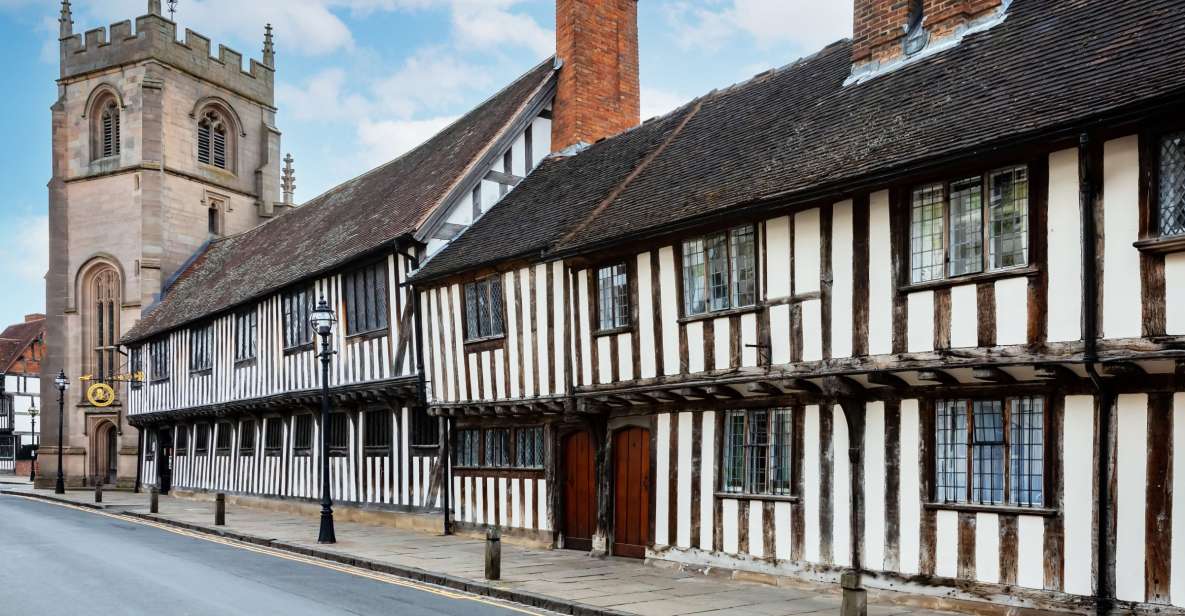
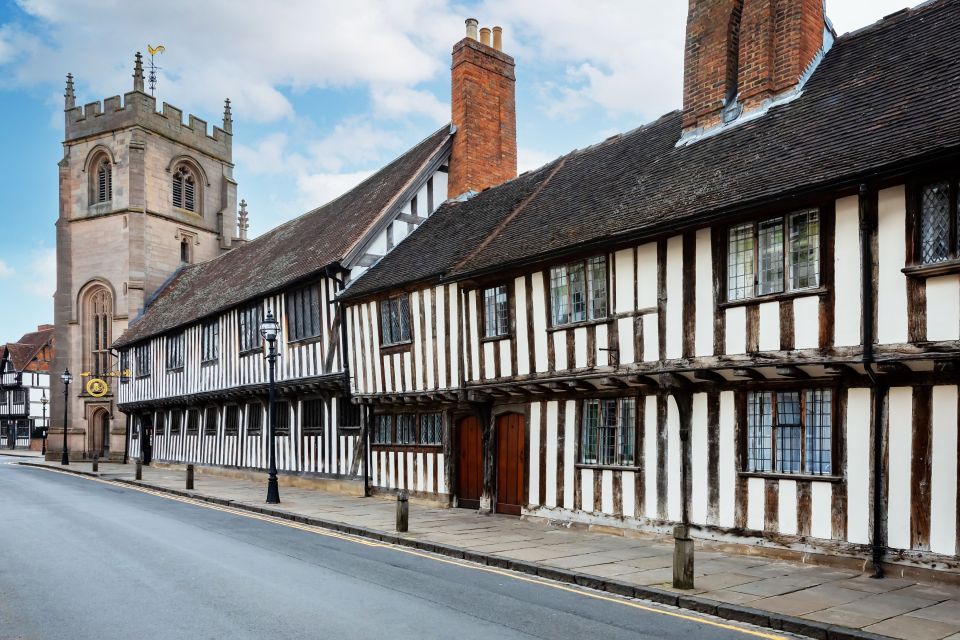
You’ll meet at Shakespeare’s Schoolroom & Guildhall on Church Street, Stratford-upon-Avon, CV37 6HB. Expect an English-led experience, with guides who run the show and keep everyone together. The venue is wheelchair accessible, which is a helpful note if mobility is part of your planning.
Because the visit is short, I recommend showing up with a relaxed pace. Think of it like arriving for a guided session, not like browsing a museum at your own tempo. Once you’re inside, the guides keep things moving so you see the highlights without feeling rushed.
The Stratford schoolroom: sitting with a young Shakespeare’s story
The main draw is the recreated school setting tied to Shakespeare’s early years. You’re invited to step into a room meant to represent where Shakespeare sat as a pupil in the 1570s, and that framing gives your imagination a place to land.
What I like about this section is the way it tackles the school experience in practical terms. Instead of treating the subject like vague “Shakespeare trivia,” you learn about the subjects the great man would have studied and the teaching methods of the day. You also hear how a schoolboy encountered classical literature and theatre—important context, because it links the education to the creative spark people associate with Shakespeare later on.
Here’s what you’ll get from it, in plain terms:
- A clearer sense of what “learning” looked like in that era
- A story connection between classroom study and performance culture
- A place to imagine Shakespeare as a real kid in his home town, not a distant legend
A small caution: because the space is limited, you may not get long, quiet “look-and-think” time. The experience is more guided and theatrical than slow and scholarly.
The Tudor lesson with Master Thomas Jenkins
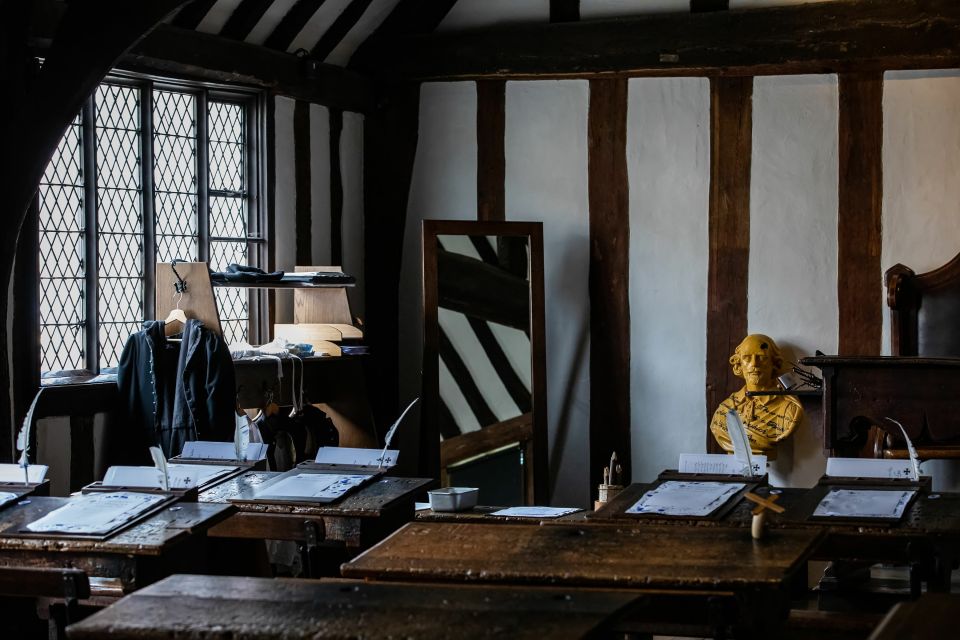
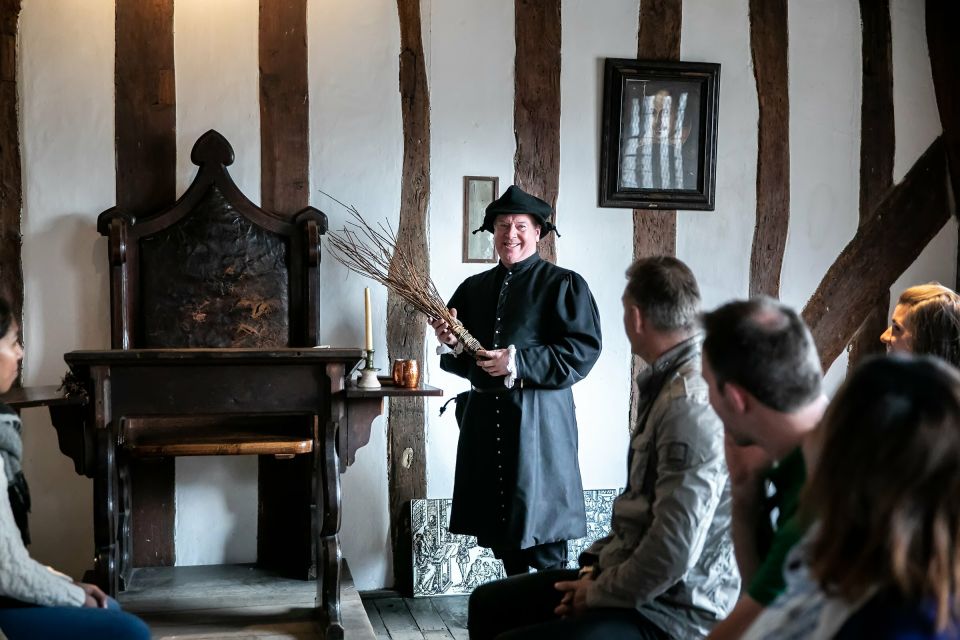
Now for the part that turns the lights on. The visit includes a lesson with Master Thomas Jenkins, and this is the segment that most strongly shifts the energy from sightseeing to participation.
The Tudor lesson format is built around the idea that you learn by doing. You’re not only hearing about the period—you’re getting a guided, period-style educational moment. In my view, this is where the ticket earns its value. It’s not just a narration stop; it’s the core activity.
A Tudor schoolmaster character is a big part of the fun. Even if you don’t consider yourself a theatre person, the lesson style is designed to keep attention, including for families. It also helps you understand that “education” in the 1500s wasn’t only about facts. It was about discipline, repetition, and learning through structured exercises.
Quill writing at the desks
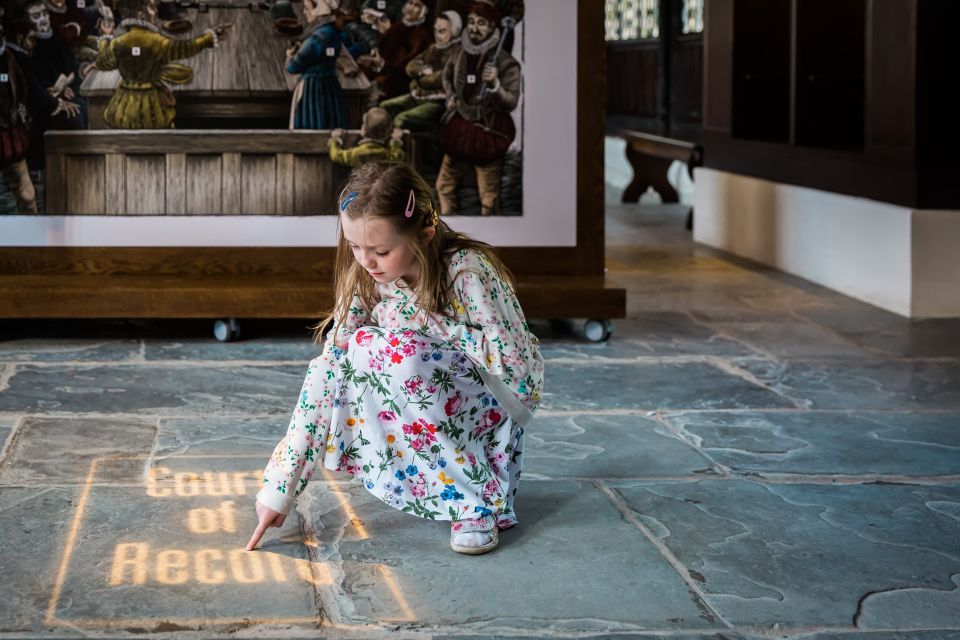
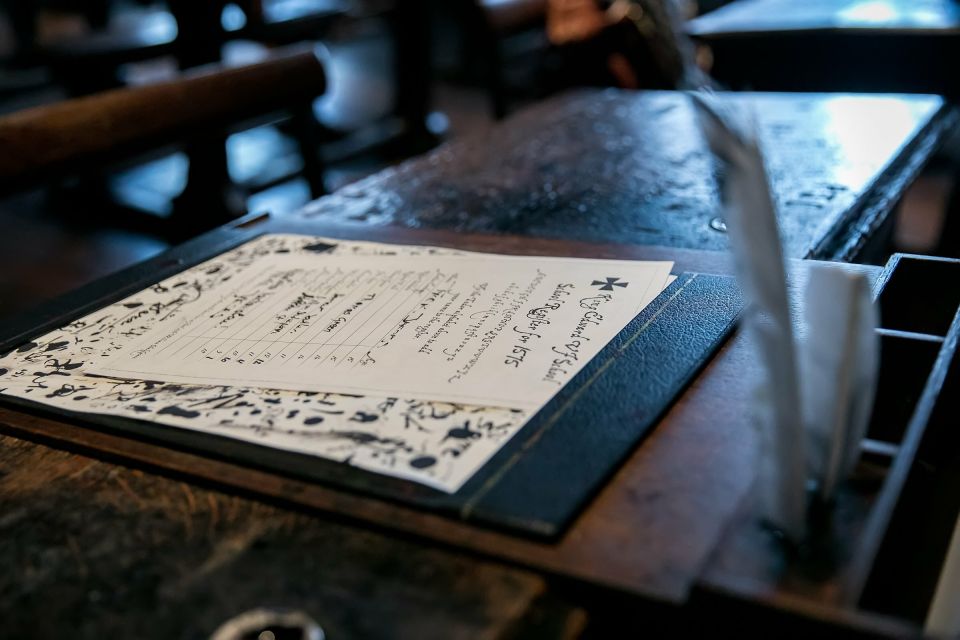
After the lesson, you practice quill writing. This is one of those activities that sounds simple until you try it and realize how different writing tools feel when they’re not modern and forgiving.
This section matters because it gives you physical memory. You’ll understand why handwriting, patience, and careful copying were such a big deal. It also pairs nicely with what you learned about classroom teaching—suddenly the whole idea of instruction clicks into place.
If you’re the sort of person who enjoys crafts, this will feel satisfying. If you’re less artsy, you can still enjoy it as a light, historical skill demo. Either way, it breaks up the visit so it doesn’t become purely verbal.




Dressing up and playing Tudor games
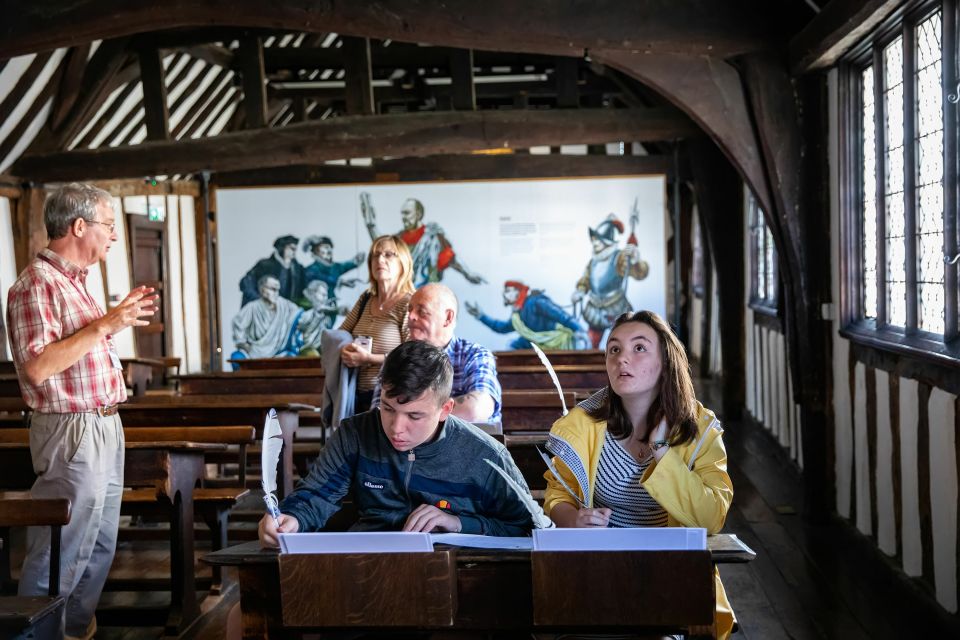
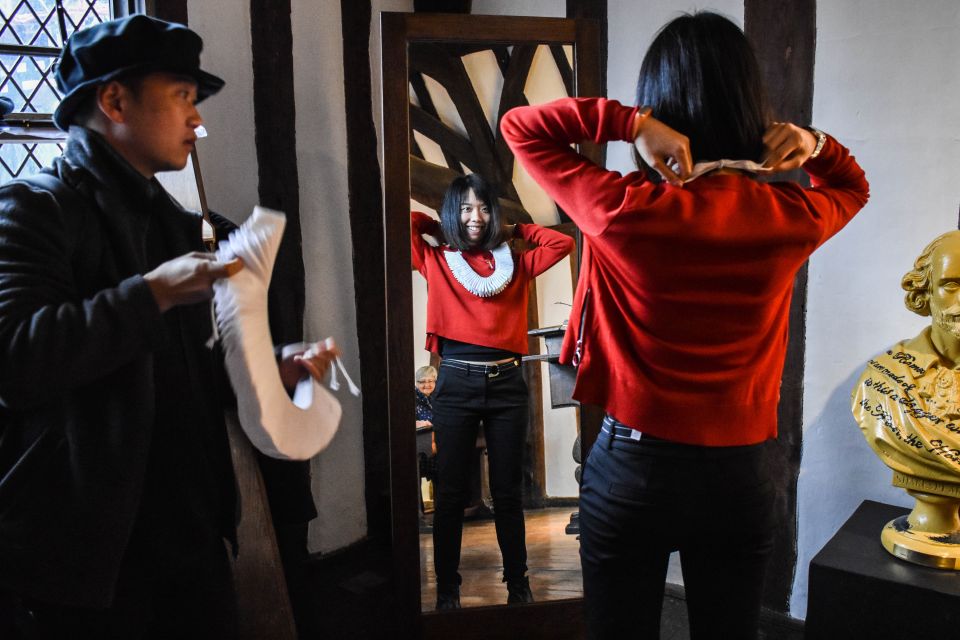
One of the most fun parts of the experience is permission to play. You can dress up in Tudor-style clothing, then take part in Tudor games.
I like this because it changes the tone of the visit. Instead of just standing in rooms and listening, you get a chance to act out what life might have felt like—at least in a simplified, guided way. And if you’re visiting with kids, this is often where their interest stays alive.
For adults, it can be silly in the best way. Not every museum offers a moment that feels like being in a period play rehearsal. This one does.
Medieval Guildhall rooms: priest’s chapel and wall paintings

Then the visit opens up into a different kind of atmosphere: Stratford’s medieval Guildhall, built in 1420. The Guildhall is one of only a few surviving medieval guildhalls in the country, so you’re not just seeing a themed room—you’re seeing a real historical structure preserved enough to tell its story.
This part of the experience focuses on the Guildhall’s role as a provincial medieval guildhall, and it gives you a sense of what the building was for. Instead of Shakespeare only, you get the wider community world that surrounded him—civic life, ceremony, and the spaces where local power and identity played out.
One highlight is the late medieval priest’s chapel. It includes a rare wall painting that’s been recently conserved. If you enjoy seeing how conservation changes your perception, this is a good stop. You’re not just looking at paint—you’re looking at evidence of what has survived and what caretakers worked to preserve.
Because the building is old and the layout is tight, it’s worth knowing what to aim for: keep your eyes up, and pay attention when the guide points out details. In compact spaces, the important things are often small.
The short film by Michael Wood
In a one-hour visit, a film might sound like a time-killer. Here, it works because it’s short and it connects the Guildhall’s story to a clear explanation.
You’ll see a short film by historian and broadcaster Michael Wood. Even if you don’t know his work already, this adds a layer of authority. It also helps you place what you’re seeing into a bigger story of how the building functioned.
I find this helpful because the Guildhall rooms can feel like they’re telling multiple stories at once. The film acts like a quick anchor so the later guided comments land better.
How guides shape the experience (and why it matters)
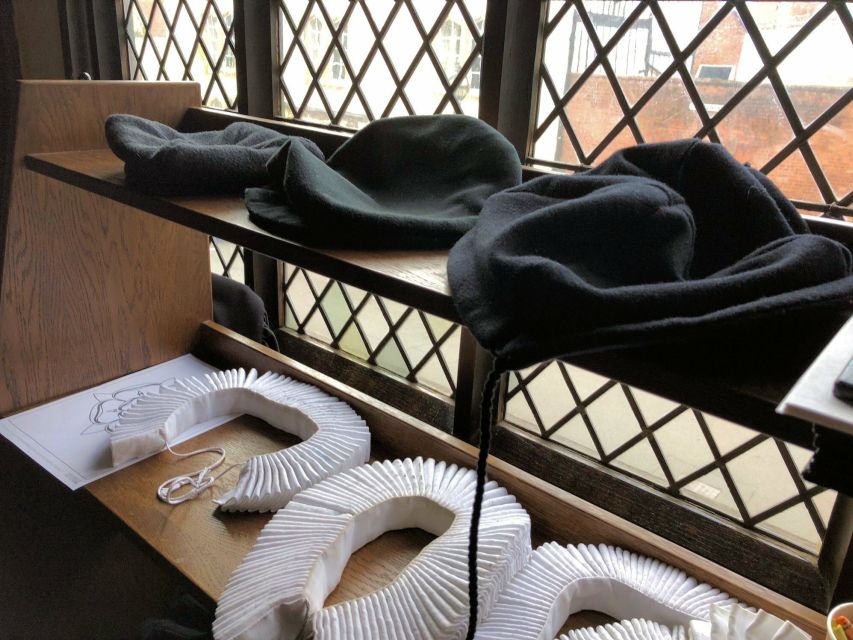
Guides play a big role here, and not in a generic way. You get explanations that connect: the schoolroom teaching methods connect to quill writing, Tudor themes connect to the lesson, and the Guildhall setting connects to the chapel paintings.
In the best moments, the guide gives you small anecdotes that make the spaces feel lived-in. The overall effect is that you don’t feel like you’re “touring” rooms. You feel like you’re following a guided narrative.
And because the format includes costumed teaching, it’s designed to be fun, not just informative. That blend is what makes it work for mixed groups—people who like Shakespeare, people who like medieval England, and kids who just want the chance to be part of something.
Price and value for a $20, one-hour ticket
The ticket price is listed at $20 per person for about 1 hour. For Stratford, that can be a good value because you get multiple components packed into a short visit: guided tour, the film, the Tudor lesson with Master Thomas Jenkins, quill writing practice, and costume/game participation.
Here’s my value test: if an experience includes only one thing—say, a room you walk through—then $20 can feel steep. But this ticket stacks several types of engagement: story + interaction + doing. Even if you don’t participate as much as the costumed lesson invites, you still get the guided context and the conserved chapel highlight.
It’s not a long, multi-hour museum day. So if your ideal day is leisurely and self-paced, you might choose something else. But if you want a concentrated, entertaining slice of Stratford’s Shakespeare-era world, this is priced like a focused experience rather than a whole afternoon commitment.
Who should book Shakespeare’s Schoolroom and Guildhall tickets
This one is a strong fit if:
- You’re visiting Stratford-upon-Avon and want something that feels both historical and hands-on
- You like interactive learning (quill writing is a great test)
- You want a Shakespeare connection that goes beyond plays and famous quotes
- Your group includes kids or teens who might otherwise lose patience in a traditional museum
You might think twice if:
- You prefer long, quiet, self-guided museum time
- You expect a large-scale site with extensive galleries
- You want only Shakespeare content with minimal Tudor/medieval overlap
Should you book this ticket for your Stratford trip?
Yes, you should book it if you want a short, story-driven visit that actually keeps you engaged. The Tudor lesson with Master Thomas Jenkins, the chance to practice quill writing, and the Guildhall’s preserved medieval chapel wall painting give you variety in a tight hour. It’s also well suited to mixed ages, because it offers multiple ways to participate.
If you’re already planning a full day of big Stratford attractions, treat this like a high-energy chapter rather than a replacement for everything else. And if your group includes someone who likes doing more than watching, this is the kind of ticket that makes everyone’s experience feel more even.
If you want to check your timing, aim for a slot that leaves you enough margin afterward to stroll Stratford’s streets. This visit is designed to fit cleanly into a day, not to swallow one whole.
FAQ
How long does Shakespeare’s Schoolroom and Guildhall take?
The visit is about 1 hour.
Where is the meeting point for the tickets?
The meeting point is Shakespeare’s Schoolroom & Guildhall, Church Street, Stratford-upon-Avon, Warwickshire, CV37 6HB.
What does the ticket include?
It includes entrance to Shakespeare’s Schoolroom and Guildhall, tour guides, and a lesson with Master Thomas Jenkins.
Is there a film during the visit?
Yes. You’ll see a short film by historian and broadcaster Michael Wood.
Do you get to do hands-on activities like quill writing or costumes?
Yes. You’ll practice quill writing, and you can dress up in Tudor-style clothing and play Tudor games.
Is the experience suitable for all ages?
It’s described as perfect for all ages.
What languages are the tours in?
The tour is in English.
Is it wheelchair accessible?
Yes, it’s listed as wheelchair accessible.
Is the booking flexible if plans change?
Free cancellation is available up to 24 hours in advance for a full refund, and you can reserve and pay later.