REVIEW · OXFORD
Oxford: City and University Tour, including college entry
Book on GetYourGuide →Operated by Oxford Walking Tours · Bookable on GetYourGuide
Oxford runs on stories. This 1.5-hour walking tour is a fast way to get your head around why Oxford looks the way it does, and why it matters. I like that you get college entry (not just photo stops) plus the big university landmarks, including the Bodleian library and the famous “dreaming spires.”
Two things I’d call out right away: you get a guide who can explain how Oxford works day-to-day, including the collegiate and tutorial system, and you’ll also catch the places tied to pop culture like Harry Potter, Brideshead Revisited, and Inspector Morse. That mix makes the history feel less like a lecture and more like a map of ideas.
One consideration: colleges and the library can close at short notice. The tour company says this happens sometimes, and your guide handles it with alternative college options when available, but you should keep a little flexibility in your plans.
In This Review
- Key highlights worth timing your day around
- Dreaming Spires and College Entry in 90 Minutes
- Where the Tour Starts at Trinity College Gates
- Major Oxford Landmarks: Bodleian, Divinity School, Radcliffe Camera
- Bodleian Library
- Divinity School (the exam-hall vibe)
- Radcliffe Camera (1749) and the exam crunch
- Sheldonian Theatre (1669) and Wren’s early work
- The Collegiate and Tutorial System: What You Learn Beyond the Buildings
- College Entry: Stepping Inside New, Balliol, Trinity, or University College
- New College (founded 1379) and the film connection
- Balliol College (c. 1263) and the dining hall
- Trinity College (founded 1555) and the chapel/lawns
- University College (c. 1249) and famous alumni
- Hertford College, Bridge of Sighs, and the Oxford Movie Trail
- Guide Style That Makes the Walk Add Up
- Timing, Weather, and Seasonal Ghost Stories at Twilight
- What You’re Really Paying $37 For
- Who This Tour Fits Best (and who might skip it)
- Should You Book This Oxford City and University Tour?
- FAQ
- How long is the Oxford City and University Tour?
- When do the tours run?
- Where do I meet for the tour?
- Does the tour include college entry?
- Which college sites might I see?
- Are there any seasonal differences?
- Is there free cancellation?
Key highlights worth timing your day around

- 90 minutes, hourly runs (11am–4pm): ideal if you’re juggling trains, museums, or a tight itinerary
- College entry included: you step inside one of Oxford’s historic colleges, not just the exterior views
- The “dreaming spires” and the system behind them: you learn what makes Oxford’s collegiate setup unique
- Oxford University classics on the route: Bodleian, Divinity School, Radcliffe Camera, Sheldonian Theatre
- Movie and TV trail: filming locations like New College and Hertford College’s Bridge of Sighs
- Guides who tell stories and answer questions: you’ll often get practical tips for what to see next
Dreaming Spires and College Entry in 90 Minutes

Oxford is beautiful in a very specific way: those spires aren’t just decoration. They’re part of a real school system that’s been shaping people for centuries. This tour is designed to help you see the architecture, but also understand the university logic behind it.
The walk is listed at 1.5 hours, and the pace is built for a one-sitting overview. You won’t spend all day waiting outside gates, and you won’t feel like you’re missing the point because you arrived without context. It’s also a smart choice if you want to do something “Oxford” on day one, so the rest of your trip makes more sense.
You can also read our reviews of more city tours in Oxford



Where the Tour Starts at Trinity College Gates
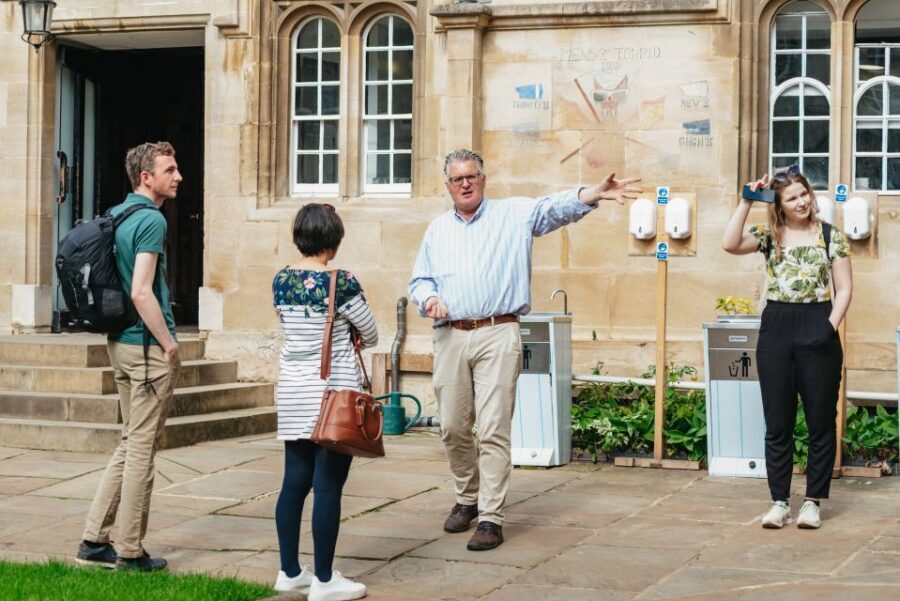
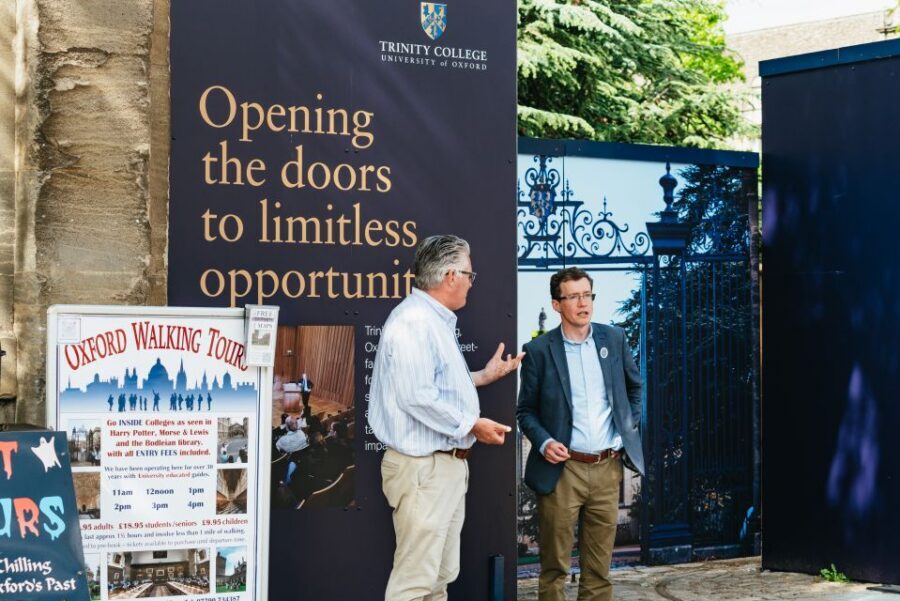
The tours run hourly from 11am to 4pm, and they start at the gates of Trinity College on Broad Street. On the day you go, check your specific meeting point details (the provider notes it may vary depending on the option booked), but the Trinity location is the standard anchor.
This matters because it gives you a natural starting viewpoint. Trinity is central to Oxford’s identity, and it sets you up to walk into the university core rather than zig-zag across town. If you’re arriving by train, I’d still plan buffer time—Oxford schedules are always calm until they suddenly aren’t.
Major Oxford Landmarks: Bodleian, Divinity School, Radcliffe Camera

This is where you get the “why Oxford is famous” part, beyond the postcards.
Bodleian Library
Your route includes a visit connected to the Bodleian library, one of the university’s most iconic institutions. The value here isn’t only the building—it’s what the library represents: an old-school academic engine that still influences learning today. If you’re the type who likes to understand how knowledge is organized, you’ll appreciate the emphasis on the university as a living system.
Divinity School (the exam-hall vibe)
Next up is the Divinity School (c. 1482), described as Oxford’s oldest lecture hall and examination room. It’s also a filming location, including for Harry Potter. The best part of a stop like this is that it turns “history” into a tangible space: you can almost feel the purpose of the room.
Practical note: it’s an interior stop, so dress for weather outside but be ready to move through covered spaces and stand for explanations.





Radcliffe Camera (1749) and the exam crunch
You’ll also see the Radcliffe Camera (1749). This building has a reputation for being students’ favoured library during intense final exam periods. Even if you’ve never studied in Oxford, the idea lands fast: it’s a place built to pull focus, with serious architecture designed for serious work.
If you’re someone who loves “learning through atmosphere,” Radcliffe Camera is one of those spots that clicks immediately. You’ll understand why people photograph it—but you’ll also understand why it’s more than a photo.
Sheldonian Theatre (1669) and Wren’s early work
The tour continues to the Sheldonian Theatre (1669), one of Sir Christopher Wren’s early buildings before his St Paul’s Cathedral work. That connection is a nice extra layer if you’re into architecture and how famous names fit into earlier stages of their careers.
The tour framing here is useful: it doesn’t just identify buildings. It connects them to the broader Oxford story—education, ceremonies, and the public face of a university.
The Collegiate and Tutorial System: What You Learn Beyond the Buildings
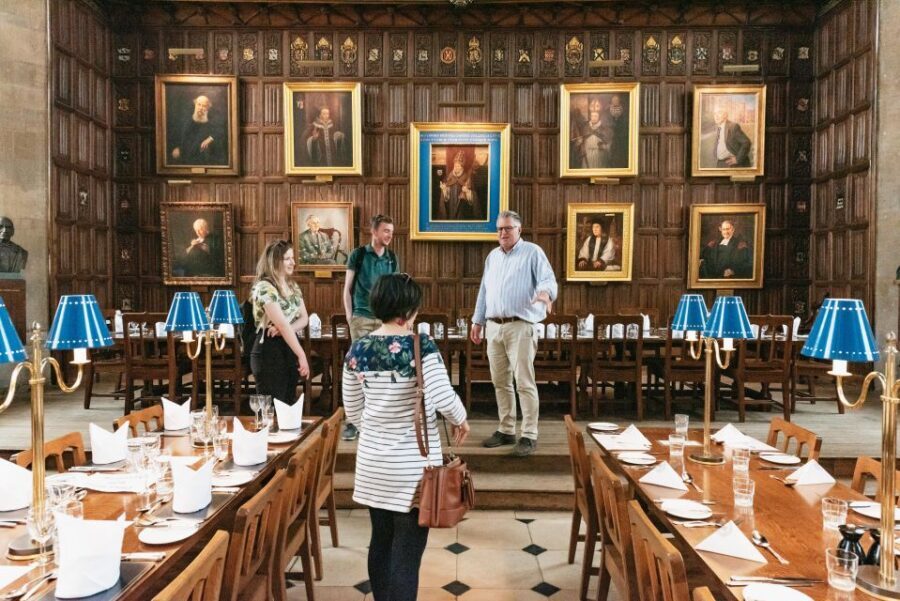
This tour isn’t only about where Oxford is. It’s about how it functions.
Oxford’s structure is collegiate, meaning students are tied to one of the colleges, while the larger university supports instruction through wider systems like the tutorial system. The guide explains how that works in real life, and why it shaped student experience and university culture over time.
Why that matters for you: once you understand the system, Oxford’s layout makes more sense. The colleges aren’t random buildings you walk past—they’re the “home base” for academic life, traditions, and identity. So when you later visit another college on your own, you’re not just looking at gates and stonework. You’re seeing the role each place plays.
This is also where the guide’s approach can make or break the tour. Since the company positions its guides as university-educated, the storytelling tends to connect facts to lived academic rhythms rather than dumping a timeline.
College Entry: Stepping Inside New, Balliol, Trinity, or University College
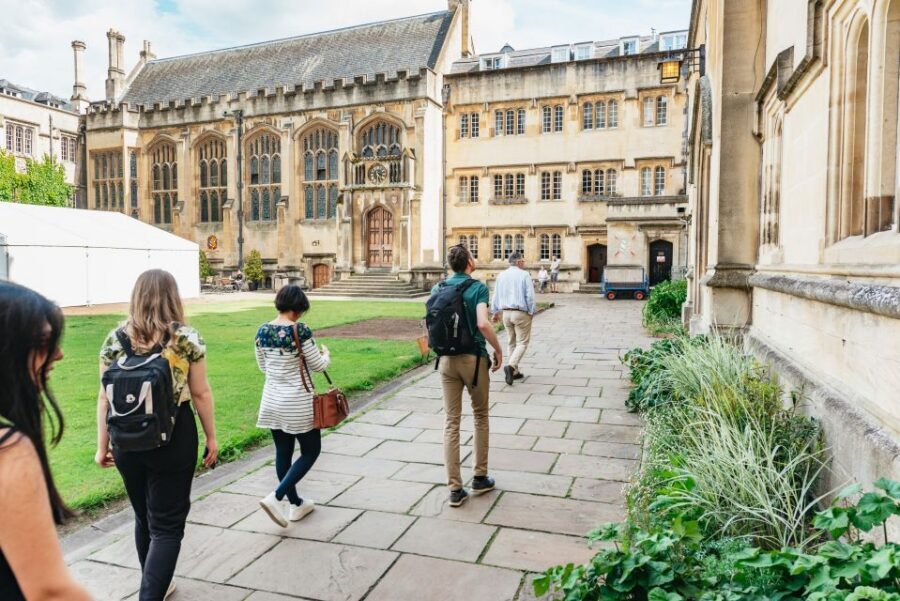
This is the big reason to book this specific tour. You don’t just get the outside. You get inside one of Oxford’s historic colleges.
The provider says they regularly visit colleges such as New College, Balliol College, Trinity College, and University College. Which one you get can depend on scheduling.
New College (founded 1379) and the film connection
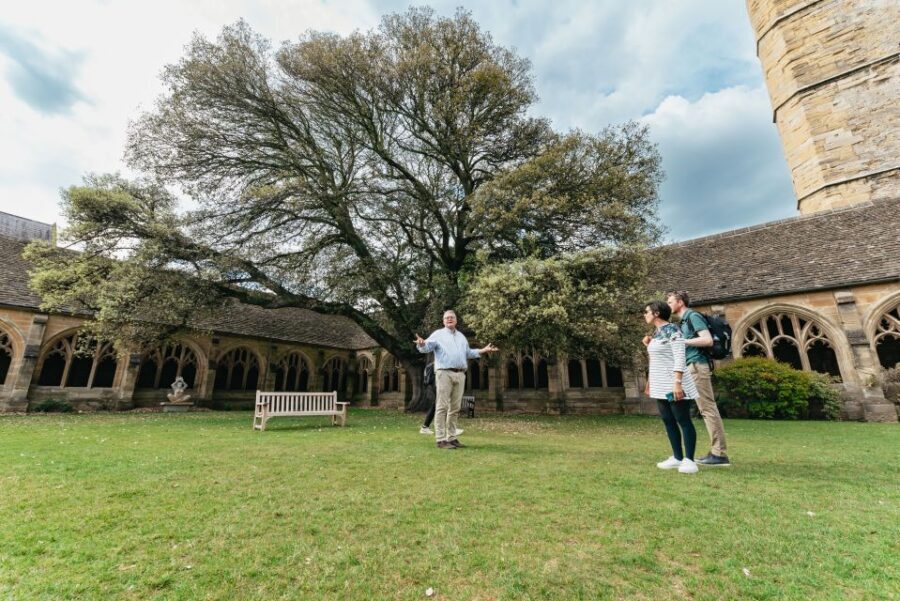
New College was founded in 1379, and it’s a popular filming location for Harry Potter, Inspector Morse, and His Dark Materials. If you recognize Oxford from screens, this is the stop where that recognition tends to feel the most rewarding.
Even if you’re not a movie fan, New College gives you a strong “Oxford classic” look: stone, structure, and the sense of long continuity.
Balliol College (c. 1263) and the dining hall
Balliol College, founded around c. 1263, is noted for one of the university’s most majestic dining halls. The tour also highlights that Balliol is home to some of Oxford’s famous Prime Ministers.
This is a great choice if you want the human side of Oxford. You’re seeing where community happens—meals, gatherings, routine—things that don’t show up as clearly in library stops.
Trinity College (founded 1555) and the chapel/lawns
Trinity College, founded in 1555, is connected to England’s counter-Reformation era. It’s described as having a stunning chapel, sweeping lawns, and a medieval library linked to its 13th-century predecessor.
This combination—chapel plus open lawns—helps you understand the visual mix Oxford does so well: formal and quiet in one breath, airy and social in the next.
University College (c. 1249) and famous alumni
University College, founded around c. 1249, is linked to famous alumni including C.S. Lewis, Stephen Hawking, and Bill Clinton. The tour includes an extra human detail: it notes Clinton’s favourite pub is an old gambling den, and your guide may show you afterwards.
Why I’d treat this as a highlight: it’s the kind of “you’ll remember this” thread. You start thinking about Oxford as a place that shaped writers, scientists, and politicians—not just academics in robes.
Hertford College, Bridge of Sighs, and the Oxford Movie Trail
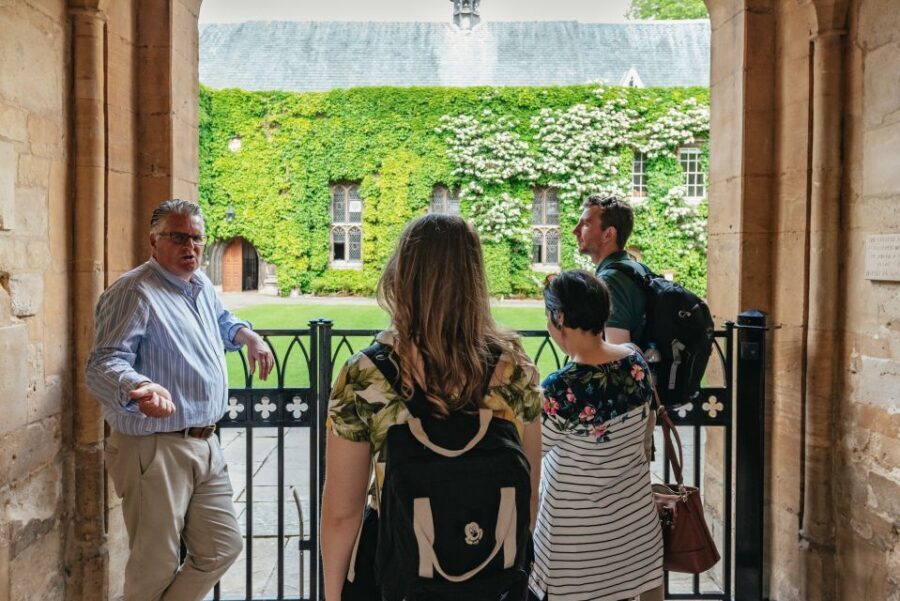
If your interest in Oxford runs partly through film and TV, this part of the tour can be surprisingly fun.
You’ll see Hertford College (1874), described as having a romantic façade and the Bridge of Sighs. It’s said to be instantly recognizable from Brideshead Revisited, Endeavour, Saltburn, and even Wonka.
The best use of a filming-location stop is not just name-checking titles. It’s comparing how a production frames a building versus how the real place feels. In Oxford, that comparison can be extra satisfying because the real architecture carries its own mood.
Guide Style That Makes the Walk Add Up
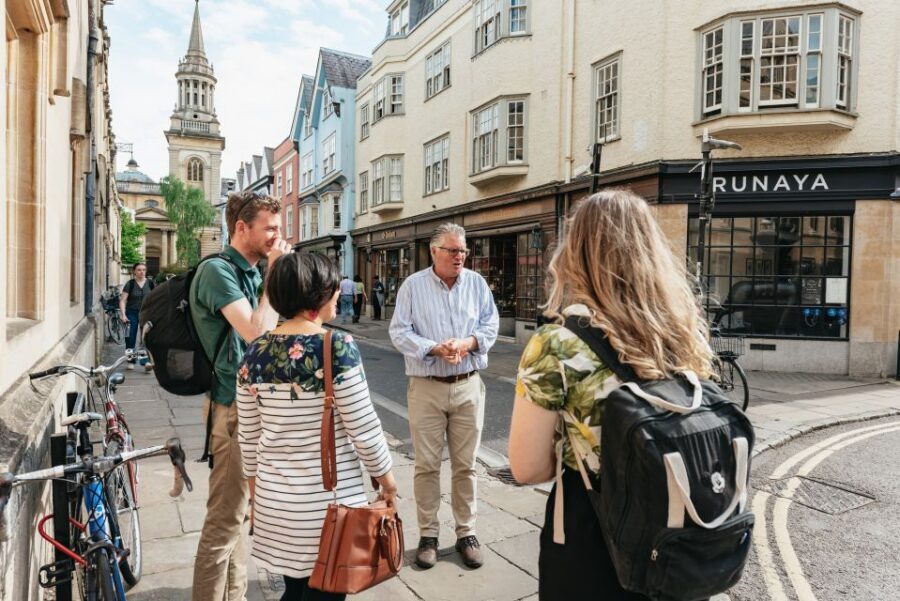
If you want to judge this tour quickly, focus on the guide.
From the guide team you can get—names that have included Jonathan, Tom, Joe, Dan, Simon, Stuart, Sergi (Sergei), Leonor, Bryan—the recurring pattern is that the explanations don’t stay at the level of facts. The tour company emphasizes university-educated guides, and the on-the-ground experience tends to be story-led: why a room matters, what a tradition signals, and how student life shaped Oxford culture.
You’ll also get practical direction. Many guides are described as offering tips on where to spend time next and even how to approach closures or limited access. That’s not just nice to know; it’s how you make a short tour turn into better rest-of-trip decisions.
Timing, Weather, and Seasonal Ghost Stories at Twilight
Oxford walks can be weather tests, but this route is built for a relatively short commitment. Still, plan for delays in winter daylight. The provider notes that in winter, the 4pm tour includes stories of Oxford’s gruesome past and ghostly tales as you wander through historic streets in twilight.
The tour guide tries to keep these stories age-appropriate, but the note is clear: if you’re bringing small children, be aware of the ghost-story material. If that doesn’t fit your group, choose another time slot instead.
What You’re Really Paying $37 For
At $37 per person, the price looks simple on paper. The value comes from three things that are hard to copy cheaply in Oxford:
First, you’re paying for a guided route that connects major landmarks in a logical order, including the Bodleian area and other classic university buildings. Second, you’re paying for college admission and an in-college experience. College entry in Oxford isn’t always quick or guaranteed without the right access. Third, you’re paying for someone who can explain the “so what”—how the collegiate and tutorial system shapes what you’re seeing.
If you’re doing Oxford for the first time, this is often better value than piecing together multiple standalone entrances. You get orientation plus access, in just 1.5 hours, and it sets up what you do after.
Who This Tour Fits Best (and who might skip it)
This tour is a strong match if you:
- want a time-efficient Oxford overview with college entry
- like history tied to places you can actually see
- enjoy film and TV references that point you to real architecture (Harry Potter, Morse, Brideshead Revisited, and others)
- want a guide who can answer questions about how Oxford education works
You might consider skipping it if you:
- already know Oxford’s college system deeply and only need a very specific college building
- are mainly looking for modern Oxford or nightlife (this is classic university Oxford, not that vibe)
- can’t handle the possibility of closure changes (the provider says closures can happen and alternatives are used)
Should you go in expecting a slow museum-style pace? No. Expect a tight walking sequence with clear stops and explanation.
Should You Book This Oxford City and University Tour?
I’d book it if you want to understand Oxford in one sitting and also step inside a historic college. College entry is the differentiator, and the inclusion of key university landmarks like the Bodleian, Divinity School, Radcliffe Camera, and Sheldonian Theatre makes the walk feel like the “greatest hits” without turning into a rushed checklist.
I’d also book it if you like guides who can turn Oxford into a story you can carry into the rest of your day—especially if you’re using the tour as your first move in town.
Just remember the closure reality: colleges and the library can close at short notice. If that would ruin your day, keep a backup plan for self-guided exploring after the tour, and choose a time slot that fits your comfort level with seasonal ghost stories.
FAQ
How long is the Oxford City and University Tour?
The tour duration is listed as 1.5 hours.
When do the tours run?
Tours are described as running hourly from 11am to 4pm.
Where do I meet for the tour?
The standard meeting point is the gates of Trinity College on Broad Street, though the provider notes the meeting point may vary depending on the option booked.
Does the tour include college entry?
Yes. The experience description states it includes entrance to one of Oxford’s historic colleges.
Which college sites might I see?
The provider lists regular college options such as New College, Balliol College, Trinity College, and University College (and it also notes closures can lead to suitable alternatives).
Are there any seasonal differences?
Yes. In winter, the 4pm tour includes stories of Oxford’s gruesome past and ghostly tales during twilight, and the guide tries to keep it age-appropriate.
Is there free cancellation?
Yes. The activity lists free cancellation up to 24 hours in advance for a full refund.