REVIEW · OXFORD
Oxford: The Original Uncomfortable Oxford™ Tour
Book on GetYourGuide →Operated by Uncomfortable Oxford · Bookable on GetYourGuide
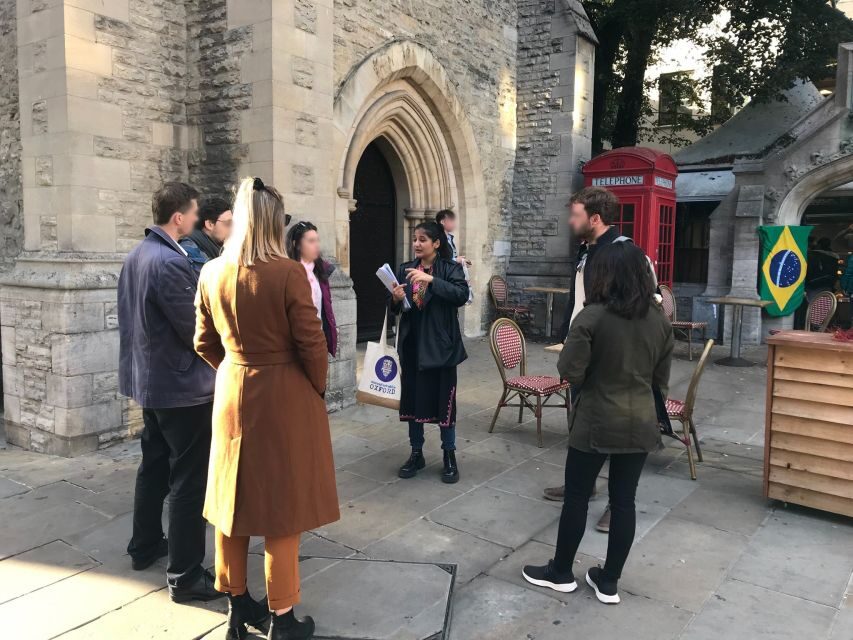
Oxford gets uncomfortable on purpose. This is the Oxford: The Original Uncomfortable Oxford™ Tour, a 1.5-hour walk through the city center where Oxford University researchers frame the famous sights with the less-comfy parts of history. You’ll go beyond the postcard Oxford you already know, including how power worked locally and far beyond the UK.
Two things I really like: first, the guide approach is built around discussion and evidence, not a one-way lecture. I especially liked the way the tour invites questions and keeps you thinking while you’re standing in front of real places. Second, it connects big themes—empire, race, class, and gender—to the way Oxford developed and how it still affects the modern world.
One drawback to consider: it’s a walking tour in streets and courtyards, so if you’re sensitive to sound, you may find it harder to hear at times when the group is spread out or the pace gets lively.
In This Review
- Key highlights worth your attention
- Oxford’s University power story, told on foot
- What you’ll actually learn: town, gown, empire, and social power
- Stop-by-stop: Carfax Tower to Bonn Square
- Carfax Tower (and the optional Fantastea start)
- University Church of St Mary the Virgin
- Oriel College (outside context)
- All Souls College
- Bodleian Library (with university-world context)
- The Sheldonian Theatre
- Balliol College (context without entry)
- Faculty of History, University of Oxford
- Bonn Square (finish point)
- Walking logistics: timing, distance, and what to bring
- Price and value: why $29 can make sense
- Group style and Q&A: what to watch for
- Family-friendly, but not kid-only
- Should you book this uncomfortable tour?
- FAQ
- How long is the Oxford: The Original Uncomfortable Oxford™ Tour?
- Where does the tour start?
- Does the tour include entry into colleges?
- What landmarks are included on the route?
- How much walking is involved?
- Is the tour wheelchair accessible?
- What language is the tour in?
- Is the tour rain or shine?
- What’s included in the price?
- Can I get a refund if my plans change?
Key highlights worth your attention
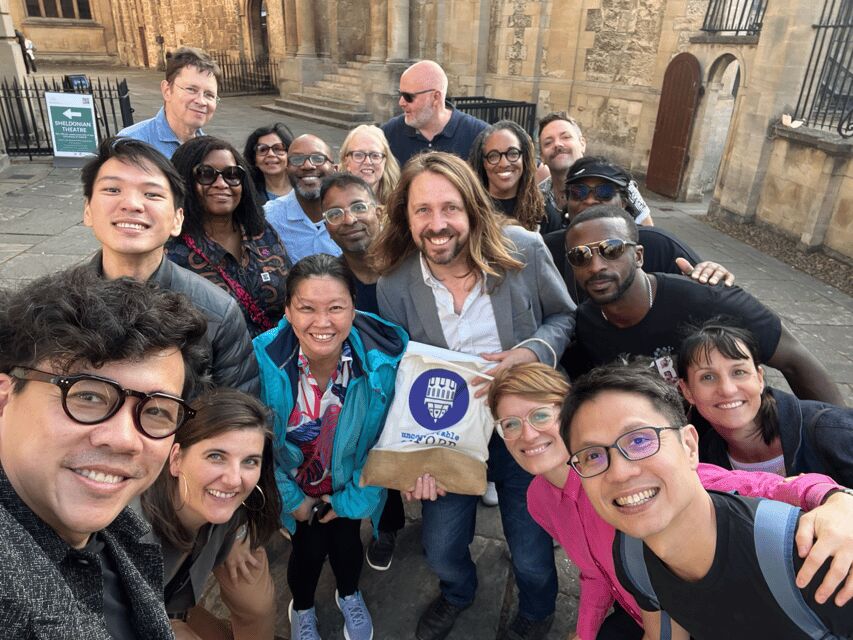
- Oxford academic researchers lead the walk, trained in the Uncomfortable Oxford™ approach
- Town-and-gown tensions explained through real institutions, not vague slogans
- Empire and controversy woven into stops like the Rhodes Statue and surrounding university buildings
- Iconic central sights like All Souls College, the Bodleian Library area, and the Sheldonian Theatre
- No college entry: you get the context without tours inside colleges
- You leave with tools, including a reading list compiled by University experts and a souvenir sticker
Oxford’s University power story, told on foot
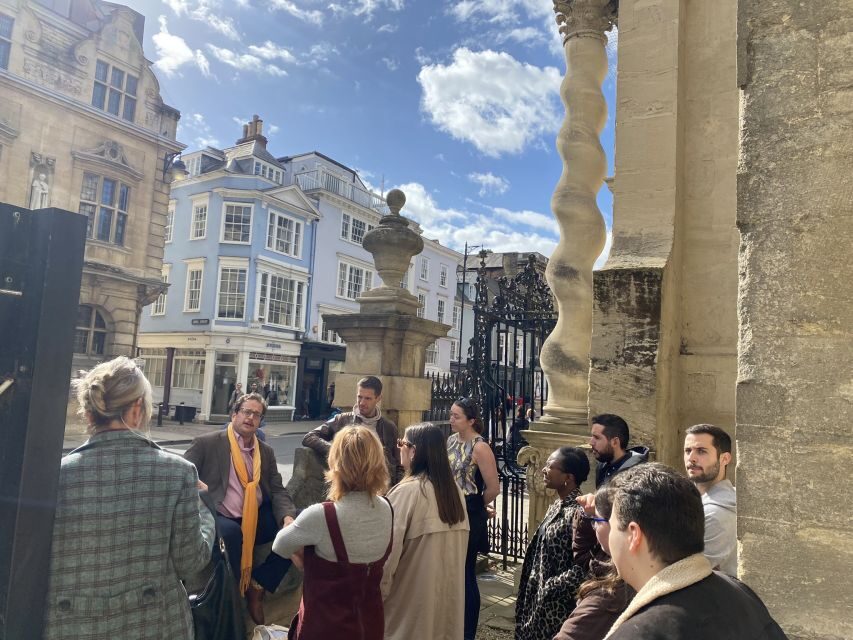
Oxford’s streets can feel like they run on tradition alone—until you get a guide who’s willing to connect the dots. This tour focuses on how the University gained power, not just academically, but through relationships with the town, the empire, and different groups within society. The result is a route that feels like you’re learning how Oxford works, not just what Oxford looks like.
The tone matters. Instead of polishing the past into something easy, the tour treats uncomfortable facts as part of the city’s everyday reality. You’ll hear about historic tensions between town and gown, and you’ll also see why those tensions matter for how people understand identity, opportunity, and influence today.
And the format is quick. At 1.5 hours and about 2 kilometers of walking, it’s a practical add-on for a first visit. You don’t need to commit a whole day to get the big-picture story.
You can also read our reviews of more tours and experiences in Oxford.



What you’ll actually learn: town, gown, empire, and social power
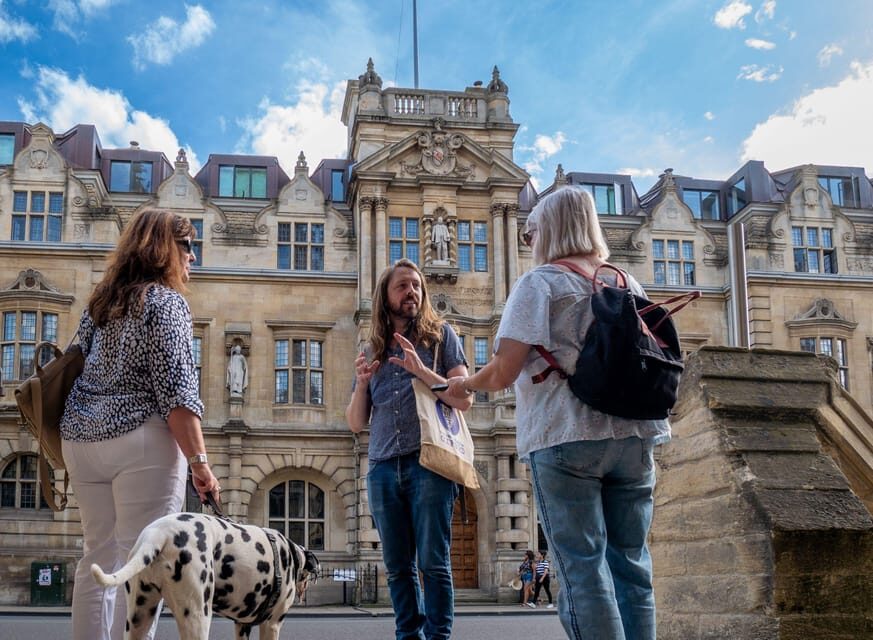
This is not a “did you know” tour. The themes are the point, and the landmarks are the proof.
Here’s what the tour is aiming to show you:
Town versus gown. Oxford University and the city have never been fully separate stories. The University’s growth affected housing, money, policing, social life, and who got to shape public life. When you’re told that history on the ground, those arguments stop being abstract.
How Oxford connects to empire. The tour’s route includes connections to empire, including how global power systems fed into Oxford’s institutions and ideas. Expect the guide to connect those links to local impact, not just faraway events.
Race, class, and gender in Oxford’s institutions. You’ll hear how evolving ideas about who belongs, who counts, and who gets access changed over time. The tour frames these themes so you can see patterns, then relate them to modern conversations.
Why it feels like a living debate. One of the strongest moments is the conversational style. In the best cases, the guide doesn’t just talk at you. They ask questions, push you to compare evidence, and help you make sense of contradictions.
If you enjoy cultural tourism—history with a current conversation attached—this is your kind of walk.
Stop-by-stop: Carfax Tower to Bonn Square
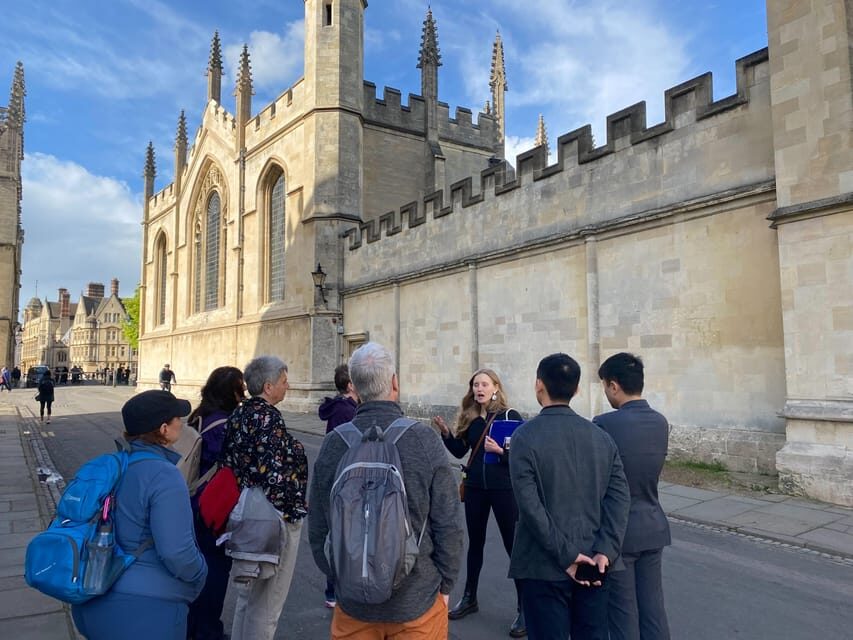
You’re moving through Oxford’s center with short, guided bursts at each stop. Times can vary a bit by guide and schedule, but the flow stays similar.
Carfax Tower (and the optional Fantastea start)
You start with two possible meeting points. One is Carfax Tower, which gets a short guided introduction (about 10 minutes). The other option starts at Fantastea, teas around the world, which can be a nice way to begin if you’re meeting friends and want a quick, cozy start.
Why this matters: Carfax Tower is a classic orientation point. Getting your bearings early helps the rest of the walk make sense fast.
University Church of St Mary the Virgin
Next is a brief stop at the University Church of St Mary the Virgin (about 5 minutes). Even if you’ve seen churches like this before, the tour uses it as a way to connect religion, education, and institutional power in Oxford’s development.
Practical note: churches tend to make people linger. This stop is short, so keep your group moving if you’re on a tight schedule.




Oriel College (outside context)
At Oriel College (about 10 minutes), you’ll get guided commentary tied to the themes of the tour. Since the tour does not take you inside any colleges, expect exterior viewing plus a clear historical frame for why this site matters.
The payoff: you learn how to read Oxford buildings like evidence—who had influence, how systems worked, and why certain stories got repeated.
All Souls College
All Souls College is another around-10-minute stop. All Souls is famous on its own, but the tour uses it to connect institutional identity with wider social issues.
If you like being shown why a place is controversial (or why it became a symbol), this is the kind of stop that clicks.
Bodleian Library (with university-world context)
The tour includes a guided segment at the Bodleian Library (about 15 minutes). If you’re expecting a museum-style tour, this is not that. Instead, you’ll get a focused explanation of why the Bodleian matters—its role in knowledge production and how Oxford’s status grew around that.
This is a good point in the walk to check your footing. A 2-kilometer route in a historic center means uneven ground and quick turns.
The Sheldonian Theatre
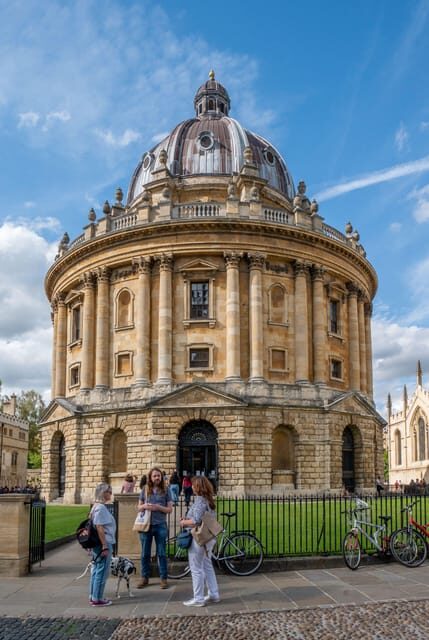
At the Sheldonian Theatre (about 10 minutes), you’ll hear how performance space, ceremony, and authority connect in Oxford’s public face. It’s one of those places where architecture and power meet in a visible way.
Balliol College (context without entry)
Balliol College is included for about 10 minutes. Again, you won’t be going inside; you’ll get the story tied to what you can see from outside, plus explanation that connects the college to the tour’s bigger themes.
Faculty of History, University of Oxford
The Faculty of History gets a guided stop (about 10 minutes). This is a smart choice because it places the subject matter—history itself—inside the university ecosystem. You’re not just learning about the past; you’re also learning how institutions interpret and teach it.
For me, this stop was a reminder that how people explain history is part of the story too.
Bonn Square (finish point)
Finally, you finish at Bonn Square (with about 10 minutes of guided time at the square). This is also where you’ll get a clearer sense of how the tour’s themes land in the present day—especially the themes of power, inclusion, and controversy.
The route’s highlighted stops include the Rhodes Statue, so expect the guide to bring that up somewhere in the central walking arc. The key is that you’re meant to connect symbolism to context, not just to name the statue and move on.
Walking logistics: timing, distance, and what to bring
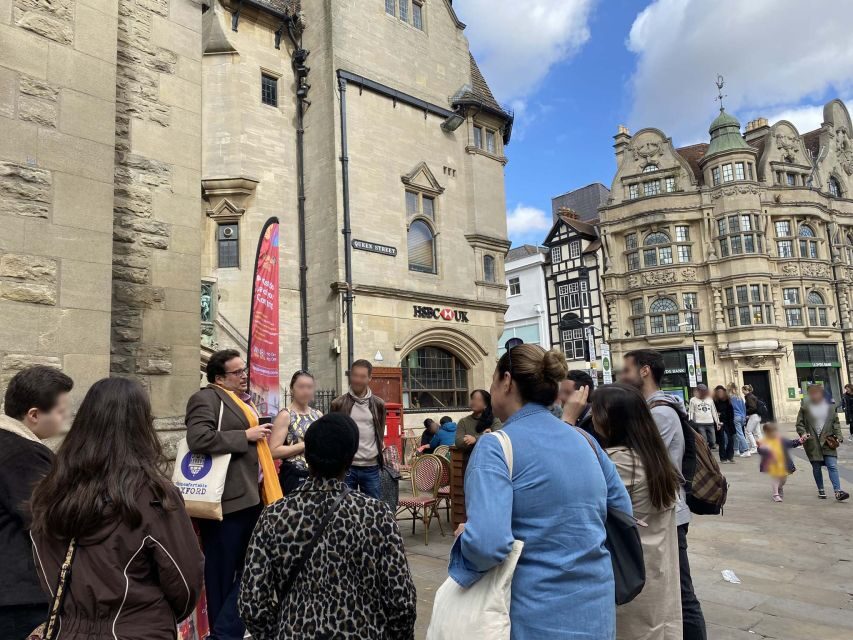
This tour is built around brisk, short segments. Expect around 2 kilometers of walking, rain or shine, with street crossings and some cobblestones.
Bring:
- Comfortable shoes (cobblestones and uneven edges are the main issue)
- Weather-appropriate clothing (it runs in rain)
Keep this in mind if you’re navigating with kids. The tour is family-friendly for ages 12 and up, but the pacing still includes regular stops and moving through a busy center. Staying together matters more than usual because it’s not a bus loop—it’s a true street walk.
Also, if you’re worried about hearing: choose a spot close to the guide when you can. When you’re spread out, it’s harder to catch the quieter parts of the discussion.
Price and value: why $29 can make sense
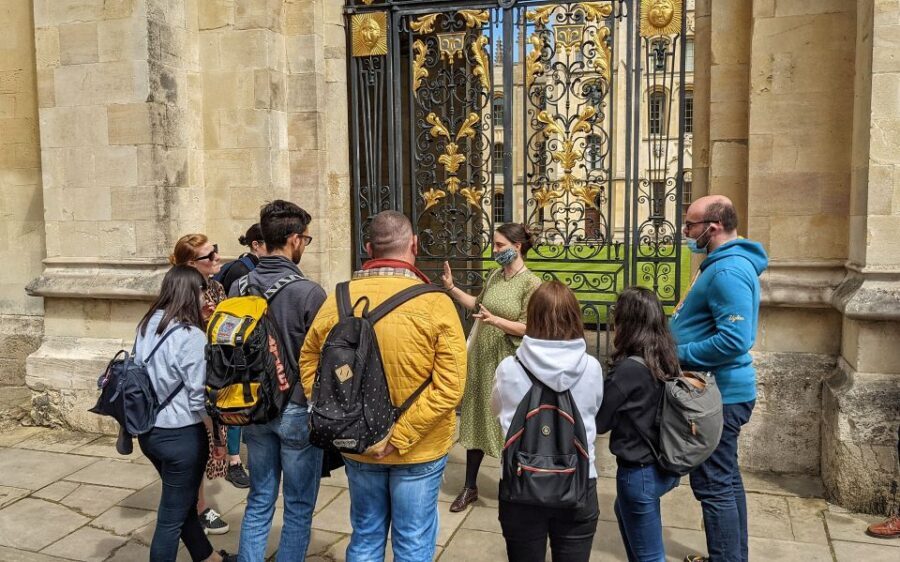
At about $29 per person for 1.5 hours, this is a budget-friendly way to upgrade your Oxford visit. The value isn’t just that you see famous buildings. It’s that you get interpretive context from university researchers, plus a reading list after the tour.
A lot of paid tours in Europe focus on facts and dates. This one is priced like a quick highlight, but it behaves like a mini seminar on the street. That’s why people who like history-for-thinking tend to rate it highly.
If you’re the kind of traveler who’s tired of the same polished stories, this price feels reasonable because it targets the questions that make Oxford more complicated.
If you only want “tell me what to look at” and nothing else, you might find the themes heavier than you expected. Choose this tour for the questions, not for the postcard photos.
Group style and Q&A: what to watch for
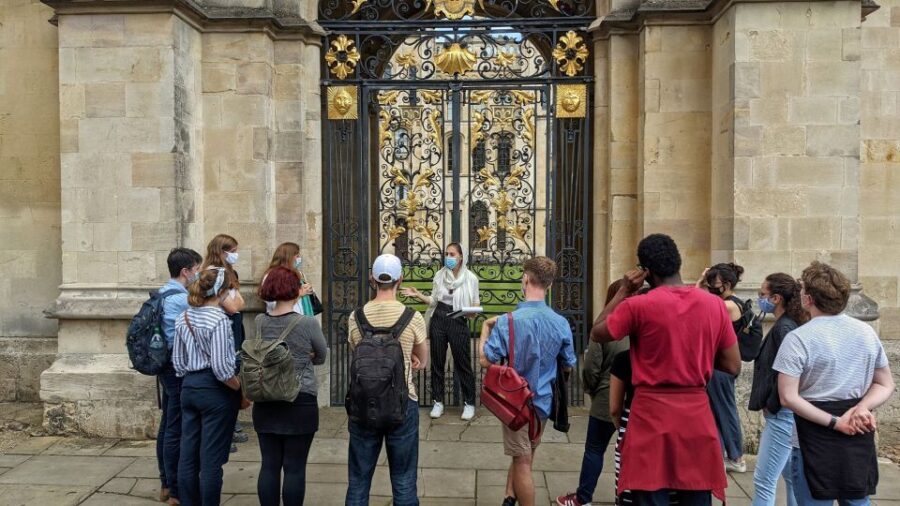
A big strength is the way the guide keeps the conversation moving. In one standout case, the guide asked questions and helped the group engage in thoughtful discussion using evidence-based framing. That style is exactly what turns a short walk into something memorable.
That said, a possible trade-off exists: on some tours, audio clarity and group dynamics can affect your experience. Since it’s a street walk with moving pauses, you’ll enjoy it more if you:
- stay near the guide
- pay attention at each stop (the context builds fast)
- don’t let the group discussion slow everything down
If you’re traveling with people who hate discussion, you might want to explain the format ahead of time so expectations match reality.
Family-friendly, but not kid-only
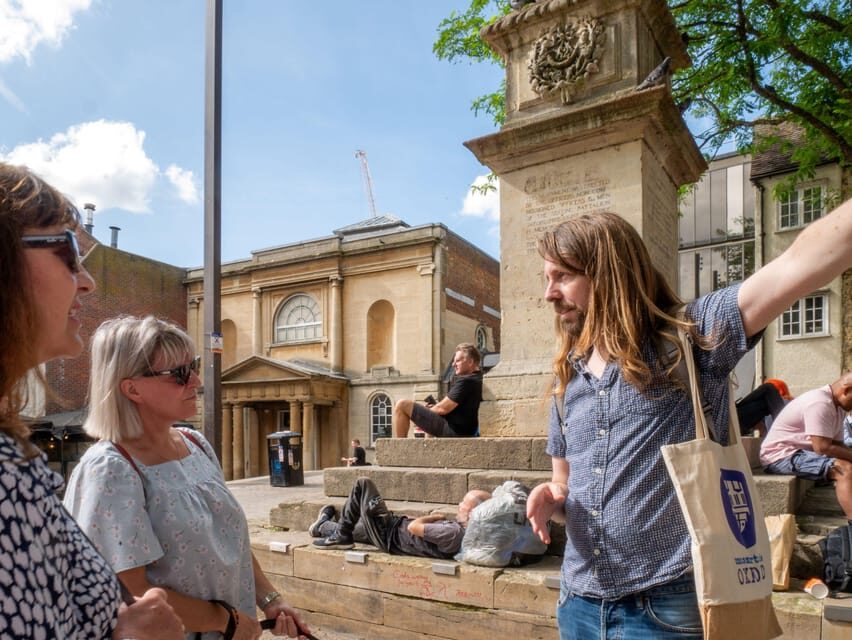
This is marked as family-friendly for ages 12+. That’s believable because the tour is practical in length and stays concentrated on big concepts.
Still, the themes—empire, race, class, gender—aren’t always comfortable. If you’re traveling with teens who can handle serious history, this tour can be a strong way to connect classroom topics to real-world places.
If your group includes very young kids, the walking and the reflective tone may be a harder fit. For ages 12+, though, it’s a smart way to keep a history day from becoming a straight museum lineup.
Should you book this uncomfortable tour?
Book it if:
- you want an Oxford introduction that goes beyond the usual legends
- you like history that connects to today’s debates about race, class, gender, and power
- you’re okay with controversy being part of the story, not a footnote
- you’d appreciate a reading list to keep learning after the walk
Consider skipping (or at least adjusting expectations) if:
- you’re mainly in Oxford for quick sightseeing photos and don’t want heavy context
- you’re sensitive to hearing in outdoor groups and prefer tours with strong audio support
- you have very limited time and need only the simplest highlights
FAQ
How long is the Oxford: The Original Uncomfortable Oxford™ Tour?
The tour runs for 1.5 hours.
Where does the tour start?
You can choose between Carfax Tower and Fantastea, Teas around the world. The exact meeting point can vary depending on the option booked.
Does the tour include entry into colleges?
No. This tour does not take you inside any colleges.
What landmarks are included on the route?
You’ll visit or stop at places such as Carfax Tower, the University Church of St Mary the Virgin, Oriel College, All Souls College, the Bodleian Library, the Sheldonian Theatre, Balliol College, the Faculty of History, and finish at Bonn Square. The route highlights also include the Rhodes Statue and All Souls College, plus Weston Library.
How much walking is involved?
It covers around 2 kilometers of walking, with some street crossings and sections with cobblestones.
Is the tour wheelchair accessible?
Yes, the tour is wheelchair accessible.
What language is the tour in?
The live tour guide speaks English.
Is the tour rain or shine?
Yes, it runs rain or shine.
What’s included in the price?
You get a trained Uncomfortable Oxford™ tour guide, a free Uncomfortable Oxford™ souvenir sticker, and a reading list compiled by University experts.
Can I get a refund if my plans change?
Yes. Free cancellation is available up to 24 hours in advance for a full refund.