REVIEW · OXFORD
Oxford: City & University Tour with College entry included
Book on GetYourGuide →Operated by The Best Bits of Oxford Tour Co. · Bookable on GetYourGuide
Oxford rewards slow attention.
This private walking tour is interesting because it’s led by an Oxford local, with stories that connect the university’s history to the streets you’re actually standing on, and it includes college entry when open. Two things I really liked: Jaye, your guide, brings Oxford to life in a way that feels fun and well-paced, and you get inside a college so the tour isn’t just outside-photo stops. One possible drawback: some interiors and building access are subject to opening and accessibility, so a couple of spots may be more of a look-from-outside moment on the day.
You’ll move at your pace, with room for a coffee or comfort break if you need one. The route ends right in the middle of things at Broad Street, so it’s easy to keep exploring after the tour wraps up.
In This Review
- Key highlights worth planning around
- Meet at The Randolph Hotel, then get your bearings fast
- Martyrs Memorial and the university’s early symbolism
- St John’s College, Balliol College, and Exeter College: the Oxford “world inside” tour
- Blackwell’s Bookshop: Oxford’s literary heartbeat
- The Sheldonian Theatre: ceremony, sound, and spectacle
- Bridge of Sighs and the Bodleian Library: power and learning, side by side
- University Church of St Mary the Virgin and All Souls College
- Oxford’s Covered Market and finishing on Broad Street
- Timing and pacing: how to make 90 minutes feel like more
- Value: why the included college entry changes the math
- Who this Oxford tour fits best
- Should you book this Oxford City & University Tour?
Key highlights worth planning around
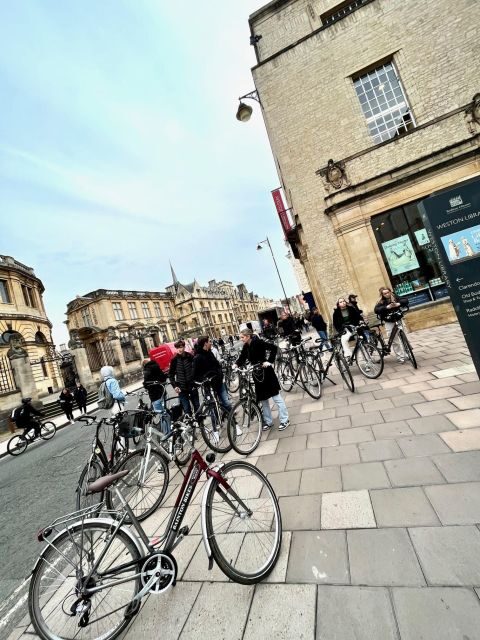
- Local guide energy from Jaye, with lively, engaging storytelling for both young and old
- College entry included, subject to opening restrictions
- Small private group (up to 8), so it feels more like a conversation than a lecture
- Iconic Oxford landmarks in a tight route, including the Sheldonian Theatre and the Bridge of Sighs
- Flexible pace, with the option for a coffee or comfort break
- A practical finish at Broad Street, making it easy to continue on your own
Meet at The Randolph Hotel, then get your bearings fast

Most Oxford tours start with big facts. This one starts with location: you meet outside The Randolph Hotel, across from the Ashmolean Museum entrance, and staff can be flexible on the exact meeting point as long as you’re nearby. That matters because Oxford can feel maze-like, especially if it’s your first time here.
From there, you’ll walk a line through the university core and the city landmarks, finishing in Broad Street. It’s a smart format: you get a guided thread through the sights, but you’re not stuck for hours after dark and rainy. Also, you’re in a private group, so you can ask for clarifications without waiting your turn.
You can also read our reviews of more city tours in Oxford



Martyrs Memorial and the university’s early symbolism
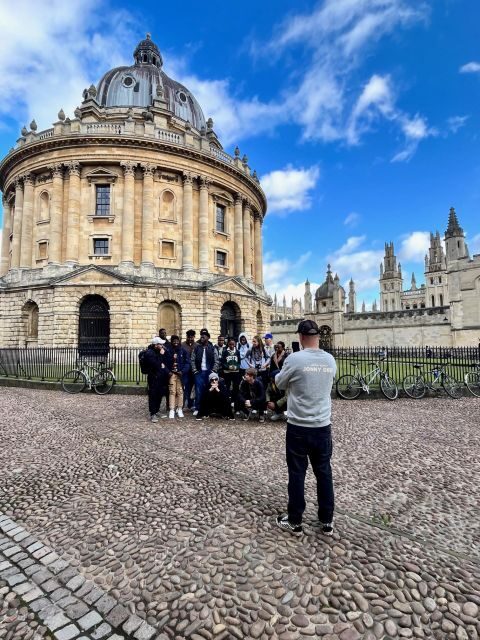
The first stop is the Martyrs Memorial, a short pause (around 10 minutes) to set the tone. Even if you only take a few minutes here, it helps you read Oxford differently because you start noticing how the university grew alongside real political and religious conflict.
This is one of those moments where a good guide makes the difference. Jaye’s style is energetic and animated, with a light touch of humor when it fits, so even serious topics don’t feel heavy. If you tend to skip memorials on your own, use this time—Oxford’s stone has opinions.
St John’s College, Balliol College, and Exeter College: the Oxford “world inside” tour
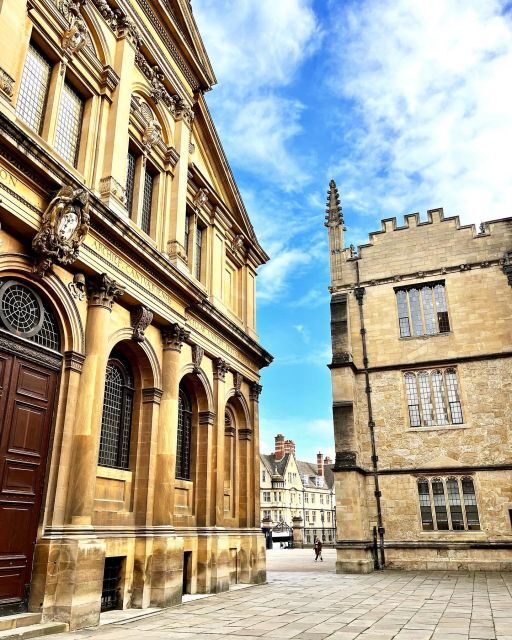
A big reason this experience works is that it focuses on colleges, not just university buildings. The tour is built to get you into at least one college, and the ticket includes the college visit subject to opening. That “inside access” can be the difference between admiring architecture and understanding how Oxford actually functions.
You’ll typically spend time at St John’s College (about 10 minutes) and Balliol College (about 10 minutes), plus Exeter College (around 5 minutes). The timing isn’t meant to pressure you into speed-walking. It’s designed so you get a sense of layout and mood without needing a full architectural degree.
Here’s what I’d watch for as you move through these stops:
- The little contrasts between courtyards and gateways, which often signal how each place evolved over time
- The way college boundaries shape daily university life, not just historic prestige
- The small details your guide points out that you’d totally miss if you were scanning only for famous postcard angles
If college interiors are available, you’ll get a real sense of scale and atmosphere. If access is limited, you still benefit from the explanation and context, but you’ll likely spend more time looking outward and hearing the stories that connect the spaces.
Blackwell’s Bookshop: Oxford’s literary heartbeat
After the colleges, you’ll pass by Blackwell’s Bookshop for a quick stop (about 5 minutes). It’s one of those Oxford places that instantly tells you the university isn’t just about old stone—it’s about ideas, print culture, and everyday academic life.
Even with limited time, this stop is useful because it grounds everything you just heard. If the tour is doing its job, you’ll feel like Oxford’s reputation isn’t only for famous names—it’s for how people keep thinking and learning.
Tip: if you want to buy anything, plan for a short browse after the tour ends in Broad Street, since this stop is brief.
The Sheldonian Theatre: ceremony, sound, and spectacle
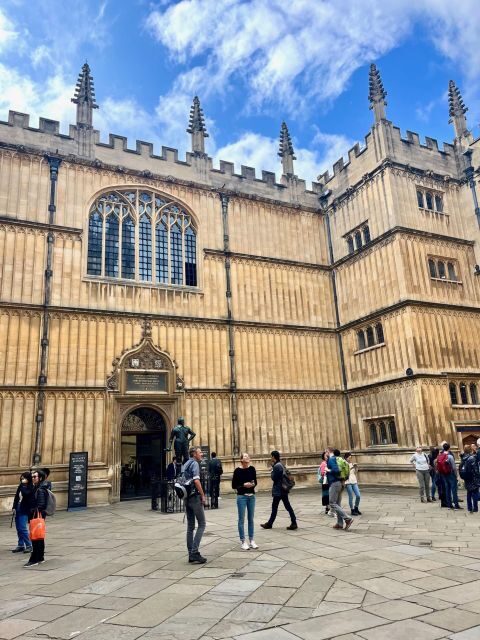
Next up is the Sheldonian Theatre (around 10 minutes). This is where Oxford looks like it stages important moments on purpose. It’s a key landmark because the university is famous for formal ceremonies, public lectures, and events that need a proper stage.
In a short span, your guide can connect architectural choices to what the theatre is used for. You’ll get a clearer picture of why this building matters beyond appearances. It also helps you understand that “university life” includes performance and public gatherings, not only quiet reading.
If you’re someone who loves architecture, you’ll appreciate how Jaye points out what to look for without sending you into a technical spiral. If you’re less architecture-minded, you’ll still get the story behind the building.



Bridge of Sighs and the Bodleian Library: power and learning, side by side
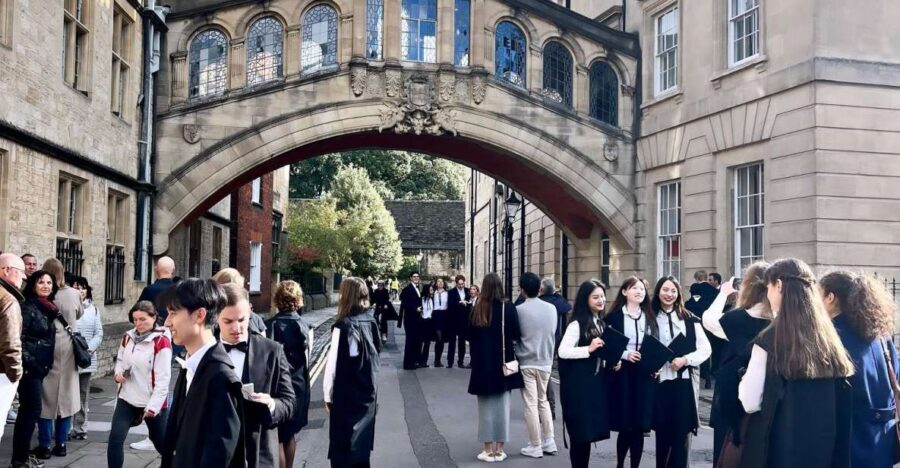
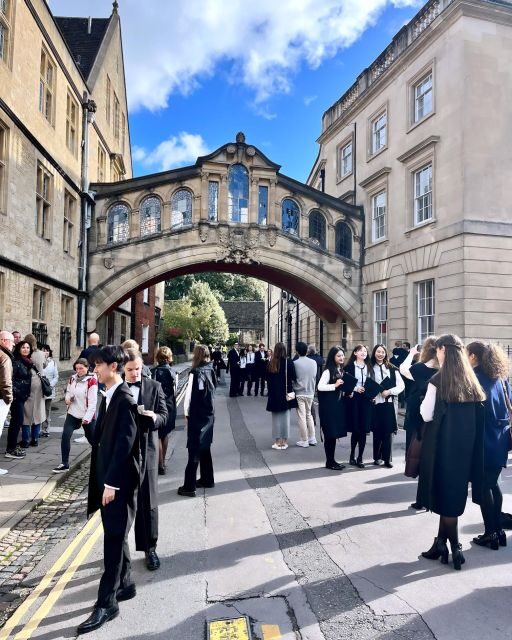
Then comes one of Oxford’s most recognizable visuals: the Bridge of Sighs (about 10 minutes). It’s short, but it’s a great checkpoint because it acts like a hinge in your mental map of Oxford. Once you connect this view to the rest of the university buildings, the city starts to feel more organized.
After that you’ll visit the Bodleian Library (around 10 minutes). The Bodleian is a big deal, and the tour gives you a chance to connect that prestige to the university’s mission of learning and collection. Even if you don’t spend ages inside, you’ll understand what makes the library so central to Oxford’s identity.
Two practical notes:
- This route is best when you’re ready to walk and pay attention at each stop. If you’re tired, take that coffee break your guide offers—this tour is designed to go at your pace.
- Building access can affect how much you actually see inside, since some parts depend on availability.
University Church of St Mary the Virgin and All Souls College
The University Church of St Mary the Virgin is next (around 10 minutes). Churches in Oxford don’t feel like random detours. They’re part of the university ecosystem, and they help explain how religious life and academic life have historically braided together here.
Then you’ll spend a short visit at All Souls College (about 5 minutes). That time is tight, but it’s still valuable if you use it to connect what you saw earlier: the colleges, the ceremonial buildings, and the learning institutions all tell parts of one story about Oxford’s evolution.
All Souls can come with a sense of mystery for people who don’t know its background yet. That’s where a guide helps. Jaye’s approach is lively and entertaining, but it also stays grounded in what each place represents, not just what it looks like.
Oxford’s Covered Market and finishing on Broad Street

You’ll end at Broad Street after visiting Oxford Covered Market (around 10 minutes). This is a great finish because it shifts you from university architecture back into the living city.
The Covered Market is useful for travelers because it gives you a quick, low-stress way to grab a snack, a drink, or just something to do with your hands after the tour. Drinks during the tour aren’t included, so if you want something along the way, plan to purchase it yourself. The stop at the market gives you a natural place to do it.
Finishing in Broad Street also makes logistics easier. You’re in the central zone where it’s simpler to connect to museums, shops, or your next walk without backtracking.
Timing and pacing: how to make 90 minutes feel like more
This is set for about 1.5 hours. One part of the tour description also mentions around two hours for the private walking tour experience, and that’s believable because Oxford stops can expand or shrink based on access and the pace you set. The key point is that the tour is meant to feel flexible, not frantic.
You’ll want to keep these practical ideas in mind:
- Wear shoes you can walk in comfortably. Oxford streets and stone entrances are not made for flimsy soles.
- If you need a coffee or comfort break, ask early. The tour is designed for that kind of adjustment.
- If you’re traveling with mixed ages, lean into the private size. It’s built for up to 8 people, which keeps it manageable and personal.
Value: why the included college entry changes the math
Price is listed as $201 per group up to 14, while the private tour format is described as for parties up to 8. Either way, the value question comes down to what you get for the time: you’re not just sightseeing from the sidewalk.
The ticket includes a college visit subject to opening restrictions. That alone can be the difference between a basic walking tour and something that feels like you’ve stepped into Oxford’s working world. It’s also efficient: in a short walk you cover a cluster of landmarks—Martyrs Memorial, major colleges, Blackwell’s, the Sheldonian Theatre, the Bridge of Sighs, the Bodleian Library, and the University Church—so you spend your energy on meaning, not on trying to line up separate tickets and stops.
If you’re a small group, private pricing can feel easier to justify than a larger-group tour, since you can ask questions and steer the pace. If you’re a family or a small mix of ages, this format is often a sweet spot: structured enough to guide you, flexible enough to keep it comfortable.
Who this Oxford tour fits best
This tour is a strong choice if you:
- Want a private, guided walk instead of joining a big crowd
- Care about the university story but don’t want a textbook-only lecture
- Like a guide who tells lively, human stories (Jaye’s style is upbeat and engaging)
- Prefer to see key landmarks while still being able to pause for breaks
It’s also ideal for first-timers because it gives you a route that naturally connects the famous sites. If you already know Oxford extremely well and want only deep specialist detail, you might find 1.5 hours a bit short. But for most people, the balance of iconic sights plus college access is exactly right.
Should you book this Oxford City & University Tour?
I’d book it if you want Oxford with context, not just photos. The inclusion of a college entry (when open), the small private size, and the fact that your guide is an Oxford local named Jaye make this feel like more than a standard checklist.
Book it particularly if your group values pacing. The ability to slow down, ask questions, and take a coffee break turns the walk into something you can actually enjoy. If you’re set on visiting specific interiors every single time, keep in mind access depends on opening and accessibility—so be flexible in how you define success.
If you’re ready to learn Oxford in a practical, walkable way, this is a solid pick.