REVIEW · LONDON
London: The Beatles Walking Tour of Soho and Mayfair
Book on GetYourGuide →Operated by Brit Music Tours · Bookable on GetYourGuide
If you like your Beatles stories tied to real streets, this one hits. This London Beatles walking tour threads through Soho and Mayfair with a guide pointing out the theaters and music venues you’ve seen in Beatles photos, videos, and era snapshots.
I really like two things about it: the chance to gaze up at the roof where the Beatles performed together for the last time, and the way the tour connects band milestones to specific places—like John and Yoko’s first meeting connected to Yoko’s art exhibition, not just vague fan lore. The guide also brings in the business side, so you get the pop-history meets pop-industry angle.
One consideration: this is a walking tour and it’s not suitable for people with mobility impairments, so check your comfort level with pavement and sustained walking before booking.
In This Review
- Key Highlights You’ll Remember
- How Soho and Mayfair Turn Beatles Myth Into Real Street Corners
- Where You Start: Piccadilly Circus Meets the Music-Scene Story
- The Roof Where They Performed Together for the Last Time
- John and Yoko’s First Meeting Through Yoko’s Art Exhibition
- Carnaby Street Fashion: Why Style Was Part of the Beatle Brand
- Ronnie Scott’s Jazz Connection and the Broader Music Scene
- Royal Variety Performance: Pop History at the Big Lights
- The Studios Angle: Seeing Why Other Rock Gods Got In Too
- The Business Side: Royalties, Spin-Offs, and the Fanbase Engine
- The Walk Itself: 2 Hours, Steady Storytelling, and a Clean Finish
- Who This Tour Fits Best
- Should You Book This Beatles Soho and Mayfair Walk?
- FAQ
- Where is the meeting point for the London Beatles walking tour?
- How long is the tour?
- What’s included in the price?
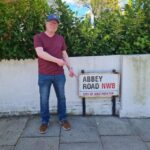
- Does this tour include a visit to Abbey Road Studios?
- What language is the tour guide speaking?
- Where does the tour end?
- Is the tour suitable for people with mobility impairments?
- Can I cancel for a full refund?
Key Highlights You’ll Remember
- The rooftop moment tied to the Beatles’ last performance together
- John and Yoko’s first meeting explained through the lens of Yoko’s exhibition
- Royal Variety Performance and how they made pop history in front of the establishment
- Carnaby Street on a fashion-focused walk through 1960s style territory
- Ronnie Scott’s jazz-club connection to the music scene around the band
- Music-royalties and spin-off companies—why Beatles fame turned into an enduring business
How Soho and Mayfair Turn Beatles Myth Into Real Street Corners
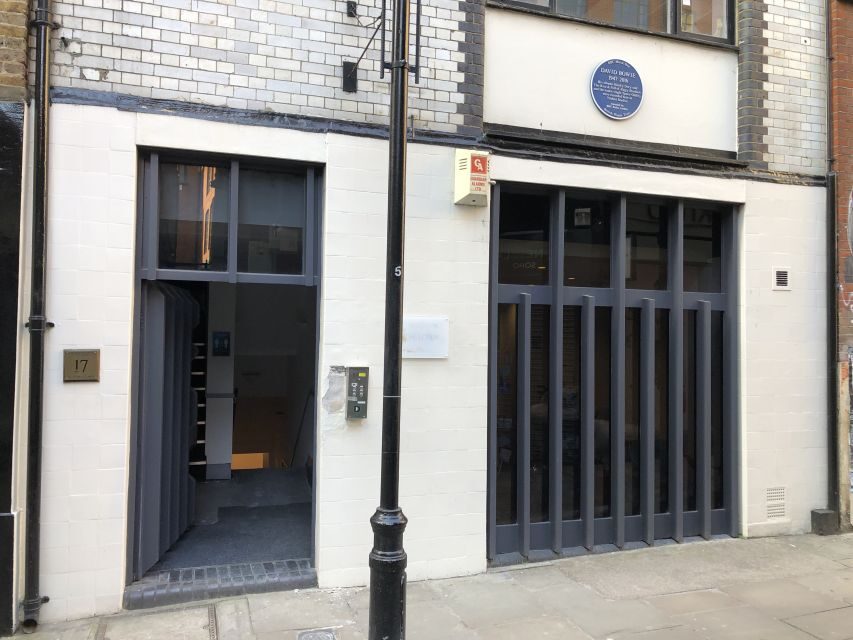
Soho and Mayfair are the kind of London neighborhoods where the past still feels walkable. This tour is built on that idea. You’re not just collecting trivia; you’re getting an organized route that points out the places where the Beatles era rubbed shoulders with theaters, music venues, and media culture.
The guide keeps it grounded. You’ll see locations tied to performances and filming, plus stops connected to the songwriting world—then you shift gears into what made the Beatles last financially: royalties, spin-offs, and the business machinery that kept generating revenue for decades from a loyal fan base around the world. That angle is rare on standard sightseeing walks, and it’s one reason this tour can feel more satisfying for people who love the Beatles as both art and phenomenon.
You can also read our reviews of more walking tours in London



Where You Start: Piccadilly Circus Meets the Music-Scene Story
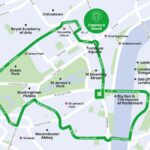
The meeting point is outside Hard Rock Cafe, 225–229 Piccadilly (Criterion Building), near Piccadilly Circus. You’ll want to be ready to begin right on time, because the tour is set for a tight 2-hour walking loop.
Why this start works: Piccadilly Circus is one of those London hubs where you can quickly feel the mix of showbiz, crowds, and media attention that surrounded the Beatles. From there, the guide typically sets the tone by connecting what you see on the street to what was happening in the entertainment world during the band’s peak years.
The Roof Where They Performed Together for the Last Time
One of the tour’s biggest draws is the moment you spend looking up at the roof where the Beatles performed together for the last time. Even without stepping inside any studio, you get something powerful: perspective.
Standing outside and craning your neck gives you a clear sense of scale. You’re not just imagining the scene—you’re placing it in London’s real architecture. That physical detail matters for emotional accuracy. It also makes the story stick because you’re not relying on memory; you’re attaching the memory to a spot.
If you’re a visual learner—if you remember the rooftop imagery from the film and think in images rather than dates—this stop is worth the price alone.
John and Yoko’s First Meeting Through Yoko’s Art Exhibition
Next, the tour shifts to the human story behind the headlines. You’ll hear about John and Yoko’s first meeting through an art exhibition at Yoko’s exhibition space.
This is valuable because it corrects a common Beatles-fan shortcut: it’s easy to treat that moment as one dramatic encounter and stop there. The tour nudges you to see it as a cultural collision—art, ideas, and music meeting in a specific place. Even if you already know the broad outline, tying it to a real exhibition setting helps you understand why the meeting mattered beyond romance and press cycles.
Carnaby Street Fashion: Why Style Was Part of the Beatle Brand
Then you head into one of the most fun London storytelling zones: Carnaby Street, Soho’s fashion center during the 1960s.
Carnaby Street isn’t just about clothes. It’s about how the Beatles era became a whole look, a whole attitude, and a whole consumer moment. The guide uses the street to explain how pop culture fed fashion and how fashion amplified pop culture. If you’ve ever wondered why the Beatles didn’t just change music but changed what young people wore, bought, and wanted—that’s the thread you’ll feel here.
Also, this is the part where you can enjoy the walk even if you’re not chasing every lyric detail. You get a strong sense of place: shopfronts, street energy, and the kind of London where trend and fame moved at the same speed.





Ronnie Scott’s Jazz Connection and the Broader Music Scene
The tour also includes a look at a Beatles-adjacent hangout: Ronnie Scott’s jazz club. Even though the Beatles weren’t a jazz band, their London world didn’t sit in a sealed container. Jazz venues, rhythm changes, touring circuits, and late-night conversations shaped the wider music atmosphere.
Why this stop is smart: it helps you understand the Beatles as an organism living in a city’s ecosystem. You start to see the band as part of a broader scene where different styles shared stages and fans cross-pollinated.
Royal Variety Performance: Pop History at the Big Lights
One of the most “how did they do that” moments is when you learn about how the Beatles made pop history at the Royal Variety Performance.
This kind of story matters because it shows the Beatles’ cultural strategy without making it sound tactical. They were a phenomenon, but they also cracked a door that mainstream gatekeepers controlled. The guide frames the Royal Variety angle as more than a show—it becomes proof that pop could command the same spotlight as traditional entertainment royalty.
If you like your tour moments to have stakes, this one delivers. It’s the transition from youth-culture popularity to mainstream authority.
The Studios Angle: Seeing Why Other Rock Gods Got In Too
You’ll also see a recording studio location as part of the route, and the tour points out that it was used by other rock icons as well.
Even though this tour does not include a visit to Abbey Road Studios, the studio stop still helps you grasp the bigger recording-world map. Abbey Road may be the headline name, but studios are networks. This tour’s approach keeps the focus on what the Beatles fit into—how their recording world sat among other major rock careers.
If you want Beatles-only places, you may wish the tour included Abbey Road. But if you want the Beatles as part of a larger music production story, this works.
The Business Side: Royalties, Spin-Offs, and the Fanbase Engine
One of the most unusual parts of this walk is the attention to the business behind the Beatles. The guide explains the world of music royalties and the spin-off companies that developed over roughly the last 60 years, with revenue largely driven by the fanbase of millions worldwide.
This is where the tour becomes more than a sightseeing circuit. It gives you a framework for understanding why the Beatles still matter in the present day. A band that can survive decades doesn’t survive on nostalgia alone. It survives because rights, licensing, publishing, and brand systems keep working.
If you’re the kind of person who enjoys music but also likes how the industry operates—how songs turn into long-term value—this section will feel like a hidden upgrade.
The Walk Itself: 2 Hours, Steady Storytelling, and a Clean Finish
This is a 2-hour guided walk through parts of London that connect tightly to the Beatles era. You’ll end near Green Park Station, which is handy if you want an easy link into the rest of your day.
A good mental plan: treat it like an intro-to-Soho-and-Mayfair-and-Beatles experience. You’ll cover a lot of narrative ground quickly. If you plan to visit museums or other attractions later, I’d schedule a lighter day after this so your brain can store the details.
Who This Tour Fits Best
I’d point this tour at three types of Beatles fans:
- People who like specific locations and don’t want a bus-tour blur of general talk
- Anyone curious about the Beatles beyond songs—especially the music-business story
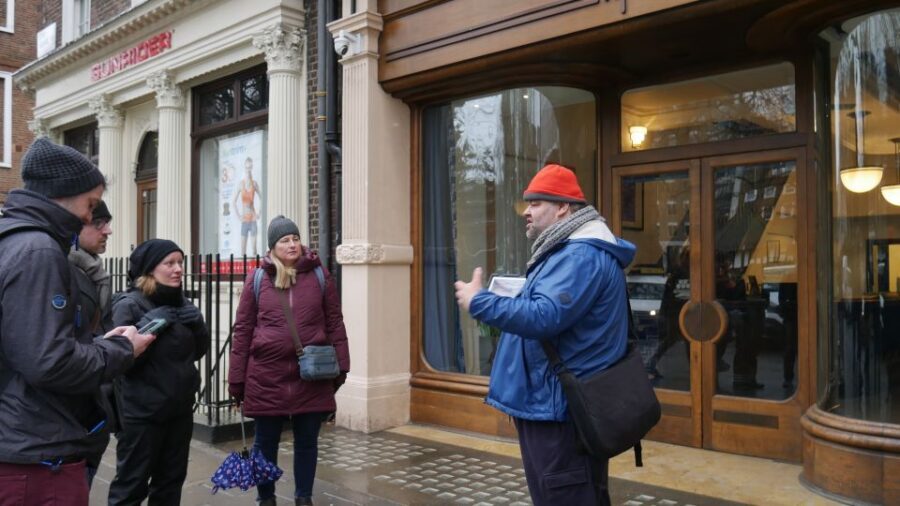
- Readers who like a guide with energy and clarity, based on the strong track record of guides such as Michael and Spencer, who are praised for humor and enthusiasm
If you need a fully accessible route, it’s not the best match since the tour is listed as not suitable for mobility impairments.
Should You Book This Beatles Soho and Mayfair Walk?
Book it if you want Beatles storytelling that stays attached to real London streets, including major performance and meeting moments, plus the industry-side explanation that many Beatles walks skip. It’s also a solid value at $22 per person for a 2-hour guided experience focused on concentrated locations around Soho and Mayfair.
Skip it only if you specifically want an Abbey Road Studios visit, since this tour does not include that stop. Also reconsider if long walking segments are a problem for you, since accessibility isn’t a match.
FAQ
Where is the meeting point for the London Beatles walking tour?
You meet outside Hard Rock Cafe at 225–229 Piccadilly in the Criterion Building, London W1J 9HR. The nearest Tube is Piccadilly Circus (Bakerloo and Piccadilly lines), and you leave the station by the exit for the statue of Eros.
How long is the tour?
The tour runs for 2 hours.
What’s included in the price?
The price includes a guided Beatles walking tour.
Does this tour include a visit to Abbey Road Studios?
No, a visit to Abbey Road Studios is not included.
What language is the tour guide speaking?
The live tour guide speaks English.
Where does the tour end?
The tour ends near Green Park Station.
Is the tour suitable for people with mobility impairments?
No. It is listed as not suitable for people with mobility impairments.
Can I cancel for a full refund?
Yes. There is free cancellation if you cancel up to 24 hours in advance for a full refund.