REVIEW · LONDON
Tower of London: After-Hours Tour with Ceremony of the Keys
Book on GetYourGuide →Operated by the tour guy · Bookable on GetYourGuide
Night turns the Tower into a stage. This after-hours walk lets you see the White Tower area and the key prison story spots after the public crowds have gone, guided by a real Yeoman Warder (Beefeater) who tells the Tower like a living job. I especially love the Ceremony of the Keys finale and how the guide ties each dark stop to the people who were actually caught in power, betrayal, and punishment.
One consideration: this is an exterior-grounds experience only. You will not get access to the Crown Jewels, and the walk is real, so wear comfortable shoes and plan for evening weather.
In This Review
- Key points to know before you go
- After-hours timing: what 105 minutes feels like at the Tower
- Starting at the Tower of London Shop: quick, clear meeting setup
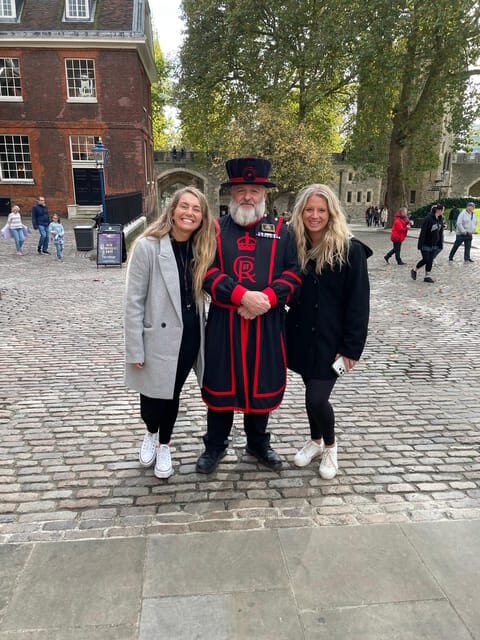
- A Beefeater guide makes it personal: military service meets storytelling
- Inner Ward and Outer Ward: learning the Tower’s layout as you pass through
- White Tower photo stop: the landmark you measure the rest against
- Traitor’s Gate and the prison narrative: outside access with real punch
- Chapel Royal of St. Peter ad Vincula: the quiet gravity of the outside view
- Ceremony of the Keys: why this 700-year ritual still hits
- Value check: what you’re paying for at $175 per person
- Who this tour suits (and who should plan another option)
- Should you book this after-hours Tower of London tour?
Key points to know before you go
- Real Yeoman Warder guide: you’re led by a Yeoman Warder who has long service ties to the Tower, so the tone feels authentic.
- Exclusive after-hours grounds time: the grounds tour is for your group while the Ceremony of the Keys is open to other ticket holders too.
- Traitor’s Gate and prison tales, outside: you get the big prison narrative without needing indoor access.
- Chapel Royal of St. Peter ad Vincula, from the outside: learn about a resting place for major figures including Anne Boleyn and Sir Thomas More.
- Ceremony of the Keys tradition continues nightly: a ritual with roots going back over 700 years, capped by the Chief Warder locking the Tower.
- Skip-the-line style convenience: you avoid the regular ticket-line flow, saving time for the walk and the ceremony.
After-hours timing: what 105 minutes feels like at the Tower
The Tower hits different at night. In the daytime you move fast through crowds and sound bites. After-hours, the walls feel closer, the stories slow down, and you notice how the space is built to control people.
You’re in the Tower’s exterior grounds for about 105 minutes, which is enough time to get the main landmarks in context without turning it into a marathon. The format matters here: you’re not just looking at buildings, you’re getting connected storytelling as you walk, with the fog-of-the-moment setting the mood.
This timing also changes your picture of the Tower. You’re seeing it when guards would be making rounds and gates would be getting secured. That makes the prison-focus details land harder, especially once the Ceremony of the Keys begins.
You can also read our reviews of more tours and experiences in London.



Starting at the Tower of London Shop: quick, clear meeting setup
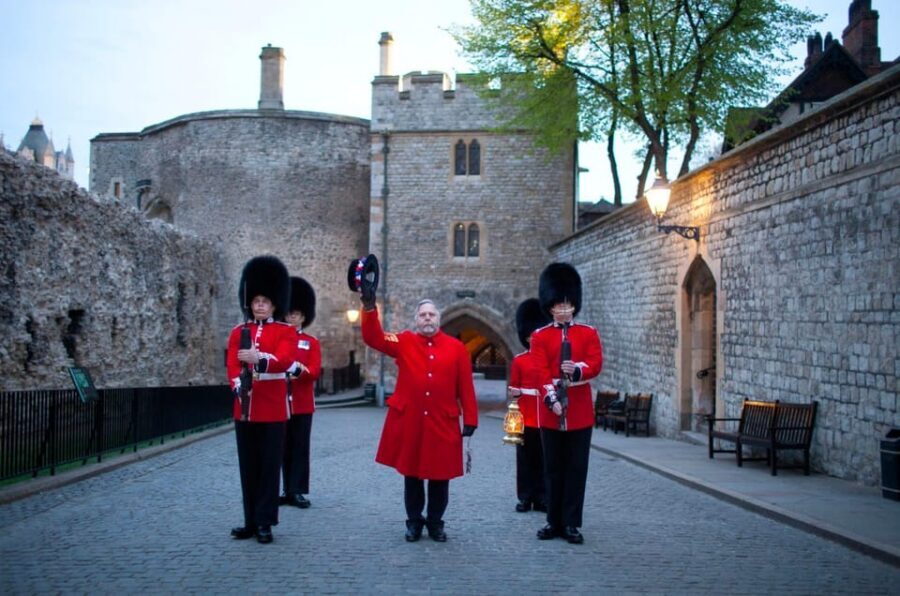
You’ll meet at the Tower of London Shop, and the advice is simple: arrive about 10 minutes early. The meeting staff wear red and hold a sign that says The Tour Guy, which helps you find the group without stress.
From there, you start moving right away. That matters because evening logistics are real. Plan to show up with good shoes, a light layer, and nothing you need to drag around.
Also, know what kind of access you’re buying. This tour is built around the Tower’s exterior grounds and the Ceremony of the Keys, not a full ticket that includes Crown Jewels access. If that’s on your must-do list, you’ll need a separate plan.
A Beefeater guide makes it personal: military service meets storytelling
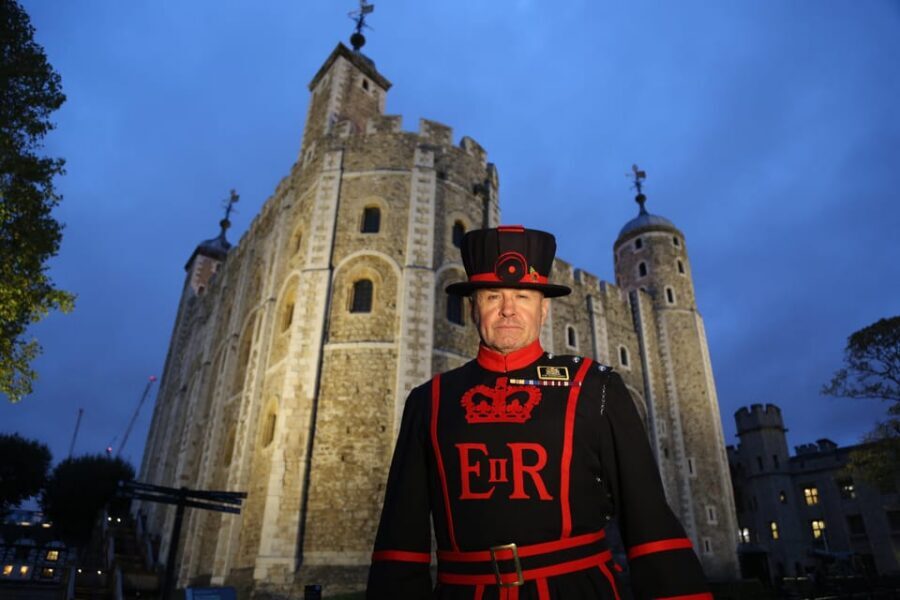
The biggest strength here is the guide. You’re led by a Beefeater, meaning a Yeoman Warder, and the voice you hear is the voice of someone who serves in the Tower’s tradition. The guides aren’t just repeating facts. They frame each location around power, fear, rank, and consequence.
In particular, guides like Barry can bring real passion to the telling, which you feel in how the story rhythm changes from stop to stop. Some guides also make a point of highlighting how long service ties them to this place. That connection shows up when they describe what it meant to be inside the system rather than watching it from outside.
You’ll also notice the guide’s focus on big prison themes. Betrayal, imprisonment, and executions are not random plot points. They’re tied directly to how the Tower became the feared machine people feared.
Inner Ward and Outer Ward: learning the Tower’s layout as you pass through
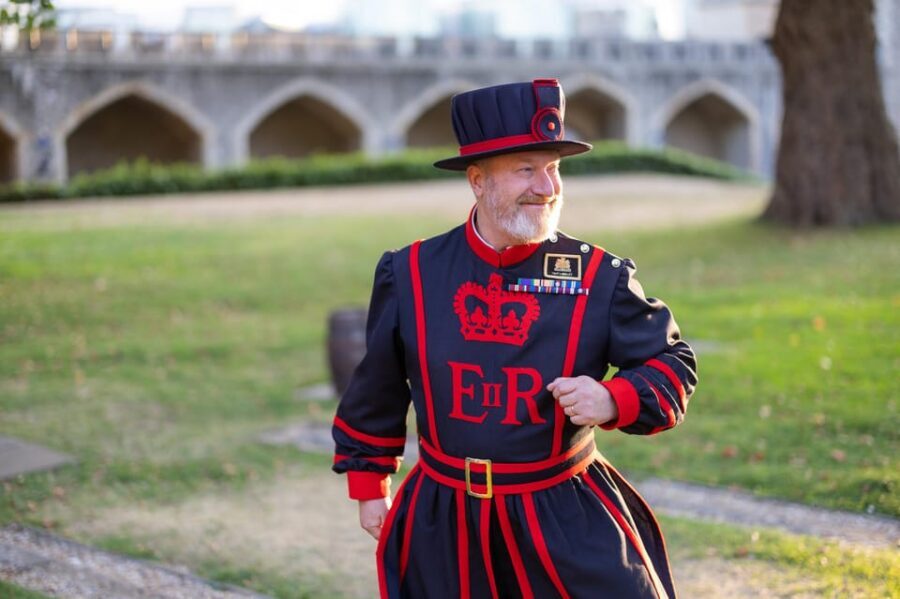
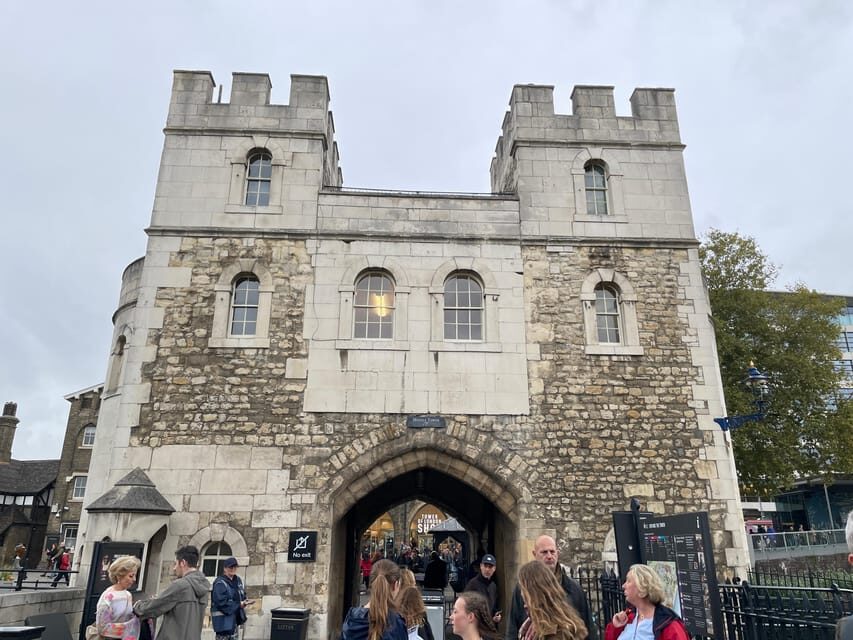
Right after the meeting, you’ll move through the early zones of the grounds, including stops at the inner ward and outer ward areas. You won’t get a slow museum-style standstill at every point. You’ll pass through, then hear what the space is doing.
That approach is useful. It helps you understand the Tower as a working whole: entrances, boundaries, and the way movement is controlled. Even when you’re just passing, your guide can steer your attention to what mattered historically, like how the Tower functioned as both a royal space and a prison-like force.
One of the more surprising angles you’ll hear is that the Tower wasn’t only a palace-adjacent symbol and prison. It also served as a menagerie for exotic animals, which adds a different kind of historical texture to the evening. It’s a reminder that this place has worn multiple roles.
You may find the outside-only format means you’re looking at the Tower through viewpoints and framing. But that can be a benefit: you see how the structures relate to each other without being rushed through indoor corridors.
White Tower photo stop: the landmark you measure the rest against
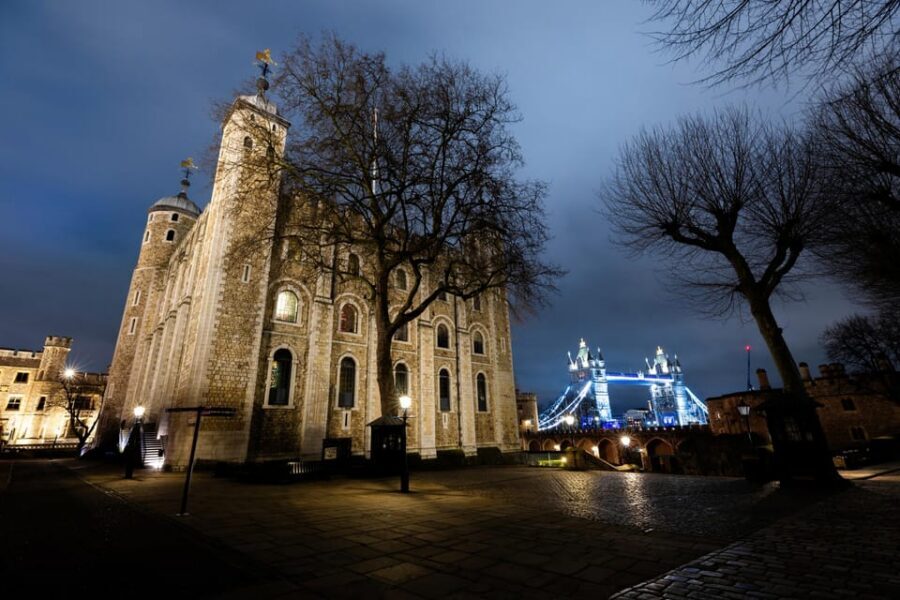
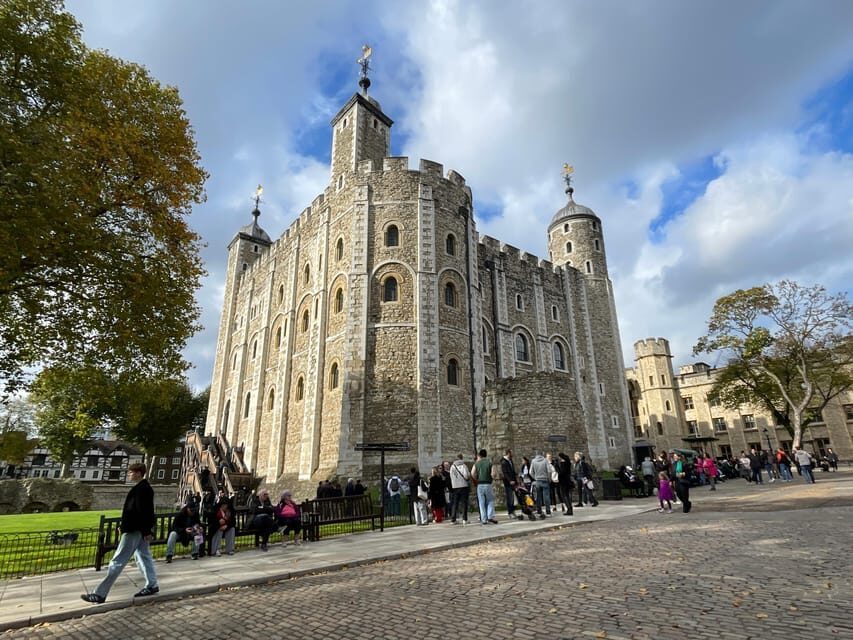
At some point on the walk, you’ll have a photo stop at the White Tower. This is one of those simple “anchor points” that helps you orient the evening in your head. Once you’ve seen it up close from outside, the other story stops make more sense.
A photo stop also gives you breathing room. Evening tours can feel like a steady line of information, so having a moment to stand still helps you absorb the previous stories. It’s also a practical time to check your camera settings, wipe your lens if it’s misty, and get the shot you came for.
Keep expectations realistic: you’re not going inside the buildings on this tour. But the White Tower still works as a strong visual reference, and your guide’s context gives it weight beyond the obvious silhouette.





Traitor’s Gate and the prison narrative: outside access with real punch
One of the core themes of the tour is the Tower’s prison identity. You’ll learn how it became one of history’s most feared prisons, with story points that focus on betrayal, power, and imprisonment. The evening setting helps here. When the light drops, the stories feel less like history trivia and more like lived danger.
A major stop in the narrative is the infamous Traitor’s Gate. You’ll stand before it area and hear how this was part of the Tower’s system for bringing people in and controlling outcomes once they arrived. Even without indoor access, this is the kind of location that makes the whole Tower concept click.
You’ll also hear about executions as part of the broader punishment story. The guide connects those moments to the Tower’s purpose, so it doesn’t feel like a set of unrelated grim facts. It’s more like one theme running through the spaces.
Tip: as you walk, don’t try to memorize every name on the fly. Instead, listen for the cause-and-effect pattern your guide explains—how power decisions led to confinement and how confinement changed people’s fates.
Chapel Royal of St. Peter ad Vincula: the quiet gravity of the outside view
The Chapel Royal of St. Peter ad Vincula is one of the most meaningful parts of the tour’s storyline. You’ll learn about it from outside, and that matters because it keeps the tone respectful. You’re not rushing in and out. You’re standing with the awareness that some very famous figures rest here.
Your guide focuses on who is connected to the chapel and what that means. The final resting place story includes Anne Boleyn, Catherine Howard, Lady Jane Grey, and Sir Thomas More. Those names aren’t just famous labels; they’re tied to the Tower’s bigger narrative of political danger and consequences.
Even from outside, this is where the emotional weight tends to land. It’s a contrast to the more dramatic prison storytelling earlier. The evening’s mood shifts from fear-and-action to remembrance and the lasting mark of power struggles.
If you like history that feels human—choices made under pressure, faith and family shaken by politics—this portion is a highlight. If you prefer only spectacle, it might feel quieter. But it’s still a strong anchor for understanding why the Tower endures in memory.
Ceremony of the Keys: why this 700-year ritual still hits
The highlight of the evening is the Ceremony of the Keys. This nightly tradition has continued for over 700 years, and you’ll be there to witness it as part of your after-hours experience.
The ritual is officially framed by the Chief Warder locking the Tower. That simple action carries a lot more meaning than it sounds like in writing. You’re watching the end of the day’s control shift back into place—gates secured, the Tower made safe for the night, and the Tower returned to its long-standing role as a guarded boundary.
One detail worth knowing: the Ceremony of the Keys itself is open to other visitors and groups who hold tickets for the event. That means your experience happens in the context of other people being there too. Your after-hours grounds tour can feel exclusive to your group, but the ceremony is a shared moment in the Tower’s calendar.
In practice, that often works well. It’s a lived tradition, not a staged performance just for one small group. You’ll likely feel the difference immediately once the ceremony begins—how the tone turns formal, and how the Tower stops being a set of stops and becomes a single ongoing ritual.
Value check: what you’re paying for at $175 per person
At $175 per person, this is not a bargain. So you should ask what you’re actually buying beyond the standard Tower ticket experience.
Here’s what you get that most people don’t:
- After-hours access to the Tower’s exterior grounds
- A Yeoman Warder guide telling the stories in an official, long-service voice
- Attendance at the Ceremony of the Keys
- Skip the ticket line convenience
- A guided walking format that focuses on the grounds and ceremony rather than Crown Jewels entry
That’s the value story. You’re paying for time after the public exits, plus a specific kind of guidance that makes the Tower’s prison identity and key sites feel connected.
There’s also a smart way to think about price comparisons. If you compare your total cost to what you might pay for the Ceremony of the Keys alone, you might see big differences. In at least one real-world case, two people paid €279 total even though the ceremony itself was priced at €5 per person on the official side. The takeaway for you is simple: your money here is not only the ceremony ticket. It’s the entire guided after-hours grounds experience that wraps around it.
Last value note: Crown Jewels access is not included. If Crown Jewels are your main mission, you’ll want a separate plan so you don’t feel like you missed a key item.
Who this tour suits (and who should plan another option)
This is a great fit if you:
- Like history that tells a story as you walk, not history that waits for you in a brochure
- Enjoy atmosphere at night and want the Tower when it feels guarded and tense
- Want the Ceremony of the Keys without having to piece together the rest of the night yourself
- Appreciate guided context for major sites tied to power, imprisonment, and executions
It may be a poor fit if you need wheelchair access or extra assistance for mobility impairments. The tour does not accommodate wheelchair users or guests with walking impairments that require special assistance. Strollers, luggage, and large bags are also not allowed, so travel light.
Should you book this after-hours Tower of London tour?
Book it if you want the Tower in a different mood and you care about guided storytelling that connects Traitor’s Gate, the Tower’s prison identity, and Chapel Royal of St. Peter ad Vincula into one night. The Ceremony of the Keys is a strong reason on its own, and the Beefeater-led walk is what makes the night feel more than just a single event.
Skip it and consider another Tower option if Crown Jewels access is a must for your day, or if you can’t comfortably handle an evening walking tour on the grounds. If you do book, plan for comfortable shoes, cool or wet weather clothing, and the reality that this is exterior-focused.
If you’re trying to choose one Tower experience to match the vibe you want, this is the one that leans into night, ritual, and the Tower’s darker chapters.