Aldwych feels like a secret time machine. This guided tour takes you into Aldwych station, a Piccadilly line terminus opened in 1907 and closed in 1994, so you can see a largely untouched underground world: the abandoned ticket hall, original lifts, platforms, tunnels, and interconnecting walkways. I love how this is real space you move through, not a slideshow of what used to be there.
You’ll also get the kind of details that make London feel specific and personal. I love the way the London Transport Museum team approach the storytelling, using their archives and collections to connect the station’s past to what’s visible today. And the guides are often praised by name—people rave about Colin and Cat, and also Emily, Jas, and Dom—especially for bringing the place to life with fast, friendly explanations and movie-spotting stops.
One thing to think about first: this tour involves a lot of walking, uneven ground, low lighting, and staircases with no elevator. It’s not suitable for claustrophobia or mobility impairments, and it’s not ideal if you dislike confined spaces.
In This Review
- Key things to know before you go
- Aldwych Station: why this 1907 time capsule matters
- Finding your meeting point outside Aldwych station on Surrey Street
- Inside the abandoned ticket hall and original architectural features
- The original lifts, platforms, and tunnels you’ll actually walk through
- Blitz-era refuge stories and how treasures were stored
- Movie and TV spotting: Luther: The Fallen Sun and more
- When guides bring Aldwych to life (and why it matters)
- Pace, walking, and why 75 minutes is the right length
- Who this tour suits best (and who should skip it)
- Price and value: is $60 worth 75 minutes underground?
- Practical tips: what to bring and what to leave at home
- Should you book the Aldwych Hidden Tube Station guided tour?
- FAQ
- How long is the Aldwych Hidden Tube Station guided tour?
- Where do I meet the guide for the Aldwych tour?
- Is the tour in English?
- What do I need to bring?
- What items are not allowed during the tour?
- Is the tour suitable for children?
- Is the tour step-free or accessible for mobility impairments?
- Can I cancel for a refund?
Key things to know before you go
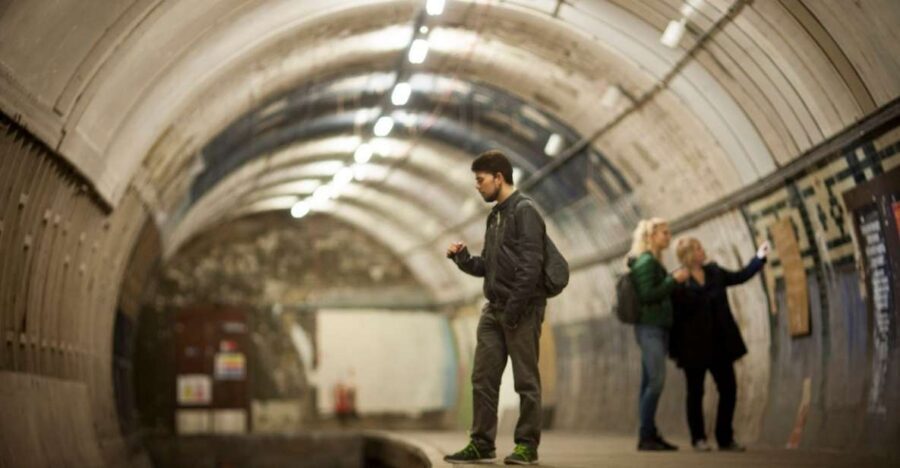
- A disused Piccadilly line terminus you walk through, including ticket hall areas and tunnels that most visitors never see
- Museum-grade explanations grounded in London Transport Museum records and artifacts
- Blitz-era survival stories, including accounts from Second World War shelterers and how items were stored during the war
- Movie and TV location spotting, with references ranging from Sherlock to Darkest Hour and Luther: The Fallen Sun
- 75 minutes that feel full, with plenty of stops and varied facts rather than one long lecture
Aldwych Station: why this 1907 time capsule matters
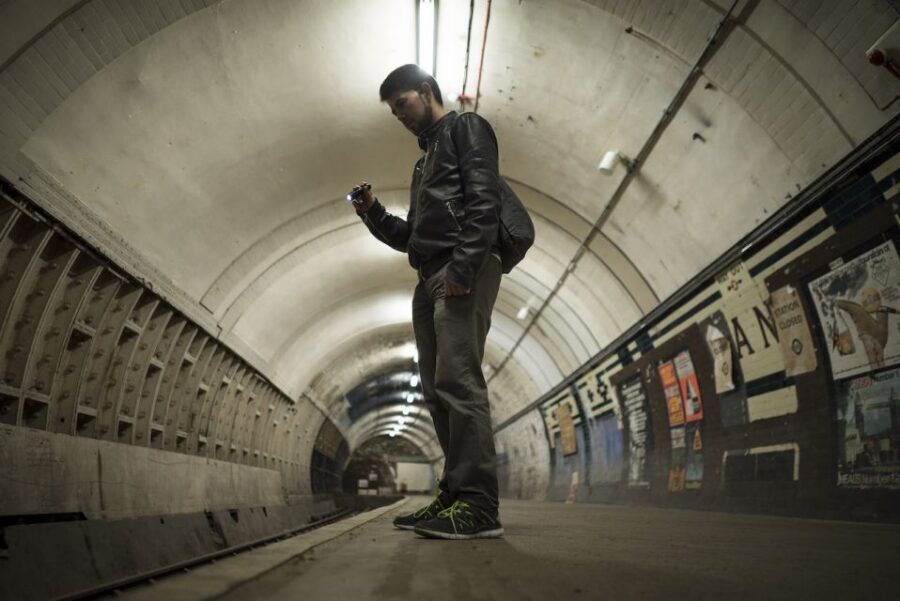
Aldwych is one of those places that makes you look at London differently. The station is no longer part of everyday commuting, but it still carries the physical feel of a working Tube: corridors, signage remnants, and the kind of underground geometry that makes you understand how people actually moved. You’ll be walking inside a station that spent decades serving passengers and then had a second life as a wartime refuge and storage point.
The timing is also a big part of the appeal. Aldwych operated for nearly a century, which means it wasn’t built and then abandoned quickly. That long lifespan shows up in the architecture and in the stories the guides connect to it—how the station functioned, how it changed during wartime, and how it later became a filming backdrop.
You can also read our reviews of more guided tours in London



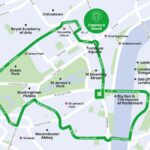
Finding your meeting point outside Aldwych station on Surrey Street
Start by getting the meeting point right. The tour meets your guide outside Aldwych station on Surrey Street, and that entrance is different from the one you’ll see facing the Strand. If you arrive by instinct, you might head to the wrong side before you realize it—so I’d give yourself an extra 5 to 10 minutes to orient.
This is also a good moment to check footwear and clothing plans. The tour runs through low-lit underground areas and involves staircases and uneven ground, so “London shoes” can quickly turn into a bad idea.
Inside the abandoned ticket hall and original architectural features
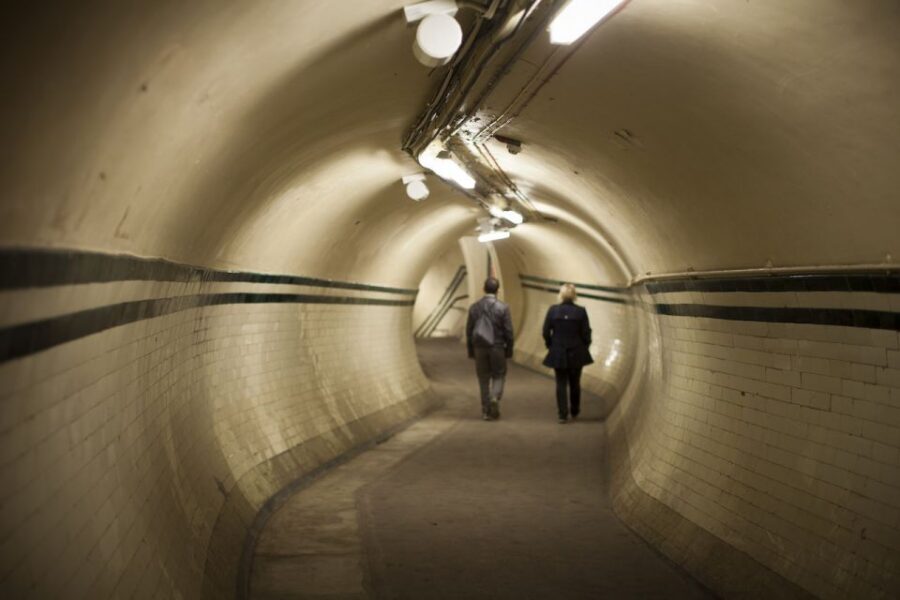
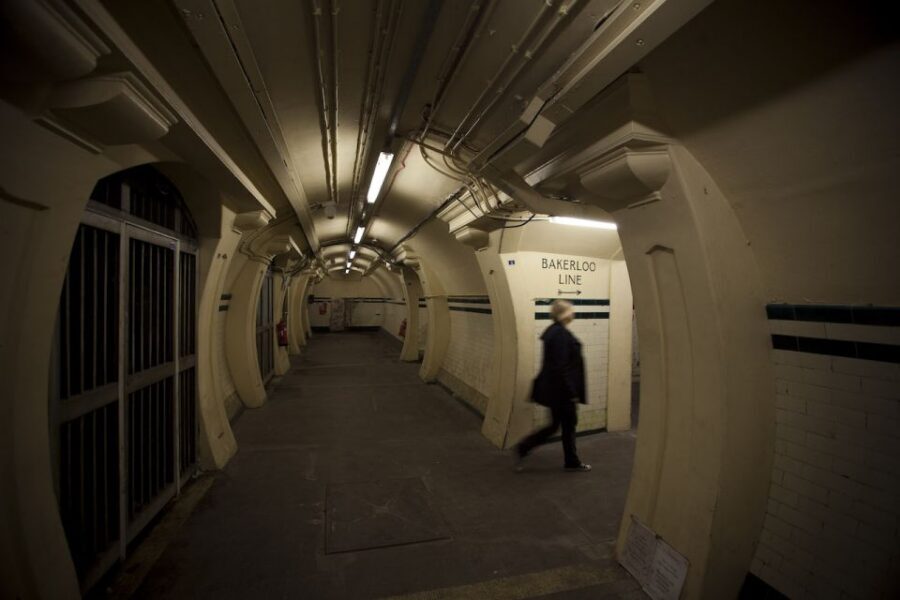
One of the biggest draws is the ticket hall. This is where you get that frozen-in-time feeling: an abandoned space with original architectural features that you can actually stand in. Instead of seeing a model or a reconstructed set, you’re viewing the station as it exists—quiet, disused, and full of visual cues about how the public interface once worked.
It helps that the guide connects what you’re seeing to how Aldwych operated. You’ll get a sense of how passengers would have entered, waited, and moved through the station, and you’ll notice the design choices that reflect the era. And because the tour is focused on real locations, the ticket hall isn’t just pretty to look at—it becomes a reference point for everything you’ll see later.
The original lifts, platforms, and tunnels you’ll actually walk through
After the ticket hall, the tour moves into the former terminus spaces of the Piccadilly line. This is where the station starts feeling more like a network of corridors than a single room. You’ll be guided through a mix of areas such as original lifts, abandoned platforms, tunnels, and interconnecting walkways, including sections that are seldom seen by the public.
A key practical point: underground movement isn’t always smooth. Expect uneven ground and lots of walking, plus staircases. There’s also low lighting in parts of the route. If you’re used to easy, step-free sightseeing, this one can feel more like an organized historical walk with real physical effort.
The payoff is that you don’t just see “the idea” of Aldwych. You see how spaces connect. That’s the difference between a tour that’s mostly about stories and one that gives you context through the layout.
Blitz-era refuge stories and how treasures were stored
Aldwych has a wartime chapter that’s hard to imagine until you’re underground looking at it. The tour explains how priceless treasures came to be stored here during the Blitz, and you’ll hear first-hand accounts from Second World War shelterers about what it was like to rely on spaces like these.
This part of the tour is compelling because it turns a disused station into a living survival system. You start thinking less like a modern visitor and more like someone trying to get through danger: where you’d wait, how you’d move, what you’d carry, and what it meant to have a place built (or adapted) for emergency needs. Even if you don’t know much about the Blitz going in, the guide’s framing helps the details land quickly.
I also like that it’s not only about dramatic moments. The stories help you understand the practical side of shelter life and the station’s role in protecting valuable items. That mix—human accounts plus specific use of the space—is what keeps this portion from feeling like generic World War II trivia.





Movie and TV spotting: Luther: The Fallen Sun and more
One of the fun twists is that Aldwych didn’t just serve history—it served film and TV. As you move through the station, you’ll hear about location links to productions such as Luther: The Fallen Sun, Sherlock, Darkest Hour, Atonement, and The ABC Murders (2018).
What makes this enjoyable is the way it changes your attention. Instead of treating the station as a sealed-off museum, you start scanning it like a set: corridor angles, platform shapes, and the way light falls in underground spaces. Even if you only recognize one or two titles, you’ll still benefit from the guide showing you why directors picked this kind of architecture.
Think of it as a two-layer visit: history in one layer, cinema in the other.
When guides bring Aldwych to life (and why it matters)
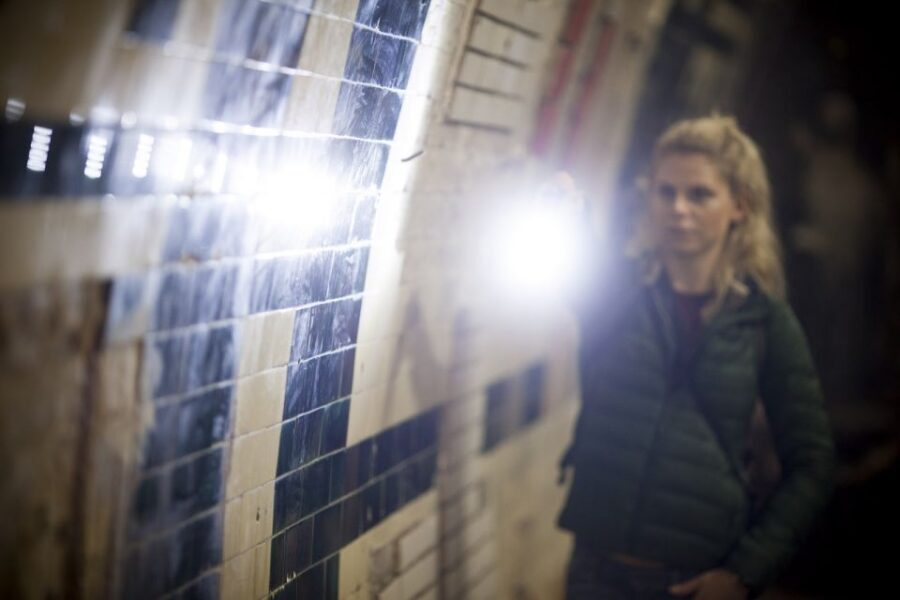
The tone of the guide can make or break any underground tour. Here, the guides get strong praise for being enthusiastic, friendly, and packed with varied information. People often highlight the way guides use energy without turning the tour into a show.
Names that come up in the most positive feedback include Colin and Cat, and also Emily, Jas, and Dom (with one reviewer calling out Dom and another Dom in the same group). Across those comments, the message is consistent: the tour feels guided by someone who enjoys the subject and can explain it clearly without losing the thread.
For you, that means you’re less likely to feel lost in a maze of tunnels. The station can look similar in segments, so a good guide acts like a map in human form—pointing out what’s important, then tying it back to the wider story.
Pace, walking, and why 75 minutes is the right length
The tour lasts 75 minutes, which is long enough to cover multiple areas but short enough that you won’t feel trapped underground for hours. That length also helps keep the experience varied: ticket hall first, then moving through the station network, then ending with the higher-interest stories like wartime shelter and filming connections.
Still, plan it like an active activity. It’s not a sit-down lecture. There are staircases, low lighting, and uneven ground, and the tour is not step free. If you’re comfortable with walking and you don’t mind tight spaces, you’ll likely enjoy the steady rhythm of moving from one “type of evidence” to the next—architecture, wartime use, and visual culture.
Who this tour suits best (and who should skip it)
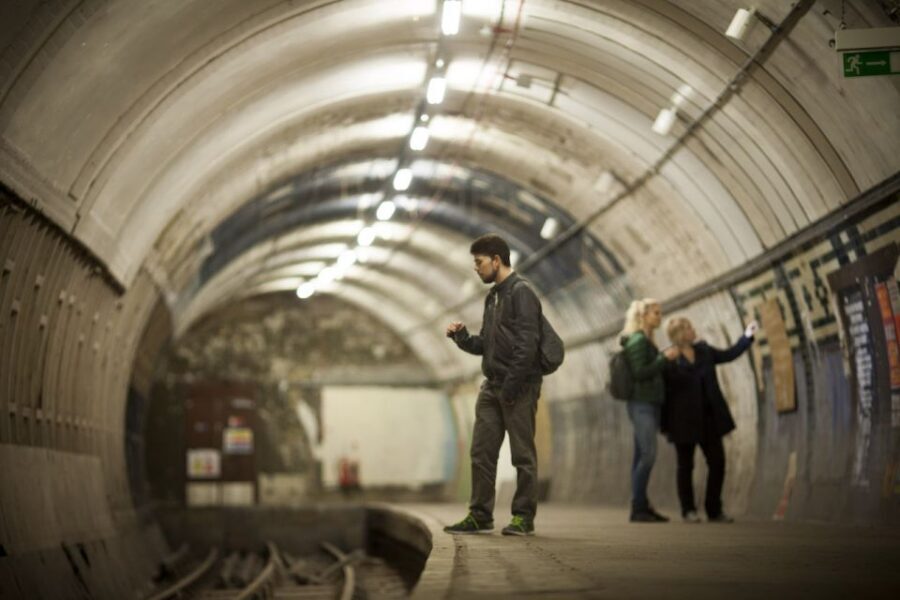
This one is best for people who like practical history—transport, architecture, and the human side of wartime survival. If you’re a London Underground fan, it’s a strong match because you get to see a station that’s part of the city’s transit story without being in use like it once was.
It’s also a good fit if you enjoy film-location details. That extra layer keeps your eyes moving even when you’re tired.
Now, the cautions matter:
- Not suitable for children under 10 years
- Not suitable for guests with claustrophobia
- Not suitable for people with mobility impairments
- Maximum of four children aged 10–15 per adult
- Not step free; no elevator
If any of those apply to you, I’d treat the written restrictions as a real warning, not a technicality. Underground surfaces and lighting can add stress fast.
Price and value: is $60 worth 75 minutes underground?
At $60 per person, this tour is priced like a specialist experience rather than a casual attraction. The value comes from three things you can’t copy easily on your own: access to disused areas, a guided historical interpretation, and the ability to connect visible details to specific narratives like Blitz storage and shelterer accounts.
If you’re the type who enjoys “walk-and-learn” tours where you stop frequently and see actual locations, this tends to feel fair. You’re paying for guided entry into a station that’s closed off to typical foot traffic, plus museum-level context that turns the space into a story you can follow.
If you’re mainly looking for a quick photo stop, the price may feel steep. This is not a casual wander; it’s structured and active.
Practical tips: what to bring and what to leave at home
Keep your prep simple and you’ll avoid most problems:
- Bring a passport or ID card
- Wear sturdy footwear and suitable clothing
- Avoid open-toed shoes
- Don’t bring food or drinks
- Don’t bring luggage or large bags—there’s no cloakroom
Because the route includes staircases and low lighting, your clothing should help you move comfortably and safely. If you need to carry things, travel light. Also consider the mental side: claustrophobia risk is specifically called out, so take that seriously.
Should you book the Aldwych Hidden Tube Station guided tour?
If you want an authentic, underground London experience that mixes transit history, wartime stories, and screen-spotting, I’d book this. It’s the kind of tour that rewards attention: architecture becomes story, and story becomes a reason to look closely at the next corridor.
I’d especially recommend it if you:
- love transport history and station design
- enjoy World War II accounts tied to real locations
- like movie and TV location details you can verify by sight
Skip it if you’re dealing with claustrophobia, mobility limitations, or discomfort with uneven ground and stairs. And if you prefer fully accessible routes, this is not the right match.
FAQ
How long is the Aldwych Hidden Tube Station guided tour?
The tour lasts 75 minutes.
Where do I meet the guide for the Aldwych tour?
Meet your guide outside the entrance of Aldwych station on Surrey Street. This entrance is different from the one facing the Strand.
Is the tour in English?
Yes, the tour is guided in English.
What do I need to bring?
Bring a passport or ID card.
What items are not allowed during the tour?
Open-toed shoes, food and drinks, and luggage or large bags are not allowed.
Is the tour suitable for children?
Children under 10 years are not suitable. There is also a maximum of four children aged 10–15 per adult.
Is the tour step-free or accessible for mobility impairments?
No. The tours are not step free, include walking up and down staircases, and there is no elevator. People with mobility impairments are not suitable.
Can I cancel for a refund?
Yes. You can cancel up to 24 hours in advance for a full refund.