REVIEW · BATH
Bath: Roman Baths Entry Ticket with Audio Guide
Book on GetYourGuide →Operated by Bath and North East Somerset Council · Bookable on GetYourGuide
Roman Baths in Bath feels oddly close to right-now life. You’re walking through a working museum built around a still-impressive hot-water complex from Roman Britain. What makes it click is that your ticket is self-paced and the audio guide points you to the good stuff without turning your visit into a scavenger hunt. I especially like the museum route because it gives context for what you see later in the baths, and I also like that you can sample the spa water when you’re done. One drawback to plan for: it can get crowded fast, so your timing matters.
The experience works because it combines objects, big set-pieces, and practical info. You’ll move from temple remains and sculpture fragments to the Great Bath, then out to the surrounding bath areas, all with audio in 12 languages (plus a handheld BSL video guide option). I like the touch of costumed Roman characters too, since they make the history feel less like a lecture. My one consideration: the audio device may be held in your hand, and a few people prefer headphones, especially if your shoulders get tired.
Overall, this is a strong value for a single day in Bath if you want an on-your-own route that still feels guided. Go early, follow the route labels, and you’ll get a lot of meaning from every stop.
In This Review
- Key things you’ll notice (and why they matter)
- Roman Baths in Bath: why the audio ticket feels like the right choice
- Museum highlights: Gorgon’s head and Sulis Minerva
- Stepping into the Great Bath: what it feels like to walk the Roman line
- East Baths, West Baths, and the Circular Bath: the details you’ll actually use
- Costumed Roman characters and how to get more from your time
- Spa water tasting: the 43-mineral moment that connects past to present
- Your audio guide: how to use it without getting frustrated
- Price value: what $30.31 gets you, and how to decide fast
- When to go and how long to plan for
- Who this Roman Baths ticket is best for
- Should you book the Bath Roman Baths audio ticket?
- FAQ
- How long is the Roman Baths entry valid?
- What’s included with the ticket?
- Is there a live guide included?
- What time should I arrive?
- What languages are available on the audio guide?
- Are pets, strollers, or large bags allowed?
- Is the Roman Baths wheelchair accessible?
- What is the spa water tasting?
- Is there an audio option for children?
Key things you’ll notice (and why they matter)
- 12-language audio guide plus BSL video option so you can match the pace and language that fits you
- Museum-first route that explains what you’re seeing before you reach the Great Bath
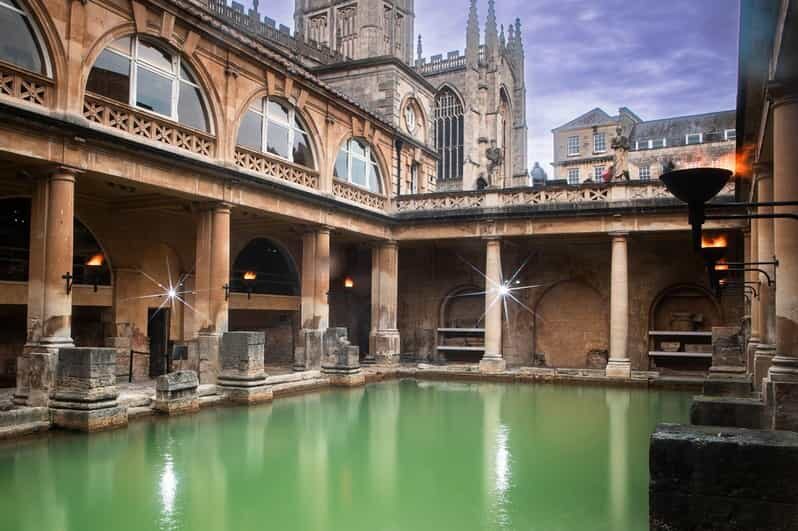
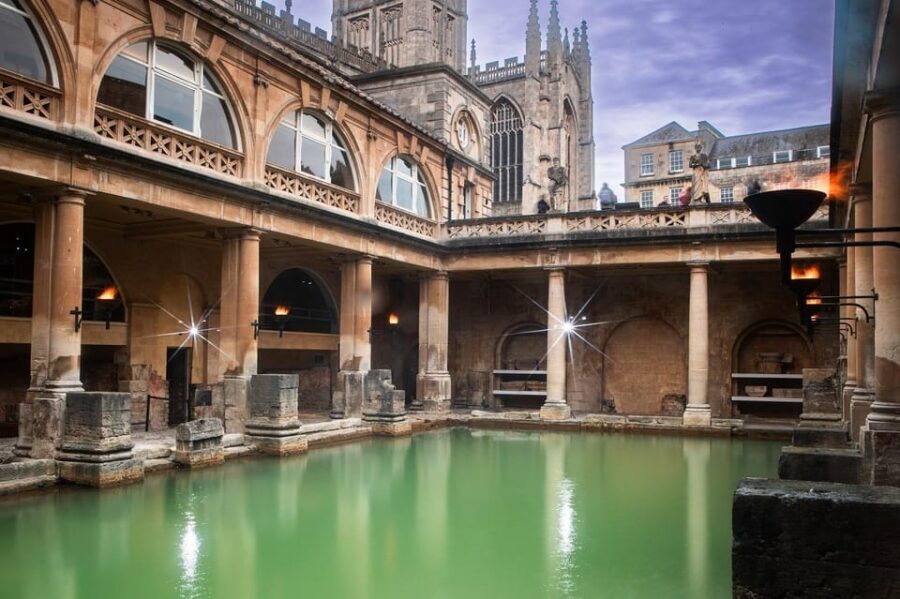
- Great Bath walkways and views over warm water with sky and Bath rooftops in frame
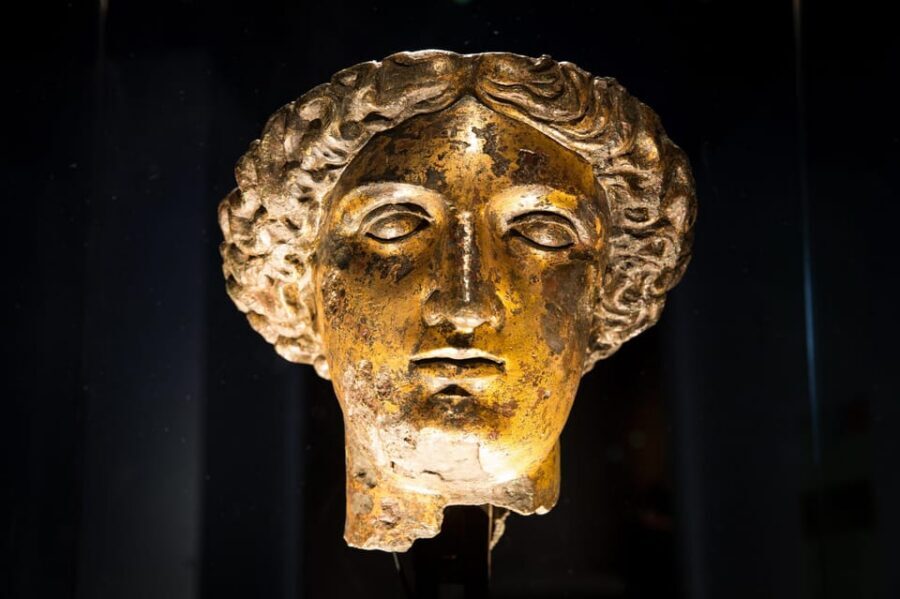
- Temple highlights like the Gorgon’s head and the gilt bronze head of Sulis Minerva
- A dedicated spa-water drinking tap with water tasting and its mineral reputation
- Small group limit of 6 which usually keeps the check-in and handover smoother
Roman Baths in Bath: why the audio ticket feels like the right choice
If you’ve ever wished a museum had fewer signs and more plain explanations, this Roman Baths setup is built for you. Your entry includes the ticket plus an audio guide in English and 11 other languages, and the route is designed so you can navigate from one labeled area to the next. That matters because the site is more spread out than the outside view suggests, and it’s easy to miss the best details if you’re wandering randomly.
The visit is also built around three different “learning modes.” First, you get artifacts and temple sculpture fragments in the museum area. Second, you see the bathing complex itself, including the Great Bath and the surrounding rooms. Third, you get a real, physical finale by sampling the spa water. That combination turns history into something you can actually connect with, instead of just reading labels while you drift off.
Another plus: it’s one valid day with flexible start times. You can pick a time that matches your energy level and crowd tolerance.
You can also read our reviews of more tours and experiences in Bath.



Museum highlights: Gorgon’s head and Sulis Minerva
Your ticket starts with the museum route, and that’s a smart move. The museum lays down the story of Roman Bath’s religious and daily-life angle before you step into hot water and stone basins.
Expect to spend real time with standout pieces like the Gorgon’s head, which once adorned the temple pediment and would have watched people approaching from a height of about 15 metres. The cool part is that the museum encourages you to think about what you’re seeing. Is it the mythical monster, the Gorgon? Or could it be a depiction of a water god? Even if you don’t settle on one answer, you come away with a better sense that Roman religious art wasn’t always meant to be literal in the modern sense.
Then comes one of the most impressive objects on-site: the gilt bronze head of the goddess Sulis Minerva. You’re looking at a piece of a cult statue style made with serious craftsmanship, and you can imagine it in its original temple setting. The way the museum presents it helps you understand why people treated this place as both sacred and practical.
As you move through rooms, you’ll also get a sense of Roman Britain through daily items and exhibits. The audio guide helps you connect those objects to real routines instead of treating them like separate trivia.
Quick practical tip: the museum route can be busy depending on your start time, and it’s easier to stay oriented when you listen in sequence rather than jumping tracks.
Stepping into the Great Bath: what it feels like to walk the Roman line

Once you leave the museum, you step out into the bathing complex and the centerpiece is the Great Bath. It’s the kind of location that instantly makes you look up and take in the shape of the space, not just the water.
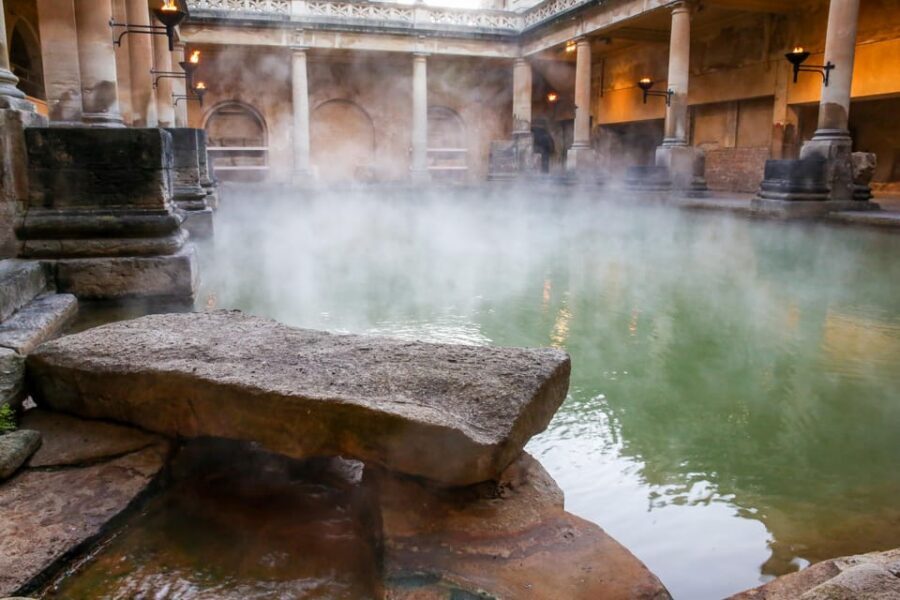
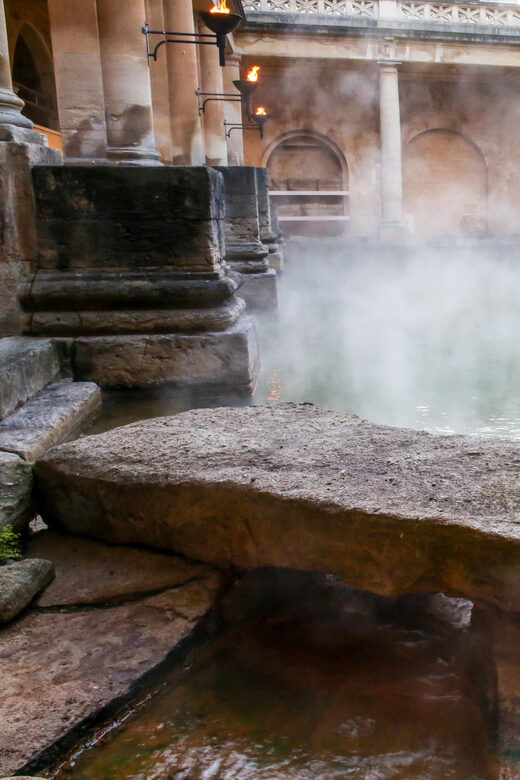
A stone walkway surrounds the Great Bath. From there, you can see rooflines and the sky above, which makes the whole thing feel like an outdoor stop even though you’re in a historic building. On colder mornings, steam can rise from the warm water, and the effect is dramatic in a quiet, natural way. Even if you don’t get the steam, the scale still lands.
Here’s why I think this stop is so effective: it’s not just a photo spot. As you walk the walkway, you’re tracing the same general pattern of movement that Roman visitors and devotees would have navigated. The audio guide points out what to notice, so you’re not stuck guessing why a specific angle matters.
If you like to control your time, this is a great area to slow down. Find your best viewpoint, listen to the matching audio segment, then walk on. The layout makes it easy to pace yourself.
East Baths, West Baths, and the Circular Bath: the details you’ll actually use
After the Great Bath, the rest of the bathing complex is where the visit turns from one big moment into a sequence of smaller revelations. The East Baths include heated rooms and massage facilities, plus an ancient sauna-like space called a laconicum. If you’ve read about Roman bathing, this is the part that turns theory into physical experience.
Next you’ll find the West Baths with plunge pools. This is a good place to notice how the Romans staged different temperatures and uses in one connected system. It helps you understand bathing as more than soaking. It was routine, ritual, and body care, all tied together.
Then there’s the Circular Bath, which rounds out the circuit. It doesn’t feel like filler. It’s another piece of the “how this place worked” puzzle, letting you see variety in the water spaces rather than one uniform basin.
The audio guide helps you make sense of the route. You’ll also see audio support through on-site visuals, including projected video content in rooms, which can help if you’re learning better with a visual cue than with spoken narration.
One thing to keep in mind: this is a self-guided site with multiple areas. If you rush, you’ll miss the connections. If you take your time, you’ll leave feeling like you understand the logic of the complex.
Costumed Roman characters and how to get more from your time
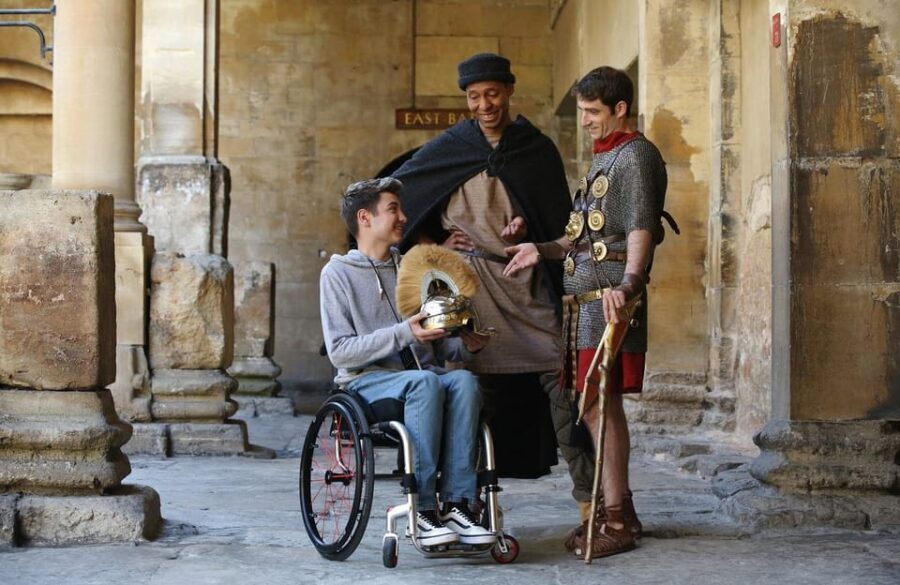
A small but memorable feature is the chance to meet a costumed Roman character. If you see one, take the chance to ask questions. These characters are set up to answer questions about life in Roman Britain and can pose for a picture.
This is not required to enjoy the Roman Baths, but it can add a fun layer, especially if you’re visiting with kids or you just like your history a little more human. It also gives you permission to interact rather than just observe.
Pair this with your audio guide. Let the audio explain the site, then use the character moment for quick follow-ups you genuinely care about, like what daily life might have looked like or what bathing might have meant socially.
You can also read our reviews of more guided tours in Bath



Spa water tasting: the 43-mineral moment that connects past to present
When you finish walking the route, don’t skip the finale: the spa water tasting from the dedicated drinking tap. The water is described as containing 43 minerals, and that mineral-rich reputation is part of why visitors have been coming to Bath for hundreds of years.
Taste it for yourself. Even if you’re not chasing a health claim, it’s a direct link to the idea of this place being both sacred and restorative. You’ve spent time learning about temple worship and bathing methods; sampling the water gives you a physical endpoint that makes the whole visit feel complete.
Also, plan to give the tasting area a few minutes of downtime. After looking at stone, water, and artifacts for a while, it helps to reset your eyes and your pace.
Your audio guide: how to use it without getting frustrated

This experience is built around an audio guide that’s available in 12 languages, including options like Dutch, French, German, Italian, Japanese, Chinese, Korean, Polish, Russian, Portuguese, and Spanish. There’s also a handheld BSL video guide. That’s a lot of coverage, and it matters because the Roman Baths story has multiple layers, so language comfort makes a difference.
In practical terms, the wayfinding helps. The audio points are labeled, and there are directional cues so you don’t feel lost in the route. Multiple people also liked the fact that audio segments reduce the need to read every board on the spot, which can make the experience more comfortable.
Still, a quick reality check: the audio device is handheld, and one concern came up about shoulder fatigue for some visitors. If you’re in the group that likes to keep your hands free, you might wish you had headphones. The good news is that you can still pause and pace your listening to avoid long stretches of holding the device.
Also, if you’re visiting with kids, there’s a children’s version of the audio tour. Listening to both the adult and child tracks can add extra detail and keep the pace lively.
Price value: what $30.31 gets you, and how to decide fast

At about $30.31 per person, you’re paying for a full-day entry that includes the ticket, the audio guide in your selected language (or BSL video guide option), and spa water tasting. There’s no separate guided tour included, and there’s no adult or children’s guide book bundled with this specific ticket.
So what’s the value?
- You’re getting a complete route (museum + bathing complex + tasting), not just one viewing area.
- You’re getting interpretation built in through the audio guide, which is a big part of getting real meaning from the exhibits.
- You’re not being rushed by a group guide, since it’s designed for your pace.
If you hate self-guided experiences because you want a person to lead every step, this might feel slightly more DIY than you prefer. But if you like control over your time, this ticket is a strong deal.
One more value point: it’s rated highly for a reason, and the audio guide tends to be the difference between seeing a famous site and actually understanding it.
When to go and how long to plan for

The Roman Baths are a one-day ticket with start times. It also helps to know timing rules: last entry is 1 hour before closing. That means if you plan to arrive late, you could cut off parts of the route.
Crowds matter too. The museum can get busy quickly, and an early start is often the easiest way to move through the space without feeling boxed in. Even if you can’t go super early, aim to beat the worst rush.
How long should you plan? You can spend enough time to enjoy all areas comfortably because the audio helps you slow down at the right spots. If you move fast, you can do it quicker. If you listen carefully and pause for photos and the water tasting, plan for a longer visit.
Who this Roman Baths ticket is best for
This works especially well if:
- you want a self-guided museum with audio interpretation
- you travel with kids and like the idea of a children’s audio version
- you enjoy seeing famous landmarks but also want to understand how they functioned
- you care about wheelchair-friendly access and want on-site elevators (the site is described as 90% accessible, with elevators available)
It may be less ideal if:
- you want a live guided explanation from a person throughout
- you dislike holding handheld audio devices for long stretches
- you’re bringing items that aren’t allowed (see FAQ)
Should you book the Bath Roman Baths audio ticket?
Yes, if your goal is to see the Roman Baths and actually understand them without speed-running the route. The built-in audio guide does a lot of the heavy lifting, and the combination of museum artifacts, the Great Bath walkways, and the spa water tasting gives you a complete experience in one day. If you’re the type who enjoys structure you can control, this ticket fits well.
If you hate self-guided visits and you only relax when someone is leading, consider pairing this with a guided option in Bath. But for most people, an audio-led route through this site is one of the easiest ways to get a satisfying, high-value day.
FAQ
How long is the Roman Baths entry valid?
It’s valid for 1 day. You should check available starting times for when you can redeem your voucher.
What’s included with the ticket?
Your ticket includes entry, an audio guide in 12 languages (or a handheld BSL video guide), and spa water tasting.
Is there a live guide included?
No. This experience includes the self-guided entry with audio, not a guided tour.
What time should I arrive?
Last entry is 1 hour before closing time, so arrive early enough to start the route comfortably.
What languages are available on the audio guide?
The audio guide is available in English plus Dutch, French, German, Italian, Japanese, Chinese, Korean, Polish, Russian, Portuguese, and Spanish.
Are pets, strollers, or large bags allowed?
No. Pets, baby strollers, and luggage or large bags are not allowed.
Is the Roman Baths wheelchair accessible?
The site is described as 90% accessible for wheelchair users, and elevators are available on site to help you access different levels.
What is the spa water tasting?
You can sample the mineral-rich spa water from a dedicated drinking tap at the end of your visit. It’s described as containing 43 minerals.
Is there an audio option for children?
Yes. A children’s version of the audio tour is available, and it can be fun to listen to alongside the adult audio.