REVIEW · BATH
Bath: Guided City Walking Tour with Entry To The Roman Baths
Book on GetYourGuide →Operated by Bath Walking Tours Limited · Bookable on GetYourGuide
Bath has a special way of layering centuries. This guided city walk explains how Rome’s influence helped shape the Bath you see today, then caps it with entry to the Roman Baths. I like the stop-to-stop storytelling style, especially when guides such as Jess, Owen, Victoria, and Phil are leading the group—clear, funny, and built around answering questions.
I also like how the route hits Bath’s most recognizable icons in a short time: Royal Crescent, The Circus, Pulteney Bridge, and Bath Abbey, with a Jane Austen-style walk and Bridgerton filming context worked in along the way. The one drawback is simple: it runs in all weather and you’ll do a proper walking circuit, so plan for rain and bring truly comfortable shoes.
In This Review
- Key highlights at a glance
- Why Bath feels like Rome’s long shadow
- Starting at Bath Abbey: where the tour keeps you on track
- Pump Room first: setting the mood before the big Georgian sights
- Royal Crescent and The Circus: seeing Georgian ambition in 2 hours
- Queen Square and Pulteney Bridge: the city’s “how it works” moments
- Bath Abbey: where architecture turns into story
- Jane Austen on your feet: stepping into the literary Bath
- Ending at the Roman Baths: how the timing works and why it’s smart
- Aquae Sulis: what you’ll take away from the ancient complex
- Weather, shoes, and hills: the practical side you should plan for
- Value check: is $93 worth it for 2 hours plus Roman Baths entry?
- Who this tour suits best (and who should rethink it)
- Should you book this Bath walking tour?
- FAQ
- How long is the guided portion of the tour?
- Where is the meeting point?
- Is entry to the Roman Baths included?
- When can I enter the Roman Baths after the walking tour?
- What should I bring, and what can’t I bring?
- Does the tour run in bad weather?
Key highlights at a glance
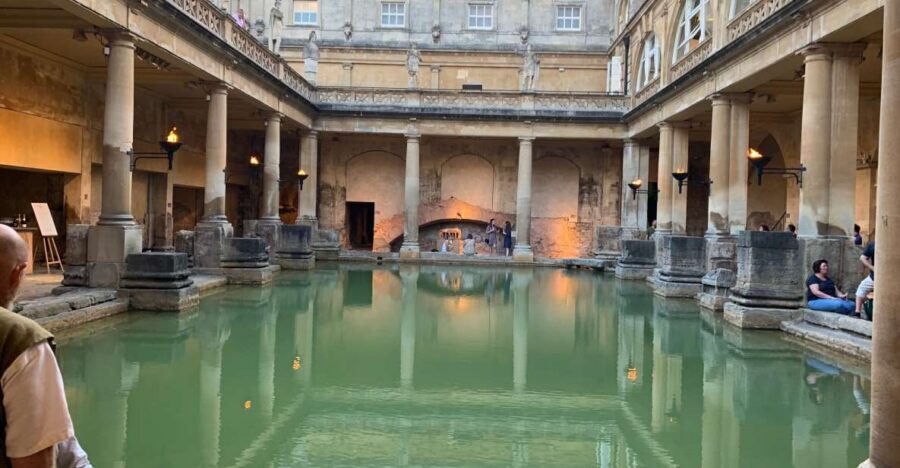
- Skip-the-line express security check before your Roman Baths visit
- Royal Crescent to The Circus: see Bath’s Georgian “designed on purpose” vibe
- Jane Austen footsteps plus Bridgerton filming talk for modern pop-culture context
- Bath Abbey, The Pump Room, Queen Square, and Pulteney Bridge in one efficient sweep
- Guides who answer questions and keep the pace friendly (even with strollers in the mix)
- Roman Baths entry included right after the walking portion, timed to your tour slot
Why Bath feels like Rome’s long shadow

Bath doesn’t just have history—it has overlapping history. The Roman Baths sit at the end of your walk, but the guide won’t treat them like a random finale. You’ll spend the morning (or late afternoon) hearing how the Roman presence and Bath’s mineral-spring reputation shaped the city’s later identity.
That’s the real value here: you get the “why” behind what you see. When you stand near the elegant Georgian buildings and bridges, it’s easier to understand that Bath wasn’t built in a vacuum. I like that the tour connects the ancient town of Aquae Sulis to the later places that made Bath famous—so the Roman Baths feel less like a separate attraction and more like the root system of the city.
You can also read our reviews of more walking tours in Bath



Starting at Bath Abbey: where the tour keeps you on track

Your tour begins at Abbey Churchyard, in front of Bath Abbey, right by the Roman Baths entrance. Look for the provider’s flag and board. Arriving a few minutes early helps because it can be tricky to spot where meeting points funnel together in a busy landmark area.
Once everyone’s gathered, the guide sets expectations fast: you’ll visit major Bath sights first, then transition into the city walks tied to Jane Austen, and finally return to the Roman Baths near the end. This matters because Bath’s center is compact, but it still moves uphill and around corners—having that roadmap prevents the usual tourist scramble where you lose time figuring out what to see next.
Pump Room first: setting the mood before the big Georgian sights
The Pump Room is a smart opening stop. It’s a clue that Bath wasn’t only about temples and springs; it also became a place for public life and social ritual. Starting here helps you notice the pattern: Bath keeps reinventing itself, using the same natural draw—its waters—but building different meanings around it.
From there, you head into some of Bath’s most iconic architecture. If you’ve ever looked at photos of the city and thought, That’s too pretty to be real, this part is your correction. You’ll see how the city’s design and layout make its famous landmarks feel theatrical, with Royal Crescent and The Circus creating that classic Bath rhythm of curves and symmetry.
Royal Crescent and The Circus: seeing Georgian ambition in 2 hours
Royal Crescent is the kind of place that looks best when you understand what you’re looking at. On this tour, it’s not just a photo stop. The guide ties the building’s presence to Bath’s rise and the city’s self-image. You’ll also get context that makes these spaces feel less like movie sets and more like a statement of status and confidence.
Then comes The Circus, Bath’s unusual, round centerpiece. This stop is where the city’s design starts to feel playful. The guide’s commentary helps you connect the curved geometry to Bath’s reputation as a fashionable destination—an important idea because Bath’s fame wasn’t only about health. It was also about who got to be seen.
One practical note: these are stone-and-street locations. The tour is short, but you’ll still be walking and standing. Bring shoes with decent grip, especially if you hit wet pavement.
Queen Square and Pulteney Bridge: the city’s “how it works” moments
If you only know Bath from postcards, you might miss the clever way different streets and structures frame the city. Queen Square gives you that broader view of how Bath plans spaces, while Pulteney Bridge is the standout that makes you slow down.
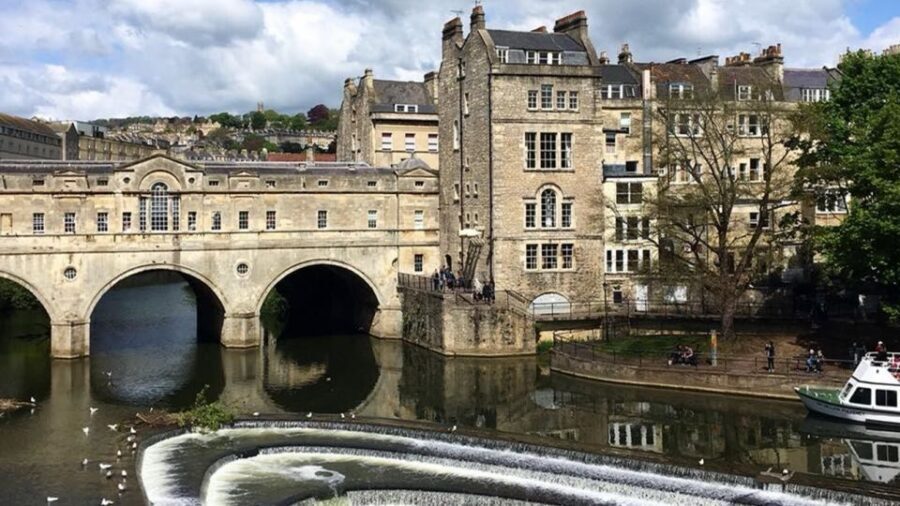
Pulteney Bridge is a perfect example of why a guided walk is worth it. The guide doesn’t just point at the bridge and move on. You’ll get the human story behind why it matters and how it fits into Bath’s identity. It also helps when you later picture Bath as a town where commerce, leisure, and people moving through streets were all part of the same system.
You can also read our reviews of more guided tours in Bath




Bath Abbey: where architecture turns into story
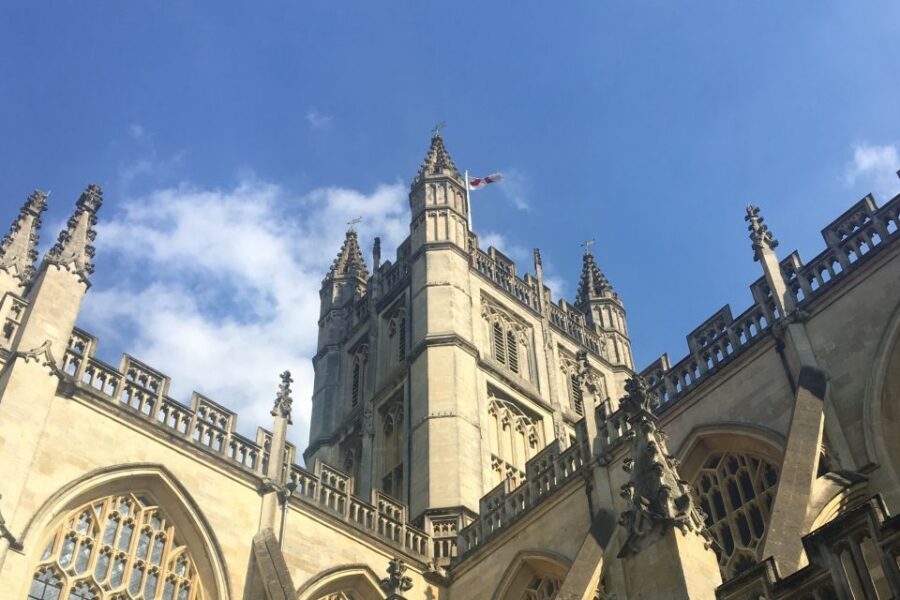
Bath Abbey is both central and powerful, which can make it tempting to rush past. Your guide keeps it from becoming just a big building by explaining how Bath’s religious and civic life shaped the city’s later feel.
This is also an emotional anchor for the walk. Even if you’re not the type to care about details like stonework and layout, you’ll likely appreciate how the guide frames the Abbey as a meeting point between eras. In Bath, that’s a theme: the city holds layers, and Bath Abbey is one of the clearest places to feel that stacking up.
Jane Austen on your feet: stepping into the literary Bath
After the major architecture stops, the tour shifts gears into Jane Austen. You’ll walk in the footsteps tied to Austen-era Bath and hear how the city appears in that time period. This part works especially well if you like literature because you’re not just hearing facts—you’re seeing where daily life would have felt real.
Then the guide connects Bath to a very modern audience by discussing where Bridgerton is filmed. Even if you’re not a hardcore fan, this helps you translate the city into something you recognize from TV. It also gives you a reason to look up from your footing and notice building shapes and street sightlines that the show’s camera loves.
Ending at the Roman Baths: how the timing works and why it’s smart
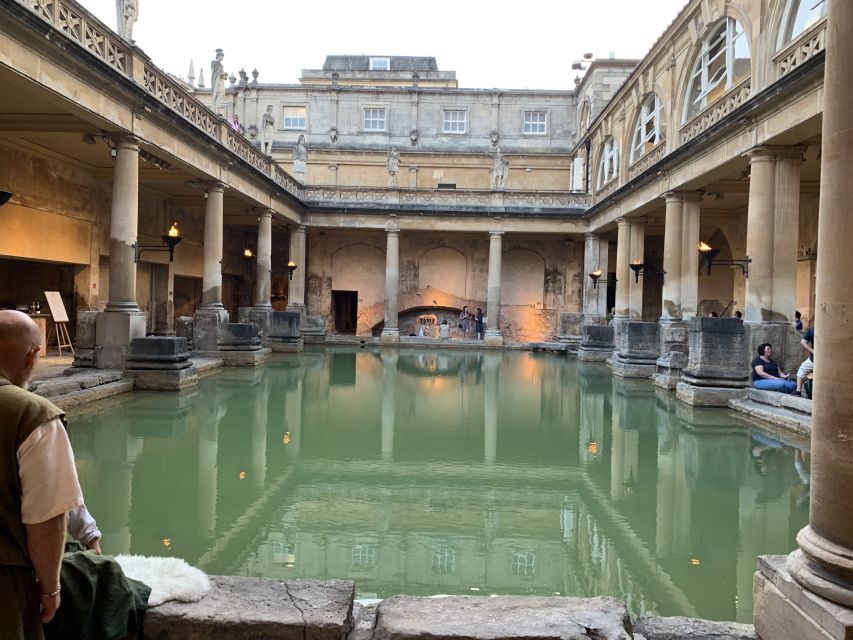
The final act is the Roman Baths, and the ticket is included. There’s an important rhythm here: the walking tour runs about 2 hours, and your Roman Baths entry comes after. If your walking slot is the 11:30 AM tour, entry is about 2:30 PM. If you book the 2:30 PM tour, your Roman Baths entry is about 4:30 PM.
That timing isn’t random. It gives the day a natural flow: you get city context first, then you step into the ancient world with your mind already primed for how Aquae Sulis fits into Bath’s story.
You’ll also benefit from an express security check, which is a real time-saver at a major attraction. In practice, it helps you arrive ready to see rather than stuck waiting.
Aquae Sulis: what you’ll take away from the ancient complex
You’ll leave the Roman Baths with a stronger sense of how society worked in the Roman town of Aquae Sulis. The guide’s walk prepares you to think about Bath as a living place rather than a single ruined site.
I like that the tour doesn’t treat the Roman Baths as a final “box-check.” Instead, it frames the complexity of Roman social life so you’re not just looking at old stone and wondering why people cared. Once that idea lands, the Roman Baths feel less like a museum and more like a window into daily routines—how a city organized itself around water, health, and public life.
Weather, shoes, and hills: the practical side you should plan for
This tour operates in all weather conditions, so you’re going to think about rain gear. At minimum, wear weather-appropriate clothing and bring comfortable shoes. If the ground is wet, you’ll be glad you packed footwear with grip.
Also, this is a walking tour, not a sit-down lecture. Even groups that include baby buggies manage fine, but expect uphill sections and corners typical of Bath’s center.
Finally, no luggage or large bags are allowed. If you’re traveling with more than a daypack, plan to store it before you go. It’s one of those details that can spoil your morning if you discover it only when you’re already at the meeting point.
Value check: is $93 worth it for 2 hours plus Roman Baths entry?
At $93 per person, you’re paying for three key things at once: a guided walking tour, a live English-speaking guide, and an included ticket to the Roman Baths. The math gets more favorable because the Roman Baths are Bath’s main-ticket attraction, and you’re not paying separately for timed access.
You’re also getting route efficiency. In a short window, you cover major sights like Royal Crescent, The Circus, Queen Square, Pulteney Bridge, and Bath Abbey, plus Jane Austen and Bridgerton context. If you were to do this on your own, you’d spend time figuring out what connects to what—and time is the one thing you can’t get back in Bath.
In my view, this is strongest for first-timers who want an organized introduction and then freedom afterward. A lot of people like to use the Roman Baths time to go at their own pace too. If you like slowing down, you can easily spend a few hours there, not just an hour and out.
Who this tour suits best (and who should rethink it)
Book this if:
- you want a guided overview of Bath’s top sights without piecing it together yourself
- you like architecture and want stories that connect buildings to how Bath developed
- you’re into Jane Austen and want the walk to feel tied to place
- you’re a Bridgerton fan and want filming context that makes the city feel current
Consider skipping or choosing a different style if:
- you hate walking in rain or don’t have good shoes
- you’re traveling with luggage or bulky items you don’t want to manage on foot
Should you book this Bath walking tour?
I think it’s a strong pick if you want your day to feel planned, not random. The mix is what makes it work: Georgian Bath landmarks first, Austen and Bridgerton context next, then Roman Baths entry that feels earned rather than tacked on.
If you’re the type who likes to ask questions and get clear answers, this is also a good bet. Guides such as Jess, Owen, Victoria, Julia, Phil, Fred, and Tony show up in customer feedback for a reason: they keep the tour moving, speak clearly, and make the city feel understandable fast.
FAQ
How long is the guided portion of the tour?
The walking tour lasts approximately 2 hours.
Where is the meeting point?
Meet in Abbey Churchyard, in front of Bath Abbey and by the entrance to the Roman Baths. Look for the flag and board.
Is entry to the Roman Baths included?
Yes. Your ticket to visit the Roman Baths is included with the tour.
When can I enter the Roman Baths after the walking tour?
If you take the 11:30 AM tour, entry is approximately 2:30 PM. If you take the 2:30 PM tour, entry is approximately 4:30 PM.
What should I bring, and what can’t I bring?
Bring comfortable shoes and weather-appropriate clothing. Luggage or large bags are not allowed.
Does the tour run in bad weather?
Yes. The tour operates in all weather conditions, so dress accordingly.
If you want, tell me what month you’re going and whether you’re mainly here for architecture, Austen, or the Roman Baths—I’ll suggest how to time the rest of your day around this tour.