REVIEW · BATH
Bath: The Bad of Bath Walking Tour
Book on GetYourGuide →Operated by The Bad of Bath · Bookable on GetYourGuide
Bath has a darker heartbeat. This 2-hour guided walk turns the usual postcard Bath tour on its head, pairing world-famous sights like the Royal Crescent with stories of thieves, gamblers, and Georgian scandals behind the glow.
I love how the guide keeps things moving at an easy pace while staying interactive, so the group isn’t just listening. I also love that you still see the big highlights everyone comes for, including The Circus and Pulteney Bridge, but with the people-and-practice details that normally get left out.
One possible drawback: this is built around the darker side of Bath. If you want only light, tidy Regency chatter, the tone may feel a bit cheeky and real.
In This Review
- Key things I’d plan around
- Bath Abbey to the scams, secrets, and Georgian excess
- Where the route shines: Royal Crescent, The Circus, and Pulteney Bridge
- Royal Crescent: wealth on the surface, trouble underneath
- The Circus: architecture as a stage for Georgian life
- Pulteney Bridge: a postcard view with a darker backstory
- Bath Abbey: the starting point that keeps the stories grounded
- Roman Baths and the contrast trick: why the city’s layers matter
- The Georgian “bad” side: crimes, corruption, thieves, and gamblers
- Simon’s style: calm pacing, clear explanations, and humour that keeps you with him
- How much walking is it, really?
- Price and value: what $29 buys you in Bath
- Who this tour fits best (and who might prefer something else)
- Should you book the Bad of Bath Walking Tour?
- FAQ
- How long is the Bad of Bath Walking Tour?
- Where does the tour start and finish?
- Is the tour guided, and what language is it in?
- Which famous places are included?
- Is food or entrance to attractions included?
- Is it wheelchair accessible and pram friendly?
- Does it run in bad weather, and can I cancel?
Key things I’d plan around
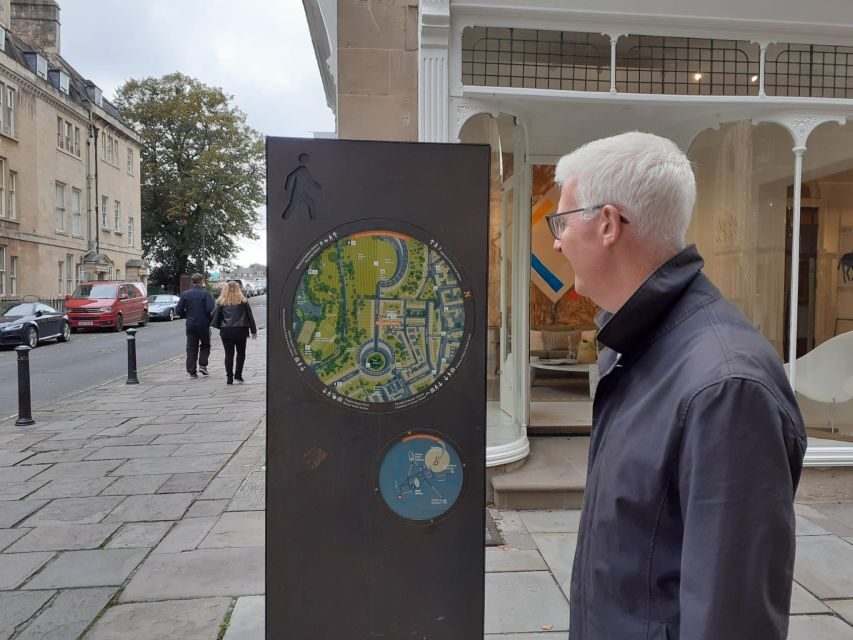
- Bath Abbey sets the tone with a gentle circular walk that keeps you oriented from the start.
- Royal Crescent and The Circus get context beyond photos, with Georgian character and conduct woven into the architecture.
- Pulteney Bridge is more than a view; you’ll connect it to the city’s moneyed energy and the stories around it.
- Simon’s storytelling style matters: humour, clear explanations, and lots of question time.
- Comfort is part of the design with pram and wheelchair friendliness and a walking pace that doesn’t wear you down.
Bath Abbey to the scams, secrets, and Georgian excess

There are two kinds of Bath tours. The ones that stay polite. And the ones that tell you what people were really doing when they weren’t posing in their best clothes.
The Bad of Bath Walking Tour is the second type. It’s still a landmarks tour at heart, starting and ending at Bath Abbey, but the guide uses those famous buildings as props for real-life Georgian stories—crimes, corruption, and the hidden sins that sat underneath Bath’s reputation for culture, healing, and good manners.
What makes it fun is the balance. You’re not just hearing gloomy facts. You’re getting a picture of how Bath worked: who had power, who chased pleasure, who got away with things, and what eventually caught up. One standout detail from past groups is the way Simon keeps the room involved, using humour and encouraging people to ask questions and weigh in on how Georgian attitudes to enjoyment and excess compare to today.
You can also count on the pace. The walk is roughly 90 minutes of gentle circular walking, wrapped inside a 2-hour tour slot. That extra time is part of what keeps the experience from feeling rushed or stressful.
You can also read our reviews of more walking tours in Bath



Where the route shines: Royal Crescent, The Circus, and Pulteney Bridge
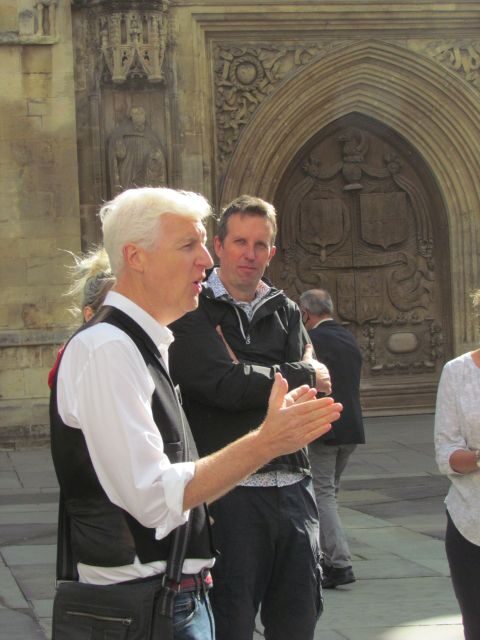
You’ll hit the Bath icons most people line up for anyway. But the twist is how the tour frames them.
Royal Crescent: wealth on the surface, trouble underneath
The Royal Crescent is one of those places that looks perfect in a picture. The tour’s strength is using that perfection as a contrast. You’ll get Georgian context that turns the crescent from scenery into a social machine—where status mattered, where people spent to display, and where the city’s glamour could hide messier behaviour.
Even if you’ve seen the Royal Crescent before, you’ll likely look at it differently after hearing how Bath’s high society operated. It’s the difference between admiring buildings and understanding what those buildings enabled.
The Circus: architecture as a stage for Georgian life
Then comes The Circus, and it stops being just another handsome fan of stone. The guide connects the design and the era to the kinds of entertainment Bath became known for—and the kind of questionable hustle that could ride along with it.
This is where the tour’s tone really lands: fun facts about Georgian Bath delivered with humour, so the stories don’t feel like a lecture. If you like history that has character, The Circus is a strong anchor point for that.
Pulteney Bridge: a postcard view with a darker backstory
Pulteney Bridge is the moment where many tours hand you a photo opportunity and move on. This one uses it as a story hinge.
The bridge helps you link the city’s visual beauty with its economic reality. You’ll hear how Bath attracted money, status-seekers, and opportunists—people who weren’t always playing fair. It’s a reminder that Bath’s famous setting didn’t exist in a bubble; it drew in human nature of all kinds.
And because the walk is circular, you’re not just crossing a bridge and disappearing. You’re moving through the city with the guide pointing you toward meaning.



Bath Abbey: the starting point that keeps the stories grounded
The tour begins and ends at Bath Abbey, and that matters more than you might think. It gives you a clear mental map for the whole experience. When you’re hearing about crime, corruption, and scandal, having a stable reference point helps your brain keep the bigger picture.
Bath Abbey also works as a symbolic contrast. Religious architecture, public space, civic identity—then, just a short walk later, the guide’s stories about what people did when they thought nobody was watching. That back-and-forth is part of why this tour feels fresh rather than repetitive.
If you’ve ever felt like other “themed” tours turn into random stops, this structure helps. You stay oriented, you revisit the landmark context at the end, and the city feels more coherent.
Roman Baths and the contrast trick: why the city’s layers matter
Even though the tour’s theme is the sinful side of Bath, you still get linked to the big historical beats that make Bath feel like a place with layers.
In the tour’s storytelling arc, you’ll connect the Roman-era prestige and Bath’s longer timeline to the Georgian period you’re focusing on. That contrast is useful. It keeps you from treating Georgian excess as a weird one-off. Instead, you see a city that repeatedly attracted crowds drawn to comfort, status, and spectacle.
This is also a smart way to remember Bath. You’re learning the city through viewpoints: the glamorous face, the older roots, and the underbelly that ran alongside it.
If you love when history feels like a system—rather than a list of dates—this portion of the tour is likely to click.
The Georgian “bad” side: crimes, corruption, thieves, and gamblers
The tour’s core promise is simple: you’ll learn about Bath’s scandalous past. But the value is in what that theme includes.
You can expect stories about:
- crimes and how wrongdoing fit into city life
- corruption, including the social and power dynamics around it
- thieves and the everyday opportunism that can follow crowds
- gamblers and the pleasure economy Bath attracted
What’s especially engaging is how the guide uses these themes to explain attitudes, not just incidents. The humour helps too. People often laugh at the logic of it all, even when the subject is not pleasant.
That mix is why this tour works for different ages. One group feedback highlighted how the guide kept the conversation going for everyone from teenagers to pensioners. Another mentioned a very interactive debate atmosphere, with people invited to think about how Georgian behaviour around enjoyment and excess compares to modern ideas.
That doesn’t turn it into a debate club. It just means you’re more likely to remember what you heard because you had to react to it.
Simon’s style: calm pacing, clear explanations, and humour that keeps you with him
The guide is Simon, and the through-line in comments is consistency: clear, calm delivery with humour that makes the stories easier to follow.
A few patterns show up in the way people describe the experience:
- Pacing that stays easy even over a full 2-hour tour slot
- Humour used as a teaching tool, not a distraction
- Q&A time so you’re not stuck silently taking notes
- Support for different interests, including people who love modern pop-culture nods to Bath
One memorable detail from a past tour is that the guide has been accompanied by an attending dog named Milo. It’s the kind of small charm that makes a themed walking tour feel human rather than scripted.
Also, the guide kept groups together carefully. For anyone who worries about being left behind on a walking tour, that’s a comfort factor.
How much walking is it, really?
The walk itself is roughly 90 minutes, and it’s described as a gentle circular route starting and ending at Bath Abbey.
For most people, that’s a sweet spot. You’ll cover enough ground to feel like you saw Bath, but you won’t get the heavy fatigue that comes with long, nonstop city marathons.
It’s also marked as pram and wheelchair friendly, so it’s not just a token claim. That makes it a practical choice if you’re travelling with mobility needs or pushing a stroller and still want the full Bath highlights.
Weather is also handled realistically: the tour runs rain or shine. So if the forecast looks wet, bring a rain jacket and wear shoes you’re happy to get slightly muddy.
Price and value: what $29 buys you in Bath
At about $29 per person, this isn’t a budget-only tour, but it also isn’t priced like a premium theatre production. What you’re paying for is the combination.
You get:
- a live guide delivering a theme you can’t easily recreate on your own
- access to the famous Bath sites (Royal Crescent, The Circus, Pulteney Bridge, and more along the route)
- a walking format that takes about 2 hours total, with the main walk around 90 minutes
- stories that add meaning to the buildings, especially Georgian-era social behaviour
Here’s the value logic. If you tried to do this as a self-guided photo walk, you’d likely hit the highlights and then move on. You’d still enjoy Bath, but you might miss the human side of why the city looked the way it did and how it functioned socially.
This tour turns Bath’s postcard locations into a narrative. For a single visit, that’s exactly what you want—focus, payoff, and context without needing hours of independent research first.
Who this tour fits best (and who might prefer something else)
This is ideal for you if:
- you like history that reads like people, not just dates
- you enjoy humour and stories with edge
- you want the big sights plus a different angle on Bath
- you’re short on time and want a one-sitting experience that covers a lot
It may be less ideal if:
- you want a strictly family-museum tone with no mention of crime or corruption
- you only want calm, polished literary sightseeing
The good news is that the tour is designed to feel friendly and accessible. It’s suitable for all and the walk is gentle. So even if the theme is darker than the usual Bath angle, the delivery style aims to keep it fun and easy to follow.
Should you book the Bad of Bath Walking Tour?
Yes—if you want Bath to feel like a real place with real people behind it.
Book this tour when you’re looking for a smart alternative to the typical landmarks-only approach. You’ll see the Royal Crescent, The Circus, and Pulteney Bridge, but you’ll leave with more than photos. You’ll understand the Georgian city as a mix of glamour and wrongdoing, served up by a guide (Simon) who’s calm, funny, and actively involves the group.
I’d skip it only if you’re strongly set on a purely sweet, polite Bath experience. Otherwise, this is a strong use of time in Bath: practical walking distance, major sites covered, and a theme that makes the city’s famous stone feel much more alive.
FAQ
How long is the Bad of Bath Walking Tour?
The tour lasts about 2 hours in total, with the walk itself roughly 90 minutes.
Where does the tour start and finish?
It’s a gentle circular walk that starts and ends at Bath Abbey.
Is the tour guided, and what language is it in?
Yes. It’s a live guided walking tour in English.
Which famous places are included?
You visit major Bath sights including The Royal Crescent, The Circus, and Pulteney Bridge.
Is food or entrance to attractions included?
No. The guided walking tour is included, but entrance fees and food and drinks are not included.
Is it wheelchair accessible and pram friendly?
Yes. The tour is described as wheelchair accessible and pram and wheelchair friendly.
Does it run in bad weather, and can I cancel?
It runs rain or shine. You can cancel up to 24 hours in advance for a full refund, and you can also reserve now and pay later.