REVIEW · CANTERBURY
Canterbury: Walking Tour with Green Badge Guide
Book on GetYourGuide →Operated by Canterbury Tourist Guides Ltd · Bookable on GetYourGuide
Canterbury is history you can walk through. This 1.5-hour walking tour strings together pilgrim lanes, timber-framed streets, and the Cathedral precincts into one easy loop with a pro local guide.
You get the key sights close-up, plus plenty of character-driven storytelling that makes medieval Canterbury feel real instead of museum-flat.
I especially like the Cathedral precinct access (you see the grounds up close) and the punchy stops like the Crooked House and the infamous ducking stool. The only real drawback is that you do not go inside the Cathedral, and access to the precincts can change at short notice.
In This Review
- Key things I’d zero in on
- Canterbury in 90 Minutes: What This Walk Is Really Good For
- Meeting at the Buttermarket: The Fastest Way to Get Oriented
- The Narrow Cobbled Lanes: Crooked House to Old Weavers’ House
- Eastbridge Hospital: Pilgrims, Hospitality, and Why It Lasted
- Heading Toward the Cathedral Precincts Without Going Inside
- Timber, Stone, and Modern Edges: Marlowe Theatre and the Moving Statue
- Stories That Actually Stick: The Characters Factor
- Weather, Footing, and Pace: How to Prepare
- Families and Kids: The Activity Sheet That Keeps Little Ones Listening
- Price and Value: Why About $20 Makes Sense
- Should You Book This Canterbury Walking Tour?
- FAQ
- Where do I meet the guide?
- How long is the walking tour?
- Is the tour in English?
- Does the tour include entry into Canterbury Cathedral?
- Is access to the Cathedral grounds guaranteed?
- Is the tour wheelchair accessible?
- Are there steps or hills on the route?
- What should I bring?
- Can I record video during the tour?
- Is there a children’s activity during the tour?
Key things I’d zero in on
- Green Badge city guides: professionally qualified locals who keep the stories grounded in place
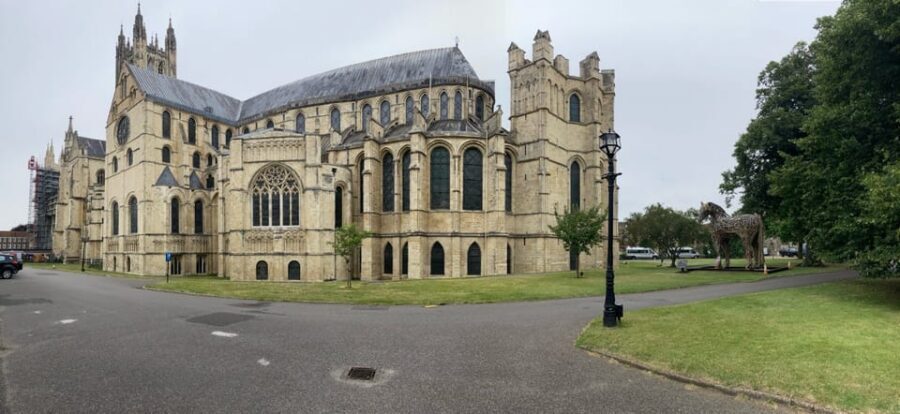
- Cathedral precincts (grounds): you get to see more than just the outside views
- Signature Canterbury sights: Crooked House, Old Weavers’ House, ducking stool
- Pilgrims since 1190: Eastbridge Hospital gets you thinking about care and hospitality
- Easy pacing, tricky sidewalks: no hills or steps, but narrow, uneven pavements
- Family-friendly add-on: children’s activity sheet and a history trail to ask for on arrival
Canterbury in 90 Minutes: What This Walk Is Really Good For

This is a practical starter tour for Canterbury. In just 90 minutes, you build a mental map: where the medieval streets sit, why pilgrims mattered, and how the Cathedral Precincts shaped the town. It’s the kind of route that helps you later when you go back on your own, because you’ll know what you’re looking at.
The guide-led format matters here. You’re not just reading plaques. You’re hearing why a narrow lane exists, what a quirky building’s name hints at, and how the city changed over time. Based on the consistent feedback on guide performance, the best tours are the ones where the guide controls the group well, speaks clearly, and keeps the pace steady—even when it’s raining.
And yes, you’ll still want time to return to the Cathedral afterward, because the big-ticket “inside” experience isn’t part of this one. But as a foundation, this walking loop is excellent value.
You can also read our reviews of more walking tours in Canterbury

Meeting at the Buttermarket: The Fastest Way to Get Oriented
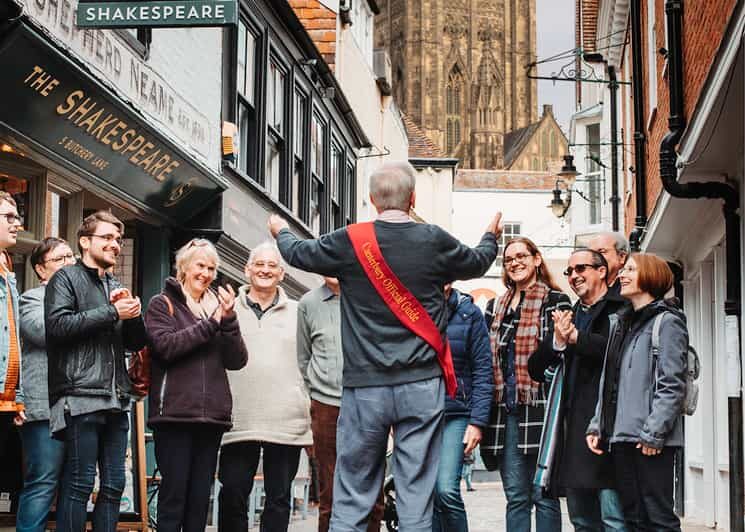
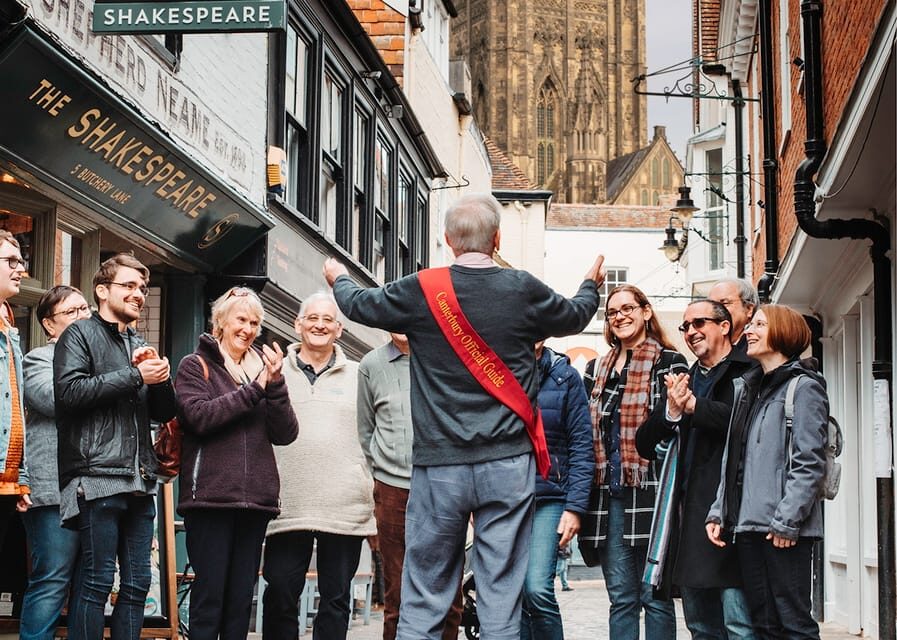
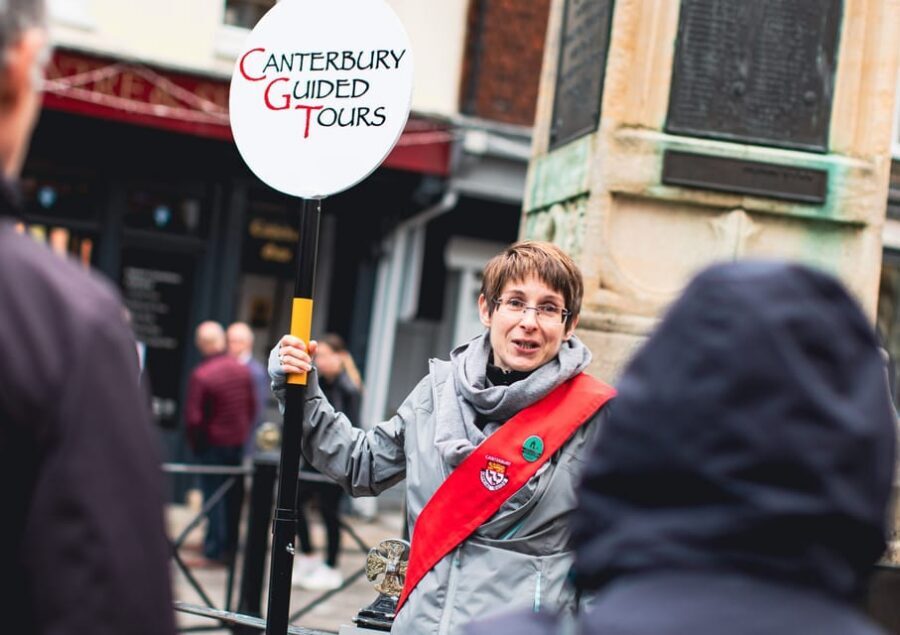
You meet your guide in the Buttermarket, outside the main Cathedral Gate. Guides wear a red sash and hold a placard, so it’s usually straightforward to spot the right group. Arrive a few minutes early so you can get sorted before you start walking.
This matters more than it sounds. The Buttermarket area is tied to Canterbury’s pilgrim life, so it sets the right tone immediately—before you even hit the narrow lanes. From there, the walk heads through cobbled lanes with timber-framed buildings and gives you those first “oh, that’s what that looks like” views toward the Cathedral.
Pacing tip: if you’re the type who freezes when someone says quick questions and quick turns, don’t worry. The routes vary a bit by guide and access restrictions, so a good guide will keep you moving without losing the point of the story.
The Narrow Cobbled Lanes: Crooked House to Old Weavers’ House
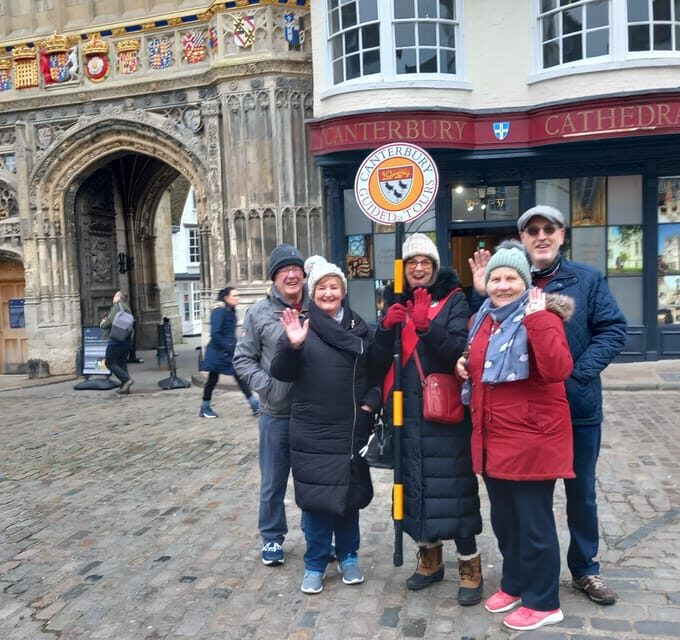
The heart of the experience is the medieval street walk. Canterbury’s lane network can feel like it all blends together—until someone points out the specific shapes and names that make it distinctive.
You’ll see the Crooked House and the Old Weavers’ House. These aren’t just photo stops. A good guide connects them to the town’s older trades and buildings—why certain places got nicknames, and how architecture can reflect everyday life rather than grand planning.
Then comes one of Canterbury’s most memorable bits of folklore: the ducking stool. Even if you’re not into darker stories, it’s a useful anchor. It gives the tour an edge and helps you understand that medieval “public order” wasn’t gentle. It also tends to make kids and adults listen a little harder, since it’s such a specific object with a strong local legend around it.
Expect narrow cobbles underfoot. The tour notes there are no steps or hills, which is great. But many pavements are narrow and uneven. If you have even mild balance issues, keep an eye on your footing and wear supportive shoes.
Eastbridge Hospital: Pilgrims, Hospitality, and Why It Lasted
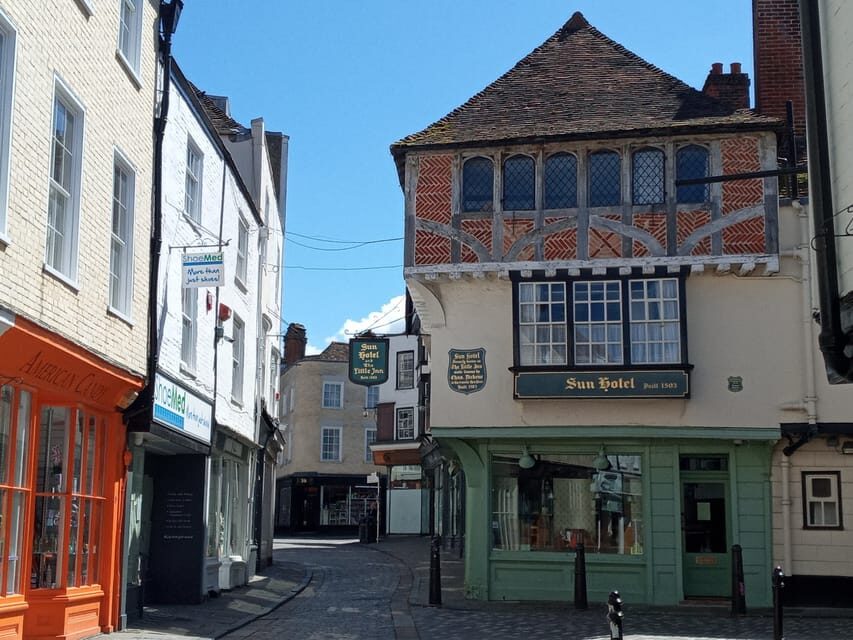
Next, you’ll hit Eastbridge Hospital, described as a place of hospitality for pilgrims since 1190. That date alone is worth holding onto. It reframes Canterbury from a pretty medieval town into a functional travel hub for people on long journeys.
This stop helps you interpret the rest of the walk. Pilgrims weren’t just coming for spiritual reasons; they needed food, care, and safe shelter along the way. When a guide connects that to what you’re seeing—types of streets, old structures, and how the Cathedral precinct connects to town life—it makes Canterbury’s layout feel logical, not random.
In feedback, guides get praised for balancing facts with storytelling and for keeping the group engaged for the full 90 minutes. That’s a big deal with a stop like this, because it’s easy for a “hospital since 1190” fact to turn into a lecture. The better guides keep it human.
Heading Toward the Cathedral Precincts Without Going Inside
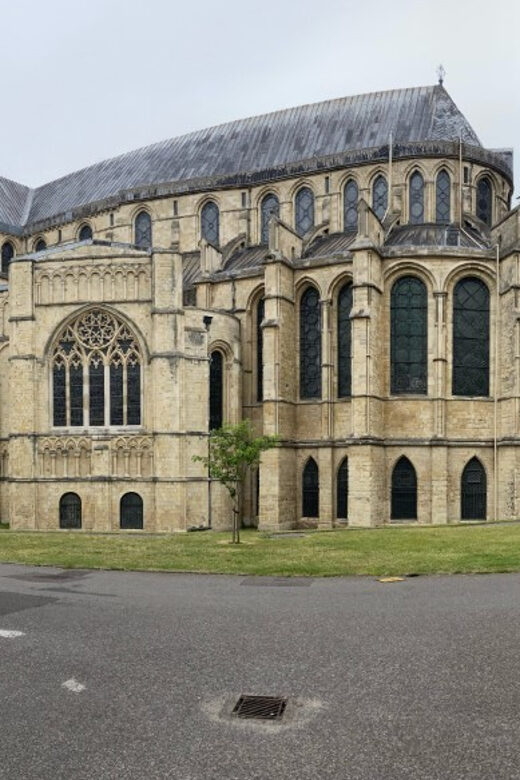
The tour includes a Cathedral precincts route around the outside of the Cathedral. You’ll visit the grounds, and where possible you may see ruins of the old monastery and the grounds of the historic King’s School.
Important reality check: it does not go inside the Cathedral. Access to the Precincts is subject to change. That means you should plan for a great outside/grounds experience, but you shouldn’t count on specific interior angles or areas in case access is restricted.
Still, seeing the grounds close-up is valuable. It puts you in the same space that shaped centuries of pilgrim movement and daily life. Even without entering, you can feel the Cathedral’s scale when you’re standing near it and looking across the precincts rather than just from a street view.
If you’re visiting Canterbury Cathedral during the same trip, this tour works well as the “context layer.” You’ll know what you’re seeing later—and you’ll spot details you might otherwise walk right past.
You can also read our reviews of more guided tours in Canterbury

Timber, Stone, and Modern Edges: Marlowe Theatre and the Moving Statue
Canterbury isn’t frozen in medieval time, and the tour reflects that. You’ll also see more modern architecture, including the Marlowe Theatre and its very own moving statue.
This stop is a smart reminder: the town didn’t stop evolving when the medieval period ended. It’s still a working place with arts, performances, and modern public space. A good guide ties that contrast back to how cities change—what stays, what repurposes, and what gets replaced.
If you’re the kind of visitor who thinks modern buildings don’t belong near old ones, this part may shift your view. You start noticing how the Cathedral’s presence influenced surrounding development long after pilgrims stopped traveling in the same way.
Stories That Actually Stick: The Characters Factor
The best thing about this tour is the storytelling style. You’re not hearing a straight chronology only. You’re hearing tales about Canterbury’s colourful characters, plus interesting facts and anecdotes that help you remember the place.
In the feedback, guides by name keep showing up—like Claire, Dave, Bob, Ian, Naomi, and Mark—often praised for clear speech, humor, and holding a group together, even in rain. Some guides also use small myth-busting moments, which is helpful because Canterbury’s famous sites attract repeat stories that may not be accurate. When a guide corrects those gently, it makes the whole walk feel more trustworthy.
You’ll also get a sense of how the past influences the present. Some guides explicitly connect the city’s older patterns of life to what you see today, which is exactly what I want from a walking tour: interpretation, not just information.
Weather, Footing, and Pace: How to Prepare
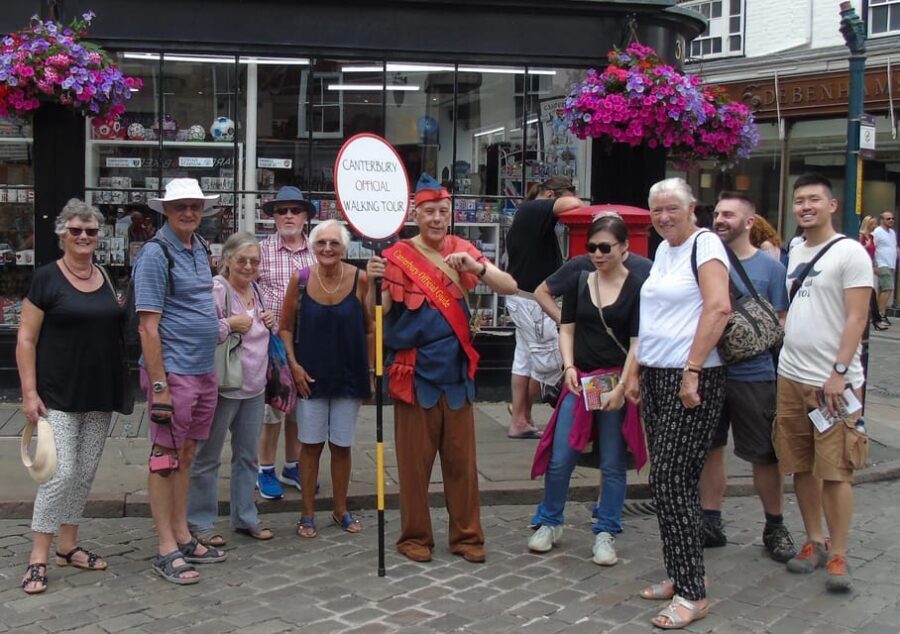
The tour goes ahead in all weather—rain, wind, sun, and snow—unless there’s an official warning to stay indoors. So your planning should be simple: dress for the conditions you’ll actually face, not the forecast you hope for.
Footwear is the big practical factor. The route has no hills or steps, but the pavements are narrow and uneven. If you bring flimsy shoes, you’ll spend part of the tour thinking about your ankles instead of the stories.
One other small rule: no video recording. You can still take photos, but you’ll be following guide instructions about recording formats. If you care about filming, check your plans before you go.
Families and Kids: The Activity Sheet That Keeps Little Ones Listening

This is one of those tours that doesn’t forget kids. It includes a children’s activity sheet and a history trail (you ask your guide on arrival). That’s a good way to turn a guided walk into something more interactive.
It also helps when your group has mixed ages. The guide can direct attention to the right corners and keep kids engaged without you needing to improvise games on the spot.
If you’re traveling with younger children in Canterbury, this tour can serve as a low-effort way to make sure they get something educational without sitting still for long.
Price and Value: Why About $20 Makes Sense
At around $20 per person for 1.5 hours, the value here is tied to two things:
1) You’re paying for a professionally qualified, local Green Badge guide, not just a generic walk.
2) You’re getting Cathedral precinct grounds access (with the usual caveat that it can change), which is a bonus compared to many “outside only” city walks.
The other important value point: the tour is structured so you cover a tight geographic area. Instead of bouncing between spots with guesswork, your guide gives you the why behind what you’re seeing. That saves time and helps you enjoy Canterbury without feeling like you’re racing a checklist.
Also, cancellations and flexible booking are available, which helps if you’re planning around weather. Just remember the tour runs in tough conditions unless there’s an official warning.
Should You Book This Canterbury Walking Tour?
Book it if you want a fast, guided way to understand Canterbury’s layout—especially the pilgrim lanes and how the Cathedral precinct shaped the city. It’s also a solid choice if you like stories, clear speaking, and a tour that keeps moving at a comfortable pace.
Skip it or pair it carefully if you specifically want to go inside Canterbury Cathedral right now. This tour is about the grounds and the surrounding precinct spaces, not the interior.
If your goal is to get your bearings and leave with a short list of things to see again on your own, this is the kind of tour that pays off all afternoon.
FAQ
Where do I meet the guide?
Meet your guide at the Buttermarket, outside the main Cathedral Gate. Guides wear a red sash and hold a placard.
How long is the walking tour?
The tour lasts about 1.5 hours.
Is the tour in English?
Yes, the tour is conducted in English.
Does the tour include entry into Canterbury Cathedral?
No. The tour does not go inside the Cathedral. It visits the Cathedral precincts (grounds) instead.
Is access to the Cathedral grounds guaranteed?
Access to the Cathedral Precincts is subject to change, so it can vary at short notice.
Is the tour wheelchair accessible?
Yes, the tour is wheelchair accessible. That said, many pavements are narrow and uneven.
Are there steps or hills on the route?
The tour notes there are no steps or hills, but you may still find narrow, uneven pavements.
What should I bring?
Bring weather-appropriate clothing. The tour runs in all weather unless there is an official warning to stay indoors.
Can I record video during the tour?
No. Video recording is not allowed.
Is there a children’s activity during the tour?
Yes. A children’s activity sheet and history trail are included (ask your guide on arrival).