You don’t see the real Piccadilly Circus unless you go underground twice. This tour takes you inside one of London’s most famous stations to explore original Edwardian features and areas closed to the public for decades.
I like the fact that you’re not just walking past exhibits. You’ll hear wartime shelter stories and learn how the Underground adapted as passenger needs changed.
The main drawback is practical: expect a lot of walking, low lighting, uneven ground, and stairs with no elevator. If you’re claustrophobic or have mobility issues, this one may not work for you.
In This Review
- Key highlights you’ll actually feel
- Two layers of Piccadilly Circus: why this tour is worth your time
- Where you meet and how the 75 minutes plays out
- Edwardian station remains: the details you miss on a normal ride
- Disused passenger tunnels and lift shafts closed since 1929
- Wartime shelter stories under Piccadilly Circus
- Top-secret storage and what the station was protecting
- The guides and the historical research behind it
- Price and value: is $60.61 worth it?
- Who should book this Hidden Tube tour (and who should skip it)
- Planning tips so the tour feels easy
- Should you book Hidden Tube Tour: Piccadilly Circus?
- FAQ
- Can I visit disused tunnels and lifts on this tour?
- Where do I meet for the Hidden Tube Tour?
- How long is the tour?
- Is the tour step-free or suitable for mobility impairments?
- What should I bring, and what’s not allowed?
- Is this tour okay for claustrophobia?
Key highlights you’ll actually feel
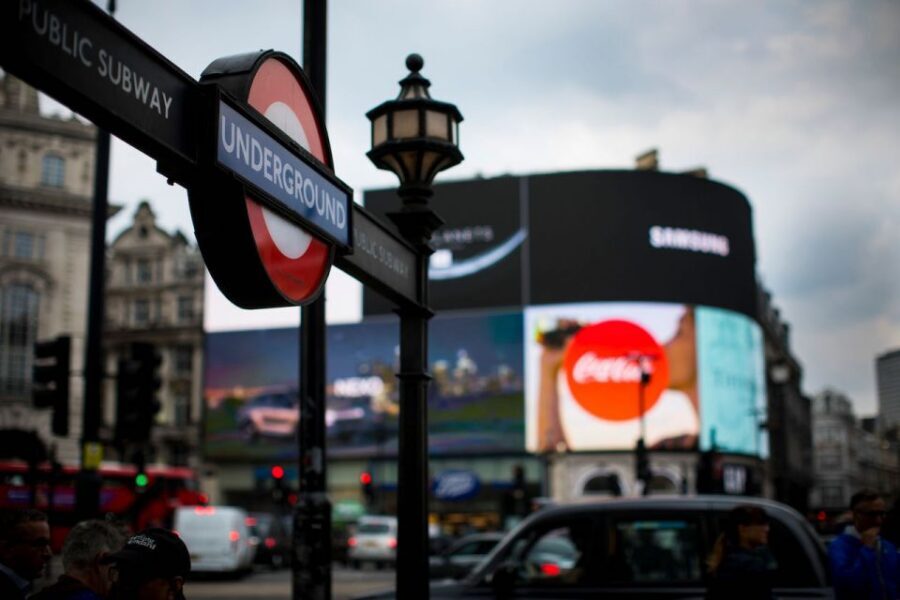
- Access behind secret doors in Piccadilly Circus station, including spaces shut since 1929
- Disused passenger tunnels that have been closed to the travelling public since 1929
- Original Edwardian design features from the station’s earliest era
- Wartime sheltering stories tied to people who took refuge underground
- Top-secret storage tales connected to priceless artefacts
Two layers of Piccadilly Circus: why this tour is worth your time
Piccadilly Circus is famous above ground. But the Underground beneath it has its own personality—part engineering feat, part survival story, part “London made do” lesson. This tour is built around that second layer, with guides pulling you into parts of the station that most people never even know exist.
You’ll start at Piccadilly Circus Underground station, then move through the station’s less-seen spaces. The focus stays tight on what the station used to be, how it got upgraded, and why those upgrades mattered. It’s not a generic history lecture. It’s a guided walk through actual parts of the infrastructure.
And yes, the setting is iconic. The station sits directly under the Piccadilly Circus landmark and opened in 1906, serving the Bakerloo and Piccadilly lines. Later, it was extensively modernised between 1925 and 1928 to handle passenger demand. That “layers of change” theme makes the whole experience click.
You can also read our reviews of more tours and experiences in London.



Where you meet and how the 75 minutes plays out
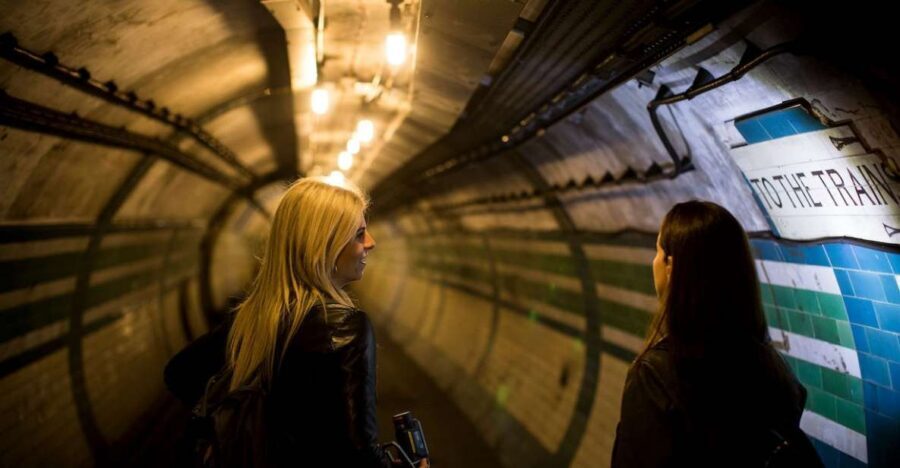
The tour meets at the bottom of the stairs of Exit 4 at Piccadilly Circus Underground station. Exit 4 is on the corner of Shaftesbury Avenue and Coventry Street, next to the Criterion Restaurant. The activity ends back at the meeting point, so you’re not left wondering where to go next.
Duration is 75 minutes, and tours run at different start times. That’s a sweet spot for people who want something meaningful without losing half a day. You’re also not dealing with a travel scramble across London neighborhoods. You’re staying right in the station area.
One practical note that matters once you’re there: the tour involves a lot of walking and includes stairs. It’s not step-free, and there’s no elevator. Also, lighting can be low in the spaces you’ll visit, and the ground can be uneven. If you normally move carefully on stairs or in darker areas, plan extra time and wear shoes you trust.
Edwardian station remains: the details you miss on a normal ride
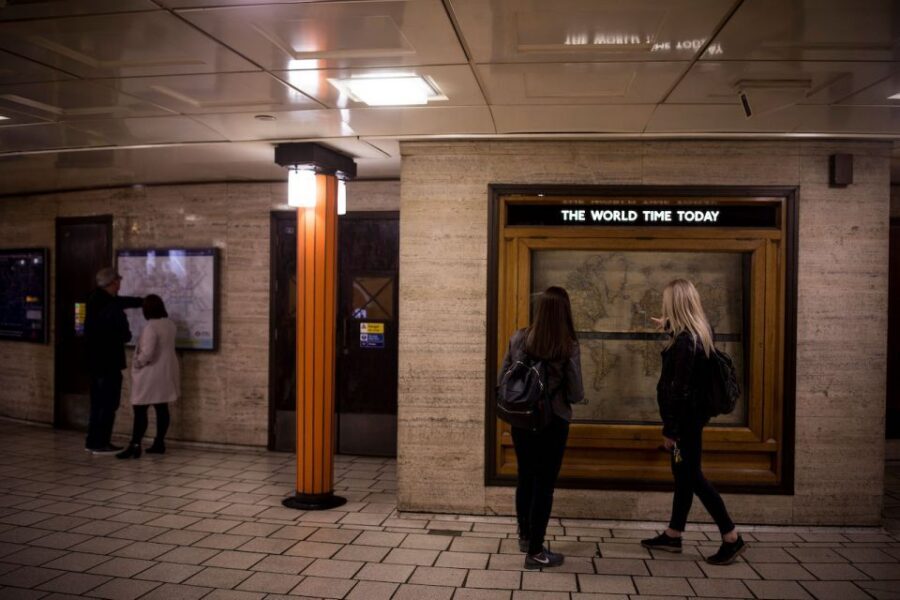
Piccadilly Circus station opened in 1906, but most riders only experience it as “the place where the trains arrive.” On this tour, you get to see how the station looked and worked earlier, including original Edwardian design features.
You’ll be led through areas that feel different from the modern station flow. That’s the whole point: you’re stepping behind doors and into passageways and shafts that are not part of the everyday route. When the guide points out design elements from the station’s earlier era, it gives you a new way to look at what you usually treat as a background detail.
This is where the tour has real value. Underground stations often get judged by function—get from A to B. Seeing Edwardian features in context reminds you that these places were designed with a specific early-20th-century vision. Even if you don’t study architecture, you can still appreciate how form and engineering were linked.
Disused passenger tunnels and lift shafts closed since 1929
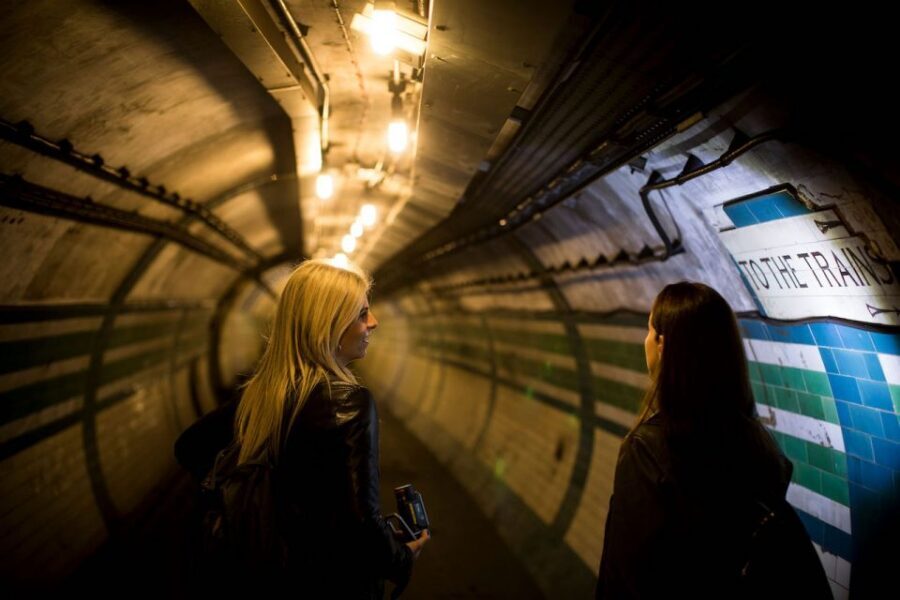
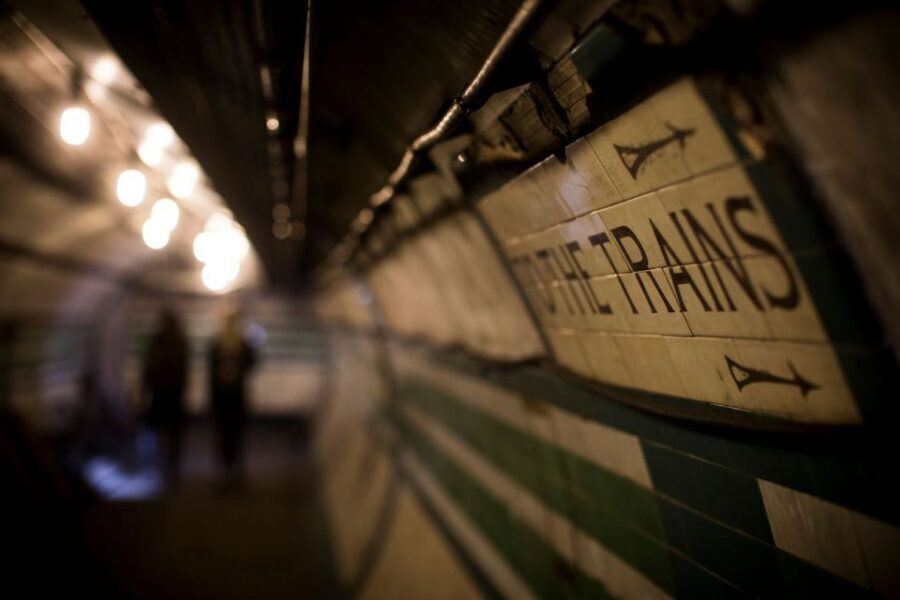
One of the most memorable parts is the access to spaces closed to the travelling public since 1929. That includes disused passenger tunnels and lift shafts. For most people, “tunnels” means the track corridor they pass through during a ride. Here, you’re seeing unused routes and older infrastructure that never became part of the current passenger flow.
What makes this special is the feeling of stepping into the station’s unused chapters. The infrastructure was built to move people and manage circulation, but over time it shifted to meet new demands. Seeing disused passages makes the whole idea of London transit growth feel concrete instead of abstract.
You should also be prepared for the physical feel of these spaces. Low lighting is mentioned as part of the experience, and parts of the route have uneven ground. You’ll be moving through areas that are not designed for casual sightseeing. The tour is still guided and structured—but it’s more “working station space with history” than “museum hallway.”
Wartime shelter stories under Piccadilly Circus
London’s Underground isn’t just a transport system. During wartime, it also became shelter. This tour shares stories about people who took refuge in the station, bringing the space to life in a way no photo can.
The guide ties those wartime sheltering narratives to the station’s layout and available spaces. When you connect stories of refuge to the geography of tunnels and passageways, the history lands differently. You can picture why certain spaces would have mattered and how people would have used them.
This section is often the emotional center of the tour. It’s also a reminder that London Underground planning wasn’t only about schedules and track alignments. It was built within the reality of a city that faced major threats, and the Underground was part of how people survived.



Top-secret storage and what the station was protecting
The tour also includes mentions of top-secret storage of priceless artefacts. That’s a fascinating angle because it shifts the station from transport and shelter into wartime protection and logistics.
Again, the value isn’t that you hear a dramatic story. It’s that you learn the station was used in ways that weren’t meant for public view. The “behind the scenes” access you get on the tour mirrors that theme. You’re literally seeing parts of the station that were closed to normal passengers, so the idea of secret use stops feeling like a headline and starts feeling like real operations in a real place.
If you like history that’s tied to physical spaces—rooms, corridors, access points—this is the kind of detail that keeps the tour from becoming generic.
The guides and the historical research behind it
Hidden London tours are written by historical experts from London Transport Museum and based on material from the museum’s archive and collection. That matters because it means the tour is built from research, not just a quick script of “cool facts.”
The guide quality is also a big part of the experience. The strongest feedback highlights guides who are not only informative, but also enthusiastic and even humorous in a way that keeps the group moving and listening. When you’re walking through low-lit, stair-heavy spaces, you want a guide who can keep the energy up and explain what you’re seeing clearly.
You’ll hear stories and explanations as you go, not at arm’s length from a single display. That “learn as you walk” format is a big reason the tour feels more satisfying than typical museum time.
Price and value: is $60.61 worth it?
At $60.61 per person for a 75-minute guided tour, the cost might look steep compared with normal sightseeing. But here’s the value logic: you’re paying for access to station areas that have been closed to the public since 1929, plus expert storytelling grounded in museum research.
In London, unique access is usually where you feel the money working. Regular walking tours show streets. This one shows infrastructure—tunnels, shafts, and Edwardian remnants. If you enjoy transit history, engineering details, or simply want a different angle on a place you already know, it’s the type of experience that can feel like a bargain compared with the cost of more standard attractions.
If you’re mostly after big sights and photos, you might find the experience less visually flashy than an above-ground landmark tour. But if you like understanding how a city works, especially a city as layered as London, the value lands fast.
Who should book this Hidden Tube tour (and who should skip it)
This tour fits best if you:
- Like transport history and hands-on, place-based stories
- Enjoy guided walking tours where you learn as you move
- Want a quieter, more original perspective on a famously busy area
You should think twice if you:
- Are claustrophobic (the tour is not suitable)
- Need step-free access or struggle with stairs (there’s no elevator)
- Prefer low-walking or minimal-stair experiences (this one includes flights of stairs and uneven ground)
- Travel with young kids under 10 (not suitable), or plan the group mix carefully (there’s a maximum of four children aged 10–15 per adult)
Also, note the practical rules: open-toed shoes aren’t allowed, there’s no food or drinks allowed, and there’s no luggage or large bags. There’s also no cloakroom. If you bring a big daypack, you’ll likely need to leave it elsewhere and travel light.
Planning tips so the tour feels easy
This is one of those tours where small prep pays off. Wear sturdy footwear that grips well on stairs. If you’re the kind of traveler who keeps your phone in your pocket in crowded places, do that here too—your attention will be needed for the guide’s direction and the route.
Bring a passport or ID card. The tour is in English and is live-guided, so you’ll want to be able to hear clearly in the lower-light areas.
And don’t underestimate how much walking fits into 75 minutes when you include stair sections and passageways. If you’re timing this around other plans at Piccadilly Circus, I’d give yourself buffer time before and after. You’ll want a calm start and an easy finish.
Should you book Hidden Tube Tour: Piccadilly Circus?
Yes—if you want a London experience that feels like you’re seeing the city’s plumbing, not just its postcards. This tour is especially worth it for the mix of closed-to-the-public station spaces, Edwardian design remnants, and human stories like wartime sheltering.
Skip it if you need step-free access or you’re nervous about tight or low-lit areas. The experience is guided and structured, but it’s still physically demanding and not designed for claustrophobia.
FAQ
Can I visit disused tunnels and lifts on this tour?
Yes. The tour includes access to disused passenger tunnels and lift shafts that have been closed to the travelling public since 1929.
Where do I meet for the Hidden Tube Tour?
You meet at the bottom of the stairs of Exit 4 at Piccadilly Circus Underground station, next to the Criterion Restaurant on Shaftesbury Avenue and Coventry Street.
How long is the tour?
The tour lasts 75 minutes. Starting times vary, so you’ll want to check availability for the slot you want.
Is the tour step-free or suitable for mobility impairments?
No. The tour is not step free, includes stairs, and has no elevator. It is not suitable for people with mobility impairments.
What should I bring, and what’s not allowed?
Bring a passport or ID card. Open-toed shoes are not allowed, and there’s no food or drinks. Luggage or large bags aren’t allowed either, and there’s no cloakroom.
Is this tour okay for claustrophobia?
No. The tour involves areas with low lighting and underground spaces, and it is not suitable for people with claustrophobia.