REVIEW · LONDON
London: British Museum Guided Tour with Free Entrance Ticket
Book on GetYourGuide →Operated by London Tours and Activities · Bookable on GetYourGuide
The British Museum is enormous. This guided tour helps you see the right things fast. You get a focused walk through headline artifacts and the smaller stories that make them click, plus fast-track entry so you can spend more time looking and less time standing.
I especially like the way the guide connects objects to the bigger world around them, not just dates and labels. And I like the range of cultures on the same route, from ancient Egypt to Assyria to Aztec work, so your brain stays switched on instead of tuning out.
One possible drawback: the museum is packed. You meet after security on the staircase at the main entrance, but during busy moments the route can shift, and you’re told to check WhatsApp for any changes. Also, with stairs involved, it’s not set up for wheelchair users or people with mobility impairments.
In This Review
- Key Highlights You’ll Actually Feel in 2 Hours
- Why a British Museum Guided Tour Makes Sense
- Getting In: Meeting Point, Security, and the Entrance Twist
- The Rosetta Stone: The Most Practical Place to Start
- Ramses II: When Scale Becomes Story
- The Elgin Marbles: Seeing Controversy Without Getting Lost
- Assyrian Human-Headed Winged Lions and the Art of Warning
- Aztec Double-Headed Mosaic Snake: A Rare Stop That Stays With You
- Other Stops That Make the Tour Feel Like a World Tour
- What the $35 Price Really Buys You
- Who This Tour Suits Best
- Quick Practical Tips Before You Go
- Should You Book This British Museum Guided Tour?
- FAQ
- How long is the British Museum guided tour?
- Is fast-track entry included?
- Where do I meet the guide?
- Can the meeting point or entrance change?
- What language options are available?
- What should I bring, and what isn’t allowed?
Key Highlights You’ll Actually Feel in 2 Hours
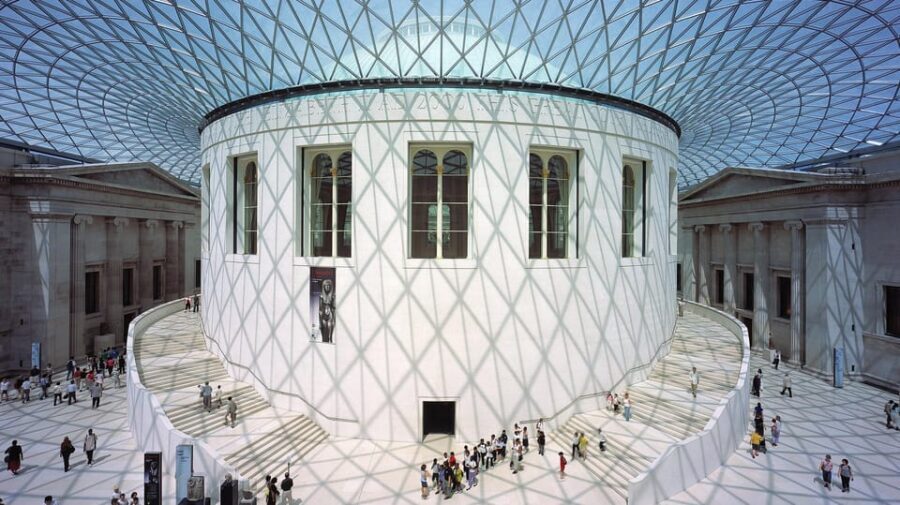
- Fast-track entry means fewer delays at one of the world’s most visited museums
- Rosetta Stone + Ramses II give you instant anchors for ancient Egypt
- Elgin Marbles are shown with context so you can look critically, not just react
- Assyrian winged lions + Aztec double-headed snake offer jaw-drop variety in one stop
- A tight route that also includes Moai, Sutton Hoo, Lewis chessmen, and Stonehenge’s Mold Cape
Why a British Museum Guided Tour Makes Sense
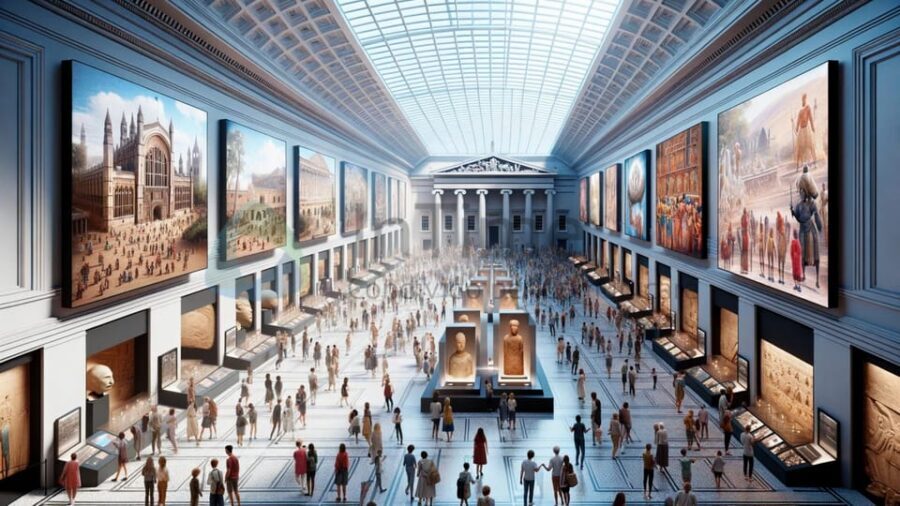
The British Museum can swallow a day. In two hours, you won’t see everything, and that’s the point. This tour is built around the objects most people come to see, then adds the “why this matters” layer that turns sightseeing into understanding.
If you like museums but hate aimless wandering, you’ll appreciate the structure. Your guide helps you move through the museum with purpose, and the highlights are spaced so your group isn’t stuck in one hallway forever.
There’s also a practical value here. With fast-track entry included, you’re not gambling on whether you’ll get in quickly. That matters in London, where museum lines can eat your schedule alive.
You can also read our reviews of more tours and experiences in London


Getting In: Meeting Point, Security, and the Entrance Twist
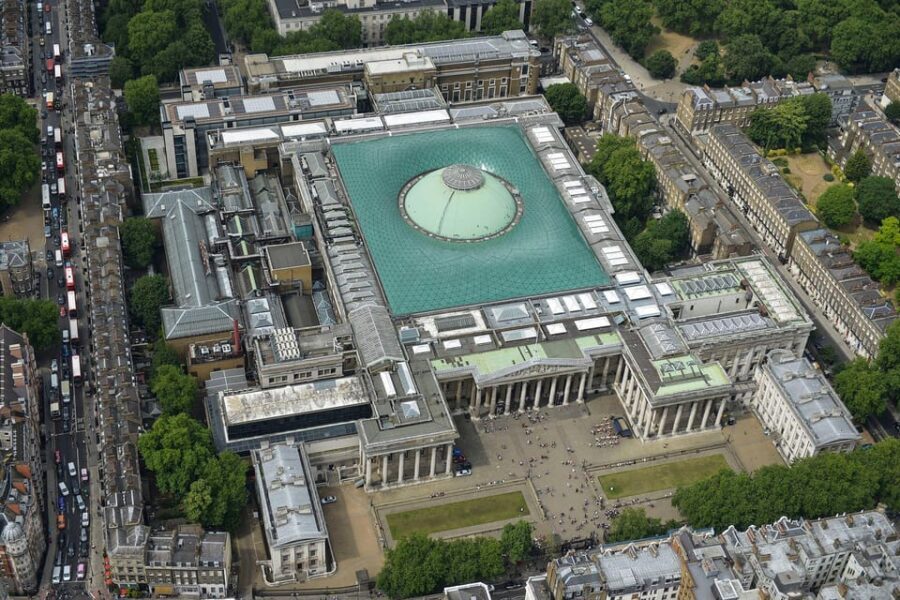
Plan to arrive early. You’re told to meet your guide at the main entrance after the security check, on the staircase, and to get there at least 15 minutes before the scheduled tour.
Here’s the real-world catch: the British Museum is the most visited museum in the world, so it can be tough to get in during busy times. The tour instructions specifically note that the meeting/entrance point can change, sometimes to Montague Place, and you should watch for updates through WhatsApp.
A tip I’d follow: don’t treat WhatsApp messages like optional reading. If there’s an entrance change, it’s usually a time-saver, not a nuisance. One guide named Angel also handled a train delay by contacting the group with options while waiting, which is exactly how you want communication to work when travel schedules wobble.
The Rosetta Stone: The Most Practical Place to Start
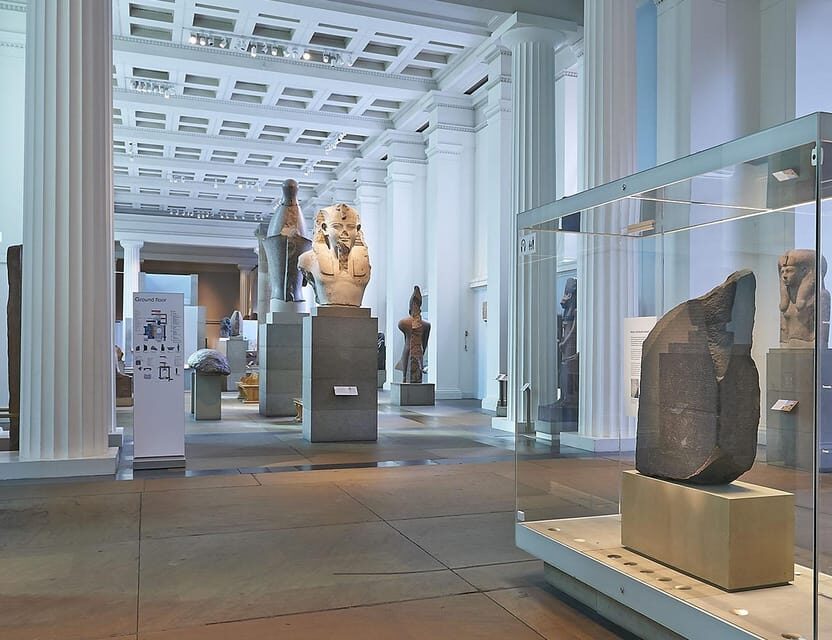
Most museum highlights are just impressive. The Rosetta Stone is different. It’s the object that helps explain how languages and scripts can be compared, which is why it’s tied to the story of deciphering ancient writing.
On this tour, you’ll see it early enough that it acts like a “decoder ring” for the rest of what you’re seeing. Even if you don’t know the alphabet of ancient Egypt, you’ll get the context for why one artifact can matter for thousands of years of scholarship and learning.
Look at the stone like a document, not a decoration. The guide’s job is to help you connect the material fact (it’s carved text) to the human fact (people wanted meaning, and later readers found a way to make sense of it).
Ramses II: When Scale Becomes Story
Next up is the colossal statue of Ramses II. This isn’t a small “nice detail” moment. It’s a giant presence that changes how you understand power and representation in ancient Egypt.
The value here is not only seeing a famous figure, but learning how the statue communicates authority. In a short tour, Ramses is a smart anchor because you can then notice how other cultures on the route also use monumental art to tell you who mattered and why.
One consideration: it’s hard to take in scale and details at the same time when a group is moving. If you like photos, wear shoes you can stand in comfortably, and don’t be shy about pausing for a moment when the guide points things out.
The Elgin Marbles: Seeing Controversy Without Getting Lost
You’ll also get a glimpse at the Parthenon sculptures known as the Elgin Marbles. These sculptures can come with loud modern arguments, and you don’t need to memorize the politics to benefit from seeing them in person.
What you’ll want from a guided moment like this is a method: how to look at materials, carving style, and what the figures are doing. The guide can help you place the works in their original setting and then explain why the story of the sculptures became complicated.
In other words, you don’t just walk past them. You learn how to look, and that makes the controversy less of a distraction and more of part of the museum experience.
You can also read our reviews of more guided tours in London






Assyrian Human-Headed Winged Lions and the Art of Warning
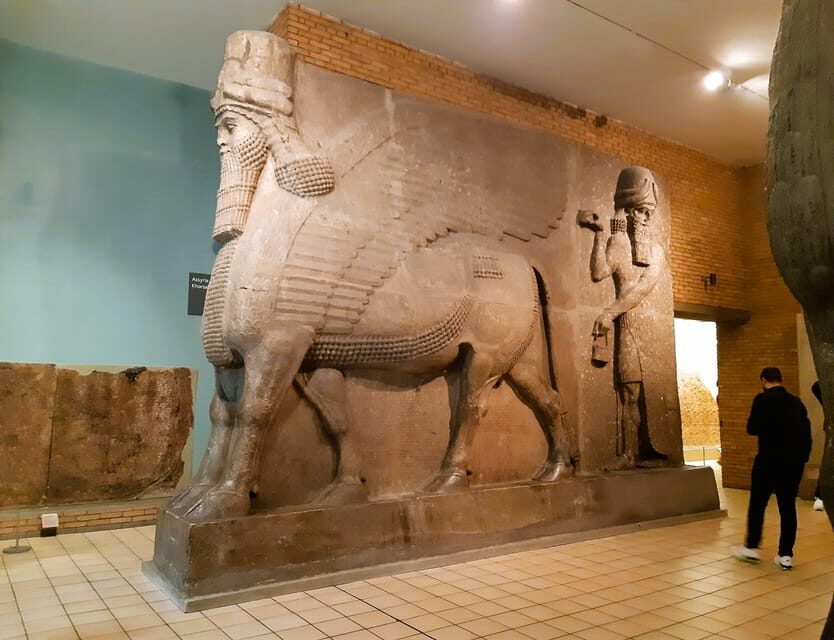
Then you hit the Assyrian human-headed winged lions. If you’ve never seen Assyrian art before, this is a great reality check: it’s not “gentle” ancient art. It’s dramatic, symbolic, and meant to project protection and dominance.
The tour keeps this contrast in your mind. After Egypt and Greece, Assyria feels like a different language of power—more motion, more intensity, more sense that the object is guarding something.
You’ll also get the chance to connect style to function. Winged creatures in ancient art often signal authority, protection, and cosmic reach. The guide’s job is to help you read the object for meaning, not just for looks.
Aztec Double-Headed Mosaic Snake: A Rare Stop That Stays With You
One of the standouts in the route is the Aztec double-headed mosaic snake. It’s described as one of the rare objects in the museum, and that rarity matters because you can feel it in the experience: you’re not just seeing a famous name, you’re seeing a special artifact that isn’t everywhere.
This is a great moment for travelers who like craftsmanship. Mosaics involve planning, materials, and precision. A guide can help you slow down just enough to notice patterns and the overall design choice—how the two heads and the symmetry communicate something beyond decoration.
It’s also a useful reminder that “museum famous” doesn’t always mean “most common.” Some of the most memorable objects are the ones you didn’t know you’d be looking for until you’re standing in front of them.
Other Stops That Make the Tour Feel Like a World Tour
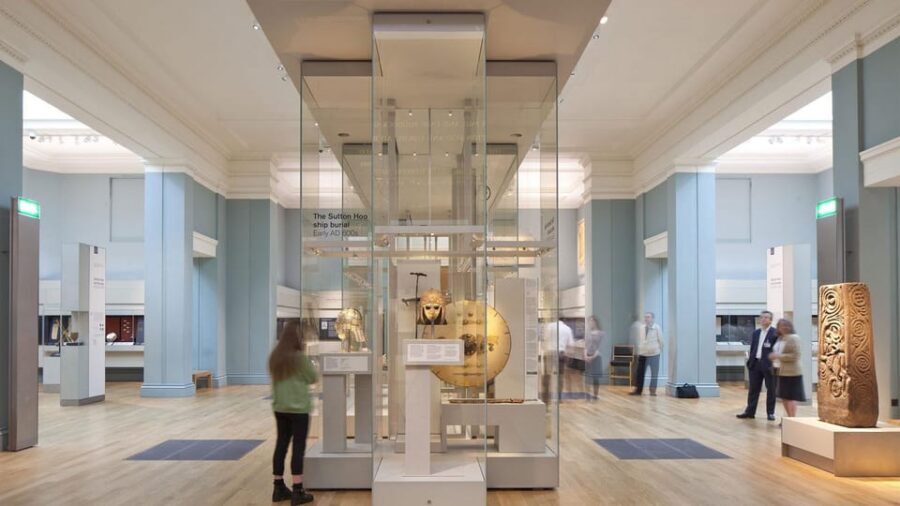
This tour doesn’t just recycle the biggest names. It also covers a set of objects that help you see the British Museum as a wide-ranging collection, not a single-theme place.
Here are the main additional highlights you’ll see:
- Moai sculpture from Easter Island: you’ll get a view of monumental sculpture outside Europe and understand why these figures matter in their original cultural setting
- Sutton Hoo burial ship: one of the most spectacular discoveries in British archaeology, with a focus on Roman Britain and what the find tells us about the time period
- Mold Cape from Stonehenge: a fascinating link between Stonehenge-era Britain and the kind of craftsmanship you don’t expect from “prehistoric” labels
- Medieval Chessmen from the island of Lewis: small enough to feel intimate, but famous enough that you’ll understand why they’ve become icons
These stops work because they keep your mental map from getting stuck. You’ll move across time and region, and you’ll start noticing a pattern: every culture used art and objects to explain identity, status, belief, and memory.
Practical note: you’re moving through a museum that’s not designed for a fast, two-hour sprint. So expect some waiting for the group to gather and for the guide to position everyone for viewing.
What the $35 Price Really Buys You
At about $35 per person for a 2-hour guided experience, the value depends on what you’re trying to do.
If your goal is simply to “see the Rosetta Stone,” you might feel like it’s cheaper to walk in on your own. But the British Museum’s scale and line situation makes self-guided plans less reliable than they sound.
This tour gives you:
- fast-track entry, which protects your schedule
- an expert guide who helps you interpret what you’re looking at
- access focused on the museum’s most famous objects, so you don’t waste time hunting
Also, the tour duration is long enough to feel satisfying but short enough to fit into a London itinerary without turning into a full-day commitment. Two hours is a realistic sweet spot: enough time to learn something, not so long that you get museum fatigue.
And the human factor matters. In one case, the guide Angel dealt with a train delay by messaging the group with options while waiting. That’s the kind of professionalism that can make a booked tour feel safe and organized, even when the world isn’t.
Who This Tour Suits Best
I think this tour fits you if you want:
- the big-ticket artifacts with context, in a short time
- a guide who helps you understand what to notice while you’re in front of the objects
- a route with real diversity across civilizations, not just one era
It’s also a good match for first-time British Museum visitors who don’t want to spend their energy figuring out where to go.
If you rely on wheelchairs or have mobility challenges, this one isn’t a great fit since it’s not suitable for wheelchair users or people with mobility impairments, and the meeting setup involves stairs.
Quick Practical Tips Before You Go
Bring the basics listed for the experience: comfortable shoes, a camera, and water. You’re also told flash photography isn’t allowed, and backpacks aren’t permitted, so travel light.
One more smart move: because the museum can require entrance adjustments, screenshot or save the meeting instructions and keep an eye on WhatsApp the day of your tour.
Should You Book This British Museum Guided Tour?
If you’re short on time, this booking makes sense. The fast-track entry plus a focused route through famous objects is a strong trade: you pay for certainty and interpretation, not for wandering.
I’d especially recommend it if you want the tour to act like a museum primer. In two hours, you’ll leave with a clearer sense of what each major object represents and how the collection connects to different world cultures.
Skip it only if you’re the type who enjoys slow, free-form exploration and you’re comfortable dealing with line uncertainty. Otherwise, for many first visits, this is a practical way to get real value out of the British Museum without turning your day into a marathon.
FAQ
How long is the British Museum guided tour?
The tour lasts 2 hours.
Is fast-track entry included?
Yes. Fast track entry is included.
Where do I meet the guide?
Meet your guide at the main entrance after the security check, on the staircase. You should arrive at least 15 minutes early.
Can the meeting point or entrance change?
Yes. During busy times, the tour may need to change the entrance (sometimes to Montague Place). Check your WhatsApp messages for updates.
What language options are available?
The live guide is available in English, Spanish, and Italian.
What should I bring, and what isn’t allowed?
Bring comfortable shoes, a camera, and water. Flash photography isn’t allowed, and backpacks aren’t allowed.