REVIEW · LONDON
London Changing of the Guard Tour – Front Row 12 guests 2,5h
Book on GetYourGuide →Operated by Babylon Tours London · Bookable on GetYourGuide
If you love a smart photo plan, this works.
This tour turns the famous Changing of the Guard parade into a moving lesson: you’ll watch what the regiments do, not just what looks good on a postcard. You’ll follow the action through big ceremonial sights like Trafalgar Square, Whitehall, and the Mall, with live commentary that helps you spot what’s happening and why.
I especially like two parts. First, the guide gets you positioned for strong angles as the parade unfolds, so you’re not stuck guessing where to stand. Second, you’ll get a steady stream of context about uniforms, duties, and the key landmarks you pass, including the route toward Buckingham Palace and the handoff back toward Wellington Barracks.
One drawback to plan for: you’re walking outside and you don’t enter the sites. If you want indoor museum time or short hops between stops, this won’t match that style.
In This Review
- Key highlights at a glance
- Why the Changing of the Guard is more than a show
- Meeting at the National Gallery’s red telephone booth (and why location matters)
- Trafalgar Square to Nelson’s Column: setting the scene before the parade
- Admiralty Arch and the Duke of York Steps: the route becomes a story
- Horse Guards Parade at Whitehall: when the cavalry enters the conversation
- St James’s Palace and Clarence House: the guards get ready
- Along the Mall to Buckingham Palace: the main event, explained
- Following the Old Guard back toward Wellington Barracks
- What you’re paying for: value of the $61 front-row experience
- Who this tour suits best (and who should choose something else)
- Booking advice: should you reserve this one?
- FAQ
- How long is the London Changing of the Guard tour?
- Where do we meet the guide?
- Does the tour enter Buckingham Palace, St James’s Palace, or other sites?
- Is this tour private or semi-private?
- Who provides the commentary and what language is it in?
- What should I bring for the tour?
- Are luggage or large bags allowed?
- Is the tour suitable for wheelchair users?
Key highlights at a glance
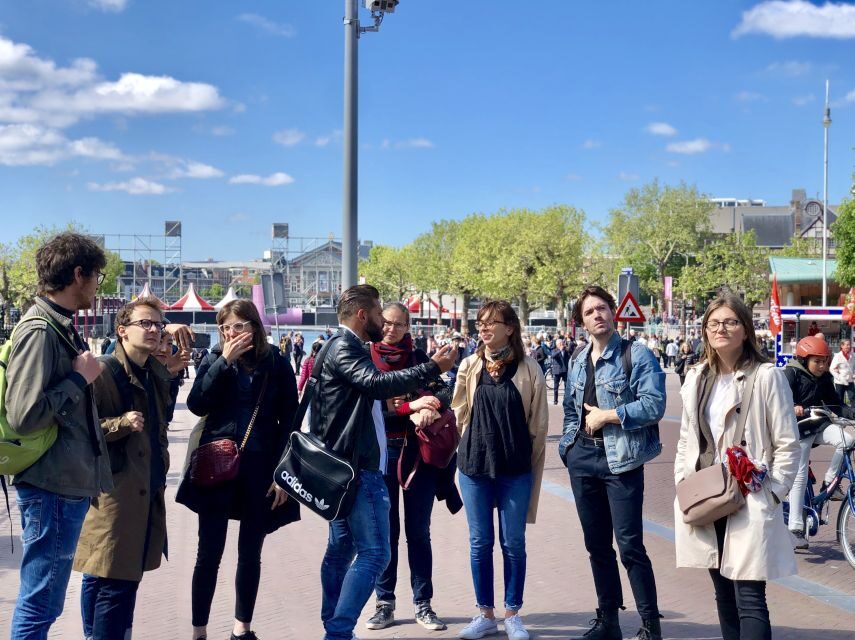
- Front-row positioning designed for photos as the parade shifts across the route
- Horse Guards Parade views, with context about the cavalry on guard and the horses
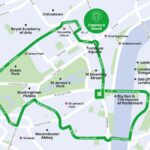
- Guided route through major London ceremony sites from Trafalgar Square up the Mall
- New and Old Guards change moments at Buckingham Palace, explained in plain terms
- Small-group feel (semi-private up to 8; private available), plus a front-row option
Why the Changing of the Guard is more than a show
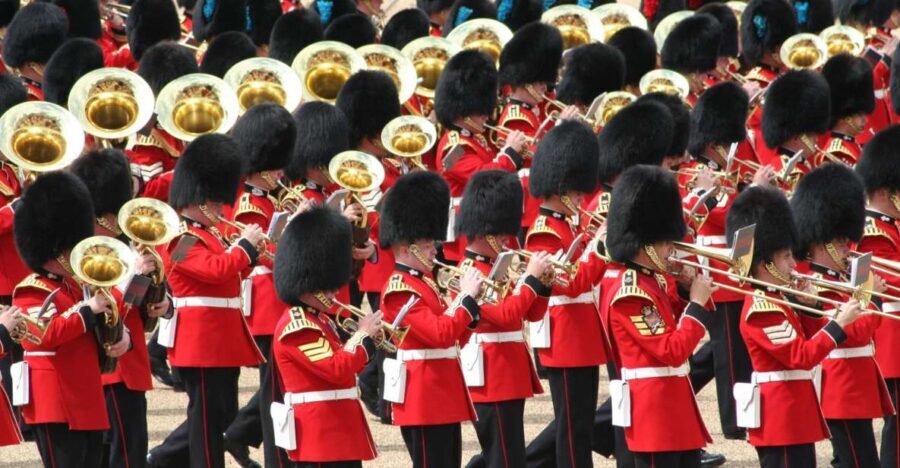
The Changing of the Guard is one of those London rituals that feels instantly familiar—until you actually stand near it. Then you realize it’s not just pageantry. It’s tied to military duties and regimental traditions, staged in a way that keeps it moving and visible for the public.
What makes this tour click is that it’s built around watching with intent. Your guide points out what to look for, so the parade doesn’t blur into a lot of marching and hats. You’ll also get context as you walk past the landmarks that frame the ceremony, which helps you understand how the route feels and why these specific corners matter.
And because the group is small, you’re more likely to get real photo positioning rather than crowd-land chaos. Past guides—names like Sheldon, Andy, Luis, Anthony, Becky, and Kathy—were singled out for how they helped people stand in the right place and make the most of the stops.
You can also read our reviews of more tours and experiences in London.



Meeting at the National Gallery’s red telephone booth (and why location matters)
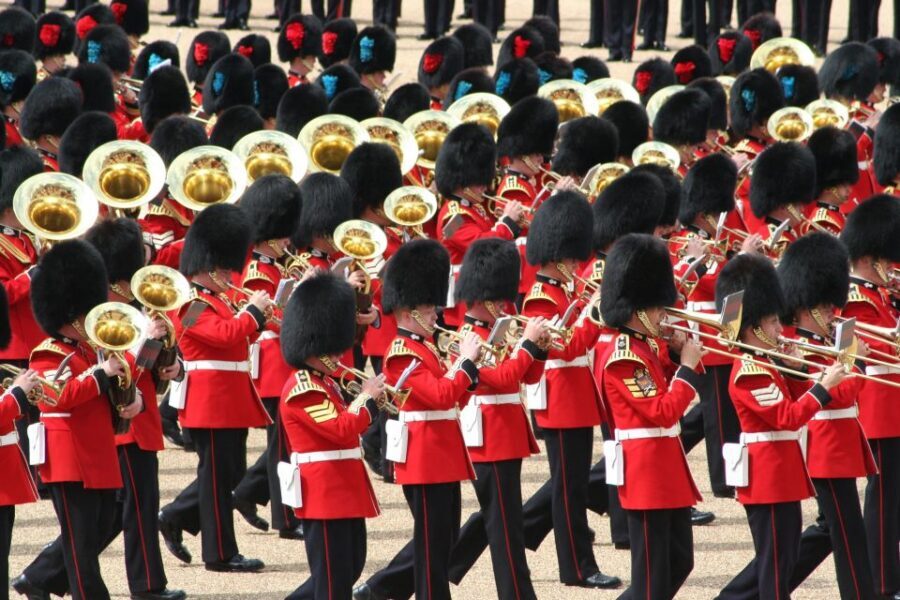
You meet outside the Sainsbury wing entrance of the National Gallery, by the red telephone booth on Pall Mall E, across the street from Canada House. That’s a practical choice: it puts you in the zone where you can start your walk without fighting traffic patterns later.
A couple tips that make the morning smoother:
- Arrive on time (or slightly early) so you’re not hurrying while your guide is setting the plan.
- Bring your passport or ID card—this tour includes that requirement.
- Skip large bags. No luggage or large bags are allowed, so pack light.
You should also know this is an outdoor experience with walking between viewpoints. You’ll get the most out of it if you’re comfortable standing for parts of the parade and moving between stops.
Trafalgar Square to Nelson’s Column: setting the scene before the parade
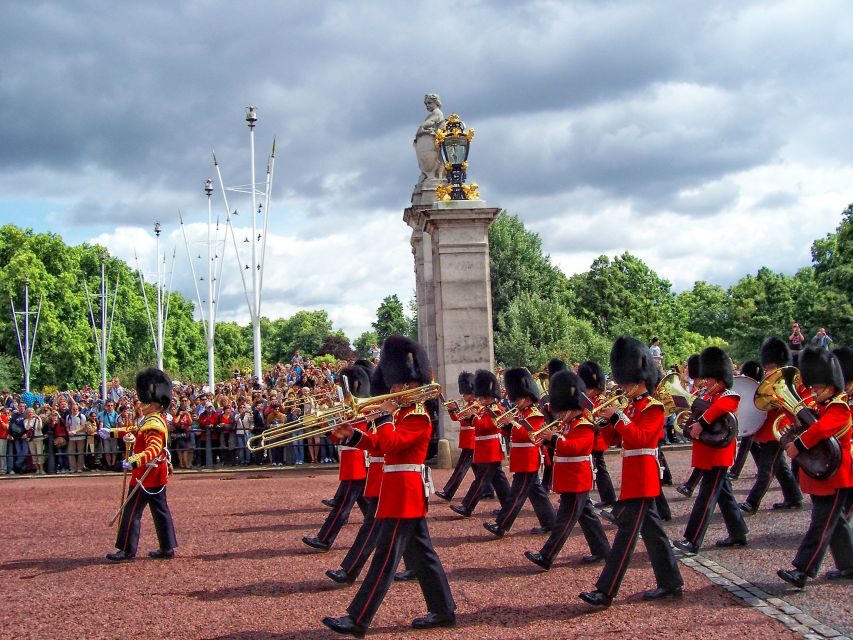
Your walk starts at Trafalgar Square. This is the kind of stop that looks obvious on a map, but it matters because it gives you orientation right away. You’ll take a photo stop and get a short guided visit, then move toward Nelson’s Column.
At Nelson’s Column, the guide’s job is to help you connect two things:
1) the physical landmark you’re seeing, and
2) the ceremonial geography it’s part of.
Even in just a few minutes, you’ll start understanding how the route “pulls” you forward. It’s not random sightseeing. It’s a planned flow toward the Whitehall and Mall corridor where the parade’s drama ramps up.
What to watch for: your guide will often describe what landmarks mean in the bigger picture, so your photos look more purposeful later. You’ll also get a feel for where gaps might open up as the group moves along.
Admiralty Arch and the Duke of York Steps: the route becomes a story
Next comes Admiralty Arch, another photo-friendly stop with a guided explanation. From here, you’re moving deeper into the ceremonial spine of central London.
Then you’ll catch glimpses up the Duke of York Steps—a small moment, but a meaningful one. It helps you see how the “stage” is built: you’re walking through viewpoints that were designed for spectators and ceremonies, and the architecture frames sightlines in a way that makes the parade easier to track.
Right after that, you’ll pass key royal-era references, including discussions around the statues of George VI and Elizabeth II. The point isn’t to memorize monarch facts. It’s to help you read what you’re seeing while you’re standing there, so it feels less like background and more like part of the event.
Small drawback to consider: if you’re expecting the parade to start immediately at every stop, it won’t. Some stops are set-ups—great for context, but you’ll want patience for the best moments later.
Horse Guards Parade at Whitehall: when the cavalry enters the conversation
Whitehall is where things shift from “London highlights walk” to “this is happening right now.” You’ll spend about an hour at Horse Guards Parade at Whitehall, with a guided tour and time for photos.
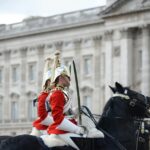
This is a highlight for a reason. You’ll get a closer look at the cavalry on guard—yes, the horses are the stars here, often described as London’s biggest four-legged inhabitants. Your guide helps connect that to the duties and traditions behind the ceremony, so the moment feels grounded instead of purely theatrical.
Photo tip: plan for photos from multiple angles. At Horse Guards Parade, sightlines can change depending on where the group positions itself. One of the big reasons people rate the tour highly is that the guide helps you stand where you’ll get the best view as the parade energy builds.
If you’re a detail person, this stop is for you. The guide’s live commentary turns what could be a quick glance into something you can actually follow.




St James’s Palace and Clarence House: the guards get ready
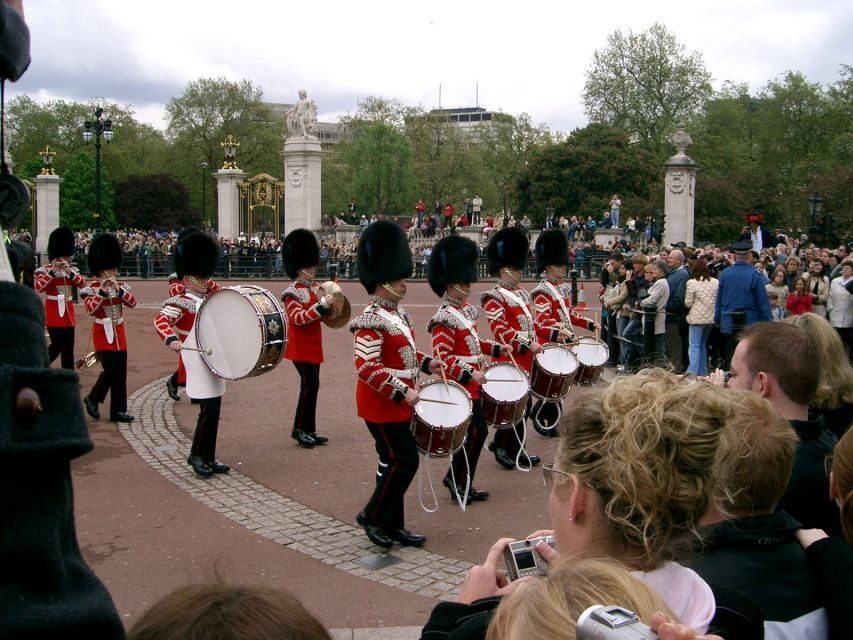
After Whitehall, the route continues toward St James’s Palace, with another short stop and guided sightseeing. You’ll also pass Clarence House.
This section is valuable because it’s the “in-between” part where you understand how guards move toward duty. You’ll learn about the inspection of guards headed off to protect the Queen, which changes how you watch the parade when it finally reaches the big focal point.
Even if you’re not a royal-facts person, you’ll probably enjoy this stretch because it teaches you what to look for as people and units shift positions. It’s the difference between seeing marching and understanding marching.
Why this matters for your photos: when you know where the action is likely to move next, you stop chasing frames. You can wait, aim, and capture the moment rather than sprinting around.
Along the Mall to Buckingham Palace: the main event, explained
As you follow the new regiment along the Mall, you’re moving toward Buckingham Palace—and this is where the tour earns its “most famous parade” label.
You’ll witness the full spectacle as the New and Old Guards change places. Your guide’s live commentary is the real secret sauce here. It helps you interpret the timing and the movements you’re seeing, so you know what moment you’re in rather than just recording hats and boots.
Also, you’ll be moving as the action moves. That matters. Standing in the wrong spot can mean you miss the exact face-to-face swap. The tour’s front-row focus is designed to prevent that.
At Buckingham Palace, expect a concentrated, high-energy period. If you’re traveling with kids or anyone who gets bored quickly, this is the part you’ll want to treat like a “sit up and pay attention” moment. Once you know the sequence, it becomes fun rather than overwhelming.
Following the Old Guard back toward Wellington Barracks
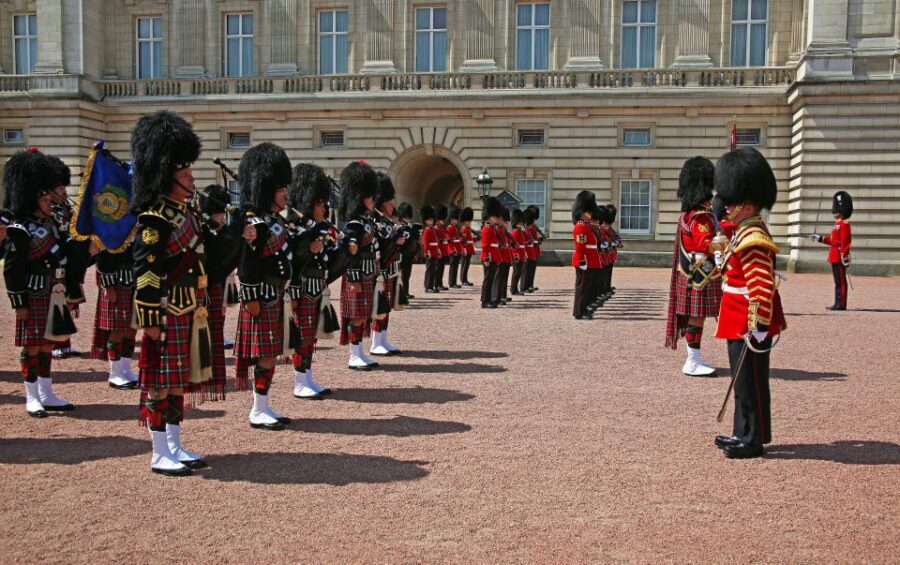
The tour doesn’t stop at Buckingham Palace. You’ll follow the Old Guard back to Wellington Barracks, and that ending is a smart choice.
Why? Because you get closure. The ceremony isn’t just a single scene; it’s a process. Watching the movement back helps you understand that these events connect multiple points along the day’s duty route, not just one dramatic lineup.
It also gives you one last round of photo chances—often with a different crowd energy than the palace area. You’ll come away feeling like you’ve seen the whole arc, not just the most famous second.
What you’re paying for: value of the $61 front-row experience
At around $61 per person for a 2.5-hour tour, you’re not paying for an entry ticket. You’re paying for three things that matter on parade day:
- a professional local guide who can explain what you’re seeing while you’re seeing it
- positioning help for photos so you don’t waste time
- a tight walk route that keeps you moving toward the best moments
If you were to do this on your own, you could still watch the ceremony. But without guidance, you’ll likely spend more time figuring out where to stand and when to reposition. The guide’s job is to reduce that guesswork, and that’s the real value.
It’s also worth noting that the tour can run as private or semi-private. Semi-private is capped at up to 8 guests, while a front-row option is described as a small group experience of 12 guests. Either way, small size is the point: it helps your guide manage sightlines and keep everyone oriented.
One more practical note: food and drink aren’t included. The tour is short, but on a long parade day you’ll appreciate planning ahead so hunger doesn’t wreck your concentration.
Who this tour suits best (and who should choose something else)
This works best if you:
- want the iconic ceremony but also want it explained in plain, practical terms
- care about getting photos without spending your entire time micromanaging your spot
- prefer a walking tour that stays focused on key viewpoints rather than broad sightseeing
- like small-group experiences with live commentary
It might not fit you if:
- you hate standing outside for stretches of time
- you expect to enter major sites (this tour does not enter the places you stop at)
- you’re traveling with heavy luggage, since large bags aren’t allowed
Booking advice: should you reserve this one?
I’d book this if your priority is to see the Changing of the Guard with less chaos and more understanding. The small-group format plus a guide who helps you with photo placement is exactly what turns a famous sight into something you can actually appreciate.
If you’re on the fence, ask yourself a simple question: do you want to watch on luck, or do you want a plan with guidance? This tour leans hard toward the second option.
Also, remember the ceremony can be affected by operational decisions. The tour notes that it may be canceled by the National Guard on the day before the parade, and if rescheduling isn’t possible, you receive a refund. That’s worth keeping in mind when you’re packing your schedule.
FAQ
How long is the London Changing of the Guard tour?
It runs for 2.5 hours.
Where do we meet the guide?
Meet your guide outside the Sainsbury wing entrance of the National Gallery, at the red telephone booth on Pall Mall E, across the street from Canada House.
Does the tour enter Buckingham Palace, St James’s Palace, or other sites?
No. The tour does not enter the sites visited.
Is this tour private or semi-private?
It’s offered as either a private tour or a semi-private tour (with a maximum group size of 8). For semi-private tours, there’s a minimum of 2 guests required for it to run.
Who provides the commentary and what language is it in?
A professional local tour guide provides live commentary, in English.
What should I bring for the tour?
Bring your passport or ID card.
Are luggage or large bags allowed?
No luggage or large bags are allowed.
Is the tour suitable for wheelchair users?
Wheelchair users must book the private tour option, with a maximum group size of 8 and a minimum of 2. The tour is also listed as not suitable for wheelchair users, so it’s important to confirm the private arrangement before booking.