REVIEW · LONDON
London: Jack the Ripper Tour in Spanish
Book on GetYourGuide →Operated by Empire Tours and Productions LLC (United Kingdom) · Bookable on GetYourGuide
Jack the Ripper stories have a way of sticking in your head. This tour turns those famous names into a walk through the real streets of Victorian London, guided in Spanish with an interactive format that keeps things moving. I love that it stays focused on where the events are tied to, not just theory on a screen, and I also like the mix of storytelling plus quizzes and reenactments, which makes the history easier to follow and remember. One drawback to plan for: it’s not a slow, quiet museum-style experience, and it’s guided in Spanish, so it may not feel comfortable if you need English to fully track details.
You’ll start near Aldgate East Station, looking for the guide at Fashion Warehouse, then spend about two hours working your way through key neighborhoods tied to the case. The “how” matters here: instead of rushing, the guide slows down at each stop and points out the details you’re supposed to notice, including street-level context around the murders and the investigation clues people still argue about.
The whole thing lands best if you’re the type who likes a guided narrative and doesn’t mind being pulled into the story. If you’d rather just look around independently and read at your own pace, this may feel a bit more structured and lively than you want.
In This Review
- Key highlights you’ll feel on the street
- Setting out from Aldgate East: where the walk starts
- Whitechapel Road: the case atmosphere comes alive
- Spitalfields and Spitalfields Market: Victorian detail in plain sight
- Ten Bells Pub: the stop that fans always talk about
- Brick Lane: street art now, rough past then
- Aldgate East again: tying the investigation threads together
- The guide matters: why Cova’s style boosts the whole tour
- How the 2-hour format works for real people
- Price and value: $25.59 for Spanish, live guidance, and street stops
- Who this Jack the Ripper tour suits best
- Should you book? My straight answer
- FAQ
- FAQ
- What language is the tour conducted in?
- How long is the Jack the Ripper tour?
- Where do I meet the guide?
- Where does the tour end?
- Is food or drink included?
- What kinds of activities are part of the tour?
- Is there a cancellation option?
- Can I reserve now and pay later?
Key highlights you’ll feel on the street
- Spanish live guide who keeps the pace lively and the explanations clear
- Interactive format with stories, quizzes, and reenactments
- Walking routes tied to the Whitechapel case atmosphere
- Stops built around major landmarks like Ten Bells Pub
- Small-group feel that leaves room for questions (and reactions)
- A strong emphasis on accuracy, separating facts from myths when possible
Setting out from Aldgate East: where the walk starts
The tour kicks off right by Aldgate East station, next to Fashion Warehouse. This is one of those practical choices that makes your day easier: you can get there with public transit, meet up quickly, and lose less time than you would with a far-flung pickup point.
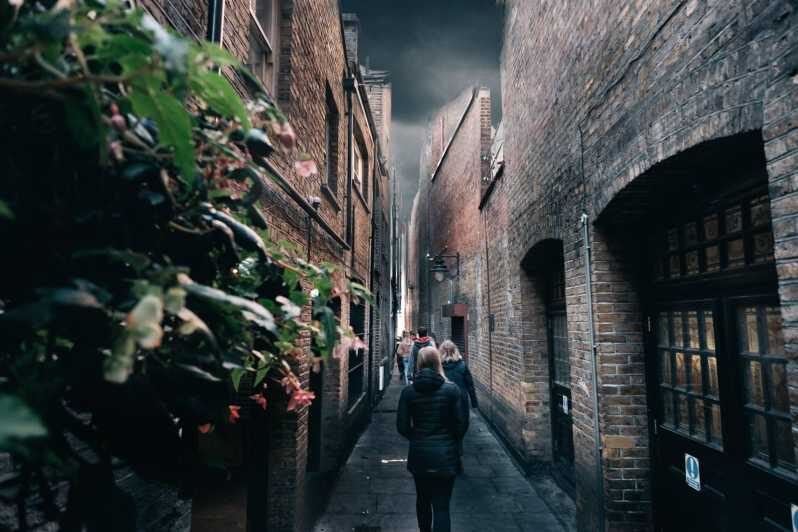
From the first moments, you’re guided like you’re part of the investigation. The guide doesn’t just list dates and names. They point you toward the streets you’re standing on and explain why those locations matter to how people understand the case today. That street-level approach is exactly what makes a Jack the Ripper tour different from a book or a documentary.
One more thing: the experience is designed for movement across neighborhoods. So wear shoes you’re comfortable walking in for the full duration. You’ll want to stay alert, because the story is tied to what you can see around you—buildings, street corners, and the feel of the area.
You can also read our reviews of more tours and experiences in London.



Whitechapel Road: the case atmosphere comes alive
Whitechapel is the emotional center of the Jack the Ripper story, and this tour puts you in that zone early. You’ll stroll along Whitechapel Road, where many people associate the victims and key moments of the murders.
What I like about this stop is the way it grounds the drama. Instead of treating “Whitechapel” like a generic label, you’re encouraged to notice the street context that shaped daily life back then. Even if you’ve read about the case before, seeing the neighborhood layout helps you understand why the timing, movement, and anonymity people talk about still feel believable.
The tour also balances the mood with explanation. It’s not only about fear; it’s about why certain theories gained traction and how modern retellings sometimes blur into legend. The guide’s focus on accuracy is part of the value here, because Jack the Ripper stories tend to attract wild myths. A good tour gives you something stronger than chills—it gives you a clearer map of what’s known and what’s argued.
Practical tip: plan to keep your attention on the guide. Whitechapel has layers—markets, side streets, and changing city life—so the story is what ties your walk together.
Spitalfields and Spitalfields Market: Victorian detail in plain sight
After Whitechapel, you’ll move into Spitalfields, a district known for Victorian-era atmosphere and everyday street life. The tour highlights Spitalfields Market, with time to look around and pick up clues about how the neighborhood grew and changed.
This is a smart part of the itinerary for a few reasons. First, it breaks the walk from “only the murders.” Second, it helps you understand that these events didn’t happen in a vacuum. They happened in a working neighborhood where people traveled, worked, and lived close together.
You may notice that the tour treats “hidden secrets” in a grounded way—less like magic, more like layers of history you can spot if someone points them out. That’s also where an experienced Spanish guide really matters. The story needs to connect to what you see, and the tour format is built to do that with clear, spoken explanations plus interactive moments like quizzes.
Possible drawback: if you prefer only the darkest stops and want less time on broader neighborhood context, Spitalfields may feel like a slight shift in tone. Still, it’s an important one, because it makes the case feel tied to real city life.
Ten Bells Pub: the stop that fans always talk about
No Jack the Ripper tour feels complete without a visit to Ten Bells Pub. This tour includes the pub as one of its centerpiece locations, tied to the idea that some victims may have frequented it.
Here’s why this stop is worth your time: it brings the story into a place that still functions as a social spot. Even with today’s crowds and modern context, standing outside or near a landmark like this helps the narrative feel less like fiction and more like a slice of real life—just with a horrific reputation attached.
Since food and drink aren’t included, you’re free to decide whether you want a stop for a quick refresh. But don’t count on the tour time to turn into a long pub visit. This is built as a guided experience, so expect the guide to keep things moving.
Practical consideration: pubs can be busy, and London foot traffic can be unpredictable. If it feels crowded at the moment, don’t fight it—stay close to the guide, because the explanation is what you’ll want to catch.
Brick Lane: street art now, rough past then
Next up is Brick Lane, famous for street art and a strong food scene today. The tour uses the area as a way to show how neighborhoods evolve without wiping their past off the walls.
This is one of my favorite parts in theory, because it puts contrast on display. You can look around and see creativity and modern energy, but the guide steers you back to the darker associations. It’s a reminder that London keeps layers. Sometimes the “then” isn’t gone—it’s just been covered, repurposed, or reframed.
Brick Lane also works well for an interactive tour format. Quizzes and short reenactment moments land better when you’re not stuck in one grim-looking street the whole time. The tour keeps your brain engaged, and the changing scenery helps you stay oriented.
Possible drawback: Brick Lane is popular. If you hate crowds, you might want to keep your expectations flexible. I’d treat this section as a “look, listen, and move” stop rather than a long pause to take your time.



Aldgate East again: tying the investigation threads together
The walk returns to Aldgate East, bringing you full circle to the neighborhood tied to investigations and continuing mysteries. Ending back near the starting point makes the logistics easy and tidy—less time guessing where you’re supposed to go next.
This final segment matters because it helps you connect the story you heard earlier. You’re not just collecting spooky stops. You’re building a timeline of why certain routes and theories keep showing up, and how people interpret clues over time.
If you’ve only ever heard Jack the Ripper as a name and a legend, this closing section often gives you something more concrete: context. You start to understand the case not as one event, but as a chain of decisions, reports, and uncertainty.
Tip: keep a little curiosity for the end. The tour is only two hours, so it can’t answer everything. But the wrap-up is designed to help you leave with questions that actually make sense, not just vague fear.
The guide matters: why Cova’s style boosts the whole tour
One reason this tour earns such high marks is the energy and care of the guides. In the Spanish-language reviews, Cova is called out for being charming, funny, and passionate about the topic. People also praise her knowledge and enthusiasm for Jack the Ripper details.
That combination is more important than it sounds. Jack the Ripper topics can slide into heavy dates or sensational claims. A guide like Cova—presenting the material with humor, clarity, and drive—helps you stay engaged without turning the tour into a lecture.
And because the tour includes quizzes and reenactments, the guide’s delivery really affects how fun and memorable it feels. If the guide keeps the room participating, you’ll likely remember more, and the story will feel like something you did—not something you sat through.
How the 2-hour format works for real people
This is a two-hour walking experience. That length is a sweet spot for most days in London: long enough to feel like a real tour, short enough to pair with other plans afterward.
It’s also a good choice if you want “serious with a pulse.” You’ll hear stories and theories, but it won’t drag into a slow pace where you lose track. The interactive pieces help prevent that.
Just be honest with yourself about language comfort. Since the tour is guided in Spanish, you’ll get the most out of it if you’re comfortable following spoken Spanish at street speed. If you’re at the beginner level, you might still enjoy the mood and the walking route, but details could slip away.
Price and value: $25.59 for Spanish, live guidance, and street stops
At $25.59 per person, the price feels reasonable when you consider what you’re actually buying:
- A live Spanish guide (not prerecorded audio)
- A structured walk through multiple linked neighborhoods
- Interactive elements like quizzes and reenactments
- Two hours of curated storytelling with stop-by-stop context
London tours can get expensive fast, especially ones that include a live guide. Here, the price-to-time ratio is strong because it’s not only “a walk”—it’s guided with activities that keep the group paying attention.
Is it premium-priced? No. Is it bargain-basement? Also no. It lands in the category where you’re paying for a real guide and a real narrative format.
If you care more about independent wandering than guided interpretation, you can probably find cheaper options. But if you want the story explained well and acted out in small moments, this price is easier to justify.
Who this Jack the Ripper tour suits best
This tour is a great fit if you:
- Want a guided Spanish explanation of Jack the Ripper connected to real streets
- Like interactive experiences, including quizzes and reenactments
- Enjoy neighborhood walks that mix famous stops with context
- Prefer small-group energy over big coach chaos
It may be less ideal if you:
- Need English to fully understand the story
- Want a quiet, self-paced experience with minimal audience participation
- Don’t enjoy crowds in popular areas like Brick Lane
Should you book? My straight answer
I’d book this tour if you’re excited by Jack the Ripper but also want structure. The stops—Whitechapel Road, Spitalfields, Ten Bells Pub, Brick Lane, and back near Aldgate East—give you a solid route that feels connected, not random.
The biggest reason to choose it is the format: live Spanish guidance plus interactive pieces that keep you involved. And the repeated praise for guides like Cova signals that the hosting style really matters here.
If you’re confident with Spanish and you like guided storytelling with some participation, this is a strong value for a two-hour London evening or afternoon plan. If Spanish is a barrier, look for an English option before committing.
FAQ
FAQ
What language is the tour conducted in?
The tour is guided in Spanish with a live tour guide.
How long is the Jack the Ripper tour?
It lasts about 2 hours.
Where do I meet the guide?
Meet at Aldgate East station, next to Fashion Warehouse. Look for the tour guide there.
Where does the tour end?
The activity ends back at the meeting point.
Is food or drink included?
No. Food and drink are not included.
What kinds of activities are part of the tour?
You can expect interactive elements such as stories, quizzes, and reenactments.
Is there a cancellation option?
Yes. Free cancellation is available up to 24 hours in advance for a full refund.
Can I reserve now and pay later?
Yes. You can reserve your spot and pay nothing today.