REVIEW · LONDON
London: Royal Museums Greenwich Day Pass
Book on GetYourGuide →Operated by Royal Museums Greenwich · Bookable on GetYourGuide
Greenwich has a way of making big ideas feel easy. This day pass strings together the Royal Observatory, Cutty Sark, and two major museum stops in one compact area, so you spend less time planning and more time looking.
I love the variety here: one ticket covers science, timekeeping, and maritime history, all with strong photo moments. The other thing I like is the pacing option—if you love ships, you can spend more time on Cutty Sark, or if you’re a history-of-ideas person, you can linger at the Observatory. A fair consideration: you’ll do a good amount of walking and the sites close at 5 PM, so you’ll want to manage your time.
In This Review
- Key things that make this pass worth your time
- Royal Museums Greenwich Day Pass: a smart way to do the core of Greenwich
- Royal Observatory Greenwich: Prime Meridian moment plus real “how it works” stops
- Harrison’s clocks and the Time Ball: where public time became a thing
- The Great Equatorial Telescope in the onion dome
- Cutty Sark: tea clipper drama, ship wheel time, and the view over the Thames
- Queen’s House and the National Maritime Museum: free entry, big stories
- Price and pacing: how to make 6 hours feel like more
- What this pass is best for (and who might want a different plan)
- Should you book the London Royal Museums Greenwich Day Pass?
- FAQ
- Where is the Royal Observatory Greenwich for this day pass?
- Where is Cutty Sark for this day pass?
- How long does the Royal Museums Greenwich Day Pass take?
- What’s included with the pass?
- Is food or drink included?
- What languages are available for the audio guide?
- Do I get into The Queen’s House and the National Maritime Museum for free?
- What time do sites open and close?
- Is the experience wheelchair accessible?
- Can I cancel for a refund?
- Can I reserve now and pay later?
Key things that make this pass worth your time
- Astronomy meets world-changing timekeeping at the Royal Observatory, including Harrison’s clocks and the Time Ball.
- Stand on the Prime Meridian Line with one foot in the east and one in the west at the home of GMT.
- Cutty Sark is unusually hands-on as a ship experience, with access to the main deck, rigging, and the ship’s wheel.
- You can add Queen’s House and the National Maritime Museum using included access (special exhibitions can cost extra).
- The whole Greenwich cluster is walkable, but plan for inclines and lots of outdoor time between stops.
Royal Museums Greenwich Day Pass: a smart way to do the core of Greenwich

If you only have one solid block of time in London, this pass helps you hit the big themes Greenwich is famous for. You’re not choosing just one “main attraction.” You’re building a mini-universe: how humans learned to measure time, how ships connected continents, and how Britain turned both into public knowledge.
I like that the ticket is built around two anchor experiences that are genuinely different. The Royal Observatory gives you the moment everyone wants—the Prime Meridian photo—and then keeps going into clocks and instruments. Cutty Sark gives you the opposite vibe: wood, iron, tall masts, rigging lines, and life on a working ship turned museum.
The price is also easier to justify than a typical single-attraction ticket. You pay for paid entry to the Royal Observatory and Cutty Sark, then you get included access to the National Maritime Museum and the Queen’s House (with standard entry free except where special ticketed extras apply). In plain terms, you’re buying the two hardest-to-work-in paid sites and getting the others as high-value add-ons.
You can also read our reviews of more tours and experiences in London.



Royal Observatory Greenwich: Prime Meridian moment plus real “how it works” stops
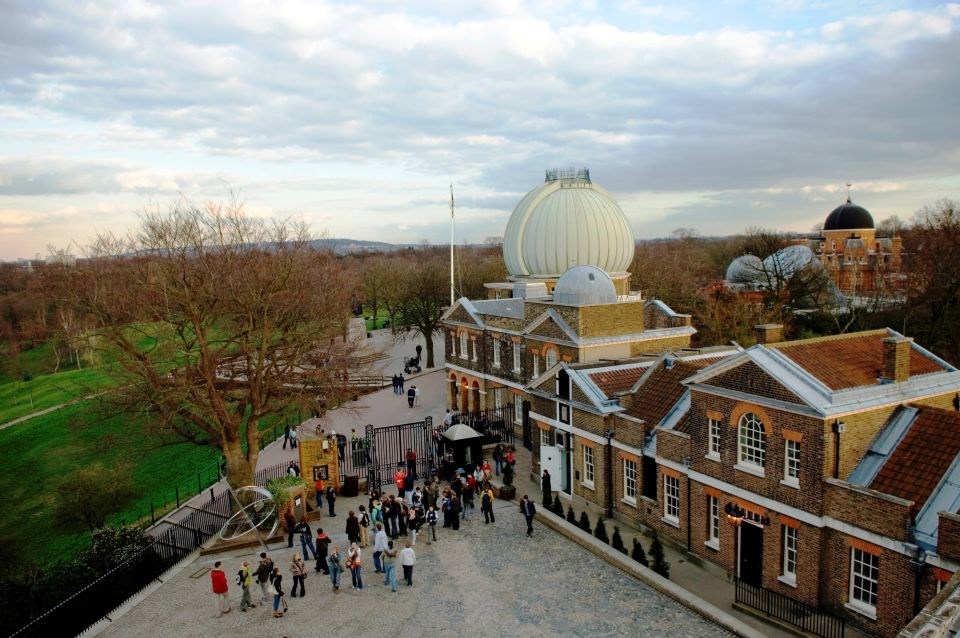
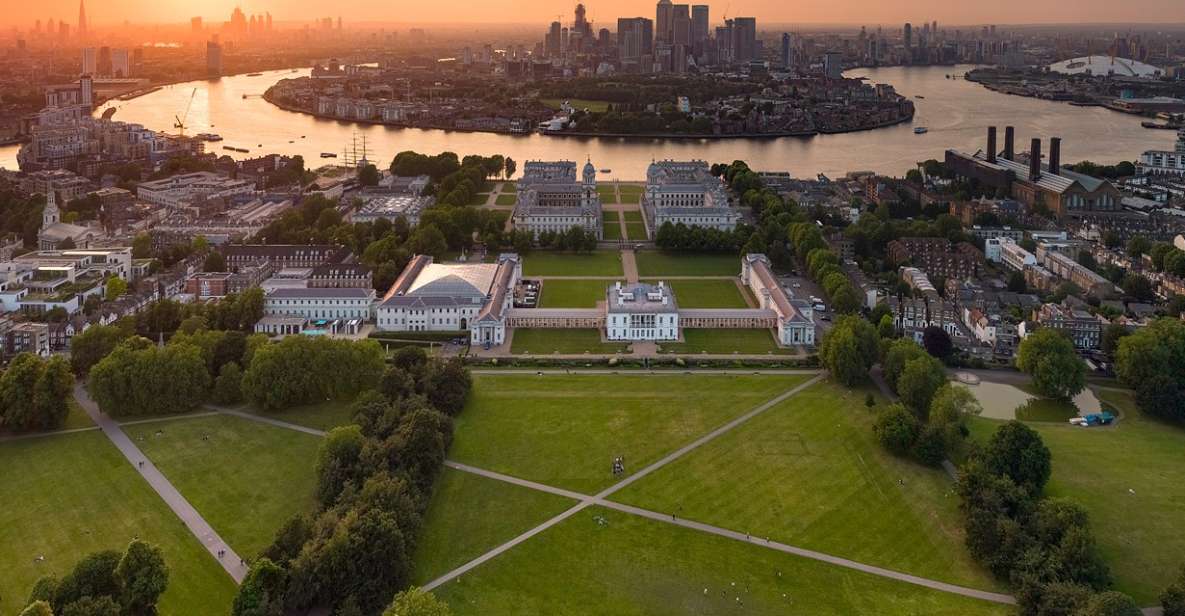
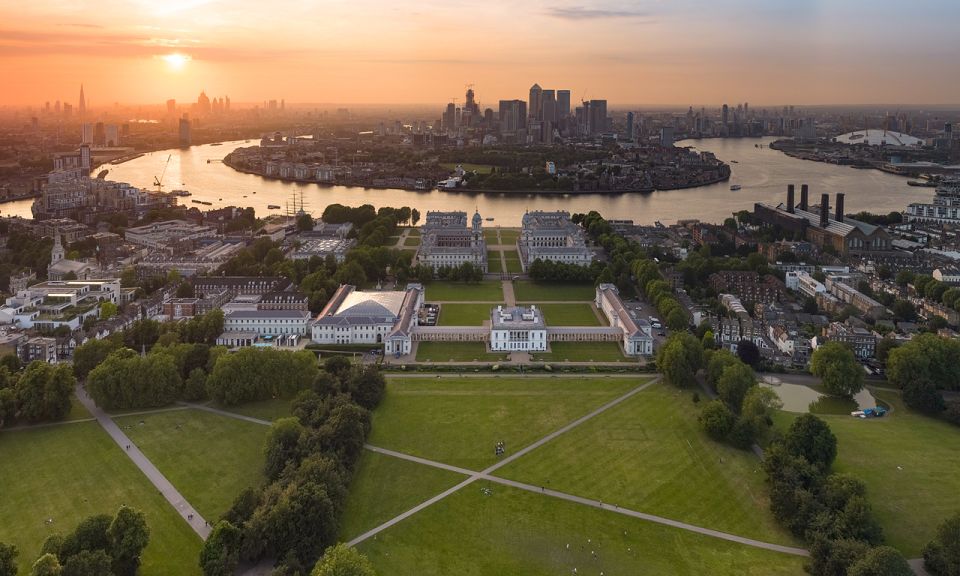
Your day starts in Greenwich Royal Park at the Royal Observatory Greenwich. From the approach alone, you’ll get dramatic views over London—across the City and down toward the River Thames. Once you’re inside, it helps to think of the Observatory as three layers: the iconic landmarks, the history of scientific practice, and the instruments that made discoveries possible.
The first must-see is the Meridian Courtyard, where you can stand astride the Prime Meridian Line. It’s one of those simple visuals that lands immediately: you’re literally straddling east and west at the home of GMT (Greenwich Mean Time). It’s also the kind of thing you can do fast for the photo, or slow down for context—either way, it’s a built-in win.
From there, you move through key rooms and buildings that explain not just what was discovered, but who did the work and why it mattered. You’ll walk through Flamsteed House, taking in the sense of stepping in the footsteps of Astronomers Royal. Then you reach the Octagon Room, designed by Sir Christopher Wren. It’s one of the best-preserved Wren interiors in London, so it feels like you’re inside a period “machine” for observation and thought rather than a modern exhibit hall.
One practical tip: give yourself enough time here to read and look. The Observatory isn’t just a checklist of objects. The story connects across rooms, and the payoff comes when you connect names, inventions, and instruments into one timeline of progress.
Harrison’s clocks and the Time Ball: where public time became a thing
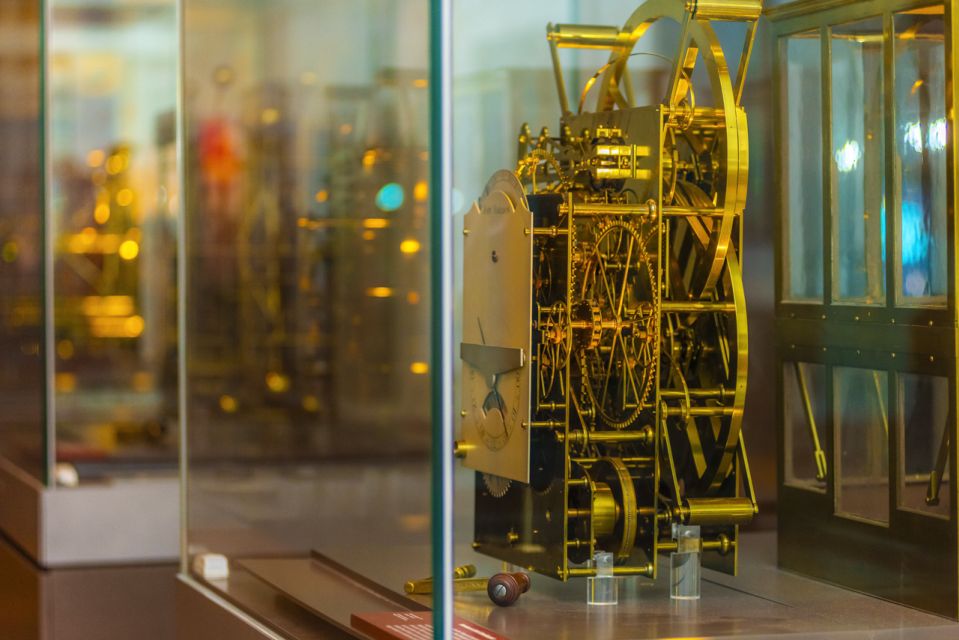
One reason this pass feels better than a basic museum visit is that it explains timekeeping as a technology that changed everyday life. At the Royal Observatory, you’ll see John Harrison’s clocks, celebrated inventions that helped transform long-distance accuracy at sea and beyond.
Then there’s the red Time Ball on top of Flamsteed House. It’s described as one of the world’s earliest public time signals, first used in 1833 and still operating today. Even if you’re not a clocks-and-math person, the concept is satisfying: societies didn’t just need time—they needed a shared, trustworthy way to know it.
You’ll also get a guided chain of influential scientists and inventors connected to the Observatory, including Newton, Halley, Bradley, Maunder, Harrison, Airy, and Einstein. You can treat this like a “connections board.” I find that approach helps: you don’t have to memorize everything, but you should leave knowing that the Observatory wasn’t a one-off facility. It was part of a long-running brain trust.
The Great Equatorial Telescope in the onion dome
The Observatory’s big visual centerpiece is the Great Equatorial Telescope in the huge iconic onion dome. It’s the sort of instrument you see in old photos, and then in person you realize how serious the engineering had to be just to do astronomy over a century ago.
The telescope matters for two reasons. First, it shows the scale of tools required before modern satellites and digital imaging. Second, it helps you connect earlier themes in the visit—accurate time, careful observation, and instruments built to reduce uncertainty.
If you’re visiting with kids or teens, this is a strong stop because it gives a clear sense of awe. If you’re visiting with people who like hands-on tasks, note that this is still a museum experience, not a science lab with repeatable experiments. Still, the telescope and the Meridian photo moment are high-energy anchors that keep the day from feeling purely academic.
Cutty Sark: tea clipper drama, ship wheel time, and the view over the Thames
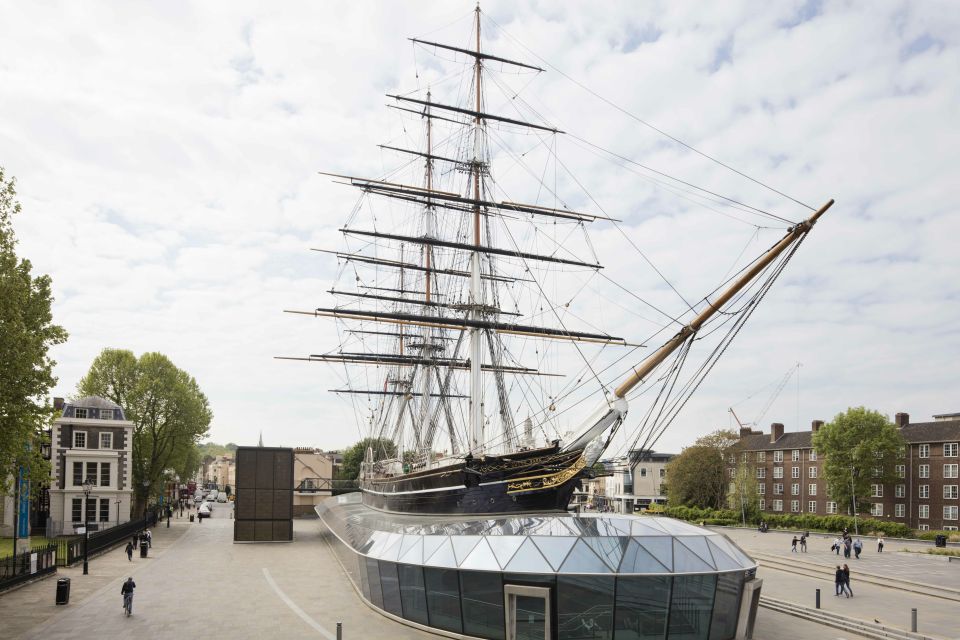
Once you’ve finished the Observatory, you head downhill toward Cutty Sark, the world’s sole surviving tea clipper. This is where the day shifts from science rooms to shipboard reality. You can board and explore an award-winning museum and visitor experience built around a vessel that was launched in 1869 and originally designed for the China tea trade.
The ship’s physical scale is the first thing you notice. You can see the towering masts and experience the feeling of height and rigging lines. You’ll also get to take the helm at the ship’s wheel and then return to the main deck with a whole different kind of viewpoint—plus fabulous views of the River Thames.
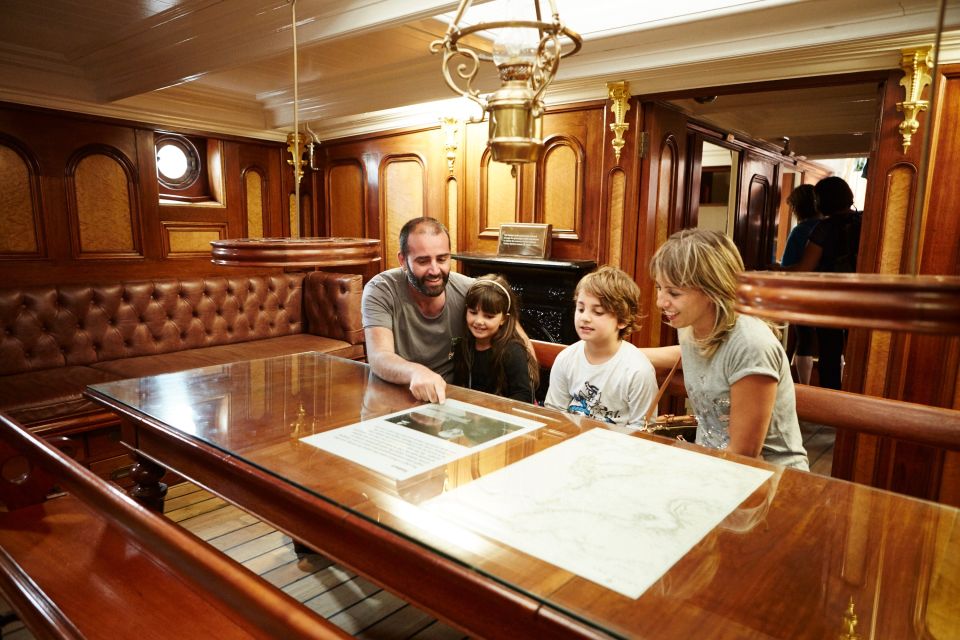
What I like about Cutty Sark is that it isn’t just a static display. The experience includes access to the ship in a way that lets you imagine movement, work, and the daily rhythms of life aboard. You can see sailor-related spaces too, including sailors’ quarters, which helps you move from “cool ship” to “how people actually lived.”
There’s also an important conservation detail that changes how visitors experience the ship. Cutty Sark was raised over three meters as part of a six-year conservation project. That means you get the unique opportunity to stand directly underneath the ship and see her elegant lines and design choices with a clarity you don’t usually get in ship museums.
If you want one practical strategy: consider how you’ll spend your time between the Observatory and Cutty Sark. If your priority is Cutty Sark, going there earlier can keep you from racing later in the day. This pass is packed enough that timing becomes real.

Queen’s House and the National Maritime Museum: free entry, big stories
After Cutty Sark, you can continue to the included historic and museum spaces: The Queen’s House and the National Maritime Museum. These are both included in your pass, and standard entry is free of charge except for special exhibitions or guided tours.
The Queen’s House is designed by Inigo Jones and is a pioneering piece of 17th-century architecture. Think of it as an art-and-architecture stop more than a maritime-tech stop. If you love paintings and architectural details, this is a satisfying pause. If you’re more “ship-first,” you may treat it as a worthwhile add-on rather than the star of your day.
Then comes the National Maritime Museum, billed as the largest museum of its type in the world. This is where the day’s themes expand from one ship and one Observatory into broader stories of exploration and endeavor that helped shape the world.
I like including this because it prevents your day from becoming too narrow. Without it, you’d have two great stops and one optional detour. With it, you get context: why navigation mattered, how timekeeping connected to travel, and how maritime achievement became part of national and global identity.
Price and pacing: how to make 6 hours feel like more
At $40 per person, you’re paying for two paid entries: the Royal Observatory and Cutty Sark. Then you’re getting access to two more major sites that have free standard entry. That structure is what makes the value feel strong. You’re not just buying a single attraction; you’re buying the hard parts and adding the rest.
Now the pacing. The day pass is listed as 6 hours, and both key attractions open at 10 AM and close at 5 PM (last entry at 4 PM). In practice, that means you should expect your day to feel full even if you’re moving at a comfortable pace.
Here’s how I’d plan your time in a way that reduces stress:
- Spend your first block of the day at the Observatory, aiming to see the Meridian area, Flamsteed House highlights, and the Wren interior.
- Build in extra time for Harrison’s clocks and the Time Ball details, because these are the parts that reward you for reading slowly.
- If Cutty Sark is your top priority, don’t wait too long to go aboard. The ship experience is large and you’ll want time to take in the main deck, rigging, and wheel.
- Treat Queen’s House and the National Maritime Museum as “choose your depth” stops. You can do both with included access, but you don’t have to try to conquer every room.
Also, plan for a realistic walking day. Greenwich has hills and you’ll move between spots in outdoor areas. One review note that matters: it’s more walking than many people expect, including a demand-like climb up and out of certain viewpoints. Wear shoes you trust.
And one more practical note if you plan to rely on your phone: there can be spotty signal in this part of Greenwich. You’ll do better if you rely on the included guides and audio features rather than expecting constant connectivity.
What this pass is best for (and who might want a different plan)

This day pass fits best if you like a mix of science, history, and real-world storytelling. If you enjoy museums that explain the “why” behind objects—timekeeping, observation, navigation—this is a strong match. It’s also a good choice for groups because everyone gets at least one clear favorite: a Prime Meridian photo for the curious, and a shipboard experience with tall masts for the romantics of maritime history.
It also works well for families, especially if kids like big sights and cool settings. The Observatory is visually engaging (Meridian Line, telescope dome), and Cutty Sark gives a sense of scale and adventure.
One caution: if you’re bringing kids who need lots of hands-on interaction, this may feel more like “look and read” than “do and play.” The experience is excellent, but it isn’t positioned as a hands-on science playground.
Should you book the London Royal Museums Greenwich Day Pass?
I’d book it if you want a one-day Greenwich plan that covers the core highlights without the headache of picking and re-picking tickets. The combination works: Prime Meridian + Harrison’s clocks + Cutty Sark + the museum context. That’s a satisfying arc for a day trip.
I would skip this pass—or adjust your expectations—if your goal is primarily just one thing. If you only care about ships, you might feel the day is broader than necessary. If you only care about art, the Queen’s House stops may not feel like the main event. But if you’re open to moving between science, ships, and museum storytelling, this pass gives you a lot of value for your time.
FAQ
Where is the Royal Observatory Greenwich for this day pass?
The Royal Observatory meeting point is on Blackheath Avenue, London, SE10 8XJ.
Where is Cutty Sark for this day pass?
Cutty Sark is located on King William Walk, London SE10 9HT.
How long does the Royal Museums Greenwich Day Pass take?
The duration is listed as 6 hours.
What’s included with the pass?
You get entrance fees to the Royal Observatory and Cutty Sark, downloadable multilingual interactive guides at both attractions, and access to The National Maritime Museum and The Queen’s House.
Is food or drink included?
No. Food or drink is not included.
What languages are available for the audio guide?
The audio guide includes English, Spanish, Chinese, French, German, Italian, Portuguese, and Korean.
Do I get into The Queen’s House and the National Maritime Museum for free?
Standard entry to The Queen’s House and the National Maritime Museum is free of charge, except for special exhibitions or guided tours.
What time do sites open and close?
All sites open at 10 AM and close at 5 PM, with last entry at 4 PM.
Is the experience wheelchair accessible?
Yes, it is listed as wheelchair accessible.
Can I cancel for a refund?
You can cancel up to 24 hours in advance for a full refund.
Can I reserve now and pay later?
Yes. The option is listed as reserve now & pay later, where you keep your travel plans flexible and pay nothing today.