REVIEW · LONDON
London: The Lost Tunnels of Euston Station Guided Tour
Book on GetYourGuide →Operated by London Transport Museum · Bookable on GetYourGuide
Euston has a whole other underground story. This guided walk takes you off the main Tube paths and into disused tunnel space, where the station’s past feels eerily close and the future (HS2) is right around the corner. I especially liked the chance to see vintage poster remnants that have been tucked away for decades, plus the way the guide ties each awkward little corridor to what’s changing above.
A big plus is the human touch. The guides (I’ve seen names like Scott and Anthony) keep the pace friendly, allow time for photos, and explain why certain areas were shut and what improvements were made for Tube service.
One clear drawback: expect low lighting, stairs, and uneven ground, and there are no toilets. If you’re claustrophobic or have mobility limits, this tour is not a good match.
In This Review
- Key things I found most compelling
- Why Euston’s forgotten tunnels feel so different from the Tube
- Getting there: Euston Square meeting point and what 75 minutes includes
- Tour start: where Euston began, and what HS2 is about to change
- Leslie Green details you’ll want to spot fast
- Vintage posters hidden for over 50 years
- Inside the disused passageways: uneven ground, low light, and real perspective
- The secret ventilation shaft: looking down at Victoria Line trains
- How the guide ties the past to present-day station engineering
- Price and value: is $60.61 worth it?
- What to bring, what to wear, and what to skip
- Who this tour suits best (and who should choose another plan)
- Should you book the Lost Tunnels of Euston?
- FAQ
- How long is the London: The Lost Tunnels of Euston Station Guided Tour?
- Where do I meet the guide?
- What is included in the price?
- Is the tour suitable for children?
- Does the tour have toilets?
- Are food and drinks allowed?
- What should I bring or wear?
Key things I found most compelling
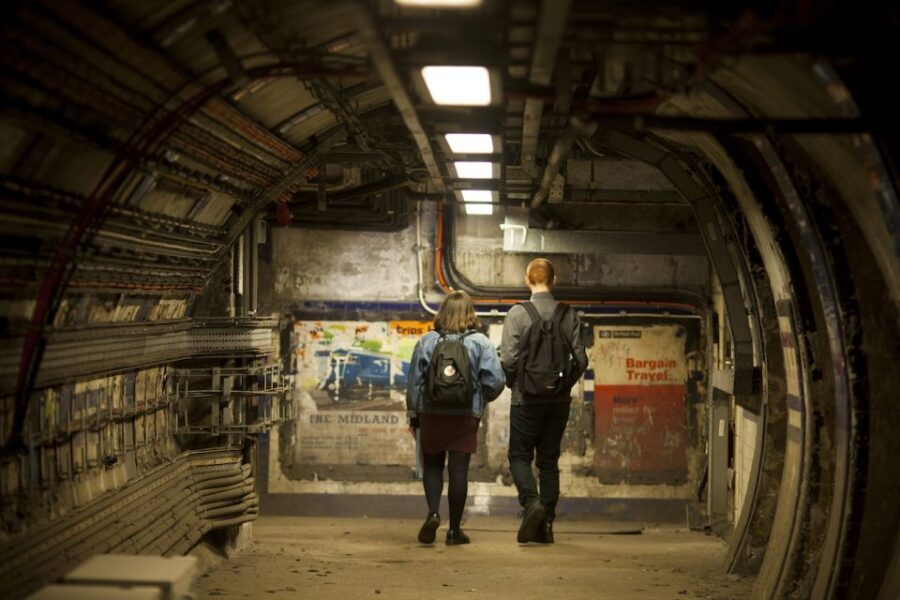
- Access you can’t DIY: You’ll walk where most people never go, in disused passageways under Euston.
- Hidden posters with a story: Remnants of vintage advertising were concealed for over 50 years.
- HS2 context you can actually picture: You learn how Euston is set to evolve as the Midlands terminus.
- A rare Victoria Line sight: A secret ventilation shaft gives you a look down at Victoria Line trains.
- Small-group energy: When the group is quiet, it’s easier to hear the details and get good photos.
Why Euston’s forgotten tunnels feel so different from the Tube
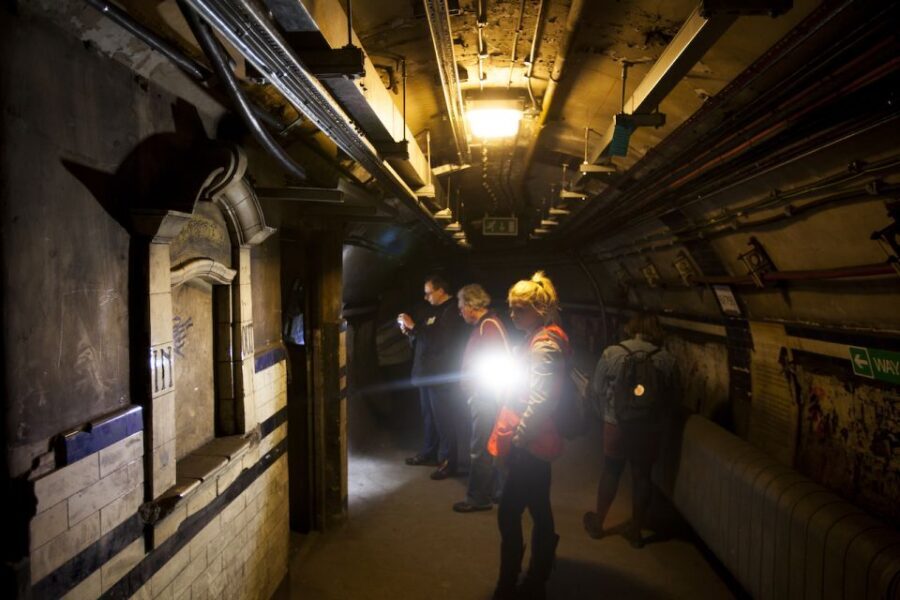
The Tube is fast, bright, and designed for flow. This tour flips that experience on its head. You move through darker, dustier spaces where the station’s infrastructure looks more like an industrial network than a passenger system.
What works is how the guide keeps your bearings. Instead of listing facts, you connect clues: where people used to pass, what was later blocked off, and how the station’s underground engineering evolved. The result is that Euston stops feeling like just a stop on your route and starts feeling like a living machine.
And yes, it’s a little spooky in a good way. You’re walking in a place that’s not meant to be toured, so the atmosphere does half the job for the storytelling—especially when you spot hidden surfaces that have been out of view for years.
You can also read our reviews of more guided tours in London



Getting there: Euston Square meeting point and what 75 minutes includes
You meet your guide at the south exit of Euston Square station (NW1 2BF), on the corner of Gower Street and Gower Place, at the glass façade on the hospital side of Euston Road. If you like navigation support, the what3words hint is baked.bend.worry.
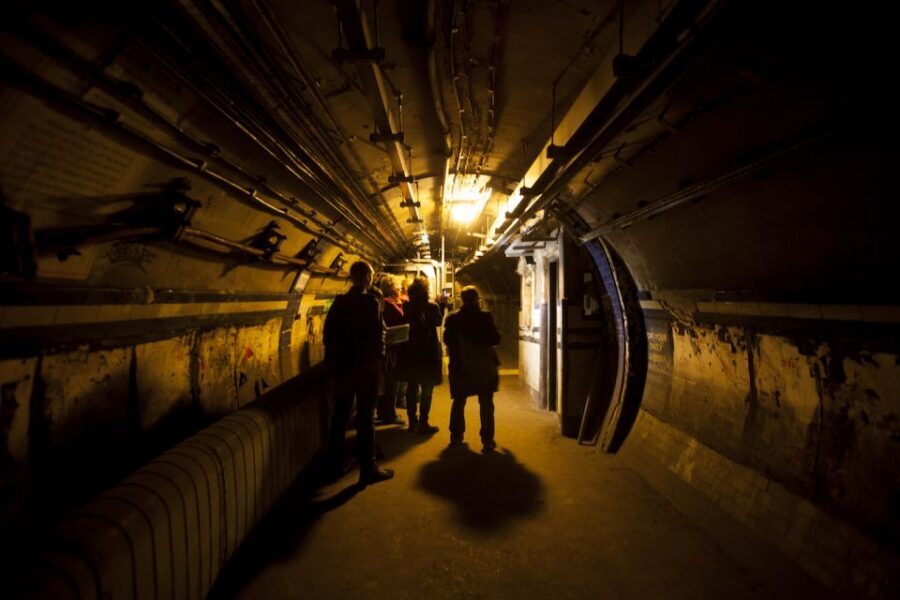
The walk is 75 minutes, and it’s a true walking tour. That matters because you’ll spend the time moving between stops—so wear shoes you trust. Comfortable clothes help too, since you’ll be dealing with stairs, uneven ground, and low lighting.
Plan around the fact that there’s no bathroom stop on the way—there’s simply no toilets. If you’re the type who always checks the nearest restroom, take care of that before you head to the meeting spot.
Tour start: where Euston began, and what HS2 is about to change
After you gather at Euston Square, the guide frames the bigger picture: Euston as a station with a long build-up of layers. You hear about its humble beginnings on the corner of Melton and Drummond Streets, which gives you a sense that today’s station didn’t just appear fully formed.
Then the conversation shifts toward the future. You’ll learn how Euston is being positioned as the London terminus for High Speed 2 (HS2), connecting onward to the Midlands. The key thing here is not the big national project talk—it’s how it affects what you can see and what’s likely to disappear.
Even if you know Euston as a commuting hub, HS2 changes the meaning of your visit. Instead of treating this as a nostalgia walk, it becomes a chance to understand what happens when a mega-project collides with existing underground infrastructure. You’re standing in a place that’s actively being re-shaped.
Leslie Green details you’ll want to spot fast
One of the most satisfying moments is when you’re directed toward the iconic Leslie Green station area and its surroundings. The tour builds toward this as a kind of visual marker—something recognizable that helps you stop thinking only in tunnel diagrams and start thinking in station history.
The guide also sets expectations about timing and change. You’ll hear that certain elements are set to be swept away as works move forward, so the visit feels like a before-and-after moment in real time.
Practical tip: keep your eyes up and your phone ready for quick snapshots here, because this is one of those stops where the guide’s pace may be brisk. You’ll appreciate the photos later, not because it’s flashy, but because it anchors the story you’ll have heard while walking.
Vintage posters hidden for over 50 years
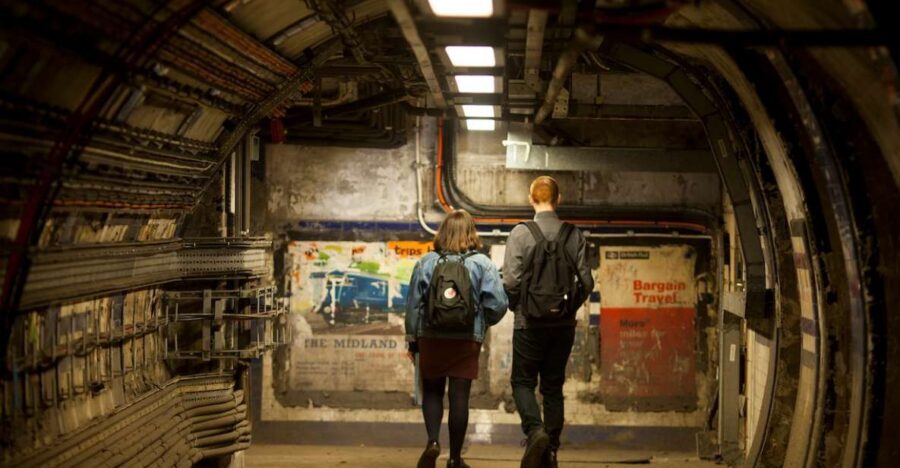
This tour delivers one of those rare travel pleasures: seeing something you would never guess exists. You’ll notice remnants of vintage posters that were concealed from sight for over 50 years. They’re not just random artifacts; they connect directly to the idea that station spaces change how people experience the public world.
What I like about this stop is the framing. The guide links those posters to the hidden corridors you’re walking through, so you understand that concealment wasn’t an accident—it was part of the station’s evolving layout and operational needs.
When the posters appear, it stops feeling like a tour of tunnels and becomes a tour of decisions. What’s displayed, what’s blocked, what’s preserved long enough to be seen again. It’s also a great photo moment, because the background textures in underground spaces add character without you trying.





Inside the disused passageways: uneven ground, low light, and real perspective
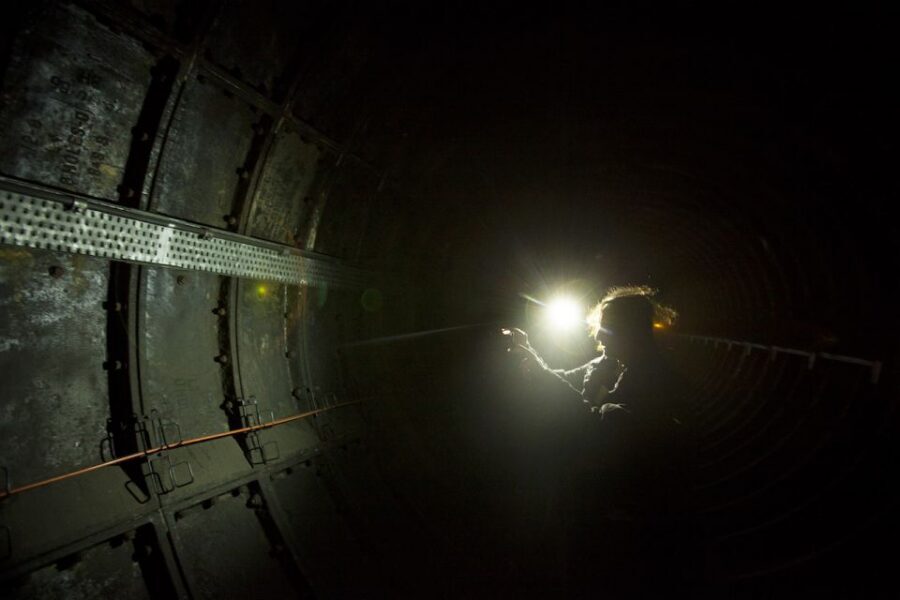
The core of the experience is the walk through a labyrinth of dark and dusty passageways—areas that were once used by the traveling public. This is not a smooth, wide, daylight corridor. You’ll move through sections with uneven ground, and you’ll deal with low lighting and stairs.
That sounds like a warning, but it’s also why the tour works. You don’t get the same effect in a bright underground museum hallway. The physical environment makes the story credible.
Here’s how to get the most out of it:
- Keep your pace steady. The guide is there to pace the group, but your job is to avoid rushing on stairs.
- Listen for directional cues. The underground can feel repetitive if you’re not tracking where you are.
- Use your camera sparingly but strategically. Low light can mean blur, so take fewer photos and aim for moments when the guide is pointing out a feature.
I also like that the guide explains what was changed to improve Tube service. You’ll get a sense of why a space was closed and how operational needs reshaped the underground. It turns the tour from a curiosity into a basic lesson on how big cities manage complexity.
The secret ventilation shaft: looking down at Victoria Line trains
If you want one standout visual, this is it. The tour leads you to a secret ventilation shaft, then you look down at Victoria Line trains.
This moment is memorable because it flips perspective. Instead of watching trains from a platform at eye level, you see them from above, framed by station infrastructure. You get a sense of how layered the system is—tunnels, platforms, ventilation, and passenger flow all stacked and connected.
Also, this is one of the stops where your comfort level matters most. Looking down can be thrilling, but if you’re uneasy with heights—or you’re already feeling tense due to low lighting—give it extra attention. This is not the time to force yourself if you’re not comfortable.
How the guide ties the past to present-day station engineering
As the tour moves along, the explanation keeps widening from the tunnels to the entire station network. You’ll learn about Euston’s underground network and how modern changes relate to the station’s daily demand—Euston serves over 42 million passengers each year.
That number matters because it explains why the station needs constant adjustment. When a place handles that volume, even small improvements to circulation, safety, or maintenance can have huge impacts. And you’re seeing those priorities indirectly, through the story of what’s been repurposed, concealed, and reconfigured.
You also hear about innovations to a Tube and Network Rail station. The key is that you’re not just told that upgrades are happening—you see how older spaces were used, and that makes today’s changes feel less abstract.
If you like transport engineering as a concept (even casually), you’ll probably walk away feeling more “fluent” in how stations operate.
Price and value: is $60.61 worth it?
At about $60.61 per person for a 75-minute guided tour, the price isn’t the cheapest way to spend an hour-plus in London. But it’s not trying to be.
The value comes from access and expertise. You’re getting guided access to disused underground spaces that you can’t wander into safely on your own, plus a guide who brings in archive-backed context tied to the London Transport Museum. That museum tie-in matters because it tends to mean the tour leans factual, not just spooky.
You’re also paying for a specific mix of moments:
- hidden passageways with tactile, real-world atmosphere
- vintage poster remnants out of sight for decades
- HS2 future context connected to the physical station
- a ventilation shaft view of Victoria Line trains
If your goal is a one-time special experience with a practical payoff—better understanding of how Euston works—this price starts to look reasonable. If you’re hoping for something mostly visual with minimal walking, you may feel the cost is high.
What to bring, what to wear, and what to skip
Keep it simple. Bring a passport or ID card. Wear comfortable shoes with good grip—avoid open-toed shoes. Dress for the weather since you’ll be walking and waiting around before you head into the underground sections.
The tour doesn’t allow food and drinks, and you should plan to travel without luggage or large bags. That’s partly to keep the space manageable, and partly because this is a narrow, low-light environment where big items become a nuisance.
And one more “yes, really” detail: there’s no toilet on the tour. This is the kind of thing people forget until it’s too late.
Who this tour suits best (and who should choose another plan)
This is a strong pick if you:
- like transport history and the mechanics of how transit systems evolve
- enjoy photo moments when a guide points things out clearly
- want something more atmospheric than a standard station tour
It’s not a good fit if you:
- have mobility impairments (the tour involves lots of walking, stairs, uneven ground)
- have claustrophobia (low lighting and enclosed passages are part of the experience)
- travel with very young kids (it’s not suitable for children under 10, and groups have limits for older kids too)
If you’re traveling with kids who are old enough, stick to the guidance on age limits. The tour also caps the number of children aged 10-15 per adult, so it’s worth checking before you decide.
Should you book the Lost Tunnels of Euston?
I’d book it if you want a London experience that’s equal parts story and physical place. The disused tunnels make the history feel real, the hidden posters add a fun visual mystery, and the ventilation shaft view is the kind of moment that makes you remember Euston as more than a transit hub.
Skip it if you hate stairs, uneven ground, or enclosed, low-light spaces. Also skip it if you need toilet access during the tour.
If you’re an “I like details” traveler—someone who pauses to read station signage, watches how people move through crowds, and enjoys transport facts—you’ll likely have a great time here. It’s a practical, slightly eerie hour-and-a-bit that turns Euston into a destination.
FAQ
How long is the London: The Lost Tunnels of Euston Station Guided Tour?
The tour lasts 75 minutes.
Where do I meet the guide?
Meet your guide at the south exit of Euston Square station (NW1 2BF), on the corner of Gower Street and Gower Place, at the glass façade on the hospital side of Euston Road (what3words: baked.bend.worry). The tour ends back at the same meeting point.
What is included in the price?
You get an Euston Tube station tour with a live English-speaking guide.
Is the tour suitable for children?
It is not suitable for children under 10. There is also a maximum of four children aged 10–15 per adult.
Does the tour have toilets?
No. There are no toilets during the tour.
Are food and drinks allowed?
No. Food and drinks are not allowed.
What should I bring or wear?
Bring passport or ID, and wear comfortable shoes and weather-appropriate clothes. Open-toed shoes are not allowed. The tour also involves uneven ground, low lighting, and stairs.