REVIEW · LONDON
London: Westminster WW2 Tour & Churchill’s War Rooms Ticket
Book on GetYourGuide →Operated by City Wonders Ltd. UK · Bookable on GetYourGuide
London’s WWII secrets live underground. This Westminster walk-and-tickets combo takes you from famous government buildings to Churchill’s bunker, where plans were made during the Blitz and the war ran on a tight clock. I like that it mixes big-sight sightseeing with the gritty reality of life in a real sealed-off wartime nerve center.
Two things I’d put at the top of the list: the guided Westminster segment (with headsets) is led by lively guides like Paul and Michael, who turn politics into human stories without getting dull. Then the Churchill War Rooms deliver the goods—rooms preserved as they were when the lights went off in 1945, plus an audio guide with Churchill speeches and details about the maze of underground operations.
One consideration: the War Rooms are cramped and busy, so if you dislike tight spaces (or if audio devices get a little glitchy), you’ll want to go in expecting crowding in the underground rooms.
In This Review
- Key points worth knowing before you go
- Westminster in WWII: why this tour feels so direct
- Meeting at Westminster Station and getting set up fast
- The guided Westminster walk: Churchill, exile, and the map of power
- Big Ben and the photo-stop rhythm
- 10 Downing Street and the human scale of government
- Westminster monuments that bring the people into view
- Headsets, timing, and how the guide shapes the day
- Churchill’s War Rooms: preserved 1945 underground work
- The War Rooms maze: operations, maps, and intercepted communications
- Transatlantic Telephone Room: the Churchill–Roosevelt connection
- Kitchen life and the odd detail that hits hardest
- Sun lamps and vitamin D: daily life in a sealed world
- Audio guide experience: your pace, your pressure
- What the itinerary gets right: walking primer plus underground payoff
- Price and value: is $59 a fair deal?
- Who this tour is best for (and who might want a different plan)
- Practical tips to make it smoother on the day
- Should you book this London WWII walk and Churchill’s War Rooms ticket?
- FAQ
- Where is the meeting point for the tour?
- How long is the tour?
- Is Westminster Abbey included in the tour?
- Do I have to join the guided portion inside Churchill’s War Rooms?
- What’s included with my ticket?
- Is the tour suitable for wheelchair users or mobility impairments?
- Are baby strollers allowed?
- Can I cancel for a full refund?
Key points worth knowing before you go
- Headsets help you hear the guide even when streets get noisy.
- Your walk covers Westminster landmarks tied to WWII, before you head underground.
- The Churchill War Rooms are preserved like 1945, with practical details (including period weather signage).
- You’ll learn how messages were intercepted and maps were built from day-to-day operations.
- Inside, it’s mostly self-paced with an audio guide, so you can slow down where you want.
Westminster in WWII: why this tour feels so direct
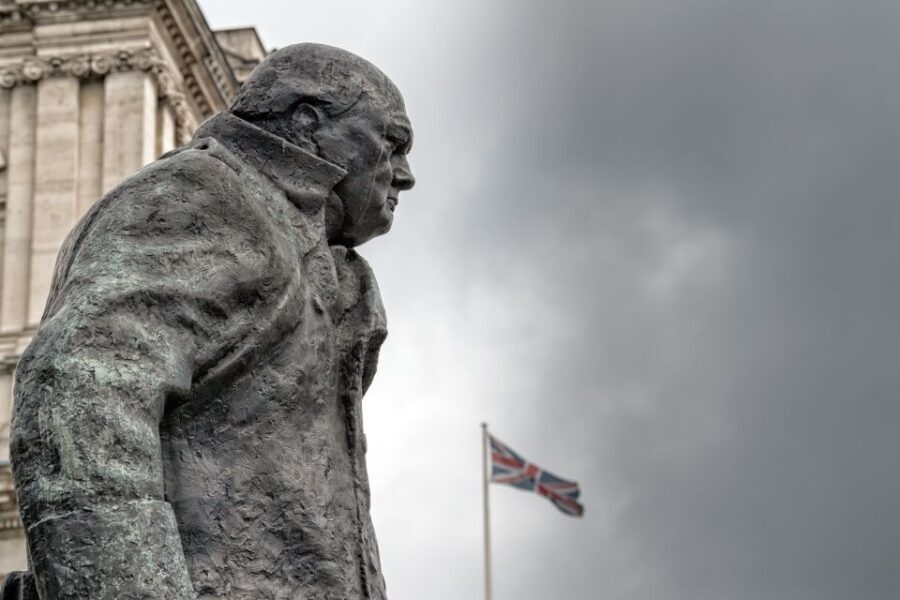
Most WWII tours focus on battlefields. This one starts closer to the decision-making engine—London’s Westminster district, where the government, Parliament, and the leadership stayed relevant even as the city took hit after hit. You get a sense of how history wasn’t far away; it was under the same streets.
The best part is the pairing. You walk past power and symbolism, then you drop into the underground spaces where the work actually happened. That contrast makes the stories stick.
You can also read our reviews of more tours and experiences in London


Meeting at Westminster Station and getting set up fast
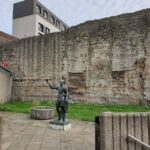
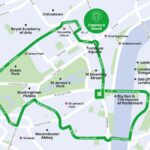
I like how this tour is built for motion, not lingering in lines. You meet your guide outside Westminster Station, specifically near the top of the stairs by Victoria Embankment Exit 2, behind the statue of Boadicea on a chariot.
Once you’re together, you get headsets. That matters in London, where traffic and crowds can drown out a normal group tour. It also helps on a walking route with multiple photo stops, so you don’t keep missing the key points.
The guided Westminster walk: Churchill, exile, and the map of power

After meeting, the tour kicks off with a guided walk through Westminster’s most recognizable WWII-relevant sites. You’ll get context as you move, not just names read off a list.
This is where the tour’s story framework really lands. Germany’s advance forced governments and monarchs across Europe into exile in London, and Westminster became a hub for official negotiations, intelligence, and the constant pressure of uncertainty. Your guide connects those facts to what you see above ground—an approach that makes the Underground feel less random and more inevitable.
Big Ben and the photo-stop rhythm
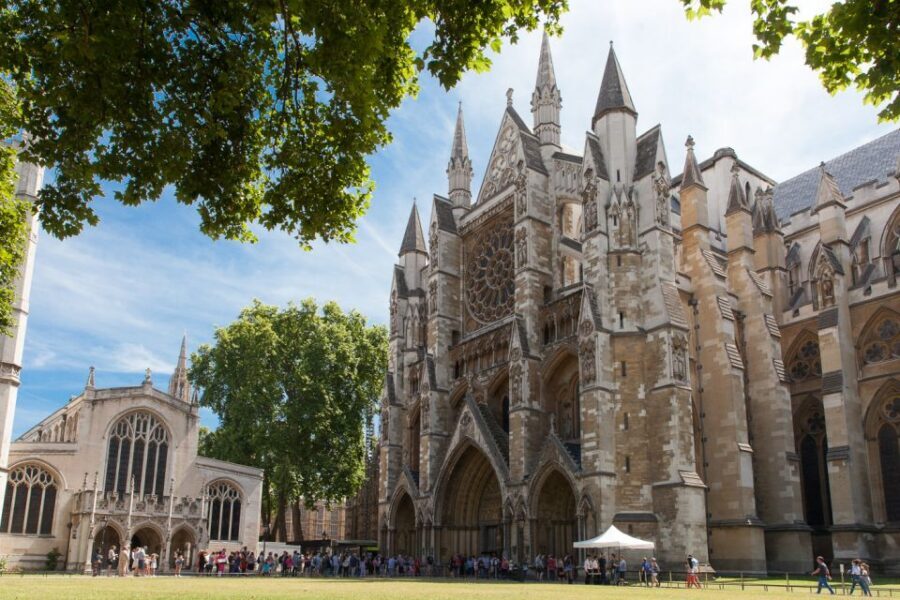
You’ll hit classic landmarks on a tight schedule: Big Ben for photos, then the Houses of Parliament and Westminster Abbey area. In the planning of your day, remember this is not a full Abbey visit. You’re there for photo stops and orientation, while the main site-time goes to Churchill’s War Rooms.
That rhythm is good for first-timers who want a strong primer without getting trapped in ticketed-entry lines at every stop. The trade-off is that if you came to see Westminster Abbey itself, you’ll still need to do that separately.
10 Downing Street and the human scale of government
One of the most satisfying moments is the tour’s attention to the symbolism of 10 Downing Street. You’ll see it from the outside, and you’ll also learn that you’re looking at a place Churchill himself walked through after becoming prime minister.
This is a small detail, but it changes your angle. Instead of treating Downing Street like a postcard, you connect it to leadership under pressure—what it meant to keep governing while London was being bombed.
If you like guides who bring a dry sense of humor without flattening the facts, you’re in good hands. Multiple guides are described as funny and quick-witted, including Paul and Dave, which makes these stops more than just photos.




Westminster monuments that bring the people into view
As you move, you’ll also hear about public memory and who the city chose to honor. The walk ends at the Cenotaph, the UK’s primary national war memorial, built as a tribute to the First World War. Even though your theme is WWII, starting and ending with national memorial language helps you understand how the country processed loss and duty across decades.
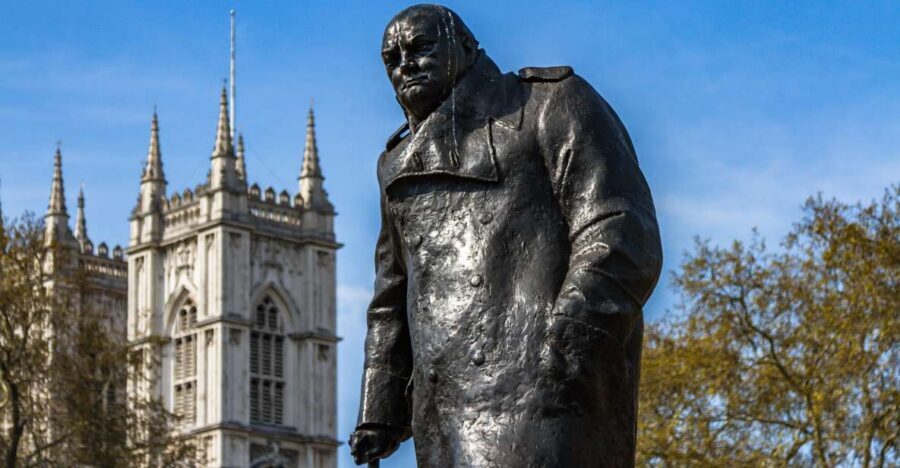
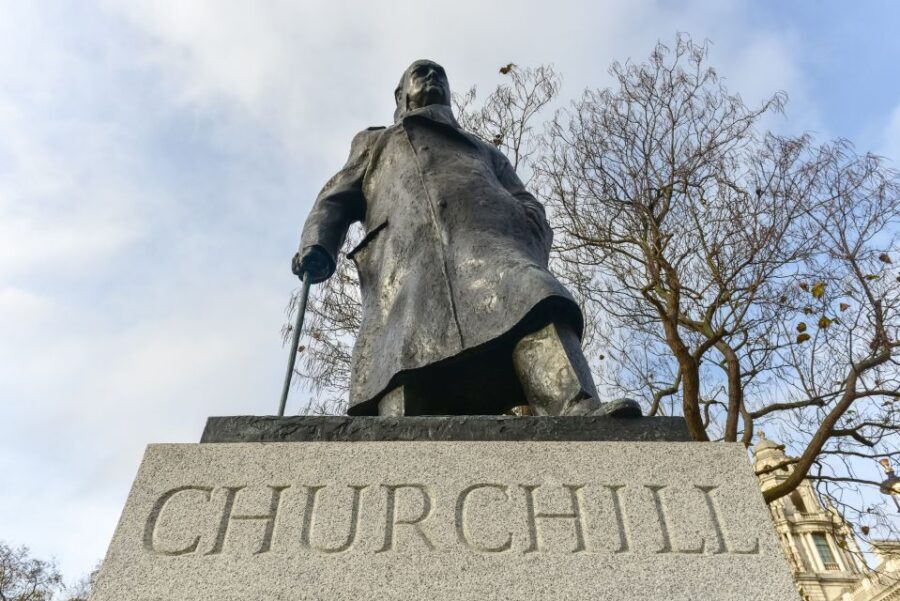
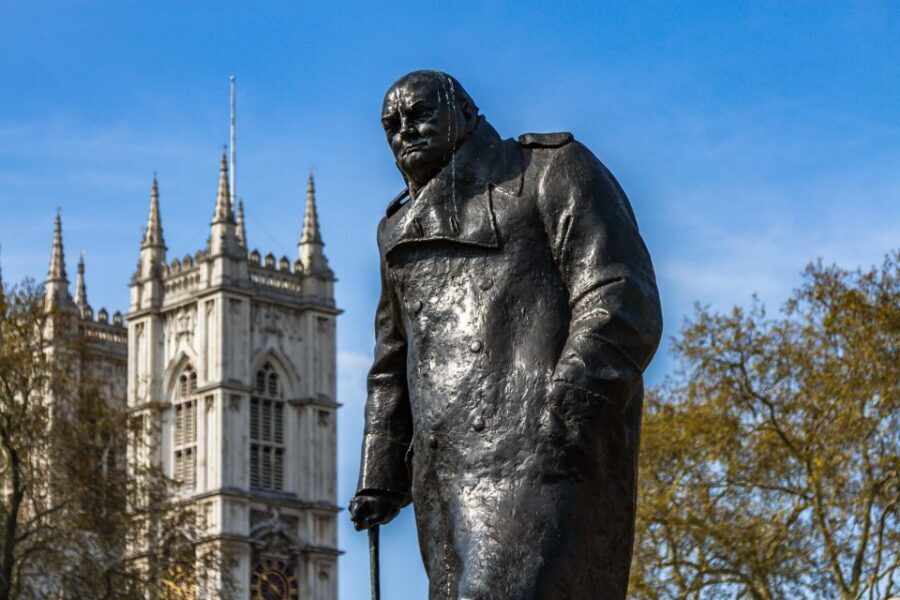
Along the way, look out for the statue of Sir Winston Churchill and the monument to the Women of World War II. These stops matter because they broaden the story beyond the men in suits. They give you a fuller picture of who kept the system running.
Headsets, timing, and how the guide shapes the day
A walking tour lives or dies on clarity. The headset setup helps keep the narration audible from stop to stop, and you won’t keep doing that annoying thing where you lose the guide every time someone walks between you.
From the feedback I’ve seen, guides often steer with energy—talking in a way that makes the group feel included. Names that come up often in that style include Michael, Maggie, Peter, and Andy. Whether your guide is cheeky and funny or more straightforward, the goal is the same: help you arrive at the War Rooms with the right questions.
Churchill’s War Rooms: preserved 1945 underground work
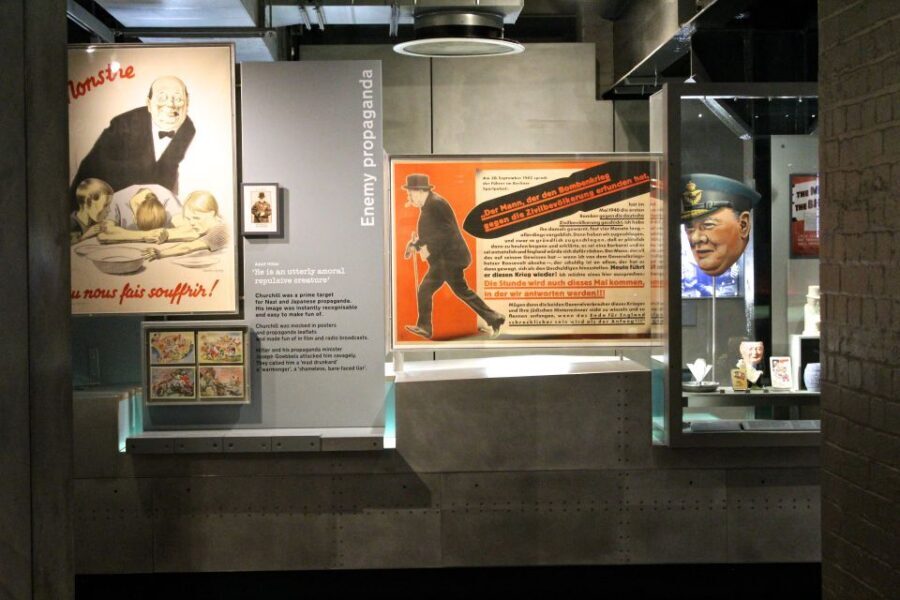
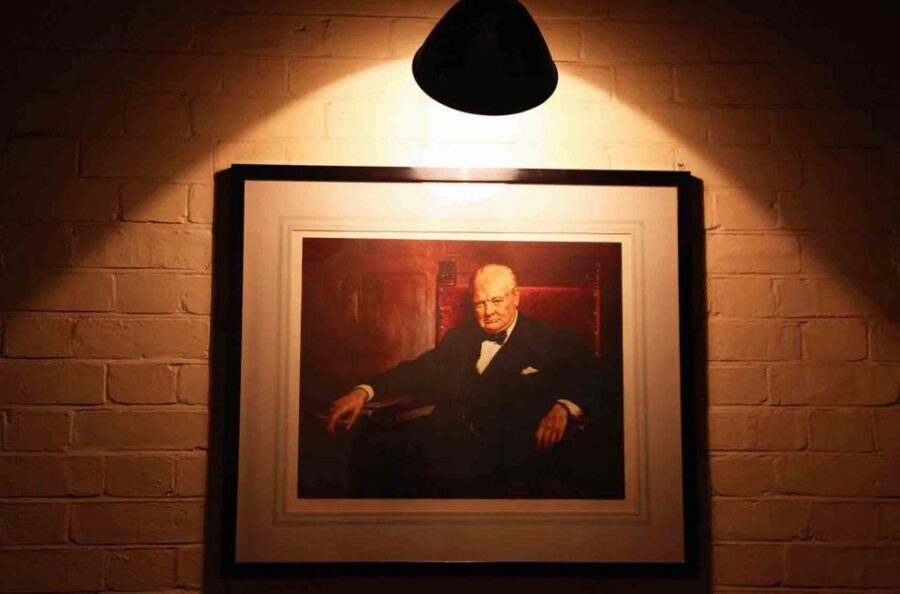
Then comes the main event: Churchill’s War Rooms. You enter a preserved bunker-space that’s designed to feel like the day the lights were switched off in 1945. That preservation detail is the reason this place hits hard. It’s not a reconstruction that feels modern underneath; it feels like a working set frozen mid-breath.
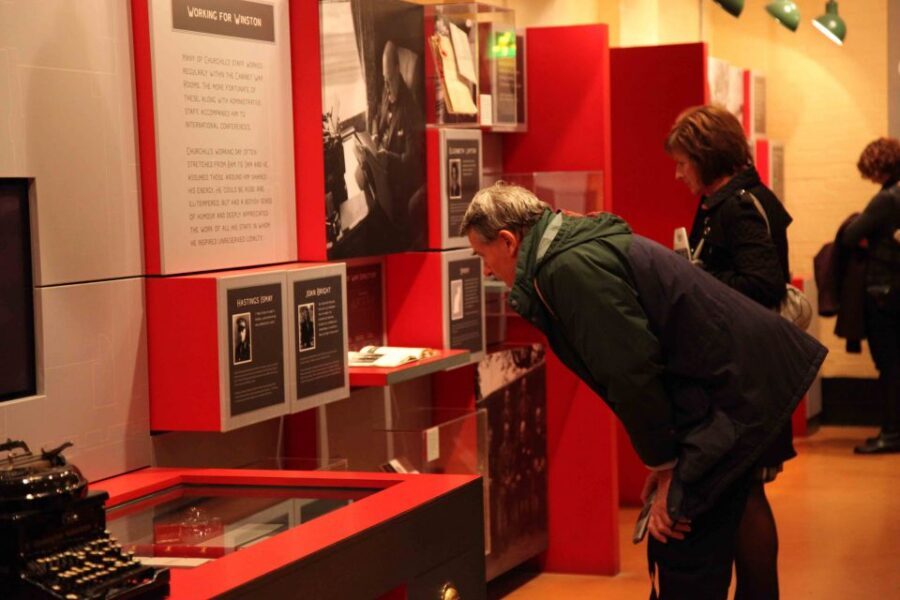
You’ll also spend time in the Churchill Museum. Even if you’re not a museum person, it helps because it sets the emotional and political context for why the bunker looks the way it does—why certain rooms exist, who used them, and what they were trying to accomplish.
The War Rooms maze: operations, maps, and intercepted communications
The layout is built like a maze for a reason. As you wander, you’ll understand how information moved around. The tour narrative centers on how the team planned and reacted during German bombing campaigns, while also working through signals and enemy communications.
You’ll learn that staff deciphered enemy messages and created maps of army movements. In other words, the bunker wasn’t only about speeches and strategy boards—it was about constant interpretation, decision-making, and the work of keeping the war machine running with imperfect information.
As you move deeper into the rooms, the details also shift from big decisions to practical realities. That’s when the visit turns from educational to oddly intimate.
Transatlantic Telephone Room: the Churchill–Roosevelt connection
One of the standout concepts built into the experience is Churchill’s special relationship with President Roosevelt. You’ll hear about it through the Transatlantic Telephone Room, a key space tied to high-level wartime communication.
This matters because it reframes the story. WWII wasn’t just a British fight on British soil. London’s bunker was plugged into a wider network of Allied coordination, and this room gives you a sense of how urgent the exchanges were.
Kitchen life and the odd detail that hits hardest
It’s not all cables and charts. You’ll also see spaces that point to domestic life underground, including Churchill’s kitchen.
That contrast is one of the most memorable parts. You’re looking at top-secret conversations on one side, then turning a corner to something ordinary enough to think about meals, routine, and human endurance. In a way, it makes the bunker feel less like a myth and more like a place where people tried to keep going.
Sun lamps and vitamin D: daily life in a sealed world
One of the most specific and memorable facts you’re likely to hear is about the primitive sun lamps used to help staff get enough vitamin D. It’s the kind of detail that feels small until you consider the environment: people working in darkness and locked-in spaces, still needing something as basic as health.
This also comes with a human edge. Even the families of some staff couldn’t know what their work involved. That adds a layer of isolation to the usual wartime story.
Audio guide experience: your pace, your pressure
Inside the War Rooms, you get an audio guide and you explore at your own pace. The guide won’t accompany you through the rooms, which gives you control—pause for maps, linger at the rooms that catch your eye, and skip quickly past the ones that don’t.
It’s worth noting how the day can flex. Many visitors report spending much longer once they’re down there. Plan on at least a couple of hours if you like reading the room details and letting the audio narration guide your path.
There can be a downside. Some people report needing to troubleshoot audio channels partway through, and the space can be cramped enough that coordinating the device and the room layout takes patience.
What the itinerary gets right: walking primer plus underground payoff
This tour’s structure is smart. The Westminster walk gives you the names, the politics, and the context—so when you’re underground, you’re not just looking at old furniture and maps. You’re understanding why they were used and what decisions were tied to them.
Then the War Rooms deliver the payoff: preserved spaces, museum content, and audio narration with authentic Churchill speech clips. You leave with a clearer picture of the war as both a public struggle above ground and a hidden operation below.
Price and value: is $59 a fair deal?
At about $59 per person for a 2.5-hour experience, the value comes from what’s included. You’re getting a guided walking tour with headsets, plus entry to Churchill’s War Rooms with reservation included, plus an audio guide inside.
If you tried to assemble this yourself—walking tour guide time plus timed entry plus audio setup—you’d likely spend more in hassle and money. What makes it feel fair is that the walking portion isn’t just sightseeing; it’s a set-up for the War Rooms, so you get more meaning per hour.
The other value point is flexibility. Once inside the War Rooms, you can move at your own pace, so you’re not forced into a strict, stop-at-every-wall schedule.
Who this tour is best for (and who might want a different plan)
This works especially well if you like Churchill, WWII politics, and places where decisions get made. It also suits you if you want a single afternoon that ties together Westminster’s landmarks and the underground bunker narrative.
It’s not a great fit if mobility is an issue. The tour is not suitable for wheelchair users or people with mobility impairments, and you’ll be on your feet for the walking and the underground maze.
It’s also not stroller-friendly. If you’re bringing kids, this is a politically heavy experience with a lot of wartime information and small-space walking, so you might find it better for older teens and adults who enjoy history.
Practical tips to make it smoother on the day
Start with the obvious: wear comfortable shoes. You’ll do a full walking segment before you descend into tighter indoor spaces.
On hot or busy days, plan to use breaks naturally during the photo stops and wait your turn patiently inside. One practical thing to expect: the War Rooms environment can feel crowded because it’s confined and popular.
Also, get your bearings early once inside. The audio guide helps, but you’ll enjoy the layout more if you take a moment to decide what you want most—speech audio, communications details, the kitchen spaces, or the high-level telephone room.
Should you book this London WWII walk and Churchill’s War Rooms ticket?
If you want a WWII experience that connects Westminster’s visible power to the invisible work underground, book it. The walking primer helps you understand what you’re seeing, and the War Rooms provide that rare feeling of stepping into a preserved 1945 command space.
Skip it only if you strongly dislike cramped interior environments or you need accessibility options that this tour can’t provide. If that’s you, there are other WWII-themed choices in London that might fit better.
FAQ
Where is the meeting point for the tour?
Meet your guide outside Westminster Station, at the top of the stairs behind the statue of Boadicea on a chariot near Exit 2 Victoria Embankment.
How long is the tour?
The total duration is about 2.5 hours.
Is Westminster Abbey included in the tour?
No. Westminster Abbey is not included as a visit, and you should expect photo stops rather than an Abbey entry experience.
Do I have to join the guided portion inside Churchill’s War Rooms?
No. The Churchill War Rooms visit is self-guided. You’ll have an audio guide while you wander the rooms.
What’s included with my ticket?
Your tour includes an English-speaking guide for the walking portion, headsets, entry and reservation for the Churchill War Rooms, and an audio guide inside the War Rooms.
Is the tour suitable for wheelchair users or mobility impairments?
No. It is not suitable for people with mobility impairments or wheelchair users.
Are baby strollers allowed?
No. Baby strollers are not allowed.
Can I cancel for a full refund?
Yes. The tour offers free cancellation up to 24 hours in advance for a full refund.