REVIEW · LONDON
Secrets of Central London Walking Tour
Book on GetYourGuide →Operated by London Transport Museum · Bookable on GetYourGuide
London has transport secrets in plain sight. This 2-hour walk from the London Transport Museum area traces Central London’s story from the 1500s to today, using streets and infrastructure as your guidebook. I especially like how you connect everyday places like Covent Garden and Kingsway to big transport milestones, and how the tour ties the Thames to the way the city moved long before modern rail.
One thing to plan for: the tour moves at walking pace. It’s English-only, and you’ll be crossing roads and spending time on uneven ground in busy areas, so if you prefer slow, conversational stops, build in a little extra patience.
In This Review
- Key things I’d watch for on this tour
- Starting at London Transport Museum on Covent Garden Piazza
- Theatreland and Covent Garden: streets that became a stage
- Kingsway and Covent Garden connections: from street plans to tunnels
- Holborn’s underground world: tunnels you can almost hear
- Embankment Gardens and the Thames: why trains sound so close
- Price and walking practicality: is it good value?
- Should you book Secrets of Central London Walking Tour?
- FAQ
- Where does the Secrets of Central London Walking Tour meet?
- How early should I arrive?
- How long is the tour?
- What does the price include?
- Is London Transport Museum entry included?
- Does the tour visit disused tube stations?
- What language is the tour guide?
- How much walking is involved?
- What should I bring and what’s not allowed?
- Is there free cancellation and can I pay later?
Key things I’d watch for on this tour

- Transport history from the 1500s to present day without getting stuck in museum-mode
- Covent Garden’s original name and how the area’s identity shaped the neighborhood
- Kingsway Tram Tunnel and Piccadilly line construction as examples of city planning in action
- Engineering stories around Crossrail work in the 2010s and how new projects affect old streets
- Holborn’s tunnels underground and what that means for the city above ground
- Embankment Gardens and the sound of trains—a fun mystery that explains the physics of place
Starting at London Transport Museum on Covent Garden Piazza

You start outside the main entrance of the London Transport Museum, right on Covent Garden Piazza (WC2E 7BB). The timing is practical: the Hidden London team meets you about 15 minutes before departure, so show up a bit early, get your bearings, and use that time to scan nearby street signs and landmarks. This matters because the tour is all about reading the city—like following a diagram drawn on real streets.
The big value here is that you’re not just walking through famous squares and theaters. You’re walking through the logic of London—where lines were drawn, where routes were widened, and where the ground itself became part of the transport story. You’ll also get a “museum brain” without paying museum admission, because the guided walk is the core experience.
A quick note that can save you hassle: you’ll need passport or ID, and this tour doesn’t include London Transport Museum entry. Also, there’s no cloakroom, and luggage or large bags aren’t allowed. That combination is common for walking tours, but it’s worth planning around—pack light and wear shoes you don’t mind getting street-dusted.
You can also read our reviews of more walking tours in London



Theatreland and Covent Garden: streets that became a stage
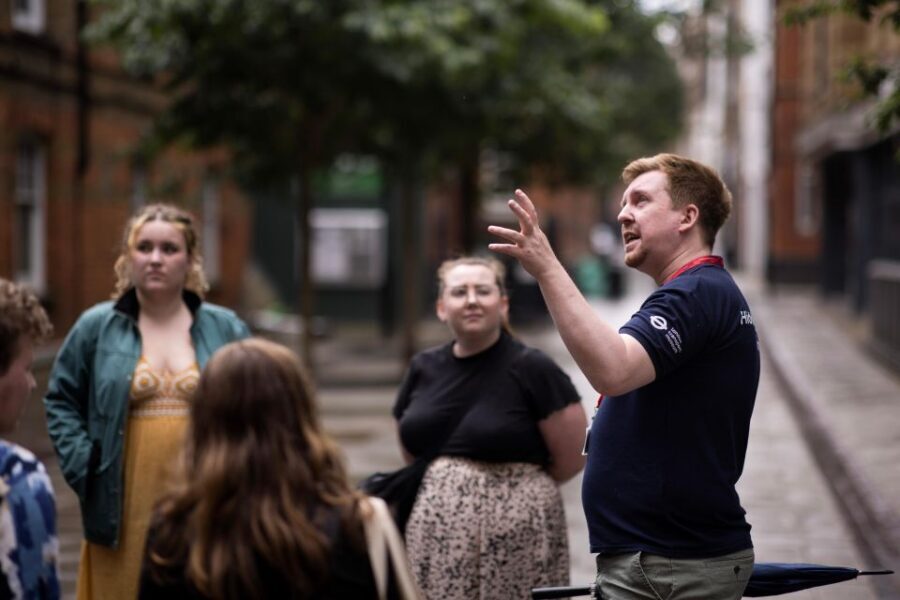
From the Theatreland and Covent Garden side of the route, the tour treats this area like more than an entertainment district. You’ll hear how Covent Garden was originally known as Convent Garden, and you’ll get a sense of how the neighborhood’s early identity fed into the kind of crowds it attracted. That’s not just trivia; it helps you understand why transport and street design were always tied to people moving for work, performances, markets, and everyday errands.
You’ll also learn about the first theatres that opened in the area. That matters because theatres create predictable surges—thick clusters of arrivals and departures. London solved those surges with streets, timing, and later transit links, and this tour shows how those needs built momentum over time.
If you like walking tours that feel like a guided reading of the city rather than a slideshow, this is the right tone. You’re standing in the same general neighborhoods where transport and culture have grown together. And because the tour is designed around archive-style stories, it tends to connect landmarks to the why, not just the what.
Potential drawback: this area can be busy, and you’ll be weaving through pedestrian-heavy streets while listening to guide explanations. If your comfort level is lower in crowds, you may want to pause your photos for a second so you can keep up with the guide’s pacing.
Kingsway and Covent Garden connections: from street plans to tunnels

Kingsway is where the tour starts feeling like engineering with a human face. You’ll hear how well-known streets shaped London’s transport systems, and the guide’s focus shifts from “place” to “project.” In other words: you’ll see how major routes weren’t accidental—they were designed, built, and modified based on what the city needed.
One of the standout topics here is the Kingsway Tram Tunnel. It’s the kind of detail you’d walk right past without a guide—just another stretch of urban fabric—yet it’s a concrete example of how transport infrastructure can hide in plain sight. You’ll also hear about the construction of the Piccadilly line, which helps you connect modern underground travel to the earlier plans that made it possible.
This part is especially valuable if you’ve ever ridden the Underground and wondered how certain routes ended up where they did. Even without getting technical, you’ll come away with a more practical mental map: lines follow corridors, corridors follow movement patterns, and movement patterns follow crowds and commerce.
Keep in mind: you’ll likely cross roads in active areas. The tour recommends sturdy footwear and suitable clothing because the ground can be uneven. This isn’t a gentle stroll where you can stop whenever you like—it’s more like following a guided route through the city’s working brain.
Holborn’s underground world: tunnels you can almost hear
Holborn enters the story as a reminder that London is not one layer deep. You’ll hear about the multitude of tunnels underground in the Holborn area. That’s a great concept for visitors, because it reframes what “downtown” really means. Even when you can’t see anything, the city can still be dense with passageways, services, and infrastructure.
What I like about this part is the cause-and-effect teaching. The tour doesn’t treat tunnels as random facts. It uses them to explain why Central London feels the way it does—why some neighborhoods seem tightly packed, why construction history matters, and why the city’s “underfoot” layer shapes what happens above.
It also helps you understand how modern transit projects fit into older city bones. The story continues with references to Crossrail in the 2010s, showing that big changes are rarely starting from zero. They’re built on top of existing routes, underground constraints, and long-standing street patterns.
Because Holborn can be a bit of a “moving through” zone rather than a sightseeing stop, this section rewards attentive listening more than heavy photography. If you can keep your ears on the guide and not just your eyes on buildings, you’ll get more from this stretch.
Embankment Gardens and the Thames: why trains sound so close

The Embankment area adds atmosphere to all that infrastructure talk. You’ll learn why you hear trains running when walking in tranquil Embankment Gardens. That’s a fun puzzle because it flips expectations: the scene looks calm, but the transport system is still close. The tour uses this contrast to make you think about proximity—how tracks, tunnels, and station approaches can sit near “quiet” parks.
This is also where the Thames thread becomes clearer. You’ll hear about the first public transport thoroughfare of London: the Thames. Even if you’ve only thought of the river as scenery, this framing is a wake-up call. For centuries, the Thames was a major way people and goods traveled, shaping where life happened along the banks. Then later, land-based systems grew—because London never stopped moving.
One more reason I like this ending stretch: it gives your brain a satisfying payoff. After walking through transport lines, tram tunnels, and underground passages, you get to stand in a place that feels restful while still hearing the city’s machinery.
Practical tip: in the Embankment and nearby areas, you’re close to water and busy streets. Dress for changing conditions, and don’t assume you can pause your attention for long if the guide is explaining how the sound and infrastructure line up. It’s easy to miss the “why” if you’re half-reading your phone.





Price and walking practicality: is it good value?
At $26 per person for about 2 hours, this tour sits in the “value category” for Central London experiences. The key reason is simple: you’re getting a guided story that connects multiple neighborhoods—Theatreland, Covent Garden, Kingsway, Holborn, and the Embankment—without adding transport-ticket costs or museum admissions. You also don’t need to plan your own route in detail. You get the framework for understanding how the city’s transport grew.
That said, it’s not a “sit and listen” experience. The tour involves a lot of walking (up to two hours), uneven ground, and road crossings in busy areas. So the real value question is: do you enjoy walking tours where you focus on information while moving? If yes, this will feel efficient and rewarding. If you prefer slow pacing, you may find the route demanding.
Suitability also needs honest attention:
- Not suitable for children under 9
- Not suitable for people with mobility impairments (even though the activity is listed as wheelchair accessible, the walking and uneven ground note is important)
If you’re traveling as a couple, with friends, or solo, this type of tour works well because you can stay attentive and then absorb the rest of the day on your own. If you’re traveling with kids, consider whether the walking time and busy streets fit your child’s attention span.
Should you book Secrets of Central London Walking Tour?
Book it if you want Central London to make sense fast—transport history you can see and hear, tied to real neighborhoods. I’d especially recommend it if you’re curious about how the Underground connects to older routes, or if you love the kind of sightseeing where your reward is understanding the city’s hidden logic.
Skip it if you need a slow, flexible pace, or if your comfort level with English listening while walking is low. This is English-language only, and the format can feel quick in parts. If you can read the environment quickly—street signs, building plaques, transit sounds—you’ll get more payoff.
If you do book, pack smart: bring ID, leave large bags at the hotel, and wear sturdy shoes. Then go into the walk with one mindset: London’s transport isn’t just a system, it’s a map of decisions made over centuries.
FAQ
Where does the Secrets of Central London Walking Tour meet?
Outside the main entrance of London Transport Museum, Covent Garden Piazza, WC2E 7BB.
How early should I arrive?
A Hidden London team member meets you about 15 minutes before the tour is due to start.
How long is the tour?
The duration is approximately 2 hours.
What does the price include?
It includes the 2-hour guided walking tour.
Is London Transport Museum entry included?
No. Entry to London Transport Museum is not included.
Does the tour visit disused tube stations?
No. This tour does not visit disused tube stations or spaces.
What language is the tour guide?
The live tour guide speaks English.
How much walking is involved?
The tour involves up to two hours of walking, including uneven ground and crossing roads in busy areas.
What should I bring and what’s not allowed?
Bring passport or an ID card. Luggage or large bags are not allowed, and there is no cloakroom.
Is there free cancellation and can I pay later?
Free cancellation is available up to 24 hours in advance for a full refund, and you can reserve now and pay later.