REVIEW · LONDON
British Museum Guided Tour
Book on GetYourGuide →Operated by The Great Weekender · Bookable on GetYourGuide
Two hours to crack the museum. The British Museum is huge, but this guided visit turns that chaos into a doable route through standout objects and the civilizations around them. I like that you start with the museum’s big “must-sees” instead of wandering until your feet give up, and I especially like how the tour works in two of the headline stars—Rosetta Stone and Elgin Marbles—with clear context you can actually hold onto.
The one drawback: in 2.5 hours, you simply won’t see everything. The museum displays around 80,000 objects, and the building holds about 8 million total, so this is a highlights-focused sprint, not a full museum day.
In This Review
- Key Points You’ll Feel Fast
- Why This 2.5-Hour Tour Works in the British Museum
- Meeting Point, Timed Entry, and Skip-the-Line Access
- The Priority Route: How You See “Most Important” Without Missing Everything
- Rosetta Stone: The Object That Makes Meaning Click
- Elgin Marbles: Masterpieces Plus a Side of Serious Questions
- Sutton Hoo: When Early England Becomes Tangible
- Lewis Chessman: A Break From the Serious While Still Learning
- Prehistoric Tools: The Museum Starts Before Written Records
- What Your Guide Actually Adds (Beyond Pointing)
- Value and Price: Is $93 Worth It for 2.5 Hours?
- Who This Tour Suits Best
- Should You Book This British Museum Guided Tour?
- FAQ
- How long is the British Museum guided tour?
- What is the price per person?
- Where do I meet my guide?
- Is skip-the-line entry included?
- Does the tour include timed entry?
- What language is the tour offered in?
- Can the itinerary be customized?
- Is this tour available as a private group?
- Is free cancellation offered?
- Is reserve now, pay later available?
Key Points You’ll Feel Fast
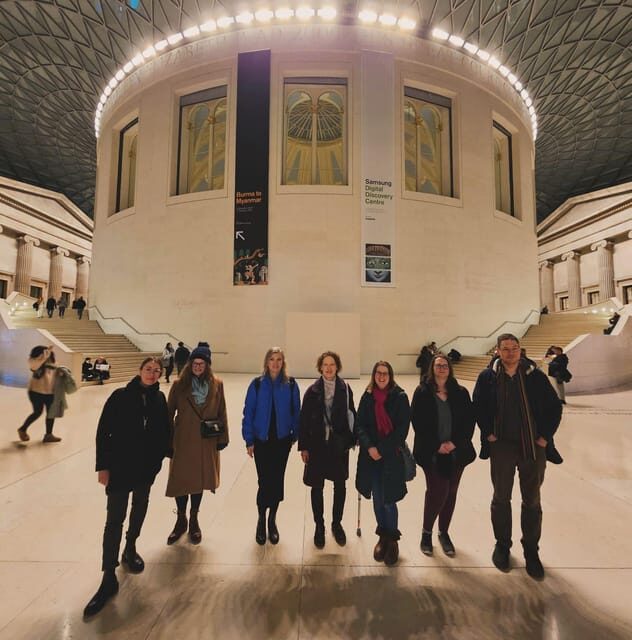
- Timed entry and skip-the-line via a separate entrance, so you lose less time to museum bottlenecks
- A guide-led route through major civilizations, with explanations that connect the famous pieces to the bigger story
- Must-see anchors like the Rosetta Stone, Elgin Marbles, Sutton Hoo, and the Lewis Chessman
- A practical 2.5-hour walking tour that keeps distance modest—just bring comfortable shoes
- Bespoke options available, including the ability to customize the itinerary for a more personal pace
Why This 2.5-Hour Tour Works in the British Museum
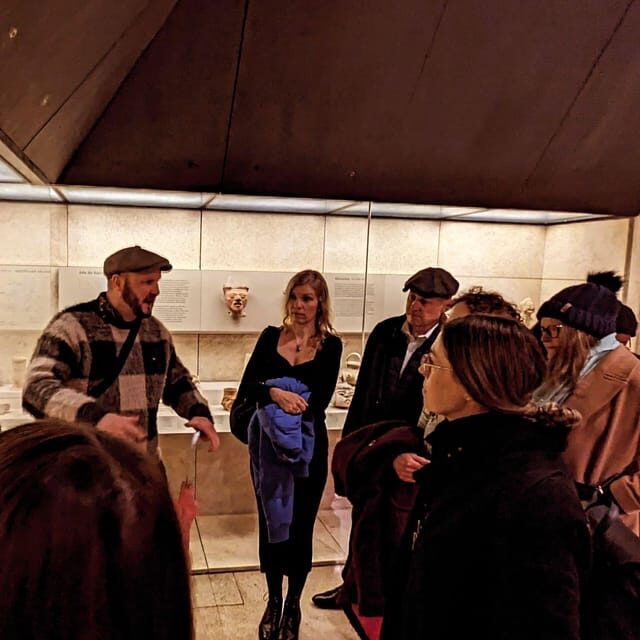
The British Museum can feel like a time machine with too many doors. One minute you’re staring at something prehistoric, the next you’re looking at art shaped by empires, trade, conquest, and everyday life. When you have limited time, that’s where a guided tour earns its keep.
I like the way this one is built around momentum. Instead of asking you to decide what’s “important” after you’re already inside, the guide brings you straight to the highlights and gives you the context as you go. You’ll cover major themes and eras while seeing iconic objects people travel for, which makes the museum feel organized rather than overwhelming.
And because the tour is only 2.5 hours, you can treat it like a smart first pass. It also helps if you’re the type who loves museums but hates the blank-stare feeling of walking from room to room with no plan. You’ll get a narrative thread, then you can decide what to return to later if you want deeper exploration.
You can also read our reviews of more guided tours in London



Meeting Point, Timed Entry, and Skip-the-Line Access
This tour is set up to reduce waiting, which matters at the British Museum. You get timed entry, and you’ll enter through a separate entrance to skip the line.
As for where to meet: the meeting point can vary by option. You’ll typically meet your guide next to the red telephone boxes on Great Russell Street by the museum entrance. Another stated meeting point is outside The Museum Tavern. Either way, plan to arrive a few minutes early so you’re not hunting for your guide with the doors already filling up.
Wear comfortable shoes. It’s a walking tour, but the distance isn’t described as heavy. Still, museum floors plus London stone sidewalks can add up fast if you choose the wrong pair.
The Priority Route: How You See “Most Important” Without Missing Everything

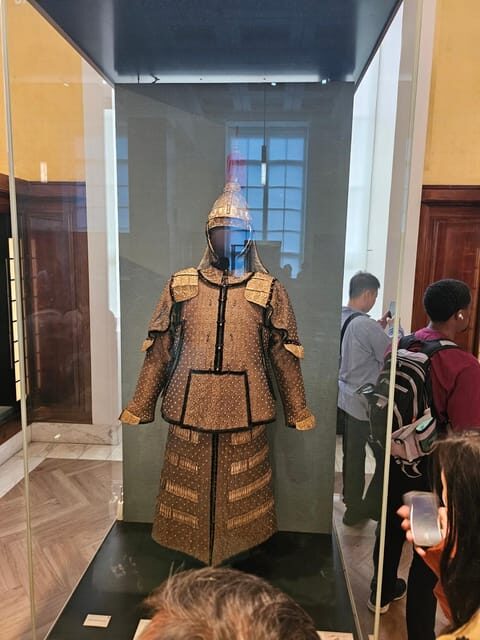
The tour is designed as a guided highlights walk, with the museum’s scale in mind. The British Museum is home to around 8 million artefacts, and you’ll only ever scratch the surface on one visit. Here’s how the experience stays focused: your guide takes you to a curated set of standout rooms and objects and explains what you’re looking at while you’re looking at it.
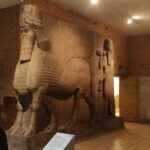
Expect an emphasis on major civilizations and famous pieces. The tour experience includes stops that highlight different eras and cultures, with particular focus on things tied to:
- Egypt
- Assyria
- Ancient Greece
- And early medieval England
That matters because the museum isn’t just “old stuff.” It’s a chain of human stories, and the best way to understand that chain is to connect objects to the world that produced them.
The guide is also there to save you from common museum problems:
- You won’t waste time trying to figure out what matters most in each room.
- You won’t miss the meaning of objects that look impressive but are hard to decode alone.
- You’ll walk away with specific names and stories, so a second visit (if you want one) is easier.
Rosetta Stone: The Object That Makes Meaning Click
If you’ve heard of only one British Museum piece, it’s probably the Rosetta Stone—and for good reason. On this tour, you get it as a centerpiece, not a random “look and move on” moment.
What I like about having the Rosetta Stone explained in a guided setting is simple: without context, it can feel like a strange slab. With context, it becomes a milestone in how people decipher language across time. A guide can connect why scholars care, what the inscriptions were doing, and how that broke open the ability to read older Egyptian texts.
You’ll also benefit from the way this tour keeps object-based storytelling tight. Instead of treating the Rosetta Stone as a standalone celebrity item, you can understand how it fits into the larger Egypt material you’ll see elsewhere in the museum during the same walk.
Elgin Marbles: Masterpieces Plus a Side of Serious Questions
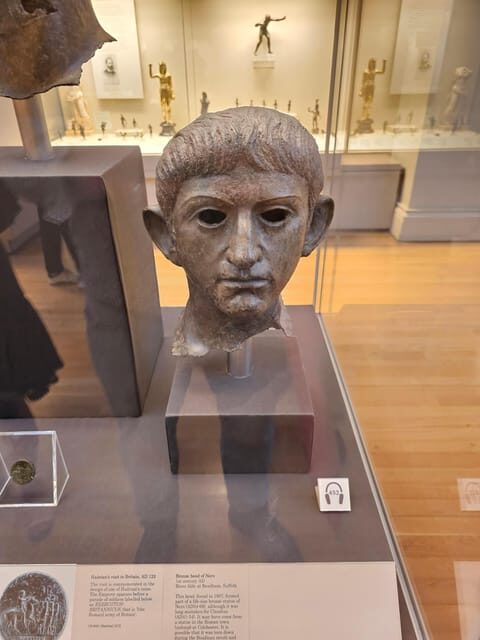
The Elgin Marbles are the kind of museum highlight that turns heads immediately. Even if you’re not a classical art expert, you can feel the scale and craftsmanship. The tour brings them into focus and gives you the historical background around them.
This is a case where a guide is especially helpful, because “pretty sculptures” is only part of the story. Elgin Marbles also lead into bigger debates about collection, ownership, and the movement of art across centuries. Even if you don’t want to get stuck in controversy, you still want the basic facts so you can form your own opinion.
I like that this tour points you toward these questions early—so you don’t just see them, you understand why everyone argues about them. It makes your museum visit more than just photos for your camera roll.
You can also read our reviews of more museum experiences in London






Sutton Hoo: When Early England Becomes Tangible
Sutton Hoo is one of those objects that makes the past feel close. Instead of abstract “ancient history,” you get something that reads like a real window into belief, status, and craftsmanship from early medieval England.
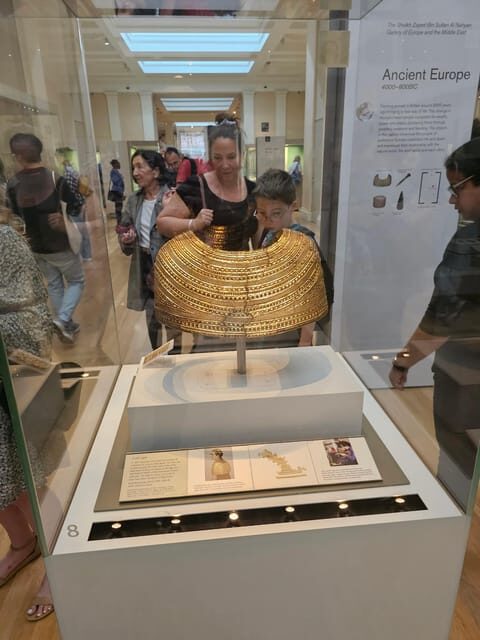
On this tour, Sutton Hoo is included among the major highlights, which means you’re not left discovering it by luck. That matters at the British Museum, where some powerful objects can be missed if you only follow signage or the crowds.
What you’ll likely appreciate is the way the guide ties Sutton Hoo to the broader timeline. You’re not just looking at a treasure display; you’re hearing how it connects with the era around it. That sort of linking turns a single exhibit into a clearer story of how societies lived, traded, and built identities.
Lewis Chessman: A Break From the Serious While Still Learning
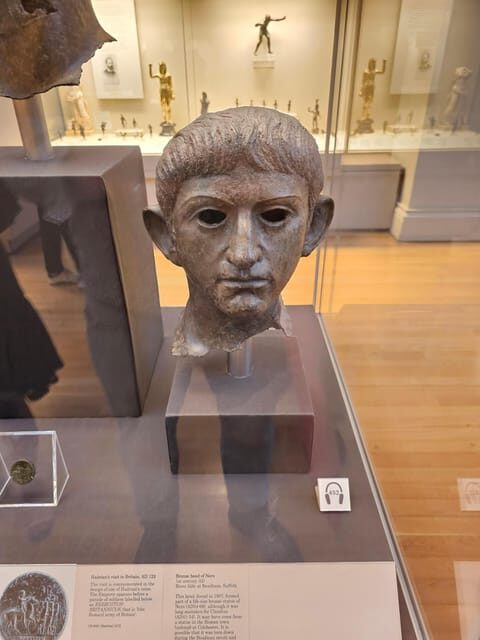
The Lewis Chessman is a favorite highlight because it adds human texture. Chess is a universal activity, and that makes the object feel less distant than many antiquities. It also reminds you that the museum isn’t only about crowns, battles, and monuments.
On this tour, you’ll see the Lewis Chessman as a notable stop—perfect if you want variety. The best part of seeing it with a guide is that the tour can explain what makes these pieces special beyond their charm. You can appreciate the craftsmanship and also understand why they’re important in the museum context.
I like this inclusion because it prevents the tour from becoming one long solemn lecture. You still learn, but you also get that moment where you can’t help smiling at the sheer idea of surviving chess pieces from long ago.
Prehistoric Tools: The Museum Starts Before Written Records
One of the more interesting things about this experience is that it doesn’t jump straight to the famous ancient civilizations. It includes prehistoric tools, which pulls you back toward the earliest part of the human story.
This is valuable because it changes how you think about “antiquities.” Written history gets all the spotlight, but tools are where daily life starts. Even with no inscriptions and no neat dates on a label that you can instantly interpret, a guided tour can help you understand what these objects represent—how people made, adapted, and survived.
If you like grounding history in real materials, this part is a strong add. It gives your brain a reset: you’re not only tracking empires and royal art, you’re meeting people where their lives actually began.
What Your Guide Actually Adds (Beyond Pointing)
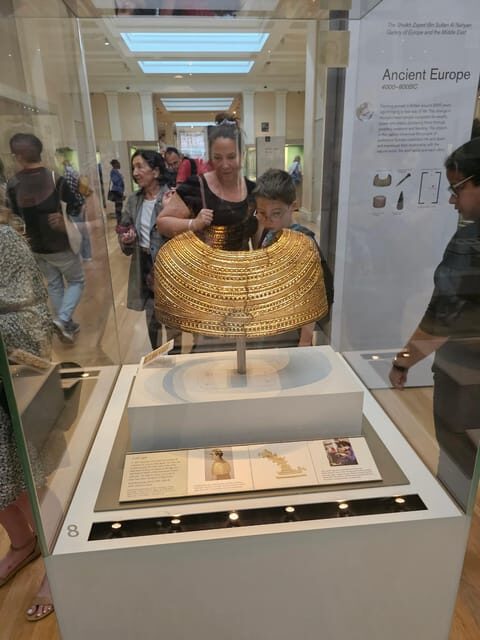
A guided tour succeeds or fails on one thing: whether the guide turns objects into understandable stories. The British Museum is so vast that signage can only do so much. Here, the guide is there to provide background and meaning as you move through the highlights.
In particular, I like that the tour experience emphasizes explanations from an experienced local guide. That usually means:
- You get a fast “what you’re looking at” orientation as you enter key areas
- You hear how objects connect to the civilizations represented
- You leave with specific takeaways you can remember later
Based on the quality of feedback tied to the guide experience, the tour style tends to include patient pacing and interesting anecdotes. If you’re the type who gets impatient with museum tours that rush, this setup is designed to keep things comfortable while still efficient.
Also, the option for private group availability and the ability to customize the itinerary means you can tailor your emphasis. If you’re focused on Egypt, for example, you can ask for more time on the related rooms and objects. If you care more about early England, Sutton Hoo can become your anchor.
Value and Price: Is $93 Worth It for 2.5 Hours?
Let’s be honest: $93 per person is not a “grab it without thinking” price. So the question is what you’re really buying.
You’re paying for three big value items:
- Timed entry that helps you avoid wasting your short visit waiting
- Skip-the-line access through a separate entrance
- A live guide to translate museum scale into a clear route
In a museum as large as this, the cost can make sense if you value time and clarity more than sheer volume. You’re not buying a checklist of everything. You’re buying a way to see the museum’s headline artifacts while understanding what they mean.
If you’re traveling with limited hours in London, you’ll get more satisfaction from a focused guided route than you will trying to self-navigate the whole museum. And if you do want to return later, the tour gives you a mental map so you can explore on your terms.
Who This Tour Suits Best
This guided tour is a strong fit if:
- You want to see major British Museum highlights without spending hours figuring out the route
- You like museum learning that stays practical and object-focused
- You’d rather have someone explain context while you stand in front of the real thing
- You’re visiting with limited time in London and want the best return per hour
It may be less satisfying if you plan to spend your whole day in the museum and want full coverage. This is a highlights sprint, not a full marathon.
It’s also a good pick for people who enjoy a mix of serious and human-focused objects—because you’ll see everything from Rosetta Stone-level importance to Lewis Chessman’s playful side.
Should You Book This British Museum Guided Tour?
I’d book it if you want a smart, efficient introduction to the British Museum’s most famous objects, with enough background to make those objects feel real instead of just impressive.
Book it with confidence if you value timed entry, skip-the-line access, and the ability to cover key works like Rosetta Stone, Elgin Marbles, Sutton Hoo, Lewis Chessman, and prehistoric tools in one guided walk. You’ll get more meaning per minute, and that’s the real luxury in a museum this big.
Skip it only if your goal is full museum coverage or if you’re the kind of traveler who always plans to read everything slowly on your own. For most people with a day (or half-day) window, this is a practical way to see the core of the collection and leave with clear memories.
FAQ
How long is the British Museum guided tour?
It lasts 2.5 hours.
What is the price per person?
The price is listed as $93 per person.
Where do I meet my guide?
The meeting point can vary. One option is next to the red telephone boxes on Great Russell Street by the museum entrance. Another stated meeting point is outside The Museum Tavern.
Is skip-the-line entry included?
Yes. You use a separate entrance to skip the line.
Does the tour include timed entry?
Yes, timed entry to the museum is included.
What language is the tour offered in?
The tour is in English.
Can the itinerary be customized?
Yes. It says the itinerary can be customized as a bespoke tour, with personalized attention from a guide.
Is this tour available as a private group?
Private group options are available.
Is free cancellation offered?
Yes, free cancellation is offered up to 24 hours in advance for a full refund.
Is reserve now, pay later available?
Yes. You can reserve now & pay later, with no payment due today.