REVIEW · LONDON
British Museum Tour: Rosetta Stone, Parthenon, Mummies
Book on GetYourGuide →Operated by Move Venezia · Bookable on GetYourGuide
Three artifacts, one loud, vast museum.
This guided run through the British Museum is interesting because it points you at the big decision-makers: the objects people argue about, the artifacts people can’t stop studying, and the ones that connect different ancient worlds in a short time. I like the focused route, since the museum is huge and easy to get lost in. I also like how the guide ties each stop to the story behind it, not just the object itself.
You’ll mainly spend your time on five headline areas: Rosetta Stone, Parthenon sculptures, mummies, Sutton Hoo, and Khorsabad. That lineup keeps the experience practical and avoids the overwhelm that comes from trying to see everything. One possible drawback: the galleries can be busy, so you may find it harder to hear a soft-spoken guide at moments.
In This Review
- Key things to know before you go
- British Museum meeting point and how the Great Court sets the tone
- Rosetta Stone: the “how we read hieroglyphs” moment
- Parthenon sculptures: beauty, politics, and Lord Elgin’s role
- Egyptian mummies: what burial goods reveal about daily life
- Sutton Hoo artifacts: an Anglo-Saxon burial story
- Winged Bulls from Khorsabad: Mesopotamian power in sculpture form
- Price and value for a focused 2-hour guided highlight run
- Timing, walking, and hearing your guide in crowded galleries
- Who this tour suits best (and who should consider another option)
- Should you book this British Museum Rosetta Stone to Khorsabad tour?
- FAQ
- How long is the British Museum tour?
- What time does the tour start?
- Where do I meet the guide?
- What time should I arrive at the museum?
- What’s included in the tour price?
- What isn’t included?
- Do I need ID?
- Is the tour private?
- Is the tour accessible for wheelchair users?
- What’s the cancellation policy?
- What happens if my chosen time slot isn’t available?
- What does English only mean here?
Key things to know before you go
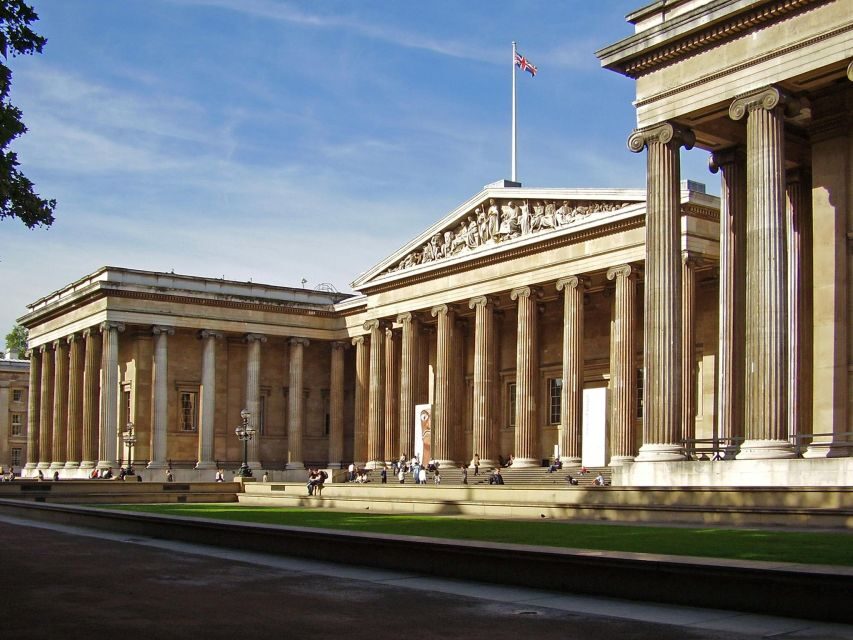
- Meet at the main entrance stairs after security so you start moving quickly
- Rosetta Stone is explained as a language key, not just a famous rock
- Parthenon sculptures come with a contested ownership story tied to Lord Elgin
- Egyptian mummies and burial goods show everyday belief and craft
- Sutton Hoo and Khorsabad bulls add two extra civilizations beyond Egypt and Greece
- You’ll walk a lot in 2 hours, so comfortable shoes matter
British Museum meeting point and how the Great Court sets the tone
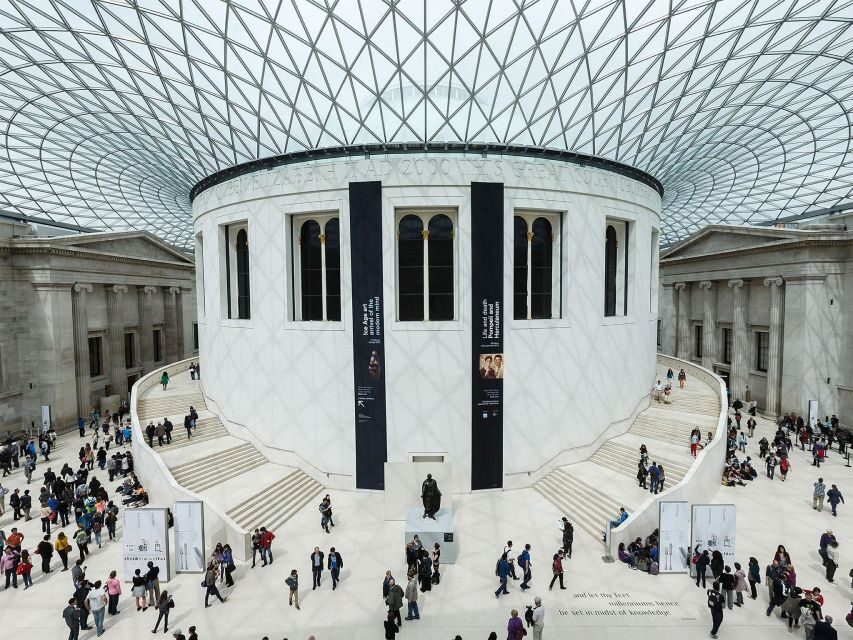
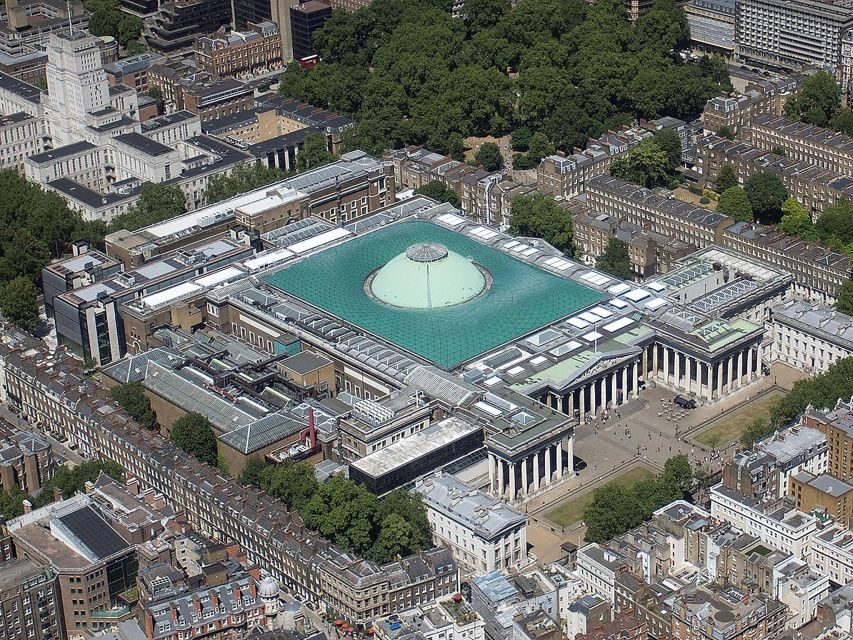
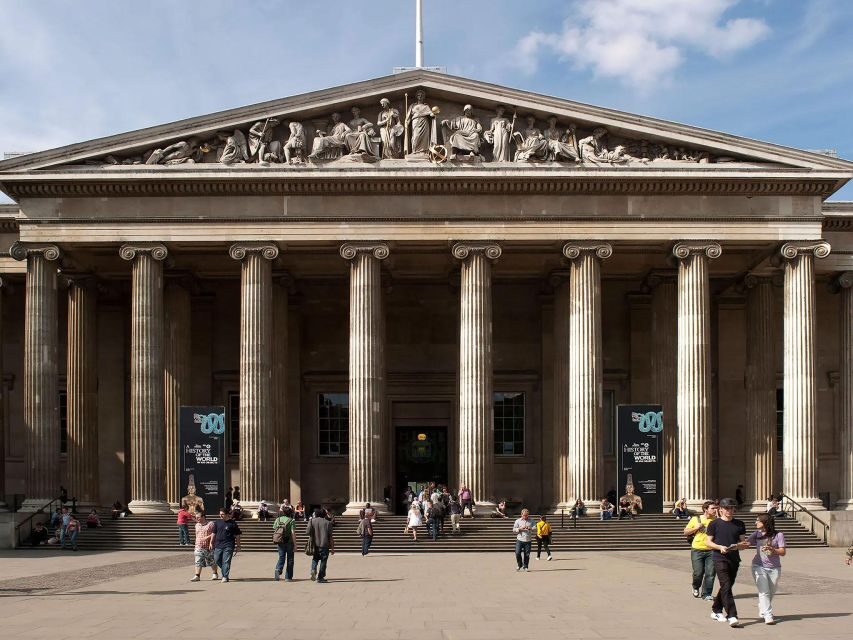
The British Museum hits you the moment you arrive. Even before you reach the collections, you’re dealing with the museum’s size, the flow of crowds, and that classic London feeling that everything is both historic and hectic. Your tour starts by meeting your guide on the stairs at the main entrance, after security checks. Plan to get there early—at least 15 minutes before your scheduled start—so you’re not rushed while people are still filtering in.
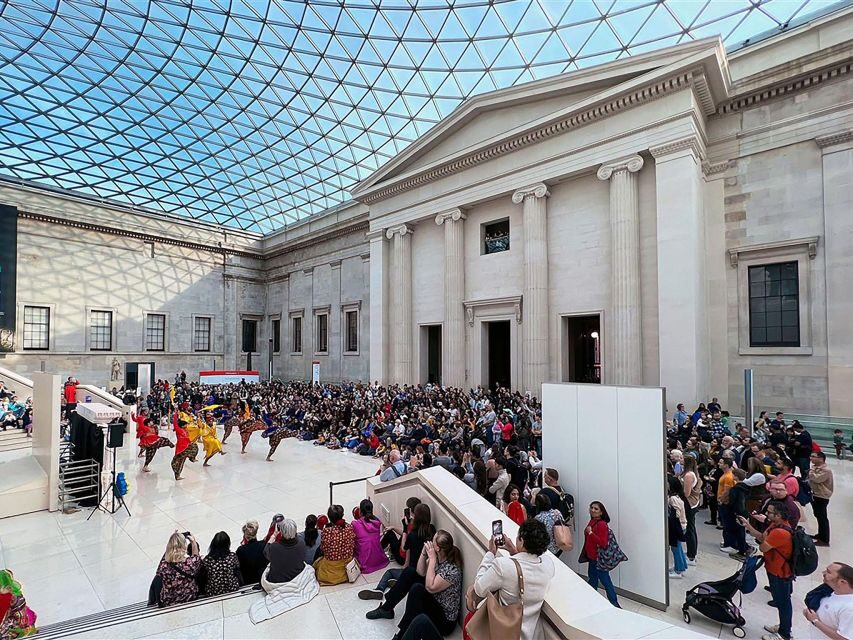
One of the best “warm-up” spots is the Great Court. The glass roof is a standout because it feels modern while still framing an old-world museum. If you’ve ever wondered how a building can make you feel like you’re under both a sky and a ceiling, this is a good place to notice that effect. It also helps you reset your bearings fast before you go object-hunting.
This tour works best if you want structure. The museum is huge, and without guidance you can end up wandering the “popular” rooms only to miss the context that makes the objects click. The guided format means your time has a plan, and your questions (if you can catch them between people moving through) have a target.
You can also read our reviews of more museum experiences in London



Rosetta Stone: the “how we read hieroglyphs” moment
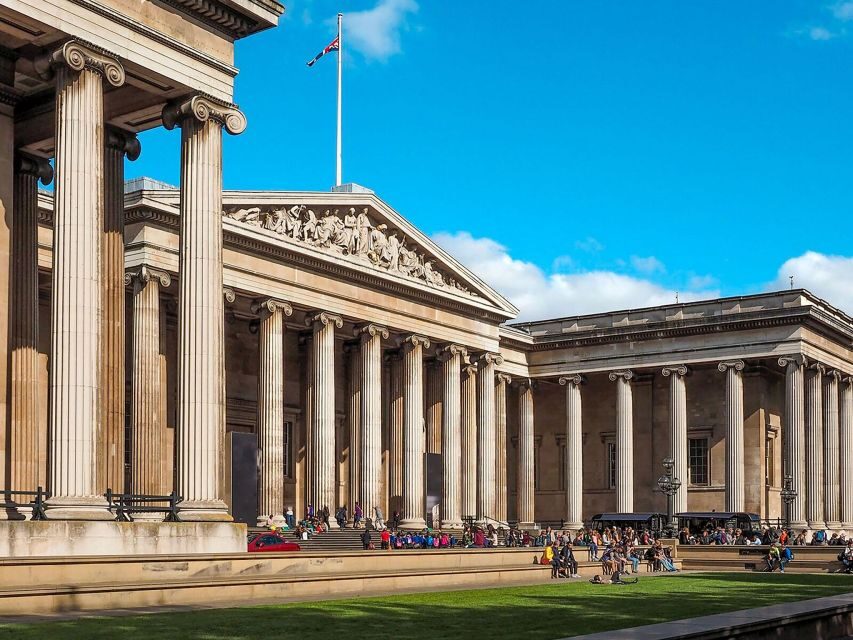
The Rosetta Stone is the kind of artifact that makes your brain switch gears. From a distance, it looks like a big slab with writing. Up close, it becomes something else: a tool that helped people crack a writing system that had been locked away by time.
What I like about how this stop is handled is that it’s treated as a turning point. The guide focuses on why the Rosetta Stone mattered—its role in deciphering Egyptian hieroglyphics—so you understand it as an intellectual breakthrough, not just a museum trophy. You don’t need to be a classic-studies expert to follow along. The explanation helps you connect letters to meaning, and meaning to history.
Practical tip: at the Rosetta Stone, the crowd pressure is real. People want the same photo angle and the same close look. If you position yourself just off-center, you often get a steadier view of the text while you listen. Also, don’t rush your understanding. Spend a minute thinking: this is a single object, yet it helped unlock an entire language world.
Parthenon sculptures: beauty, politics, and Lord Elgin’s role
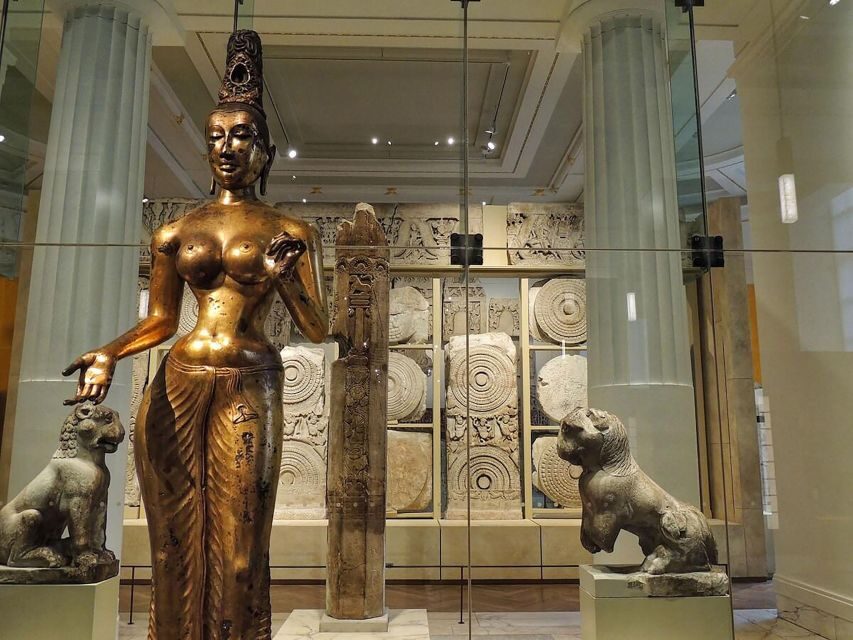
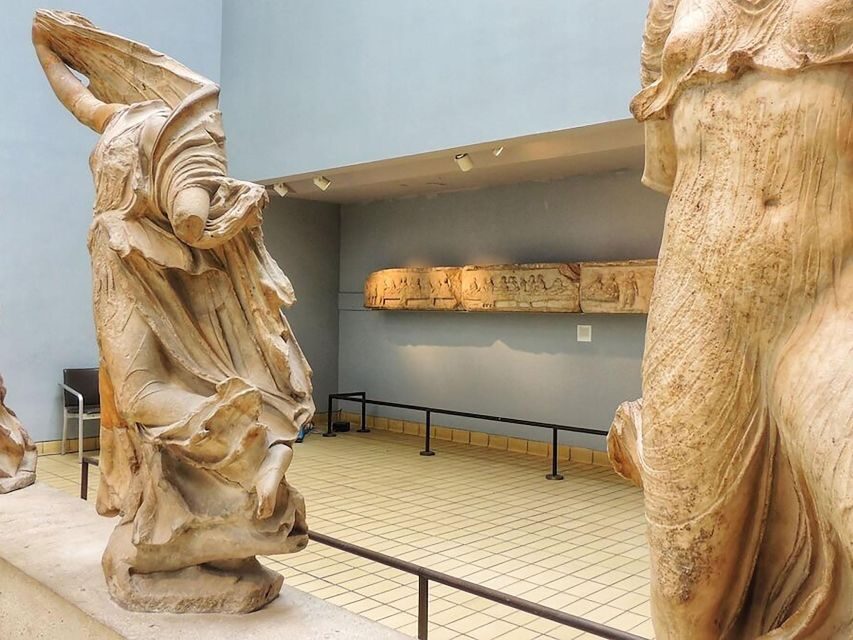
Then comes the Parthenon sculptures—gorgeous, detailed, and loaded with disagreement. This is the stop where the tour becomes more than sightseeing because it touches on the uncomfortable side of how museum collections formed.
The story here is part of the experience: the sculptures were removed from the Parthenon in Athens by Lord Elgin, the British ambassador to the Ottoman Empire, and later brought to the British Museum. That single sentence is the start of a bigger conversation about cultural ownership and historical power. The guide’s job is to keep it understandable and clear while you’re standing in front of the work itself.
Why this matters for you: if you normally see museum pieces as “things from the past,” this stop shows how those pieces also reflect modern institutions and old political realities. You’ll likely walk away thinking about who gets to preserve, display, and interpret history—and who doesn’t get a say.
A downside you should expect: when people disagree emotionally, the room gets busier and more focused. You may feel slightly more pressure to move on quickly. Use that time to absorb the art first, then let the context settle second.
Egyptian mummies: what burial goods reveal about daily life

Next you’ll move into the Egyptian galleries for mummies and burial artifacts. This is where the museum changes from argument to human scale. Mummies aren’t just “old bodies.” The real impact comes from the surrounding objects—items created with care, meant to protect, honor, and support a spiritual journey after death.
Your guide frames this collection in a way that helps you see patterns: burial practices, craftsmanship, and belief systems. It’s also a place where the tour’s value shows. The British Museum has many Egyptian rooms. Without a guide, you might hit only the “wow” factor. With a guide, you understand what you’re looking at and why it was important to people who lived thousands of years ago.
One note: photos and proximity rules depend on the specific rooms and current museum policies, so don’t assume you can linger for every angle. But you can still do the most important thing—look slowly at the details the guide points out and connect them to the burial story being told.
If you like your history with a little anatomy and a lot of meaning, this section lands well. If you’re sensitive about human remains, you might want to be ready for that emotional tone and adjust your pace.
Sutton Hoo artifacts: an Anglo-Saxon burial story
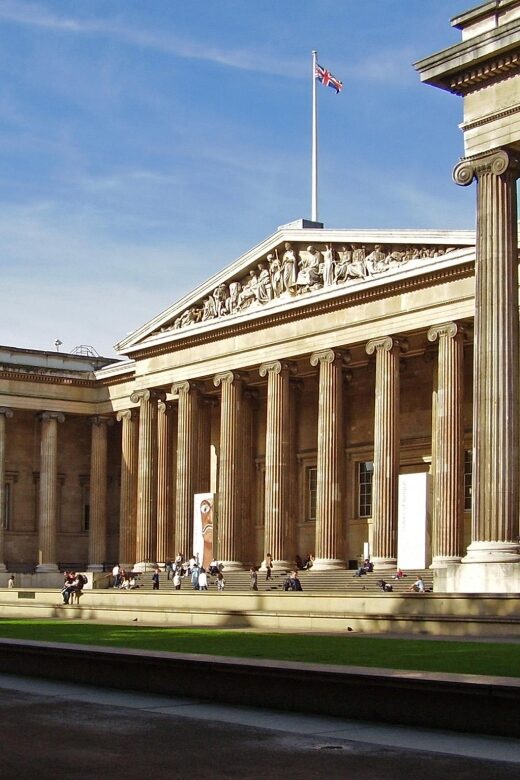
After Egypt, the tour shifts gears to early medieval Britain with Sutton Hoo. This is one of those stops that can surprise you, because the British Museum isn’t only “ancient Egypt and Greece.” It also holds strong evidence of what happened on these islands after the classical era.
Sutton Hoo is known for rich burial treasures connected to an Anglo-Saxon burial site. In the tour, you’ll see artifacts from this early medieval context, and the way the guide explains them helps you understand them as signals of status, identity, and ritual—ideas that connect to how societies organized power.
Why this stop is useful: it prevents the trip from becoming a straight line of “ancient world, ancient world, ancient world.” You get a reminder that Britain’s own deep past didn’t stop after Rome. The artifacts help you see continuity—how beliefs, wealth, and storytelling carried forward even as empires changed.
At this point of the tour, your legs may be getting tired. That’s normal. Keep moving, but don’t stop learning. A quick look at the objects, followed by listening for the explanation, is a solid way to keep your attention up even when the museum is noisy.




Winged Bulls from Khorsabad: Mesopotamian power in sculpture form
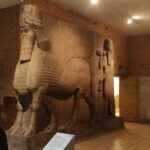
The last big highlight is the Winged Bulls from Khorsabad. These aren’t small decorations. They’re monumental sculptures, built to feel like guardians. The tour connects them to their original setting as guardians of a grand palace and links them to ancient Mesopotamian art and architecture associated with Assyrian civilization.
What makes this stop stand out is the sheer scale and presence. When you’re used to stone figures from antiquity, you might expect them to be static. These animals look like they were made to impress you in motion, like they’re part of a ceremonial route. The wings, the forms, the detail—everything supports the idea of power.
If you’ve already seen Egypt and Greece, this section broadens your mental map. You’ll start noticing how different cultures used similar strategies—fear, beauty, symbolism, and public display—to create authority. That’s the kind of pattern-learning you can’t get from a brochure.
Practical note: because it’s popular, you may have to share space for viewing. Be ready to rotate your stance and keep your eyes on the details the guide highlights rather than chasing the perfect photo spot.
Price and value for a focused 2-hour guided highlight run
The price is listed at $84.69 per person for a 2-hour English live guided tour. Is that a good value? For this kind of museum, I’d call it reasonable—mainly because your time is limited and the British Museum is too large to “efficiently stumble” into the best context for these objects.
What you’re paying for isn’t just access to objects; you’re paying for someone to connect them. The guide brings the “how it fits together” part: why the Rosetta Stone mattered, why the Parthenon sculptures are controversial, what mummies and burial goods can tell you, and how Sutton Hoo and Khorsabad slot into a wider picture of human history.
Also, the tour includes knowledge support online at the time of boarding and a live guide. It’s not a private tour, so you’ll share space and hearing quality with others. Still, in a museum this size, a guided focus can save you from wasting half a day wandering without a plan.
If you’re traveling with limited time in London and you want the biggest heavy-hitters—without spending hours deciding where to start—this is the kind of tour that helps you feel confident you saw the right things.
Timing, walking, and hearing your guide in crowded galleries
This tour is on foot, and the museum is huge. Comfortable shoes are strongly recommended. In a 2-hour window, “quick viewing” becomes “watch your pace.” I’d keep your expectations realistic: you’ll likely spend a few minutes at each highlight, then move on while crowds shift.
Hearing can be the tricky part. One review note you should treat as a warning sign: the guide can be soft spoken, and the rooms can be hard for audio. If you want the best experience, position yourself early—close enough to hear, but not wedged into the thickest traffic. If the guide pauses, use that moment to step half a pace closer rather than waiting for your turn to get a clear view later.
Wheelchair users should note that the tour is not suitable for wheelchair access. That’s important, since a museum like this includes steps, crowd barriers, and long walking corridors.
Who this tour suits best (and who should consider another option)
This tour fits you if:
- you want a structured highlights route through major collections
- you like context and explanations, not just object names
- you’re short on time and want more than a self-guided quick look
- you enjoy crossing civilizations—Egypt, Greece, Anglo-Saxon Britain, and Assyria
You might want to skip or adjust expectations if:
- you’re uncomfortable around human remains like mummies
- you need quieter, slower pacing and private listening time
- you require wheelchair access
Should you book this British Museum Rosetta Stone to Khorsabad tour?
Yes, if you want a guided hit list that feels organized and thoughtful. The strongest reason to book is focus: you get to see the Rosetta Stone, Parthenon sculptures, Egyptian mummies, Sutton Hoo treasures, and the Winged Bulls from Khorsabad in a compact format, with a guide who explains why each object matters.
The one thing to keep in mind is sound and crowding. Plan to arrive early, wear comfy shoes, and be ready to move as people flow through the galleries. If you go in with that mindset, you’ll leave feeling like the museum didn’t just overwhelm you with size—it gave you a clear set of stories to carry home.
FAQ
How long is the British Museum tour?
It lasts about 2 hours.
What time does the tour start?
Starting times vary. You can check availability for the exact times offered.
Where do I meet the guide?
Meet your guide on the stairs at the main entrance, after security checks.
What time should I arrive at the museum?
Arrive at least 15 minutes before your scheduled start time.
What’s included in the tour price?
A live English tour guide is included, plus online support at the time of boarding.
What isn’t included?
Hotel pickup and food and drinks are not included.
Do I need ID?
Yes. Bring a passport or an ID card.
Is the tour private?
No, it is not private.
Is the tour accessible for wheelchair users?
No, it is not suitable for wheelchair users.
What’s the cancellation policy?
You can cancel up to 24 hours in advance for a full refund.
What happens if my chosen time slot isn’t available?
If the time you choose is not available, you will be transferred to another time on the same day. If there’s a lack of seats for last-minute bookings, you may be placed on the day following the booked date.
What does English only mean here?
The live tour guide operates in English.