REVIEW · CAMBRIDGE ENGLAND
Cambridge: City Walking Tour & Exploration Game
Book on GetYourGuide →Operated by Go Quest Adventures · Bookable on GetYourGuide
Cambridge gets playful when you solve clues. This is a self-guided city Quest that turns historic streets into a puzzle trail, with challenges that feel like an escape room but still show you the sights. I like that it starts in the center, then guides you past college lanes and toward a great city view, all at your own rhythm.
The biggest wins for me are the escape-room-style puzzles and the fact you can go whenever you want with no group to follow.
One caution: it leans on your phone and your English skills. The app is English only, and you’ll need a charged smartphone plus a pen and some paper to solve tasks. Also, the puzzle difficulty and style may not fit every age group or taste, especially if you’re expecting a classic guided walk with straightforward questions.
In This Review
- Key highlights worth your time
- Why a city quest works so well in Cambridge
- Getting started at Great St Mary’s and downloading your code
- The route basics: 2 miles, daylight clues, and real pacing
- Puzzle stops that make the colleges and streets feel like a game
- Great St Mary’s to the cobblestone core
- College lanes and the “time-eating clock” clue
- A secret-society style mystery
- A clue tied to a castle site
- The best-view moment
- Photo challenges, leaderboard pressure, and what to do if you get stuck
- Value for money: $37 for up to five people
- Who this works best for (and who should think twice)
- Should you book the Cambridge Quest?
- FAQ
- How long is the Cambridge City Walking Tour & Exploration Game?
- Where do we meet?
- Do we need to bring anything?
- Is this tour guided by a person?
- Can we start whenever we want?
- Are attraction tickets included?
Key highlights worth your time
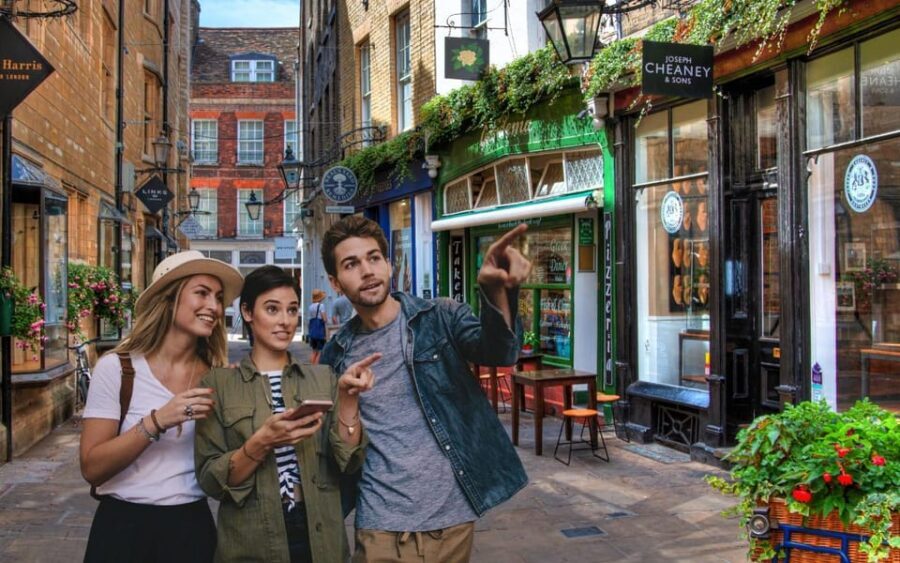
- GoQuest Adventures app delivers the whole experience, with instant access and no printing required
- Start any time during daylight, so you can shape the outing around your day in Cambridge
- Up to 5 people per ticket for one price, making it a good value for small groups
- 2-mile walking route with rest points and cafes nearby if you need to slow down
- Puzzle themes include a time-focused clock clue, a secret-society style mystery, and a castle site reference
- Wheelchair accessible, though the route is still a city walk with uneven streets
Why a city quest works so well in Cambridge

Cambridge can feel like two things at once: postcard-perfect streets and quietly serious academic life. This Quest plays with that contrast. Instead of just pointing out buildings, it asks you to notice details, solve little problems, and move from one “clue moment” to the next. The result is a walk that feels active, even if you’re not the type who loves long museum hours.
I also like that the format gives you control. You’re not stuck with a rigid schedule or forced to keep up with a guide. If you want to stroll, take photos, or duck into a cafe, you can. If your group prefers a challenge, you can push for the leaderboard and treat it like a friendly competition.
The best part is that this isn’t just trivia. The activities are interactive, and that makes the sights more memorable. You’re not only seeing Cambridge’s famous university areas, you’re doing tasks that connect the route to what you’re looking at.
You can also read our reviews of more walking tours in Cambridge England



Getting started at Great St Mary’s and downloading your code
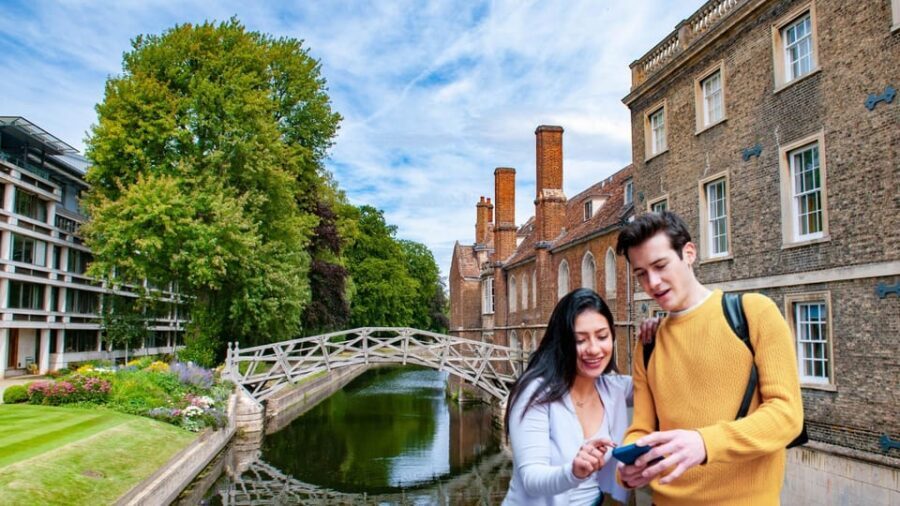
Your starting point is straightforward: the front of Great St Mary’s church. That’s helpful because you can orient yourself quickly when you arrive, rather than hunting for a back-alley meeting spot.
Before you go, you’ll need to handle the app setup. After booking, you redeem a code sent by email inside the Go Quest Adventures app. There’s no guide on site, so your phone becomes your “controller” for the whole experience. That means two things for your day:
- Get the app downloaded ahead of time, not while you’re standing outside the church.
- Make sure your phone is charged enough for GPS plus screen time and puzzle work.
You’ll also want to bring what the Quest asks for: a pen (yes, really) and paper. Even if you’re used to mobile-only activities, this one expects you to write something down. If you forget, you’ll feel that annoyance early, right when the clues start.
The route basics: 2 miles, daylight clues, and real pacing
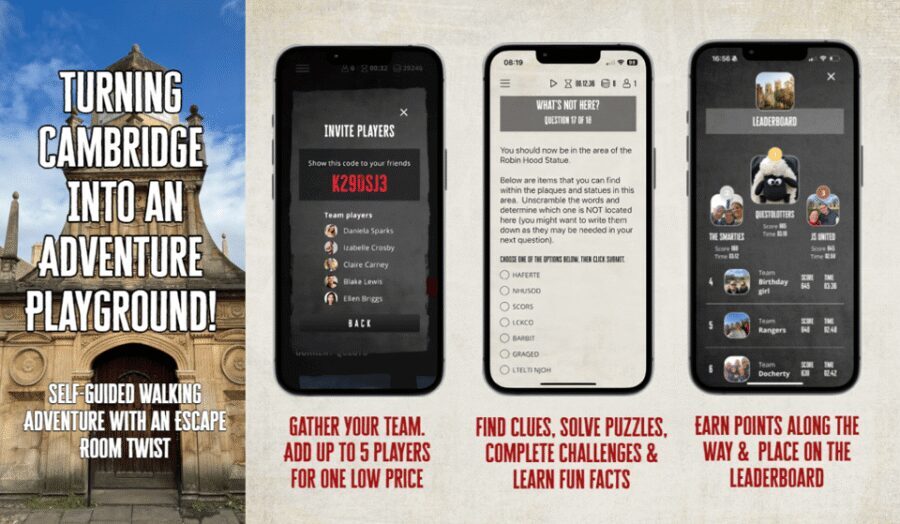
The Quest is about 2 miles long, and most groups take around 2.5 to 3.5+ hours, depending on breaks, shopping, and how often you pause to think. That time range is actually one of the smartest parts of the experience. You can do this without turning your Cambridge day into a marathon.
Daylight matters. The Quest can technically run anytime, but the guidance is clear: play during daylight hours. The puzzle trail involves finding clues and reading small details, and in dark conditions you’ll likely struggle more than you should.
A practical trick: plan to walk at “steady tourist” speed. Don’t sprint between puzzles. If you race the route and skip rest breaks, you’ll burn focus, then the puzzles get harder. Better approach: enjoy the stroll, then spend extra time when you hit a challenging question.
Also note the activity is listed as wheelchair accessible. You can’t assume every Cambridge street surface will feel easy, though. Cobblestones and uneven sidewalks are a normal part of the city, so go into it ready for some bumps even if the route is generally accessible.
Puzzle stops that make the colleges and streets feel like a game

The Quest’s storyline takes you through central Cambridge and into the university area, where the streets have that “set on repeat” look of famous college architecture. What makes it engaging is that the route isn’t just sightseeing; it’s a sequence of clue challenges.
Here’s how the experience is set up along the way:
Great St Mary’s to the cobblestone core
You start at Great St Mary’s, then move through the older-feeling streets and toward the university zone. Expect the pacing to tighten here. Early puzzles help you understand how the game works, so you’ll want to be mentally ready to slow down and read carefully.
If you’re traveling with kids or teens, this start is often the best time to set expectations: you’re not just walking; you’re solving. That mindset helps everyone stay involved from the beginning.






College lanes and the “time-eating clock” clue
One of the Quest elements specifically references a time-eating clock. Even without knowing the exact trivia beforehand, this kind of clue is a good way to get you to stop in place and look closer. You’re likely to read something, compare details, or interpret a clue based on what you can see right there.
This is where the Quest earns its escape-room energy. You’re not only passing landmarks; you’re trying to make the city answer back.
A secret-society style mystery
Another puzzle theme points you toward a secret society angle. That sort of task can be a win if your group likes stories and hidden-meets-public spaces. It also nudges you to pay attention to atmosphere, not just architecture.
One caution: tasks like this can feel abstract if you’re expecting straightforward facts. If your group gets impatient with riddles, keep your pace friendly and don’t let one confusing clue derail the whole walk.
A clue tied to a castle site
The route also includes a reference to where a castle once stood. Cambridge has layers, and this type of clue encourages you to connect the present city to older history. Even if you’re not a history nerd, it helps you notice that the town you see today replaced something before it.
When you hit this part, take a moment to look at the setting around you, not only the puzzle prompt. The Quest works best when you treat each stop as a “mini scene.”
The best-view moment
The Quest is described as winding you toward one of the best views of the city. This is a classic formula for self-guided games: you get the walking, then you get a payoff. The view is the reward for solving, and it gives you a natural place to regroup.
If your group likes photos, this is likely where you’ll want extra time.
Photo challenges, leaderboard pressure, and what to do if you get stuck

Not every puzzle is the same style. Some tasks are more straightforward clue-finding, while others can be more activity-based. One style described in feedback involves taking photos with or in front of something. That can be fun, and it can also feel awkward if your group hates staged prompts or feels self-conscious.
So here’s the practical advice: treat photo tasks as optional effort, not as a test of your social media skills. If the prompt doesn’t land, focus on completing the clue and moving on.
Also, you can play two ways:
- Go at your own pace, stopping when you want
- Or try to top the leaderboard and race the clock
For families and mixed groups, the own-pace option usually works better. Racing can lead to missed details, then you’re stuck rereading the prompt under time pressure. If you want a competition vibe, keep it light.
Finally, be ready for occasional friction. Feedback includes cases of confusing clues or content that didn’t match common knowledge. If you hit a puzzle that feels wrong or doesn’t fit the surrounding scene, don’t burn an hour trying to force it. Skip ahead, make your best guess, and keep going. The Quest is meant to be an experience, not a frustrating exam.
Value for money: $37 for up to five people

At $37 per group up to 5, this is priced for small teams rather than per-person ticketing. That matters in Cambridge, where many paid attractions and tours charge per head. If you’re traveling as a couple, a duo with a friend, or a small family, the math often looks better than a typical guided tour price spread across individuals.
The “value” also comes from how much time you get out of it. A 2.5 to 3.5+ hour self-guided outing means you’re buying an afternoon of activities, not just a quick walk through a few blocks.
What you should keep in mind about included value:
- You get the puzzle adventure and the city route
- You do not get attraction entry fees
So if you’re also planning to enter specific colleges or paid sites, budget those separately. This is still a strong option for “seeing and doing” without paying extra entry costs, but it’s not a full attraction pass.
Who this works best for (and who should think twice)

This Quest is a good match if you want a flexible Cambridge day with a built-in activity. It’s described as suitable for couples, families, groups of friends, and it can serve as a simple team activity because everyone shares the same mission.
Here’s where it tends to land well:
- If you like problem-solving more than lectures
- If your group needs something interactive to stay engaged
- If you want independence, not a group schedule
Where you should think twice:
- Young kids under 8: the activity information says under 8s are included for free, but it also states it is not suitable for children under 8. On top of that, puzzles may be difficult for younger children. With that mix, I’d be cautious and double-check whether the age fit is right for your specific kids.
- If your group hates puzzles or photo prompts: some tasks are more game-like than traditional tourism.
- If your group doesn’t read English well: the app is English only, so you’ll be relying on reading comprehension.
One more practical note: the Quest is private in the sense that you’re not following other groups. But it’s still a walking experience. If you’re expecting a seated tour or a stroller-friendly route, you’ll want to plan carefully for walking time.
Should you book the Cambridge Quest?
If you want a Cambridge outing that feels like a mission instead of a lecture, I think this is worth booking. The combination of flexible start times, a central meeting point, and puzzles that connect to real sights makes it a smart “active afternoon” plan. It’s also strong for small groups since the price covers up to five people.
But I’d only book if you’re comfortable with the app format: smartphone required, English only, and a pen-and-paper expectation. Also be realistic about puzzle difficulty and photo-style tasks, and don’t plan this as a perfect fit for very young kids.
If you’re aiming for an independent, puzzle-led walk through Cambridge’s iconic university areas, this Quest can turn a familiar city into something you actually work through step by step.
FAQ

How long is the Cambridge City Walking Tour & Exploration Game?
It’s about 2 miles long, and most groups take an average of 2.5 to 3.5+ hours, depending on how you pace yourself and how often you take breaks.
Where do we meet?
You meet at the front of Great St Mary’s church. From there, you follow the instructions in the Go Quest Adventures app.
Do we need to bring anything?
Yes. You’ll need a charged smartphone, plus a pen for the puzzles. You should also wear comfortable shoes and bring weather-appropriate clothing.
Is this tour guided by a person?
No. There’s no guide on site. You play through the Go Quest Adventures app as a self-guided experience.
Can we start whenever we want?
Yes. You can start your Quest whenever you want, with instant access after redeeming your code in the app. Daylight hours are recommended for easier clue solving.
Are attraction tickets included?
No. Entry into attractions is not included, even though you may pass by or visit places along the route.