REVIEW · CAMBRIDGE ENGLAND
Cambridge: Guided Shared River Punting Tour
Book on GetYourGuide →Operated by Scudamore's Punting Company · Bookable on GetYourGuide
Cambridge looks different from the water.
A guided shared punt on the River Cam lets you glide past Cambridge University landmarks at a slow, human pace: King’s College Chapel, the Wren Library area, the Clare College stretch, and even the famous Bridge of Sighs at St John’s—plus the wooden Mathematical Bridge you can spot up close from the deck.
Two things I love about this tour are comfort and storytelling. You’re covered for the weather with blankets and umbrellas, and your guide (I’ve seen names like Jack, Daisy, and Phoebe associated with these tours) keeps the trip moving with friendly history talk and questions along the way.
One possible drawback: timing and crowds can affect the experience. Opening times shift with daylight, you’ll want to plan around the last departure timing, and Mill Lane can feel busy around start moments—so show up a touch early to avoid stress.
In This Review
- Key highlights at a glance
- River Cam punting on the Cam: why this beats walking
- Meeting at Mill Lane: shared tour vibes and what to expect
- King’s College Chapel from the water: Gothic drama without the stairs
- Clare College Gardens and the Mathematical Bridge moment you’ll remember
- Wren Library and St John’s: two famous backdrops, one smooth glide
- How many colleges and bridges you’ll actually see
- Comfort on deck: blankets and umbrellas are not a gimmick
- Price and value: what $109 for up to 3 gets you
- Timing, daylight, and why your departure hour matters
- Which guides make this experience click
- Who this tour is best for
- Should you book this shared River Cam punting tour?
- FAQ
- How long is the punting tour?
- Where does the tour start and finish?
- What is included in the price?
- Is this a private tour?
- What sights will I see during the ride?
- What’s the maximum group size on a punt?
- What language is the tour guide?
- What if the weather is bad?
Key highlights at a glance
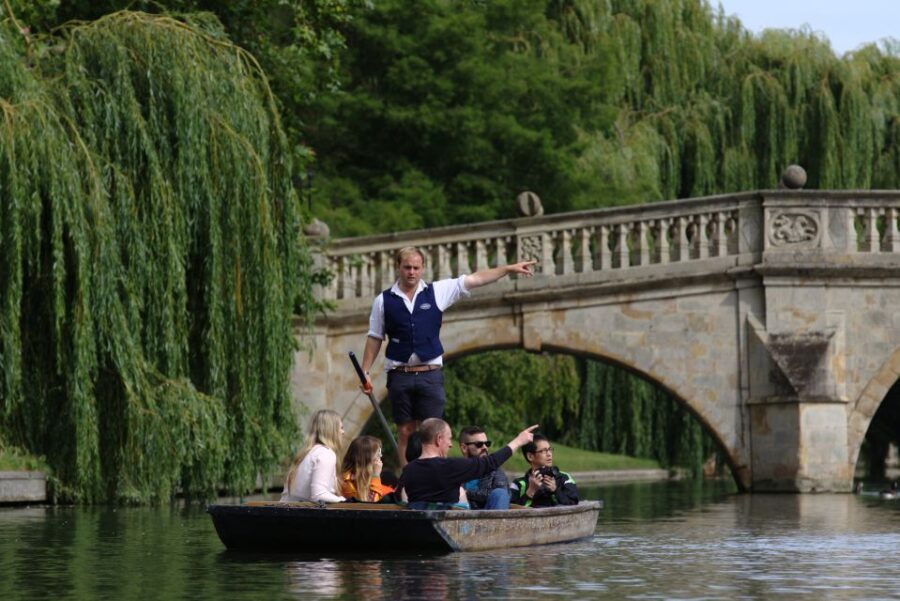
- Mathematical Bridge from the punt: see the wooden bridge clearly while you’re actually under/near it
- King’s College Chapel by the waterline: Gothic architecture with a fresh viewpoint
- Clare College Gardens and riverside atmosphere: calmer, older-feeling Cambridge moments
- Wren Library on the Cambridge education trail: classic lines you’ll recognize in seconds
- Bridge of Sighs at St John’s: one of the most photographed spots, viewed properly from the river
- Blankets and umbrellas: comfort that matters when the British weather does its thing
River Cam punting on the Cam: why this beats walking
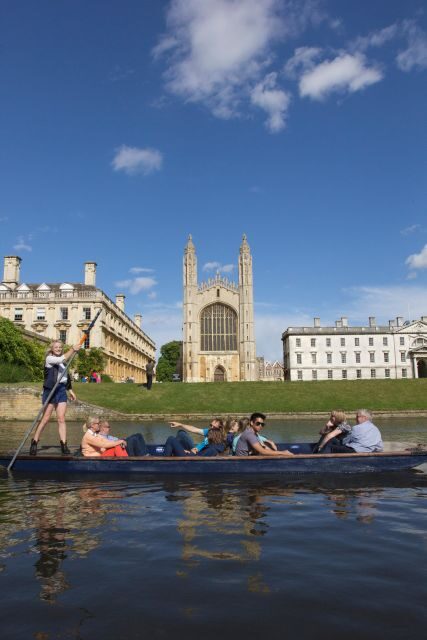
If Cambridge is on your itinerary, this is one of the best ways to get oriented fast. Walking gives you one angle on the colleges. Punting gives you the other angle—the river side that helped these institutions shape their daily life.
You sit in a punt and the guide propels you along, sharing how Cambridge evolved from a medieval market town into a world hub for education. The talk is practical and paced for being on the water, not standing in a museum. And because the Cam cuts right through the university core, you get a smooth run of major buildings without the usual backtracking.
There’s also something low-key satisfying about the whole setup. People come to Cambridge for grand facades and big-ticket sights, but the real charm here is the slower rhythm: the water, the bridges, and the sense that you’re moving through the university rather than just photographing it.
You can also read our reviews of more guided tours in Cambridge England

Meeting at Mill Lane: shared tour vibes and what to expect
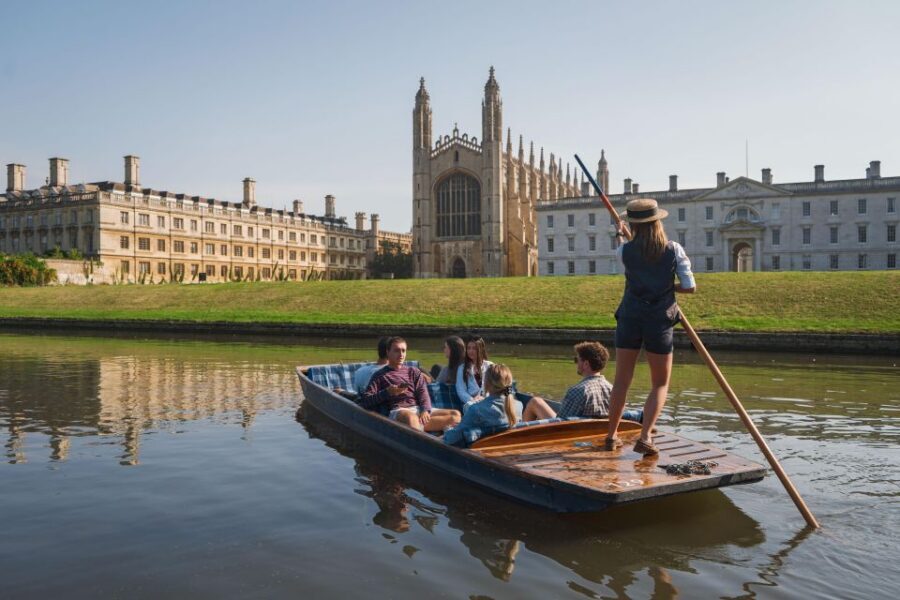
The tour starts and finishes at Mill Lane station, which is handy because it means you don’t have to solve a transportation puzzle. From this point, you’re basically stepping into Cambridge’s most photogenic “corridor”: colleges on one side, bridges and sky on the other.
This is a shared experience. That usually means you’re not getting a private boat just for your group, so your timing and pace are set by the operator flow. The plus side is value: you’re paying for the guide storytelling and the punting skill without needing to book a whole punt yourself.
In practice, it tends to feel relaxed once you’re on the river. People chat softly, and the guide’s voice becomes the soundtrack as you pass the next bridge and the next college frontage. If you’re the kind of traveler who likes to ask questions, you’ll probably enjoy how guides keep the conversation going rather than treating it like a lecture.
One small consideration: Mill Lane can look crowded right before departure. You don’t need to panic, but I recommend arriving with a little buffer so you can settle in before the punt pushes off.
King’s College Chapel from the water: Gothic drama without the stairs
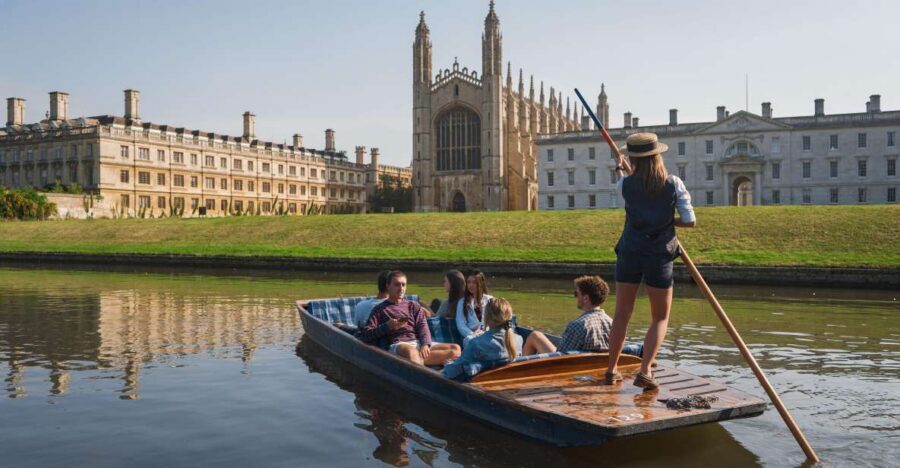
The first big wow moment is the sweep of Cambridge’s college architecture as you approach King’s College Chapel. From land, you see it as a destination. From the river, it feels like it’s part of the city’s everyday flow.
King’s College Chapel is known for its Gothic splendor, but what hits differently here is the framing. The riverside view pulls the building outward, so you notice details in a new order—mass, angles, and the way the chapel’s grandeur sits beside the lighter, open feel of water and sky.
It’s also a good example of why a punting tour is worth your time even if you plan to tour colleges later. Even if you never go inside any buildings (you usually won’t on this kind of river ride), you still get the “why it matters” effect. The guide’s job is to connect what you’re seeing—chapel, college walls, and river function—to the story of Cambridge itself.
Clare College Gardens and the Mathematical Bridge moment you’ll remember
One of my favorite parts of this route is how it shifts from big-name spectacle into more intimate riverside views—especially around Clare College Gardens and the area that lets you see Clare College in an older, quieter light.
You’ll pass the oldest riverside college stretch, which gives the river a deeper sense of connection. Cambridge’s colleges don’t just sit near the water; the river is part of their identity. You feel that when the scenery is tight and leafy, and you’re moving at a slow enough pace to really study what’s on the bank.
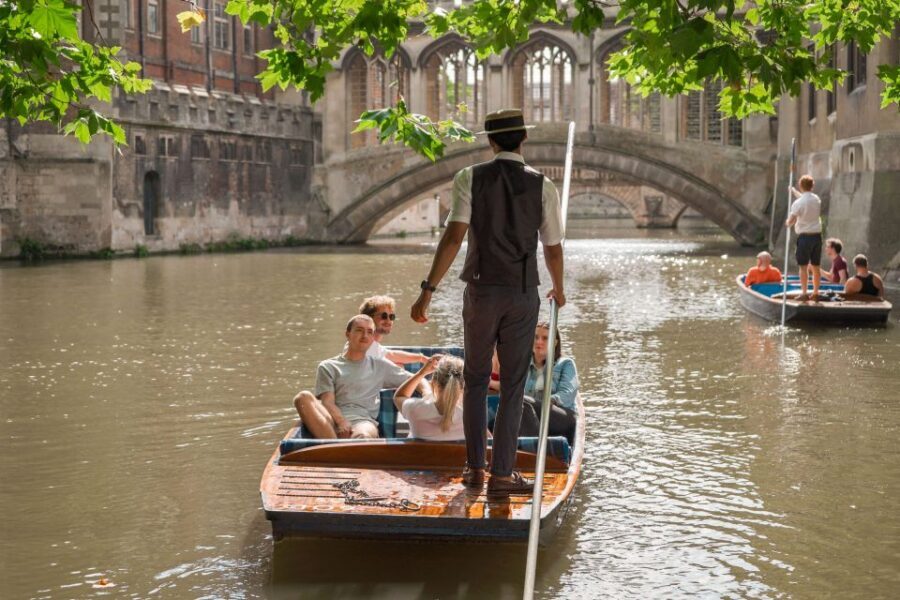
Then comes the Mathematical Bridge—the wooden bridge that looks deceptively simple until you get close enough to appreciate why it has become a Cambridge icon. From the punt, you’re not just looking at a structure in the distance. You’re seeing it at the scale it operates at, which makes it easier to understand what makes it special.
If you like architecture, this is the point where the tour transforms from “pretty views” into “I get it now.”
Wren Library and St John’s: two famous backdrops, one smooth glide
Cambridge’s education story keeps showing up as you move. After Clare’s riverside vibe, the tour continues toward the university’s most recognizable academic landmarks, including the Wren Library.
What I like about seeing the Wren Library area from the Cam is how quickly you register its classic elegance. You get the feel of an academic building set within the everyday life of the university. It’s the kind of view that helps you connect the college faces you’ll see on postcards to the lived environment students actually move through.
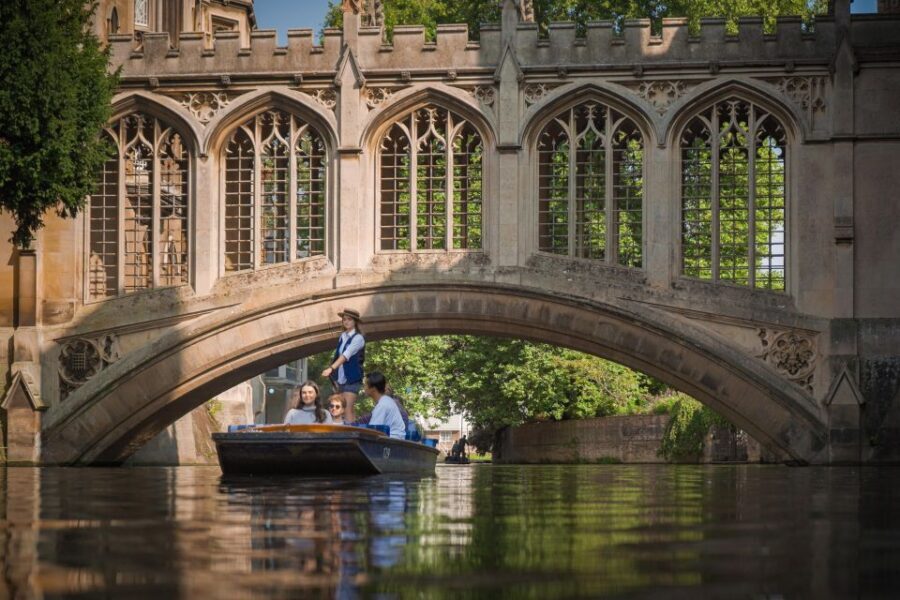
Then you reach St John’s College and the unforgettable Bridge of Sighs—one of the most distinctive river-crossing scenes in Cambridge. From the water, it’s visually complete: the bridge, the angles, the college setting, all aligned in a way that’s harder to replicate from a street corner.
And because you’re in the punt, the timing of the photo is easy. You’re gliding past it, so you can keep a steady view instead of sprinting down a sidewalk to catch the angle before it’s gone.



How many colleges and bridges you’ll actually see

You’re told you’ll cruise past a run of major landmarks, and the best way to think of it is this: the river route stitches together the university core in a single sweep.
On this tour, you’ll pass 8 colleges and 9 bridges. That matters for value. Many Cambridge sightseeing plans have gaps: you see one or two big buildings well, then you spend time traveling to the next spot. Here, the river does the connecting for you.
It also means the guide has natural stepping stones for the story. As you go bridge to bridge and college to college, the history talk stays grounded in what you’re seeing rather than bouncing around abstract facts.
Comfort on deck: blankets and umbrellas are not a gimmick
Cambridge weather loves to change its mind. That’s why I put real emphasis on what’s included here: umbrellas and blankets.
On cold days, these make the difference between enjoying the ride and spending the whole time thinking about how your hands feel. Several people note that blankets and warm touches kept the tour cosy even on chill days, and that’s exactly what you want from a water-based activity.
Umbrellas are equally helpful even when rain isn’t guaranteed. Sometimes it’s more about mist, wind, or that damp British cold than a full-on shower. Either way, you get protection without needing to pack your own gear.
The other comfort factor: you’re seated and moving slowly. You’re not climbing steps, not negotiating crowds at indoor entrances, and not rushing to keep up with a group pace.
If you’re doing this early in your Cambridge visit, it’s also a smart way to get comfortable before you commit to more walking.
Price and value: what $109 for up to 3 gets you
The price is $109 per group up to 3. That can feel steep if you compare it to free city sightseeing, but it’s easier to judge when you look at what you’re actually buying.
You’re paying for:
- the punting and guide work (not just a walking audio tour)
- prime river access to the university frontages
- and comfort extras like blankets and umbrellas
If you travel with one or two people, this pricing structure can be a strong deal because you’re not paying a high per-person rate for the boat itself—you’re splitting the punt-and-guide cost across the group.
For solo travelers or couples, it still can be good value because the tour doesn’t require extra tickets to understand the main architectural highlights. You’ll see multiple college exteriors and major river features in one outing, and you’ll learn what you’re looking at while you’re there.
In plain terms: if you want a Cambridge highlight that’s different from walking, the cost tends to make sense.
Timing, daylight, and why your departure hour matters
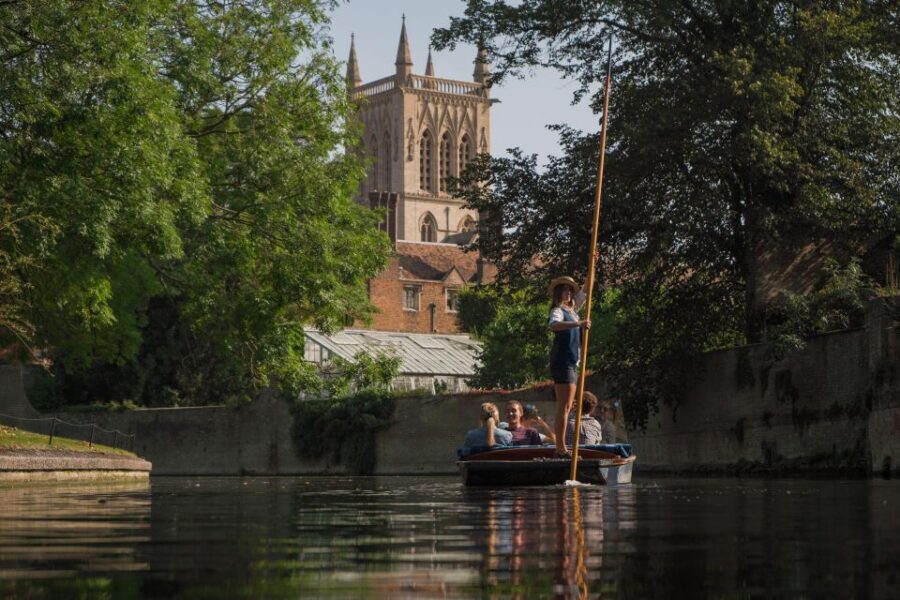
This is a daylight-sensitive activity. Opening hours vary based on daylight, and you’re advised to allow time for the tour—specifically, plan around a 45-minute tour window before the relevant cutoff.
One practical tip: schedule this when the weather and light give you the best contrast on stone buildings. People often talk about how good the colleges look when the sun hits them. Even on grey days, the river view stays atmospheric, but stronger light makes the architecture pop.
Also keep in mind the last departure is set one hour before closing time. That means if you show up late, you might miss the departure that fits your plans. I’d rather you keep the tour earlier than you think you need, then build the rest of your day around it.
Which guides make this experience click
A punting tour lives or dies on the guide. The good ones do two things at once: they keep the boat moving safely and they make the history feel like it belongs to the scenery you’re passing.
From the guide names associated with these tours—Jack, Daisy, Alex, Phoebe, Tom, Matt, Harry, and Lawrence—there’s a clear pattern: friendly delivery, good storytelling, and a sense of humor. One person highlighted that the guide was interactive with questions. Another mentioned a guide who combined history with a calm, relaxing approach.
There’s also a nice extra element: some guides are students at Cambridge colleges, which can give the story a lived-in feel rather than a scripted lecture. Daisy, for example, was noted as a Trinity College student, and that kind of perspective tends to make the tour more grounded.
Who this tour is best for
You’ll likely enjoy this most if you:
- want a different perspective than walking the city streets
- like history tied to real places, not just dates
- prefer a calm, seated activity that doesn’t tire you out
It also works well for families and mixed-age groups because the format is simple: sit, listen, glide, and look. And because the tour covers multiple colleges and bridges in one go, it’s a good choice even if you don’t have many hours in Cambridge.
If you dislike shared experiences, you might find it less private than you’d like. But if your priority is seeing the university’s river frontages with strong comfort support, this shared punt format is a fair trade.
Should you book this shared River Cam punting tour?
I’d book it if Cambridge is high on your list and you want a high-value, low-stress highlight that feels genuinely Cambridge. The combination of river views, classic landmarks like King’s College Chapel, Wren Library, and Bridge of Sighs, plus practical comfort with blankets and umbrellas, makes it easy to justify.
I’d skip it or reschedule if your schedule is tight and you can’t manage daylight-based timing. And if you absolutely need a private, quiet boat just for your group, this shared setup may not match your style.
Otherwise: this is one of the clearest ways to get your bearings fast and see Cambridge’s university core in a single, relaxing loop.
FAQ
How long is the punting tour?
You should plan for about a 45-minute tour, and scheduling depends on daylight since opening hours vary.
Where does the tour start and finish?
The tour starts and finishes at Mill Lane station.
What is included in the price?
It includes the punting tour, a punter/guide, plus umbrellas and blankets.
Is this a private tour?
This is set up as a shared punt tour. Pricing is listed per group up to 3, and you may join an available punt when tickets are issued.
What sights will I see during the ride?
You’ll pass major Cambridge college buildings and river bridges, including King’s College Chapel, Clare College Gardens, the Wren Library, and you’ll also punt under the Bridge of Sighs.
What’s the maximum group size on a punt?
One review notes a maximum of 12 per punt, though this can vary by departure.
What language is the tour guide?
The tour guide is available in English.
What if the weather is bad?
Umbrellas and blankets are included, so you’ll have shelter and warmth for colder or damp conditions.