REVIEW · LONDON
Clapham South: Subterranean Shelter Guided Tour
Book on GetYourGuide →Operated by London Transport Museum · Bookable on GetYourGuide
London gets quiet down there. This guided tour takes you about 30 metres underground into a warren of original bunks and passageways you would never spot from the street, even in busy South London.
What I like most is how it turns big historical events into something you can picture. You follow two expert guides as one brings the era to life as a 1940s ARP Warden, and you also hear Windrush arrival stories tied to the shelter’s post-war reuse.
One important consideration: the route is not step-free and it can feel tight and dark. If you have claustrophobia, or you’re sensitive to low lighting and uneven ground, this may not be the right fit.
In This Review
- Key things to know before you go
- The 11-storey descent under Clapham South Station
- The mile-long tunnel maze and what you’ll actually see
- Two guides, one ARP Warden, and the history that feels lived-in
- Bunk beds, benches, and WWII artifacts you can see close up
- Wartime graffiti: the human trace under London
- From 1944 air raids to Windrush arrivals: why the story continues
- What the tour feels like in real time (and who it suits)
- Price and value: what $51 buys you here
- Getting ready: shoes, bags, and small rules that matter
- Should you book the Clapham South shelter tour?
Key things to know before you go
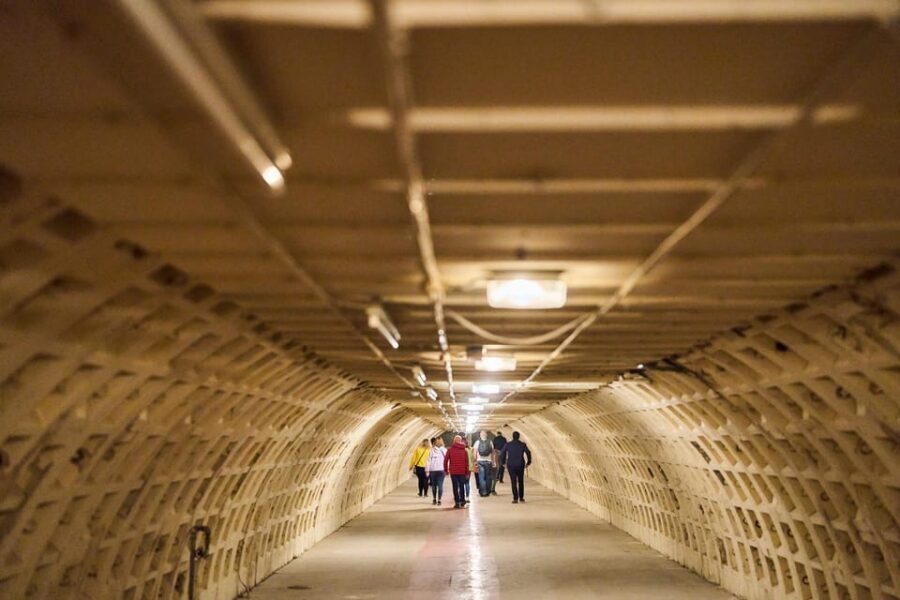
- 30 metres underground with a descent that feels like dropping 11 stories
- A tunnel walk that stretches over a mile, with trains rumbling above
- Roleplay that sets the scene as a 1940s ARP Warden
- Hands-on moments with genuine WWII torches and original bunk beds
- You’ll spot wartime graffiti left by shelter occupants
- The story goes beyond the war, including Windrush and life after 1944
The 11-storey descent under Clapham South Station
The start is half the experience. You meet on Balham HIII at the Marks & Spencer Food Hall (SW12 9EA), about a 2-minute walk from Clapham South Station. When you exit the station, you turn right and follow the street to the meeting point, then you’ll be ready to head into the tour’s underground setting.
Then the tour does something smart: it gives you an immediate sense of depth and motion. You descend the equivalent of 11 stories and it’s roughly 30 metres underground, so the underground world feels separate from the street above. As you go down, you also get that strange, working-day contrast: the Northern line is passing overhead, even while you’re stepping into a wartime shelter.
That mix matters. It helps you understand the scale of the urban machine London runs every day. The shelter wasn’t a separate bunker world. It lived under a city that kept moving.
You can also read our reviews of more guided tours in London



The mile-long tunnel maze and what you’ll actually see
Once you’re down, you’re walking through a maze of tunnels over a mile long. This isn’t a quick stop-and-stare museum path. It’s a guided route through the kind of cramped, practical spaces people depended on during air raids.
You’ll learn how the shelter system worked as a shelter for thousands. This site was opened in 1944 and built to protect over 8,000 people, and the tour focuses on how that number shapes everything: layout, facilities, sleeping areas, and how people passed the time.
One more practical note: the walking is real. You’ll move through areas with uneven ground and low lighting, and you’ll encounter static escalators with some up-and-down movement. Comfortable shoes are not optional here. Think sturdy and grippy, not fashion shoes.
Two guides, one ARP Warden, and the history that feels lived-in
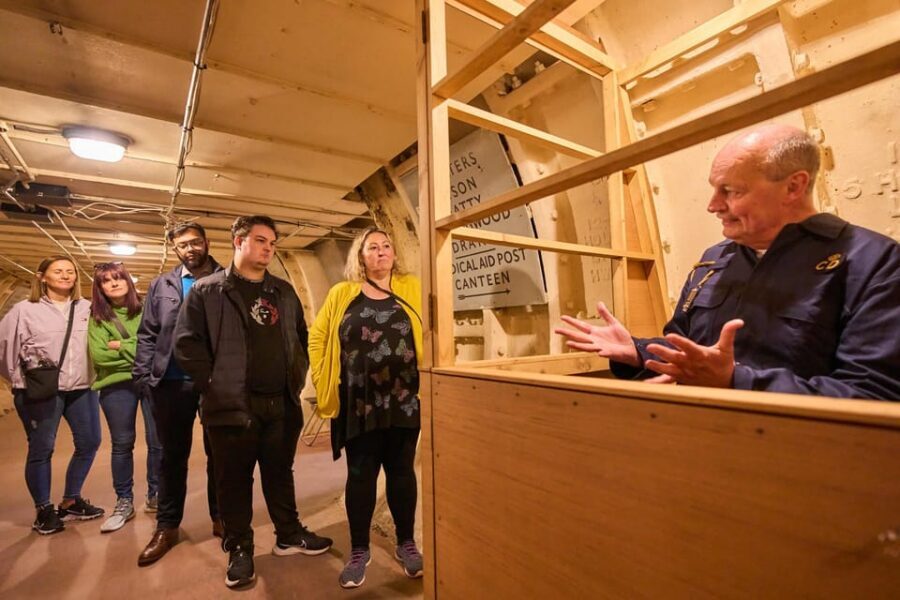
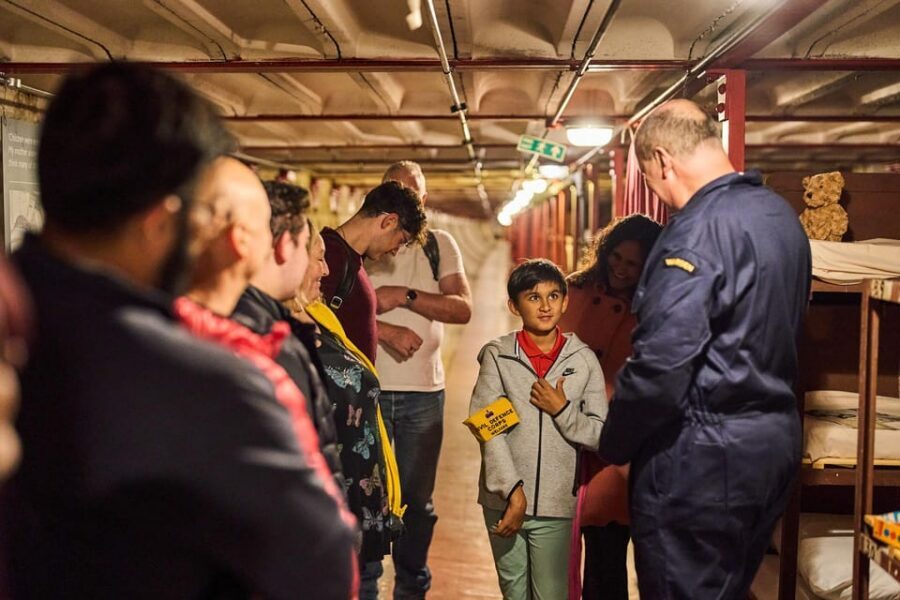
The most praised part of this tour is the way the guides bring the place to life. There are two expert guides, and one takes on the role of a 1940s ARP Warden. This is roleplay, yes, but it isn’t just performance. It’s a way to explain what people did, where they stood, and how they would have thought about safety at night.
As you follow the story, you’ll step through what a South London family’s first night in the shelter might have felt like. That matters because the shelter wasn’t only a physical space. It was a routine: waiting, listening, settling in, and trying to sleep while the city fought the air raids above.
The other guide supports the narrative with historical explanations and context. You’ll connect the tunnel layout and facilities to the lived reality of sheltering: the purpose of each room, how people coped with limited space, and why the shelter could function as a complete wartime environment.
If you enjoy guided tours where you feel you’re being taught, not lectured, this format is a good fit. It keeps your brain switched on without drowning you in dates.
Bunk beds, benches, and WWII artifacts you can see close up
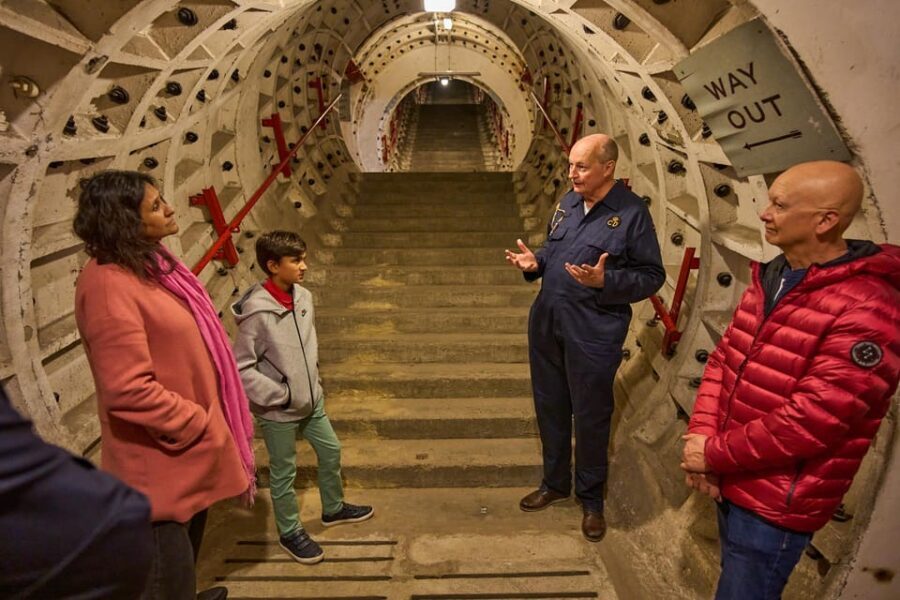
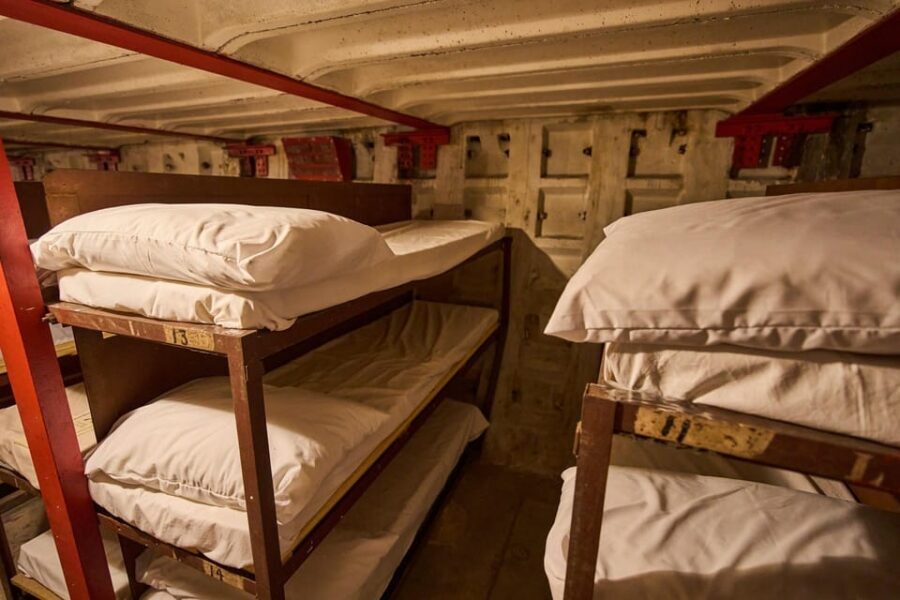
There’s a reason the shelter’s sleeping area is a highlight. The tour includes a look at original cramped bunks—the kind of setup where thousands slept overnight during air raids. Even when you’re standing and listening, you get the sense of how small the margins were.
You’ll also sit on the original bunk beds, which are turned into benches for the tour. That simple action helps you understand posture, space, and how people would have layered their lives in a space built for survival rather than comfort.
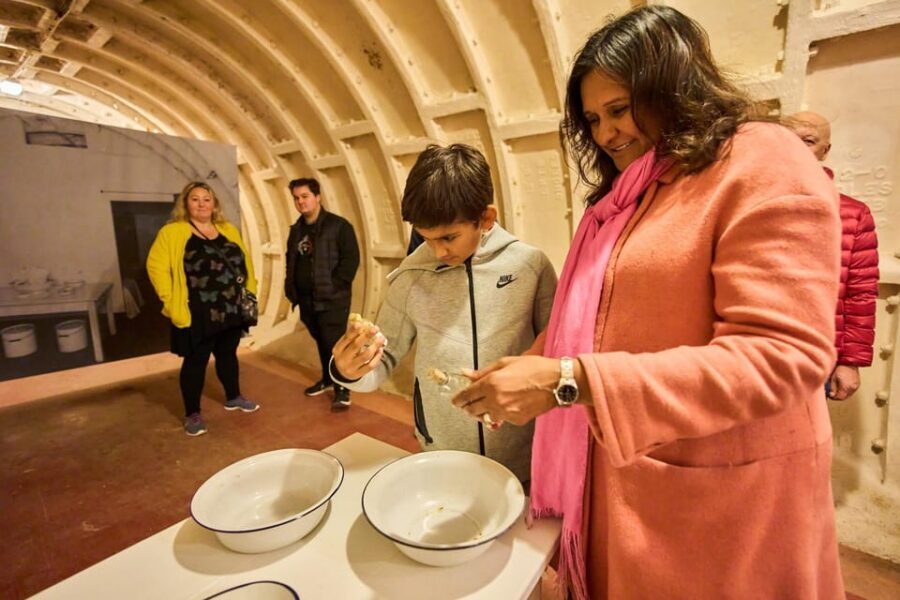
Then comes the hands-on element. You’ll handle genuine WWII torches and you’ll see what an Anderson shelter looked like. That kind of physical object learning is great for two reasons: it breaks the screen-time habit, and it makes the era feel less like a textbook.
The tour also includes details that are easy to miss if you just wander around. You’ll learn what the shelter looked like during wartime and you’ll notice how certain spaces have been refurbished to reflect a 1940s state, guided by historical research and findings.
Wartime graffiti: the human trace under London
Some museums show history behind glass. This one adds something harder to forget: historical graffiti left by shelter occupants.
Seeing those markings changes the emotional temperature of the tour. It’s one thing to learn that people stayed there. It’s another thing to see evidence that people were thinking, coping, and leaving their words behind in a place meant to hide them.
It also ties in with the tour’s bigger theme: the shelter was meant to be secret and protected. Yet the people inside still created a record of themselves, even if it was messy and informal.
This is where you start understanding why air-raid shelters became more than shelters. They were community spaces under extreme pressure.





From 1944 air raids to Windrush arrivals: why the story continues
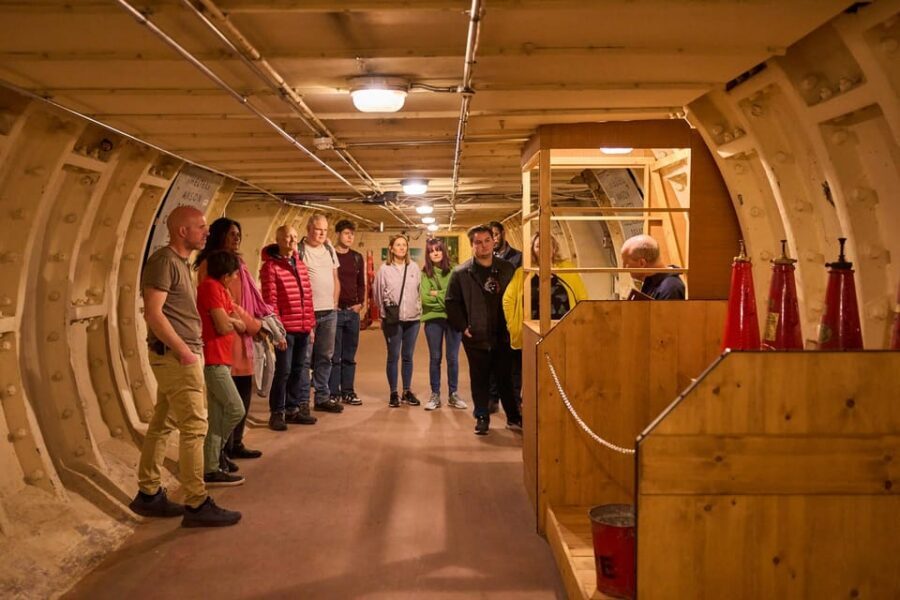
The war portion is only the first half of what you’ll hear. This site didn’t stay in wartime mode. In the post-war years, it was repurposed, including housing the first Caribbean migrants to Britain who arrived on HMT Empire Windrush.
That shift is powerful because it reframes the shelter. You’re not only walking through a space built for one kind of crisis. You’re seeing how London repurposed structures and made room for new chapters of migration and rebuilding.
The tour also mentions stories connected to other post-war visitors, including those connected with the Festival of Britain. The point isn’t to list events. The point is to show you how a single underground site can hold multiple generations of meaning.
If you care about how places keep living after the headline period ends, this part is worth your attention. You’ll come away with a sense that history doesn’t stop. It gets reused.
What the tour feels like in real time (and who it suits)
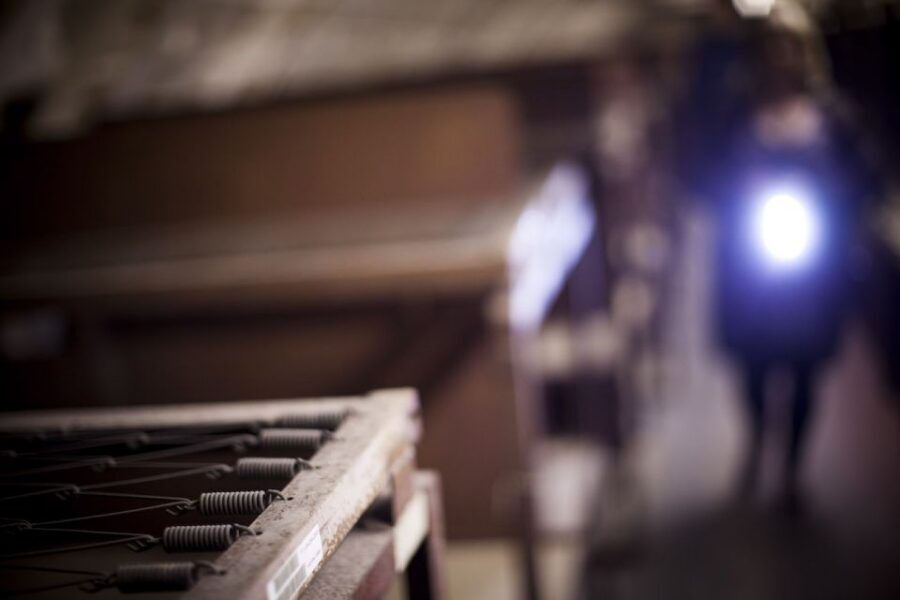
This isn’t a casual stroll. You’re moving through an underground route with uneven ground, low lighting, and static escalators. If you’re comfortable in older buildings and don’t mind tight spaces, you’ll likely enjoy the atmosphere and the realism.
It’s not suitable for:
- children under 10
- people with mobility impairments
- anyone with claustrophobia
If any of those apply, take the safety guidance seriously. The whole point of this experience is that it imitates real shelter conditions: cramped sleeping quarters, shadowy tunnels, and enclosed rooms.
For everyone else, it’s a strong choice if you like:
- WWII history that includes daily life, not just strategy
- guided tours with actors or roleplay that explain what people did
- museum visits that feel active, not passive
The duration is 75 minutes, which is long enough to feel you did something, but not so long that you melt into fatigue. You’ll be walking, listening, and looking at artifacts without it turning into a whole day commitment.
Price and value: what $51 buys you here
At $51 per person for a 75-minute guided experience, it’s priced in the range of a top museum tour. What justifies it is the access and the format.
You’re getting:
- access to a disused underground shelter below an active transport hub
- a guided walk through a mile of tunnels
- original sleeping infrastructure and authentic WWII items
- recreated spaces connected to 1940s details
- storytelling that covers both wartime sheltering and post-war Windrush-related history
A cheaper self-guided museum visit is always tempting. But this tour gives you interpretation—how to read what you’re seeing—and that’s often the difference between watching objects and understanding people.
If you’re the type who likes to ask questions and follow a storyline, you’ll feel good about the time and cost.
Getting ready: shoes, bags, and small rules that matter
Go prepared. Bring comfortable shoes, and wear weather-appropriate clothing since you’ll still be outside briefly before you go underground. You also need a passport or ID card.
You should avoid:
- open-toed shoes
- food and drinks
- luggage or large bags
There’s no cloakroom, so travel light. This is especially important because you’ll want free movement for walking and navigating the shelter spaces without juggling a bag.
Also remember the language is English, so it’s best if that’s your comfort zone.
Arrive 15 minutes early so you don’t feel rushed when it’s time to start. The meeting point is specific: in front of the Marks & Spencer Food Hall on Balham HIII (SW12 9EA), and it’s about a 2-minute walk from Clapham South Station.
Should you book the Clapham South shelter tour?
I’d book it if you want WWII history that focuses on how real people lived at night—sleeping in cramped bunks, coping with fear, and leaving graffiti traces. I’d also book it if the Windrush connection matters to you, because this tour ties the shelter’s story to the post-war years instead of stopping at 1944.
Skip it if you’re claustrophobic, need step-free access, or you know low lighting and uneven ground are likely to stress you out. Underground tours reward courage, not wishful thinking.
If your ideal trip includes hands-on moments, roleplay done with purpose, and a guided walk through an underground space you’d never find on your own, this is a great use of 75 minutes in London.