London’s old stories move fast on foot.
This 140-minute City of London route strings together big-name landmarks with the feel of the oldest parts of town, from ancient Roman traces to the places that shaped modern London. I especially like St Paul’s Cathedral as the visual anchor, and the Monument to the Great Fire as the story you can almost measure with your eyes.
Two things I really enjoy: first, the live guide brings the stops to life with enough detail to make you look twice at what’s in front of you, not just snap a photo. Second, I like that the tour builds in time to go inside, with entry to London Mithraem or The Guildhall plus a viewing platform at 120 The Garden, so you’re not stuck only looking from the sidewalk.
One thing to consider: it’s a tight 140 minutes, so if you’re the type who wants to linger forever in cathedrals or museums, plan extra time before or after the tour.
In This Review
- Key highlights worth your attention
- Entering the City: a compact route with big contrasts
- St Paul’s Cathedral: what to look for besides the front view
- The Monument to the Great Fire: using height to understand impact
- Bank of England: seeing finance as part of the city’s architecture
- Leadenhall Market: a short break that changes the whole mood
- Tower of London: the best kind of ending for a history-focused walk
- The included entries: why they matter more than people think
- Price and time: is $24 worth it for your kind of trip?
- Who should book this City of London tour?
- Should you book this tour?
- FAQ
- How long is the Hidden Gems Tour of the City of London?
- How much does the tour cost?
- Is the tour guided, or is it self-guided?
- Which attractions are included in the tour stops?
- What entry experiences are included during the tour?
- Is the tour wheelchair accessible?
- What age groups is the tour not suitable for?
- Can I cancel or adjust plans last minute?
Key highlights worth your attention
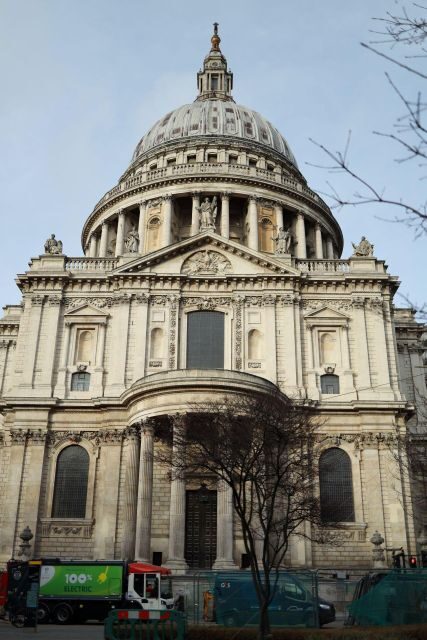
St Paul’s Cathedral as the must-see skyline moment for the whole walk
The Monument to the Great Fire of London for a stop that’s part landmark, part story lesson
Bank of England to get a street-level feel for why this area matters
Leadenhall Market for a more human, walk-through break from office-land
Tower of London as the final heavyweight historical contrast
Entering the City: a compact route with big contrasts

The City of London can feel like it has two modes: weekday practicality and historical weight. This tour keeps you moving through both, with stops that range from religious architecture to symbols of empire and finance, all within 140 minutes.
You’ll start with the kind of landmark that’s impossible to ignore, then shift into places that are easier to miss if you’re sightseeing on your own. That change of pace is part of why I like this tour format. You don’t just see famous places; you learn how the pieces connect.
Also, the group experience can be very personal. One verified booking noted the guide, Nick, as enthusiastic and very engaged. That matters because a history walk goes from mechanical to memorable when the guide clearly enjoys the route and teaches it with confidence.
You can also read our reviews of more city tours in London



St Paul’s Cathedral: what to look for besides the front view
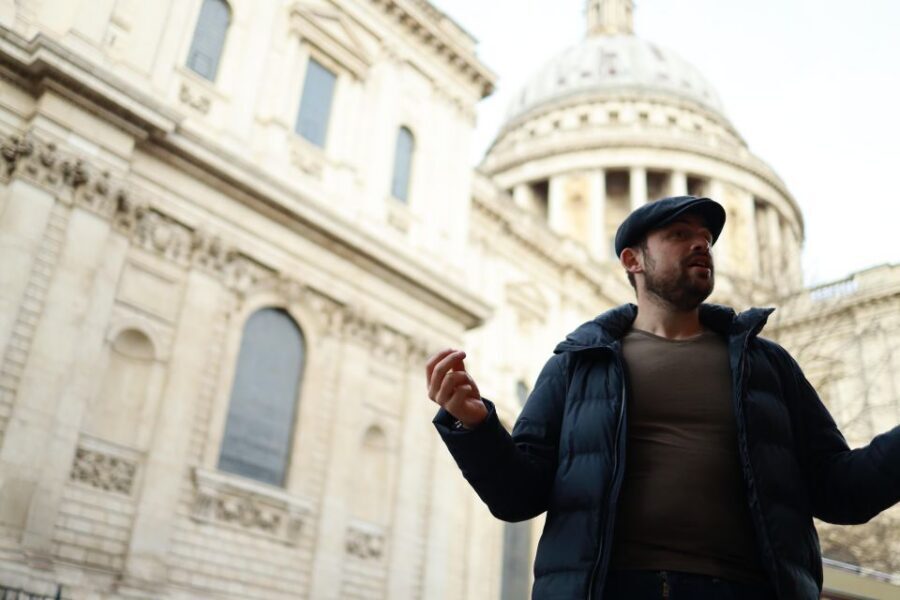
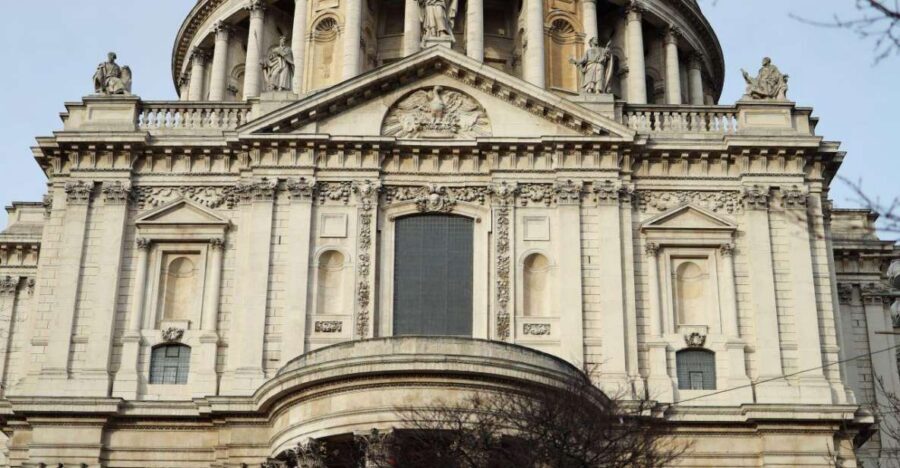
St Paul’s Cathedral is your first big “wow” for a reason. It’s not only a famous building; it’s a point of orientation. Even if you know the name, being close up helps you understand why this spot anchors so many London stories.
When you’re there, slow down for the details that travel fast when you’re rushing: the way the building’s mass sits in the surrounding streets, and the visual rhythm of its exterior. I’d focus less on collecting facts and more on noticing how the cathedral changes the mood of the area.
A practical note: cathedrals can involve lines and crowding depending on the day. If you’re sensitive to busy interiors, arrive ready to accept that you might spend part of your time waiting or moving through in a guided flow. You’ll still come away with a much clearer sense of why this stop belongs early in the tour.
The Monument to the Great Fire: using height to understand impact
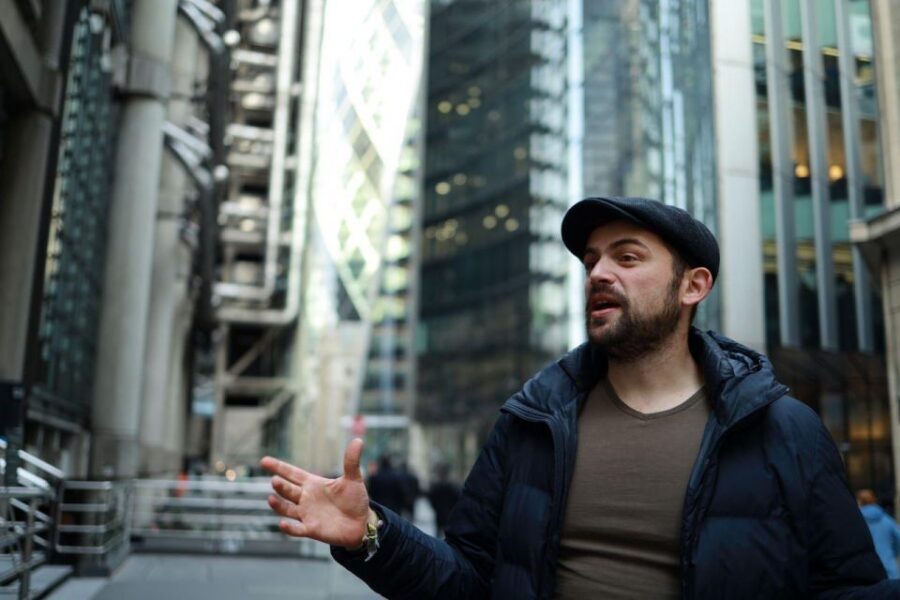
Next up is The Monument to the Great Fire of London—a stop that teaches without needing a lecture. The whole point is scale. The landmark’s design turns a historical event into something you can feel in your body as you stand there and look up.
I like how this works for first-time visitors. The Great Fire is one of those London topics people bandy about, but a monument stop makes it concrete. You’re not just hearing that it was big—you’re seeing a built reminder of what survived and what changed after the flames.
One consideration: if you want lots of time for standing and taking photos from multiple angles, remember the tour is time-bounded. You’ll enjoy the stop most if you’re okay with a guided pacing that prioritizes flow over lingering.
Bank of England: seeing finance as part of the city’s architecture
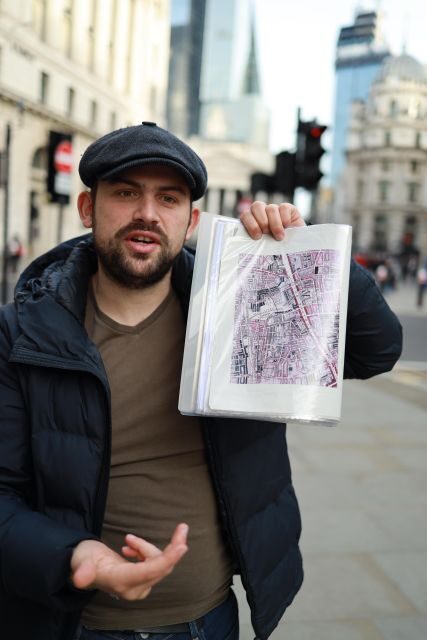
Bank of England sounds like a purely practical place, but on a walk like this it becomes something else. You start to connect the City’s money power with the way the area is physically laid out—streets, sight lines, and the institutional buildings that shape movement.
This is where I think the tour adds real value for people who usually skip “boring” sights. Finance buildings can look interchangeable when you’re only passing by. Here, the guide’s job is to make you see them as symbols with a location-specific logic.
If you’re expecting a lot of inside access at the Bank itself, the tour info doesn’t promise that. What you will get is the street-level perspective: where it sits, how it relates to nearby landmarks, and why this part of London is more than a logo on a street.
Leadenhall Market: a short break that changes the whole mood

Then you hit Leadenhall Market, which is a welcome shift from office corridors. Markets do two things well on tours: they reset your eyes, and they remind you the City isn’t only for institutions and history books.
I like that this stop gives you variety. After seeing towering monuments and monumental buildings, a market setting brings texture. You get to watch how people move through the space and feel the “real London” side—shopping, walking, and everyday rhythms.
The trade-off is simple: it’s still part of a schedule. So rather than expecting a freeform wander, think of it as a guided taste—enough to orient you, and just enough to make you want to come back later on your own when you have more time.






Tower of London: the best kind of ending for a history-focused walk
No City of London overview feels complete without the Tower of London. As a final major stop, it works because it’s visual and emotional. Even from the outside, it’s the kind of place that instantly signals power, control, and long memory.
I like using a fortress as an ending point because it helps you tie the themes together. You’ve already seen spiritual authority at St Paul’s, disaster and rebuilding via the Great Fire Monument, and the institutional backbone of the City with Bank of England. The Tower then lands as the hard-edged contrast.
One thing to keep in mind: Tower of London is exactly the sort of place that many visitors want to experience slowly. Since this tour ends after a set time, you may feel a natural urge to return later for a longer look. That’s not a flaw; it’s how you know the stop has weight.
The included entries: why they matter more than people think
Beyond the major sights, the tour includes entry to London Mithraem or The Guildhall plus a viewing platform at 120 The Garden. This part is the difference between a “look at buildings” walk and a tour that also gives you indoor moments.
I like that you don’t spend the whole 140 minutes outside. Indoor entry time helps on a changeable London day, and it also lets you shift from big landmark impressions to more grounded, place-specific context.
At 120 The Garden, the viewing platform is a smart inclusion because you get to see how the City’s layers stack up. Even if you’re not a “views person,” it helps you connect the dots between where you walked and how the streets and landmarks relate.
One practical caution: platforms and indoor sites can mean standing and moving through controlled spaces. If you’re someone who gets tired quickly, bring a little patience and plan to take your time during the guided moments when the group pauses.
Price and time: is $24 worth it for your kind of trip?
$24 per person for 140 minutes is priced like a solid “orientation” tour. In other words, it’s the kind of value you choose when you want structure without committing a whole day.
Here’s how I’d judge whether it fits you:
- If you’re visiting London for a few days and want the City highlights without getting lost, this price is a reasonable shortcut.
- If you hate crowds and want deep, self-paced museum time, you may find the schedule too tight for your style.
- If you like learning facts that make the streets feel meaningful, the guided pacing is the main value.
Also, since it’s a live English-language guide, you’re paying for interpretation and sequencing. That’s worth more than people think, because the City can be confusing if you’re only using maps and guessing what matters.
Who should book this City of London tour?
This tour suits you best if you want a focused walk through major landmarks with guided context. It’s also a good match for people who enjoy mixing outside icons with one or two indoor entry moments.
It’s explicitly wheelchair accessible, which is a real plus if you need step-free routing. On age, it isn’t suitable for babies under 1 year, and it’s also not suitable for people over 95 years—so check your travel party carefully.
If you’re traveling with kids or teens, the structure can work well because the stops are famous and the route is short. Still, the pacing may feel fast for younger attention spans, so it helps to manage expectations and be ready for frequent “look and listen” moments.
Should you book this tour?
If your priority is understanding the City quickly and seeing the big stops in one smooth loop, I think booking makes sense. The mix of St Paul’s Cathedral, the Great Fire Monument, Bank of England, Leadenhall Market, and the Tower of London, plus indoor entry options and a viewing platform, gives you more variety than a basic sightseeing walk.
Skip it if you want long, slow experiences at just one or two sites, or if you prefer fully self-guided wandering. This is a guided route with an efficient rhythm, not a day-long museum binge.
If you do book: wear comfy shoes, bring a charged phone (you’ll want photos at multiple stops), and use the time to ask yourself one question at every stop—why does this place belong to the next one?
FAQ
How long is the Hidden Gems Tour of the City of London?
The tour lasts 140 minutes.
How much does the tour cost?
The price is $24 per person.
Is the tour guided, or is it self-guided?
It is a live tour with an English-speaking guide.
Which attractions are included in the tour stops?
The highlighted stops are St Paul’s Cathedral, The Monument to the Great Fire of London, Bank of England, Leadenhall Market, and the Tower of London.
What entry experiences are included during the tour?
Entry is included to London Mithraem or The Guildhall, and there is entry to the viewing platform of 120 the Garden.
Is the tour wheelchair accessible?
Yes, the tour is listed as wheelchair accessible.
What age groups is the tour not suitable for?
It is not suitable for babies under 1 year, and it is also not suitable for people over 95 years.
Can I cancel or adjust plans last minute?
The activity offers free cancellation up to 24 hours in advance, and it also offers a reserve now & pay later option.