REVIEW · LONDON
London: British Museum Guided Tour
Book on GetYourGuide →Operated by My tour London · Bookable on GetYourGuide
Step into human stories fast.
This 2-hour British Museum tour turns a huge collection into a guided route, led by a licensed guide who helps you understand what you’re seeing as you go. You start in ancient Egypt, then keep moving through other civilizations with a story you can actually follow.
I love the Rosetta Stone part, because it’s where Egyptian hieroglyphs stop feeling mysterious and start making sense. I also like the tour’s “best of” approach, with key stops such as the Parthenon sculptures, including the controversial Elgin Marbles, plus Roman mosaics and other must-see artifacts.
One possible drawback: noise in crowded rooms can make it hard to hear the guide clearly, so plan to keep your position tight and attentive.
In This Review
- Key Points You Should Know Before You Go
- Why This British Museum Tour Works Better Than Wandering
- Meeting Up Inside the Museum Portals (Not Outside the Gates)
- Egypt First: Rosetta Stone, Pharaohs, and Why Hieroglyphs Matter
- Ancient Greece Stops: Parthenon Sculpture and Philosophy in Plain Words
- Crossing into Ancient Rome: Emperors, Gods, and Engineering Energy
- Sutton Hoo and Anglo-Saxon England: A Shortcut to Early Britain
- Easter Island on the Same Route: Hoa Hakananai’a and Human Spirituality
- How Guides Handle Contentious Objects Without Turning It into Noise
- The Guides: Filomena, Stuart, Tara, Rebekka, Lucia, and Maya
- A Realistic Take on Hearing in a Crowded Museum
- Practical Tips for Your 2-Hour Run Through the Museum
- Should You Book the British Museum Guided Tour?
- FAQ
- How long is the British Museum guided tour?
- Where do I meet the guide?
- When will I receive my tickets?
- Is the tour guide included?
- What languages are available for the live tour?
- Does the tour include express security?
- Is the tour wheelchair accessible?
- Is transportation included, and what should I bring?
- Should I book if I want flexible plans?
Key Points You Should Know Before You Go

- Express security check helps you get inside and onto the route faster.
- A time-sorted path that moves from Egypt to Greece to Rome, then onward to Anglo-Saxon England and world artifacts.
- Meaning over signage, with explanations that connect objects to people and ideas.
- Controversial objects get context, including the Elgin Marbles and other contentious museum pieces.
- Guides can make it feel personal, especially when group sizes run small.
- Two languages may run at once depending on demand, so you’ll want to choose a tour that matches your language comfort.
Why This British Museum Tour Works Better Than Wandering
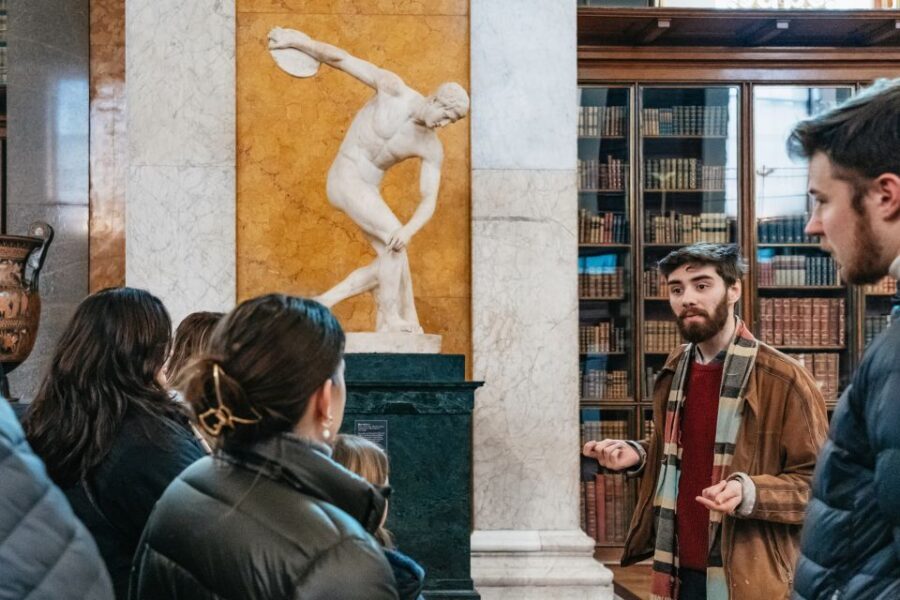
The British Museum can overwhelm you fast. You walk in, you see “everything,” and then you spend your time hunting for what’s truly important. This tour is designed to fix that problem by steering you through a logical arc of human culture in a tight timeframe.
At $39 per person for 2 hours, the value is really about what you gain for the time you spend inside. The museum’s access is often free for visitors, but a guided narrative is what changes a random gallery stroll into an understanding session—especially here, where the collection is so large that self-guided browsing can become frustrating.
I also like that the experience isn’t just about “famous objects.” It ties objects together through big themes: how people recorded beliefs, how empires built power, and how later societies borrowed ideas from earlier ones. You end up leaving with a map in your head, not just photos in your camera roll.
You can also read our reviews of more guided tours in London



Meeting Up Inside the Museum Portals (Not Outside the Gates)
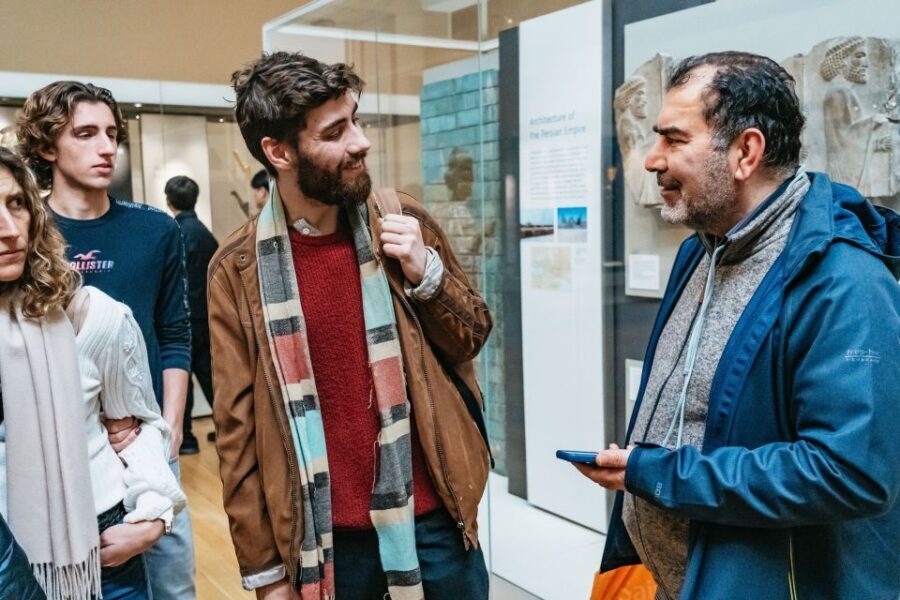
Logistics matter at the British Museum, mostly because you’re navigating security first. You’ll meet your guide in front of the museum portals on the stairs near the pillars, but only after you’ve passed security. That detail matters: don’t wait outside the gates expecting your guide to find you.
Tickets are handled close to departure. You’ll receive tickets via WhatsApp 1 hour before the tour. If you don’t use WhatsApp, contact the provider by email so they can send entry tickets another way.
You’ll also get express security check, which is the practical difference between enjoying the museum and feeling rushed on arrival. If you show up ready—comfortable shoes, weather-appropriate clothing—you’ll feel the tour’s timing work in your favor.
Egypt First: Rosetta Stone, Pharaohs, and Why Hieroglyphs Matter
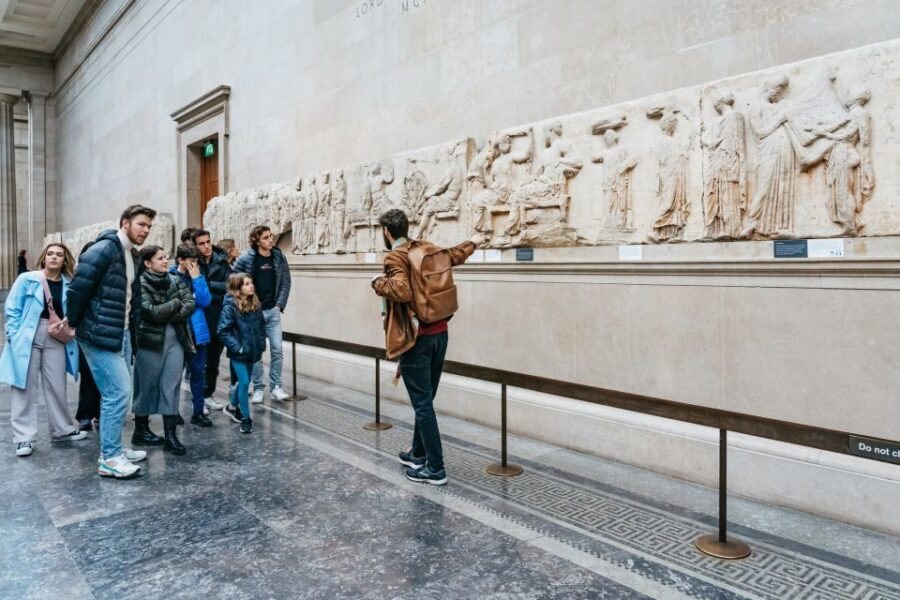
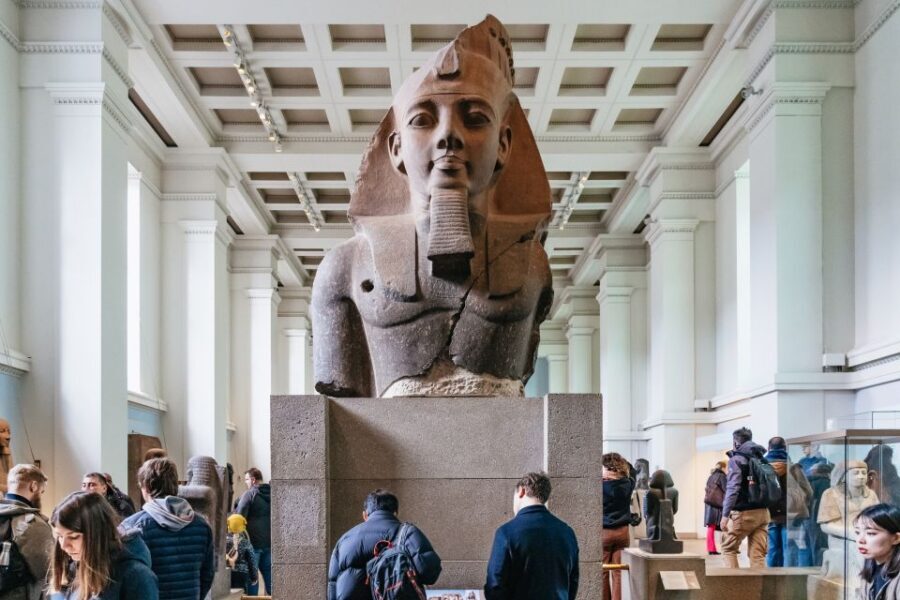
Starting in ancient Egypt is smart, because it gives you a “tool” for reading the world. The tour spotlights the Rosetta Stone and the key idea behind deciphering Egyptian hieroglyphs. Instead of treating it as a single famous slab, you’ll understand it as a bridge between languages—one that helped open a whole civilization to modern readers.
You’ll also see relics tied to pharaohs, which helps anchor hieroglyphs in daily reality: power, religion, and how rulers wanted to be remembered. Egypt often becomes the “starter chapter” that makes the rest of the museum click, because you’ll begin noticing recurring themes—how symbols communicate authority, and how images carry meaning long after the original owners are gone.
Ancient Greece Stops: Parthenon Sculpture and Philosophy in Plain Words
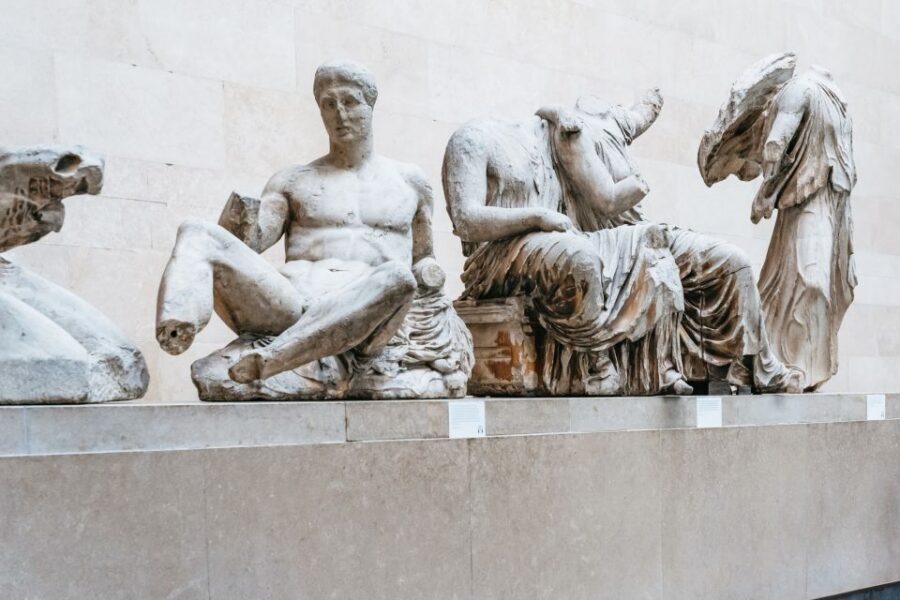
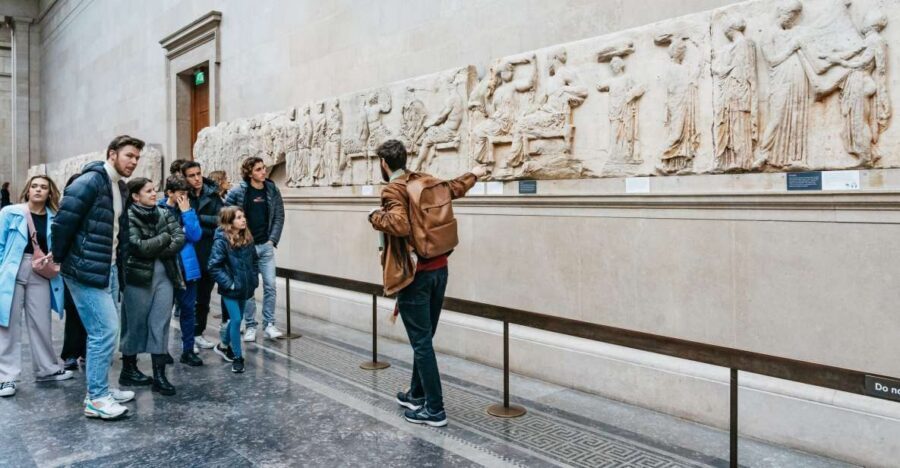
Next comes ancient Greece, and this tour focuses on why Greek art and ideas shaped Western thinking. You’ll get time with iconic Parthenon sculptures, and yes, that includes the contentious Elgin Marbles. The benefit of having a guide here is simple: you don’t just see marble in a room—you learn what those sculptures represent and why they became so influential.
The tour also connects art with philosophy. Greek civilization produced ideas that are still debated today, and you’ll see how those ideas show up not only in writing, but in sculpture and inscriptions. Even if you’re not a “history person,” the explanations are framed so you can follow the logic.
One more reason this part feels valuable: it gives context to the museum’s scale. When you’re guided, you understand why a gallery looks like a highlight reel—it’s not random curation, it’s a structured storyline.
Crossing into Ancient Rome: Emperors, Gods, and Engineering Energy

Rome is where the museum’s “power and everyday life” story becomes easier to visualize. The tour takes you through Roman-era artifacts tied to emperors and the way authority was presented through statues, imagery, and built achievements.
You’ll have a chance to marvel at intricate mosaics, along with statues depicting gods and heroes. This is a good stop for anyone who thinks museums are only about ancient portraits. Roman art often mixes public messaging with myth—so the guide’s explanations help you see what’s behind the craftsmanship and what it was meant to communicate.
Also, Rome’s engineering legacy shows up in the way you think about the objects. Even when you’re not physically surrounded by roads and buildings, you can still connect Roman artifacts to Roman systems: how they controlled space, promoted rule, and turned culture into a tool of governance.
You can also read our reviews of more museum experiences in London






Sutton Hoo and Anglo-Saxon England: A Shortcut to Early Britain
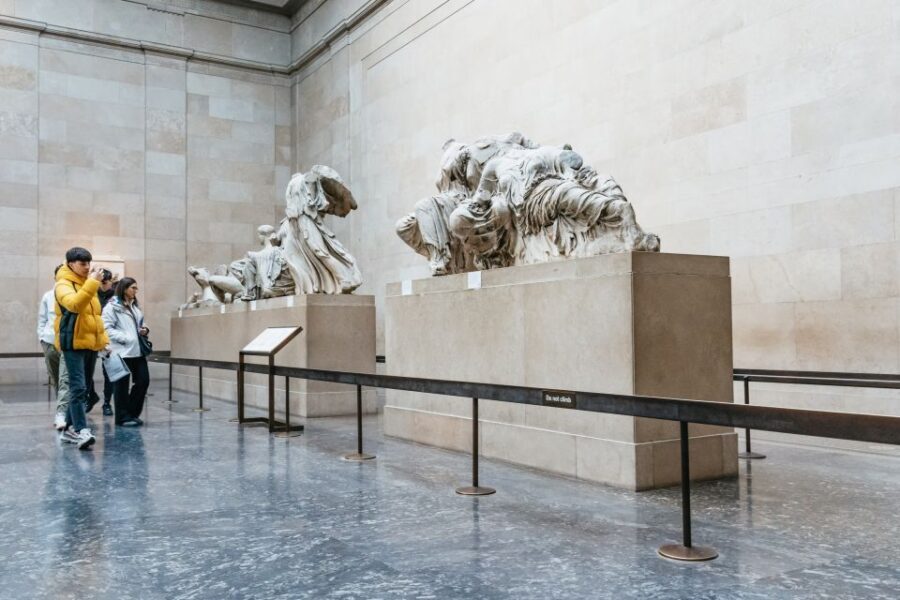
Not every museum tour spends real time on early England, but this one does. Sutton Hoo is the anchor here—Anglo-Saxon treasures that offer a glimpse into early English life.
This stop works because it breaks the usual pattern of only Euro-Mediterranean classics. It also gives you a different kind of perspective on artifacts: instead of starting with monumental empires, you see what material culture can reveal about societies that are closer in time to your own world.
If you’re traveling with kids or you’re the type who needs “fresh variety,” this is a great pivot. It keeps the tour from feeling like a straight line through “ancient Mediterranean equals everything.”
Easter Island on the Same Route: Hoa Hakananai’a and Human Spirituality
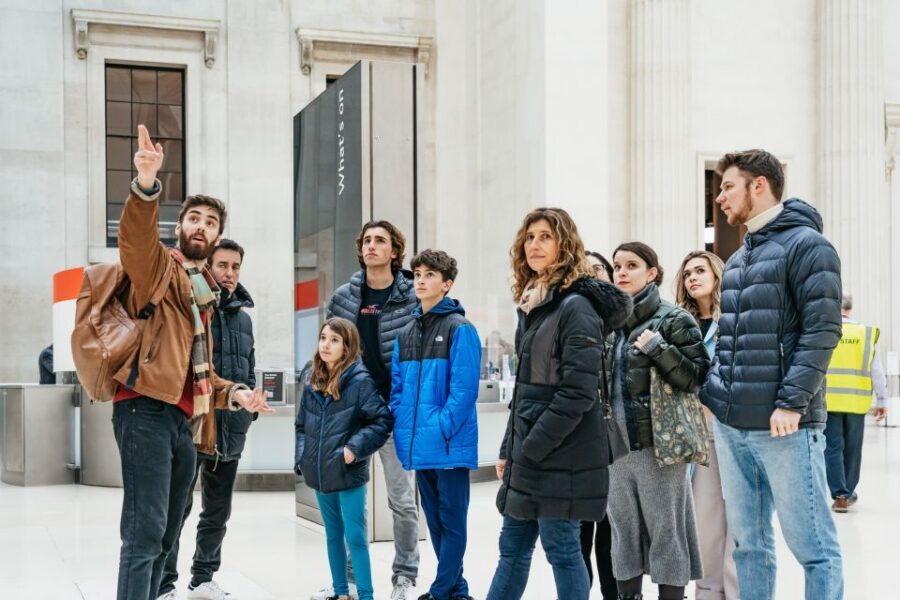
Then the tour reaches something wonderfully unexpected: the Hoa Hakananai’a, a moai from Easter Island. It’s not just a famous face-in-stone moment. The tour frames the moai as part of a spiritual and cultural system, so you’re learning what the object meant, not just how it looks.
This is where the museum feels truly global. The guide’s role becomes even more important because a moai doesn’t come with the same familiar cultural references as Egypt or Greece. When someone explains the “why,” you can actually connect the dots across distance and time.
And it’s not the last of it. The tour includes artifacts from around the globe, so you end up with a broader sense of how different cultures produced meaning through sculpture, symbols, and objects that outlast their creators.
How Guides Handle Contentious Objects Without Turning It into Noise
One standout theme from strong British Museum guides is how they treat controversial pieces. This tour’s approach is careful. You’ll get context around contentious objects, including the Elgin Marbles, and the guide may also highlight other looted or stolen items such as the Benin bronzes and Greek marble.
That matters because the British Museum isn’t just a museum—it’s a place where you can’t avoid questions about collecting and ownership. A good guide doesn’t dodge those issues, but they also don’t let them take over the entire hour. The result: you learn something real, and you still move forward through the collection.
If you care about ethics and provenance, this tour is a good fit because the conversations around these artifacts are built into the route, not tacked on as an afterthought.
The Guides: Filomena, Stuart, Tara, Rebekka, Lucia, and Maya
This tour lives or dies on the person leading it. In the guide line-up you might meet, names like Filomena, Stuart, Tara, Rebekka, Lucia, and Maya are specifically associated with strong experiences.
What’s most praised is how guides translate museum complexity into something you can track. Filomena is repeatedly described as enthusiastic and very detailed, while Stuart is praised for navigating the highlights while also making time for less-visited artifacts. Tara and Rebekka are noted for giving lots of information that makes the museum feel easier to navigate. Lucia is highlighted for explaining clearly and keeping the visit interesting. Maya is especially recognized for engaging both adults and children while summarizing the museum efficiently.
There’s also a useful practical angle here: when group size is small, the tour can feel close to private. One strong experience described it that way, which makes sense—more time for questions and less “herding” through rooms.
Language coverage is also a real factor. Tours are offered in English, French, and Italian, and in some cases you may have two languages at the same time depending on demand. If you’re sensitive to that, choose the language option that you’re most comfortable following.
A Realistic Take on Hearing in a Crowded Museum
The British Museum can get noisy. Even with a live guide, you may find it tricky to hear clearly in packed galleries. One review-style experience flagged difficulty hearing due to building noise and guide volume, and you should treat that as a heads-up.
My advice is simple: don’t just stand wherever you end up. Angle your body toward the guide, keep close enough to catch key phrases, and be ready to adjust position if a room gets too crowded. A two-hour tour is short, so losing the thread can feel bigger than it should.
If you want the best odds of a smoother audio experience, consider going during less crowded times. One experience specifically recommended off-peak hours for a better morning feel.
Practical Tips for Your 2-Hour Run Through the Museum
You don’t need a lot of planning, but a little helps.
- Wear comfortable shoes. You’ll be moving inside a large building for the full session.
- Dress for weather. You’ll do the pre-tour walk to meet your guide and then stay inside for the tour.
- Plan for a tight schedule. The whole point is focusing on remarkable parts of the public museum efficiently.
- Choose your language carefully. English, French, or Italian are offered, and two languages may run at once at busy times.
- Go with curiosity, not a checklist. The tour is about connections, like how Egypt’s deciphering logic leads into Greece’s ideas and then into Rome’s visual power.
If you prefer a museum visit where you can read slowly, this tour may feel a bit too structured. But if you want a guided “best-first” path that helps you make sense of what you’re seeing fast, it’s a strong format.
Should You Book the British Museum Guided Tour?
Book this tour if you want your time in the British Museum to feel organized and meaningful. It’s especially worth it when you’re short on time, when the museum scale feels intimidating, or when you want context for big names like the Rosetta Stone and the Parthenon sculptures.
I’d also lean toward booking if you care about how contentious pieces are presented. The guide approach includes context around difficult topics such as looted or stolen objects, and it’s handled within the flow rather than stopping everything.
Skip it (or at least consider a slower self-guided visit) if you strongly prefer to wander freely and read at your own pace. And if you know you struggle in noisy environments, arrive ready to reposition yourself so you can hear.
Overall, at $39 for 2 hours with express security and a live guide, this is a practical way to get a structured overview of humanity’s story—without spending your whole visit trying to figure out where to start.
FAQ
How long is the British Museum guided tour?
The tour lasts 2 hours.
Where do I meet the guide?
Meet your guide in front of the British Museum portals on the stairs near the pillars, after you pass the security check (not outside the gates).
When will I receive my tickets?
Tickets are provided about 1 hour before the tour via WhatsApp. If you don’t have WhatsApp, contact the provider by email so they can send the entry tickets.
Is the tour guide included?
Yes. The tour guide is included.
What languages are available for the live tour?
The live tour guide is offered in English, French, and Italian. Depending on demand, the tour may be in two languages at the same time.
Does the tour include express security?
Yes. It includes an express security check to help you skip the longer security lines.
Is the tour wheelchair accessible?
Yes. The tour is wheelchair accessible.
Is transportation included, and what should I bring?
Transportation is not included. Bring comfortable shoes and weather-appropriate clothing.
Should I book if I want flexible plans?
The activity offers free cancellation up to 24 hours in advance for a full refund, and you can reserve and pay later to keep plans flexible.