REVIEW · LONDON
London: British Museum Guided Tour with Priority Entrance
Book on GetYourGuide →Operated by BEST TOURS LONDON LTD · Bookable on GetYourGuide
You can get lost in here fast. This 2-hour guided tour gives you a smart hit list through the British Museum’s big-name galleries, with an expert telling the stories behind the objects in a way that actually sticks. I like that the group stays small (up to 10 people), so you’re not just drifting past walls. I also like the coverage: Egyptian mummies, the Parthenon Sculptures (Elgin Marbles), and the Sutton Hoo ship burial in one focused route.
One thing to keep in mind: priority entrance may not erase every delay on busy days. Even with priority-style tickets and a separate entrance, you may still face a queue after you get your ticket, so arriving early helps a lot.
You’ll start inside the museum next to the information desk, follow your guide through the museum’s most famous rooms, and end back at the meeting point. The commentary runs in English/Italian, and there’s an option for headsets if you want help hearing clearly.
In This Review
- Key things to know before you go
- Why this guided route is worth it at the British Museum
- Meeting inside the museum: start where it’s easiest to find your group
- The Great Court glass roof: the stop everyone remembers later
- Parthenon Sculptures (Elgin Marbles): more than famous names
- Ancient Egypt highlights: mummies, the Book of the Dead, and Ramesses II
- The Enlightenment Room: why science belongs in a museum
- Chinese and Southeast Asia collections: craftsmanship you can actually see
- Sutton Hoo ship burial: Anglo-Saxon England in big, human-scale detail
- Priority entrance and timing: the real-world version
- Small group dynamics: you’ll get more from the guide
- What you’re paying $39.05 for: value that makes sense
- Who should book this tour (and who might skip it)
- Should you book the British Museum guided tour with priority entrance?
Key things to know before you go
- Small-group pace: limited to 10 participants, so the guide can keep it moving without racing.
- High-impact highlights: Great Court glass roof, Parthenon Sculptures, Egyptian mummies, and Sutton Hoo.
- Big objects, clear stories: expect context and commentary, not just a walk-through.
- Priority tickets: included with allocated timeslots, plus a separate entrance.
- Languages: tours run in English and Italian.
- Headsets available: helpful if the galleries are crowded or you prefer extra clarity.
Why this guided route is worth it at the British Museum
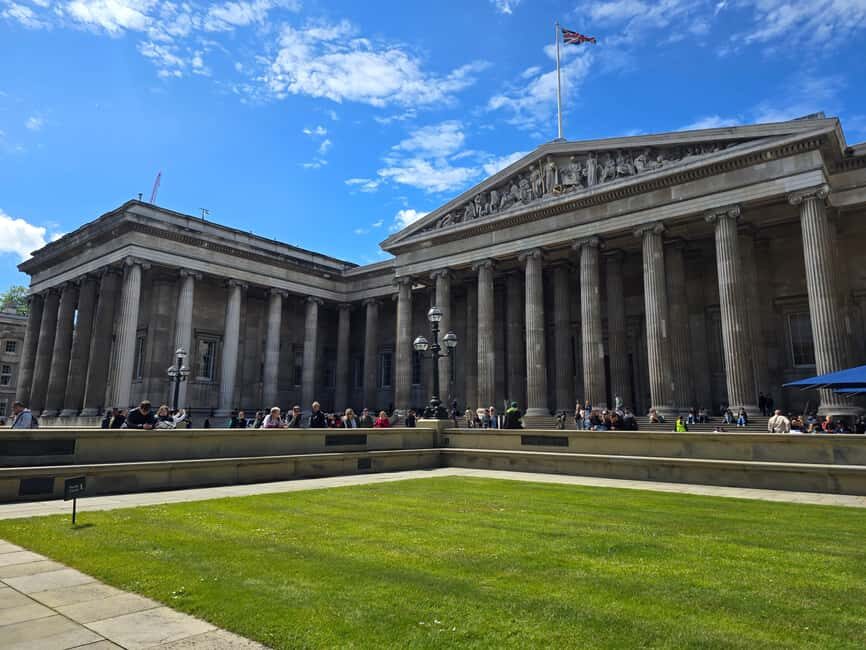
The British Museum is free to enter, which sounds like the perfect plan until you realize it’s also… huge. You can spend hours drifting and still leave with that feeling of: I saw things, but I can’t explain why they mattered. This tour solves that problem with a tight structure: 2 hours spent in the galleries that most people wish they’d focused on from the start.
You’re not trying to see everything. You’re getting the key threads that connect the collections—ancient empires, classical Greece, religious texts, and even the Enlightenment’s curiosity—all in a sequence that makes sense. The guide’s job is to give you the map in real time: what to look for, what questions to ask, and what details are easy to miss when you’re on your own.
And there’s another practical win. With a small group, you don’t spend the whole time stuck behind other visitors. That’s important here, because the museum isn’t just “crowded”—it’s crowded in the places you want to stop and look.
You can also read our reviews of more guided tours in London



Meeting inside the museum: start where it’s easiest to find your group
Your guide waits inside the museum next to the information desk. That’s a big deal for first-timers. Instead of hunting for a meeting spot outside, you start in the building where everything feels more navigable.
Bring a little patience with you. Even with priority-style entry and allocated timeslots, queues can still take time on busy days. One practical tip that keeps showing up: arrive early enough that a line doesn’t turn your first ten minutes into a stress spiral.
If you’re the type who likes to take photos, also know this: the best moments in the British Museum often happen where people naturally pause. So give yourself a buffer so you can enjoy stops instead of just surviving them.
The Great Court glass roof: the stop everyone remembers later
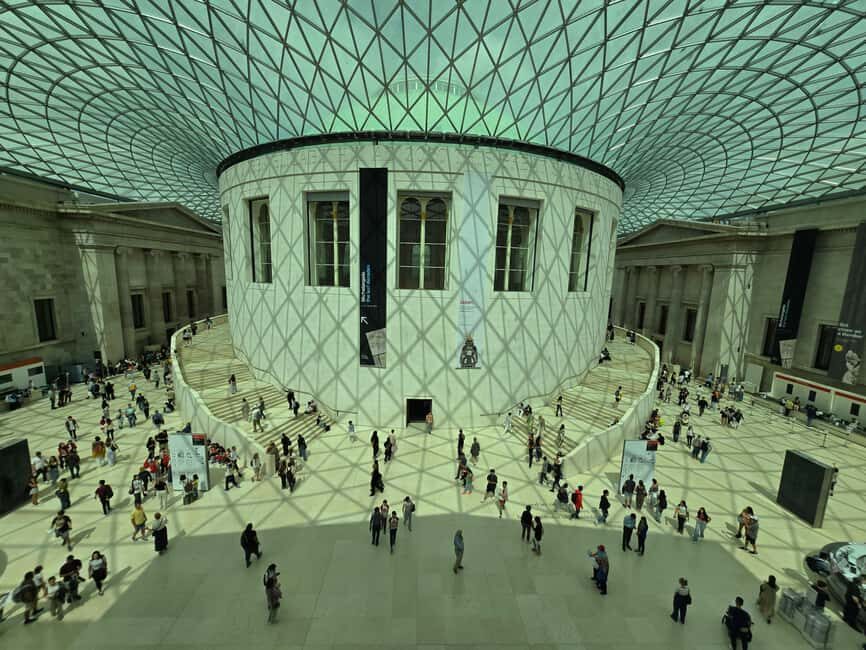
The tour’s early emphasis is on the museum’s layout and its most striking visual moment: the Great Court glass roof. It’s not just pretty ceiling photography material. It’s a kind of “orientation device.” When you see it, you understand why the British Museum feels open in some places and enclosed in others.
Your guide helps you interpret what you’re looking at—so you don’t just think, cool roof, and move on. You’ll also get the advantage of being there as a group rather than wandering in a high-traffic zone with no plan.
This is also a good point in the visit to reset your mindset. The British Museum can tempt you to chase everything at once. Starting with a landmark like the Great Court helps you switch into gallery mode—slower, more intentional, and easier to follow.
Parthenon Sculptures (Elgin Marbles): more than famous names
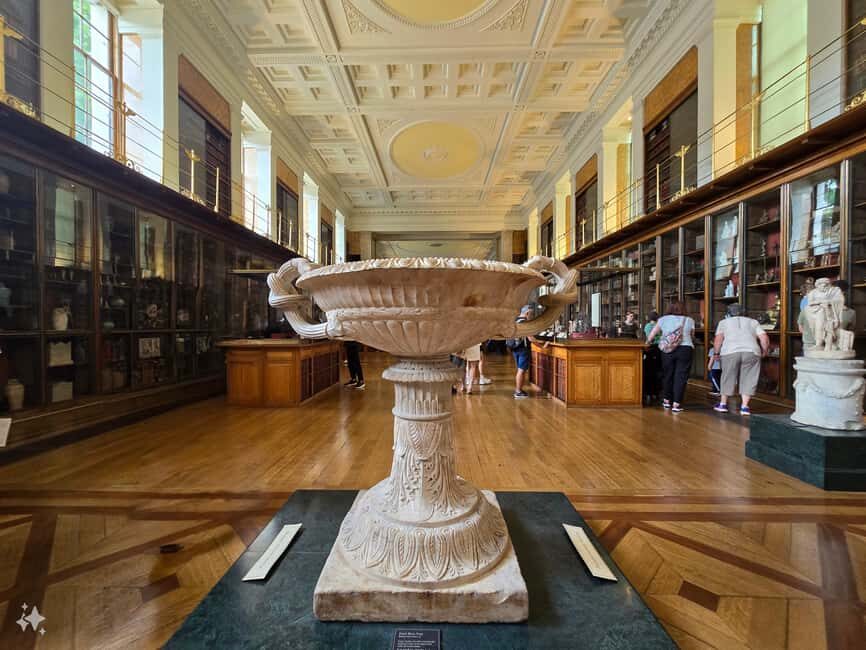
Next up is the Parthenon Sculptures, also known as the Elgin Marbles. These pieces come with a level of fame that can make them feel untouchable or like homework. A good guide changes that. Instead of treating them like a trophy case, you get help noticing what makes the sculptures powerful: their scale, their storytelling, and their relationship to ancient Greece’s ideas of art, myth, and public identity.
What I like about having this on the route is the framing. If you reach the Parthenon Sculptures early in your visit, you can connect the classical influence across other parts of the museum and your own understanding of Europe’s later history. If you reach them late, after you’ve burned through your energy, they can turn into “more stone.”
So this stop works best when you bring curiosity and let the guide do the heavy lifting on interpretation.
Ancient Egypt highlights: mummies, the Book of the Dead, and Ramesses II
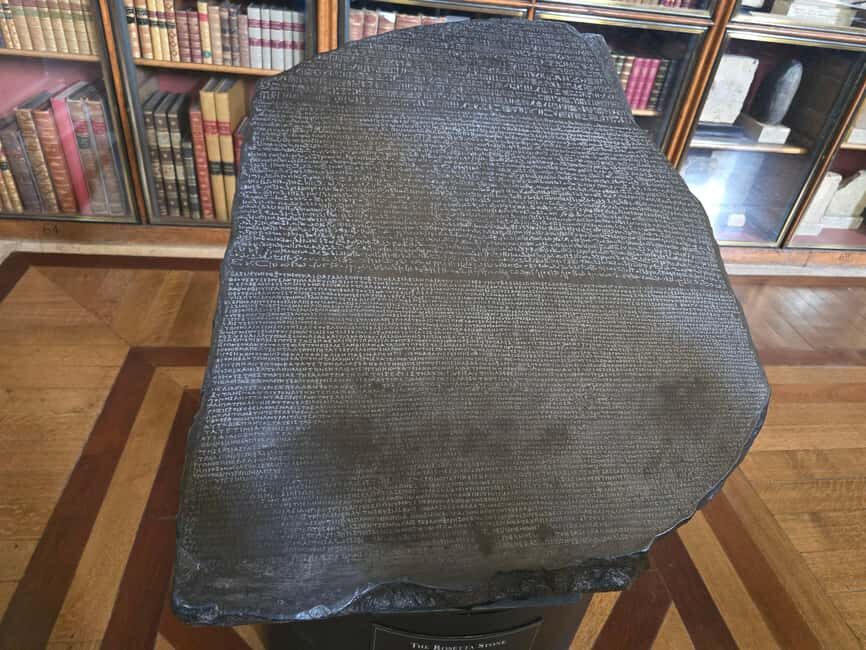
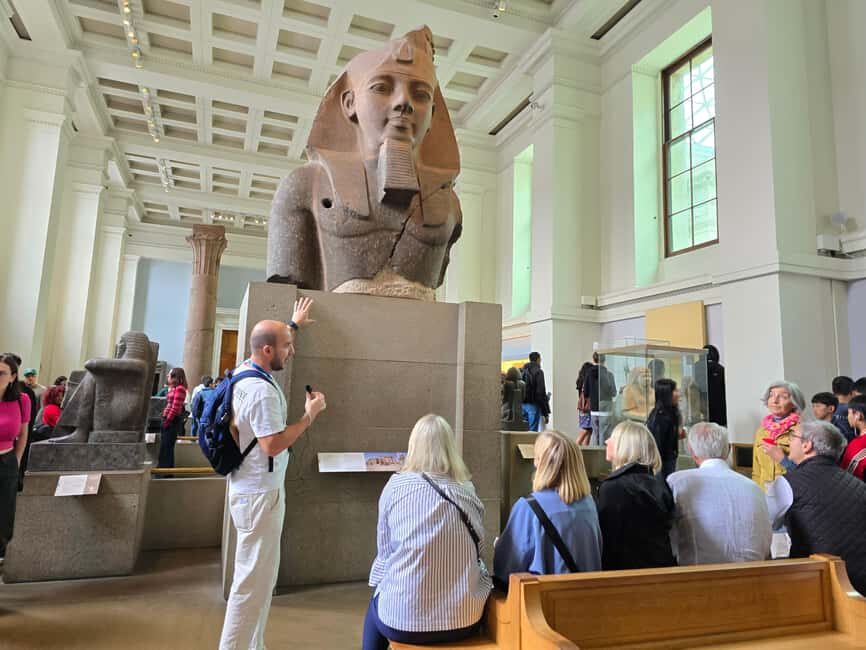
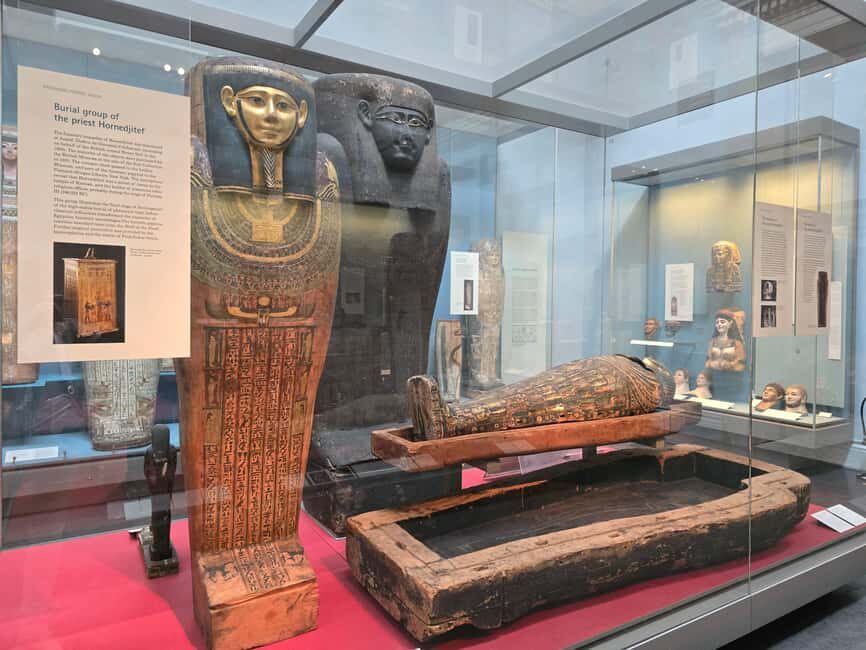
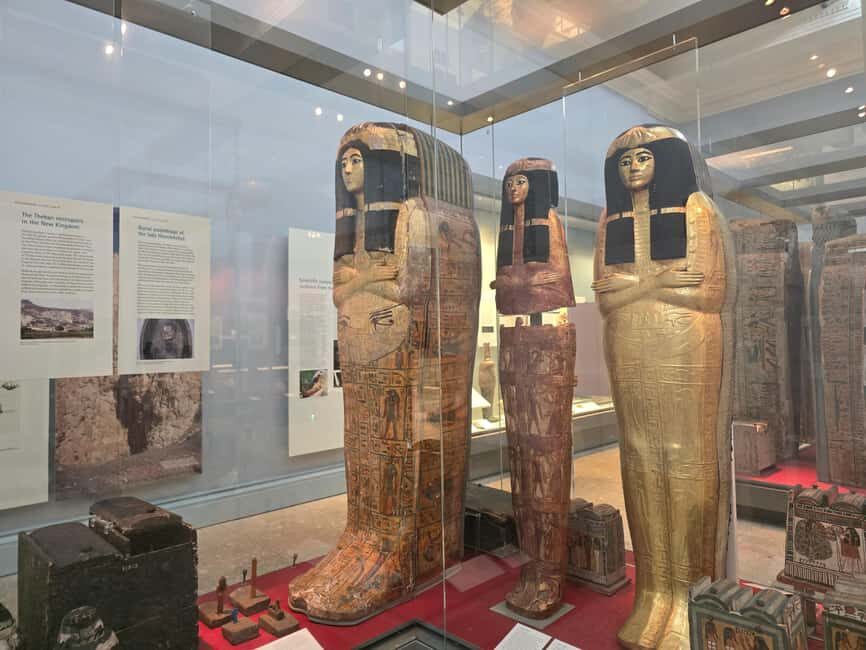
Then comes Egypt. The tour steps you into the museum’s world of burial practices and afterlife belief through Egyptian mummies, the Book of the Dead, and an awe-inspiring bust of Ramesses II.
Even if you’ve seen Egypt souvenirs before, museum objects hit differently. The mummies and associated funerary themes aren’t just “ancient bodies.” Your guide’s commentary is the difference between a surface glance and real understanding of what these artifacts were meant to communicate—religion, protection, and the journey after death.
Also, Egypt here is not only about one gallery. You’ll hear about the Rosetta Stone and why it matters—especially as a window into how languages and knowledge were unlocked over time. That connection helps you see these objects as more than isolated antiquities. They’re part of a larger story about reading the past.
If you’re traveling with teens or anyone who thinks Egypt is just curses and tombs, this is the moment where the museum’s humanity shows through: the beliefs people held, the rituals they prepared for, and the texts they used to guide what came next.
You can also read our reviews of more museum experiences in London






The Enlightenment Room: why science belongs in a museum
A standout part of the tour is time in the Enlightenment Room, with an emphasis on 18th-century discovery and intellectual curiosity. This is one of those stops that surprises first-timers, because many people walk into the British Museum expecting only ancient civilizations.
But the museum also preserves the story of how Europeans started collecting, classifying, and studying the world—through artifacts that reflect scientific advancements and curiosity. When your guide points out what you’re looking at, you begin to see the museum as a living record of how humans learned: observation, debate, and the urge to understand.
This stop is especially valuable if you like context. It turns the British Museum from a list of objects into a place where knowledge itself has a history.
Chinese and Southeast Asia collections: craftsmanship you can actually see
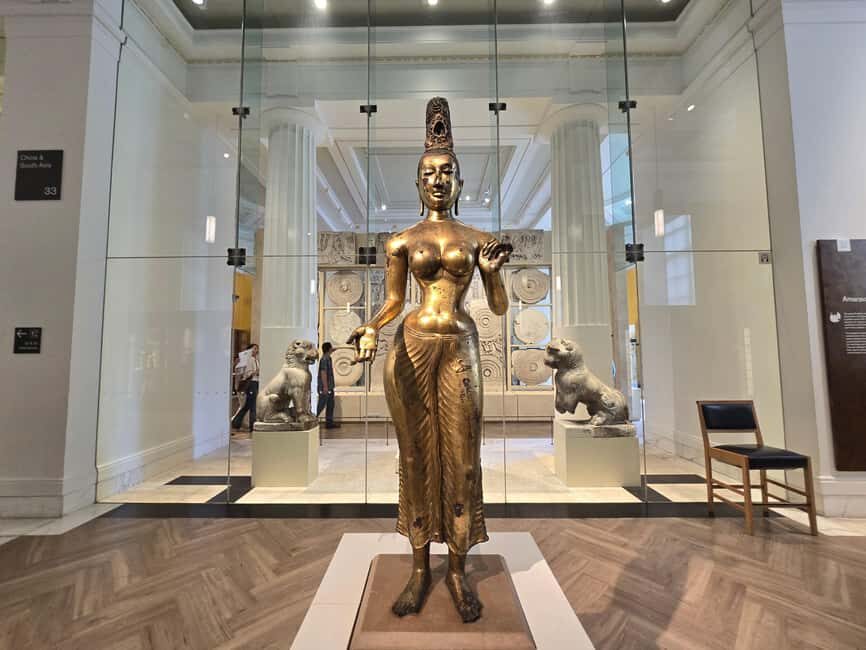
The tour also includes Chinese objects and items from Southeast Asia, with attention to the craftsmanship and artistic traditions. Even without heavy academic background, this kind of gallery works because the shapes, materials, and details do the talking.
Your guide helps you slow down long enough to notice what separates one work from another: the style choices, the design logic, and the cultural background behind the way the objects were made.
If you’re worried the tour will feel too Egypt-and-Greece heavy, this stop is a useful balance. It widens the lens beyond Europe’s ancient neighbors, and it reminds you that the British Museum’s strength isn’t only Western history—it’s global collecting across time.
Sutton Hoo ship burial: Anglo-Saxon England in big, human-scale detail
The final major focus is Anglo-Saxon England, with the Sutton Hoo ship burial taking center stage. This is one of the best “story stops” in the tour because it has built-in drama: a ship burial suggests status, ritual, and a belief system you can picture even when you don’t know every name.
Your guide highlights the intricately crafted helmet, shield, and related items. The practical value here is that you leave with a sense of what early medieval craftsmanship looked like and why it mattered. These pieces aren’t just decorative. They show skill, resources, and the social world that shaped them.
I also like ending the tour here because Sutton Hoo bridges a gap. You’ve spent the earlier part of the visit with ancient empires and classical Greece. Ending with Anglo-Saxon England turns the museum’s “time travel” into something that feels more connected to the history of Britain itself.
Priority entrance and timing: the real-world version
This tour includes priority tickets for the main entrance with allocated timeslots, and it says you’ll skip the line through a separate entrance. In practice, the time you save can depend on how busy the museum is and how the queue is running that day.
One useful takeaway from real experience: on busy days, the line can take up to 45 minutes, even when you’re using priority-style access. So don’t plan to stroll in at the last second and assume everything will be instant.
Instead, use this rule of thumb:
- Show up early enough that waiting doesn’t ruin the tour.
- Expect the guide to keep the group moving once you’re in.
- If you’re time-crunched, remember that the museum is free, so crowds are part of the deal.
Small group dynamics: you’ll get more from the guide
A tour capped at 10 people changes the whole feel. You can hear the guide better, ask quick questions if the moment fits, and you’re less likely to lose the thread when the group turns a corner.
Guides can also make or break a museum tour. I’m encouraged by the range of guide praise, including names like Tony, Tara, Stuart, Alex, and Mira. The common theme across good reviews is that the commentary was engaging and story-driven, with a real sense of respect for the museum and its objects.
So if you’re the kind of traveler who wants meaning—not just movement—this format is built for you.
What you’re paying $39.05 for: value that makes sense
The price is $39.05 per person for a 2-hour guided experience. The British Museum has free entry, so you’re not paying for admission. You’re paying for three things you usually can’t get by yourself:
- A guided route that hits major highlights in a sensible order
- Commentary in English/Italian that adds context
- Priority tickets with allocated timeslots, plus help getting through the entry process
Is it worth it? If you’re short on time, it often is. Two hours is a small window for a museum that holds over 8 million artifacts across 70+ galleries. A guide turns that huge scale into a guided selection you can actually absorb.
If you love wandering and you have a full day, you might prefer doing it solo. But if your calendar is tight—or if you hate the feeling of seeing famous objects without knowing what you’re looking at—this is a solid buy.
Who should book this tour (and who might skip it)
Book it if:
- You want a focused highlight route rather than random gallery hopping.
- You enjoy having a guide explain the why behind the what.
- You’re traveling as a pair or small group and want time well used.
You might skip it if:
- You plan to spend the day deep in the museum and already know exactly which rooms you want.
- You strongly need a full “no waiting at all” entry experience. Even with priority tickets, queues can still happen on busy days.
The tour doesn’t try to solve every British Museum problem. It solves one big one: making your limited time feel purposeful.
Should you book the British Museum guided tour with priority entrance?
Yes—if you want the museum’s best-known stories without sacrificing your sanity. The biggest strengths are the small-group pace and the way the tour connects major highlights: Great Court, the Parthenon Sculptures, Egyptian funerary themes, Enlightenment-era collecting, Asian art, and Sutton Hoo.
Just go in with the right expectation: priority-style entry may reduce waiting, but it may not eliminate it. If you arrive early and treat the two hours as a guided sampler, you’ll leave with a clearer picture of what you saw and why it matters.