REVIEW · LONDON
London: British Museum Guided Tour with Priority Entrance
Book on GetYourGuide →Operated by BEST TOURS LONDON LTD · Bookable on GetYourGuide
This is the easiest way to start strong. A guided, priority-entry sprint through the British Museum turns a huge place into a clear route you can actually enjoy. I love the 2-hour highlight plan that still leaves breathing room to look closely, and I love how guides like Tony, Antonio, and Tara keep the stories human and easy to follow. One thing to consider: you’re covering major artifacts fast, so if you want slow, room-by-room wandering, this won’t feel like enough time.
The British Museum can overwhelm you before you even find your first “wow” object. This tour helps you lock onto the museum’s best-known highlights—then you can decide what deserves a longer return visit afterward. The priority ticketing and separate entrance also help you spend less time in lines and more time staring at the good stuff.
In This Review
- Key highlights at a glance
- Entering the British Museum with priority (and less stress)
- The 2-hour route: what you’ll actually see
- Great Court glass roof: your built-in orientation tool
- The Parthenon Sculptures (Elgin Marbles) in plain English
- Ancient Egypt highlights: mummies, Ramesses II, and the Rosetta Stone
- Enlightenment Room and Asian collections: variety without chaos
- Sutton Hoo ship burial: the early medieval finale
- Tour comfort that actually helps: headsets and crowd control
- Price and value: is $53.87 worth it?
- Who should book this British Museum priority tour
- Should you book this guided tour with priority entrance?
- FAQ
- How long is the British Museum guided tour?
- Where does the tour start?
- What does priority entrance include?
- Are headsets provided?
- What languages is the tour offered in?
- What are the main highlights of the tour?
- Is flash photography allowed?
- Is the tour suitable for wheelchair users or mobility impairments?
- What’s included in the price?
- What is the cancellation policy?
Key highlights at a glance
- Priority entry with allocated timeslots so you skip the main rush at the door
- Great Court glass roof—a landmark you’ll look at twice (once to marvel, once to orient)
- Parthenon Sculptures (Elgin Marbles) with story context beyond the postcard basics
- Egyptian mummies and Ramesses II, plus the Rosetta Stone connections
- Sutton Hoo ship burial treasures, including the helmet and shield
Entering the British Museum with priority (and less stress)
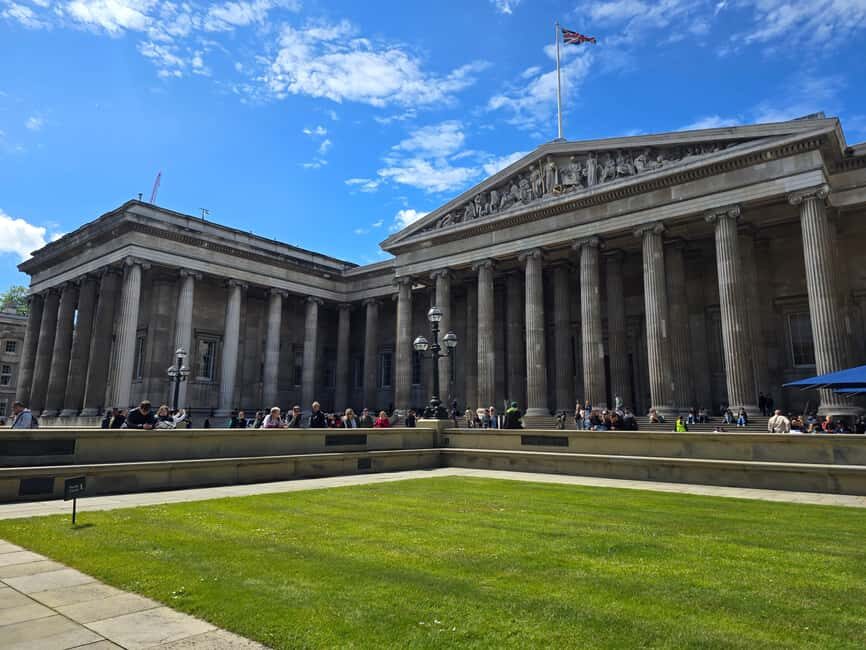
The British Museum starts before you even get inside. Your tour begins at 52 Great Russell St. The guide then meets you inside the museum, next to the information desk, which is a nice detail because this place is big and crowded enough to make “meet at the entrance” a recipe for losing people.
Here’s the practical win: you’re not fighting for your place in the same long queue as everyone else. Priority entrance with an allocated timeslot means your group gets in through a separate entrance designed to reduce the line crush. That matters because the museum’s best features—like the Great Court and the major galleries—get busy. If you waste time stuck at the front, you lose your best viewing windows.
Also, you’re not just handed a ticket and left to fend for yourself. You get a live guide who keeps the walk moving and the explanations clear. With headsets available (and used by many guests on this format), you can hear the commentary over the crowd noise instead of guessing what your neighbor is listening to.
You can also read our reviews of more guided tours in London



The 2-hour route: what you’ll actually see
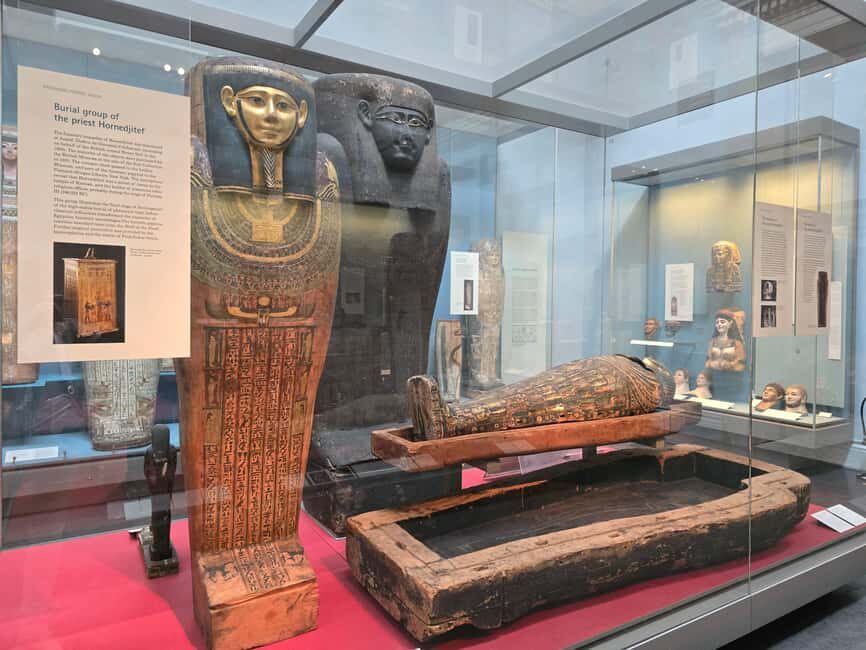
This is a 2-hour guided overview. That doesn’t sound long, until you remember the British Museum has 8 million+ artifacts spread across 70+ galleries. In other words: you can’t see it all in one trip. This tour gives you something better than “everything.” It gives you the museum’s biggest storyline beats, in an order that makes sense.
You’ll move through key areas that cover multiple civilizations, with the guide stitching together the “why it matters” behind what you’re seeing. The format tends to work like this: the group focuses on the most important objects first, then the guide points you toward where you can go deeper afterward if you want.
From the highlights listed, the tour’s arc typically includes:
- a first stop for orientation and architecture in the Great Court
- Parthenon Sculptures (Elgin Marbles) as a centerpiece of classical Greece
- a shift to Ancient Egypt with mummies and major names like Ramesses II
- connections tied to the Rosetta Stone
- a stop for Enlightenment-era ideas in the museum’s Enlightenment Room
- a look at Chinese and Southeast Asia collections
- a final strong landing on Anglo-Saxon England, especially Sutton Hoo
You’ll return back to the meeting point at 52 Great Russell St after the tour.
Great Court glass roof: your built-in orientation tool
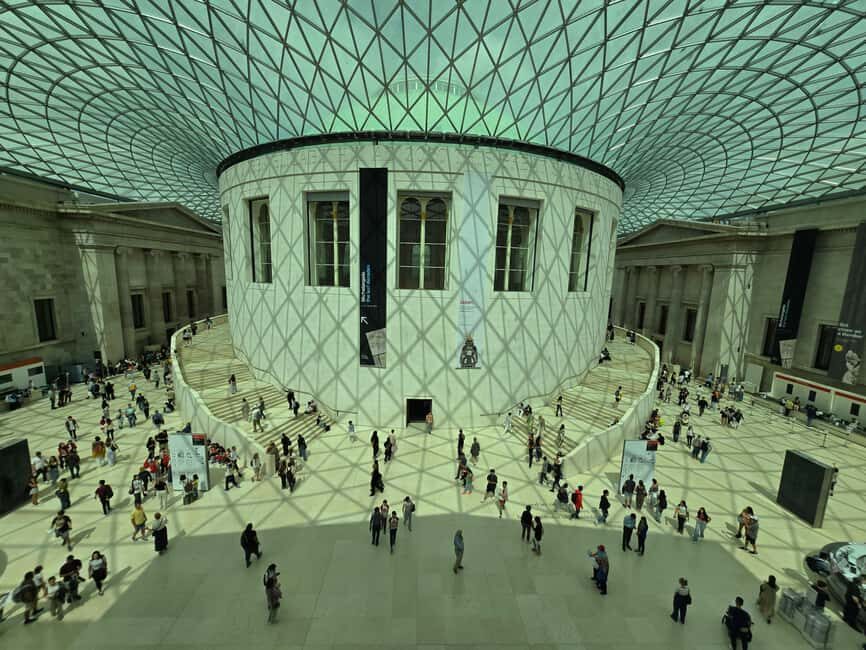
If you only know one thing about the British Museum, make it this: the Great Court is its own attraction. The glass roof isn’t just pretty. It’s a visual anchor. When you see it early, you quickly understand how the galleries connect around this central space.
That helps you even later. After the tour, when you go exploring on your own, you’ll remember where you were stood and which corridors lead where. Guides also tend to use this spot to explain how the museum organizes collections—so the rest of the visit feels less like wandering and more like following a map.
It’s also a good moment for photos, because you can take in the geometry of the court. One key rule: flash photography isn’t allowed, so plan for natural light shots.
The Parthenon Sculptures (Elgin Marbles) in plain English
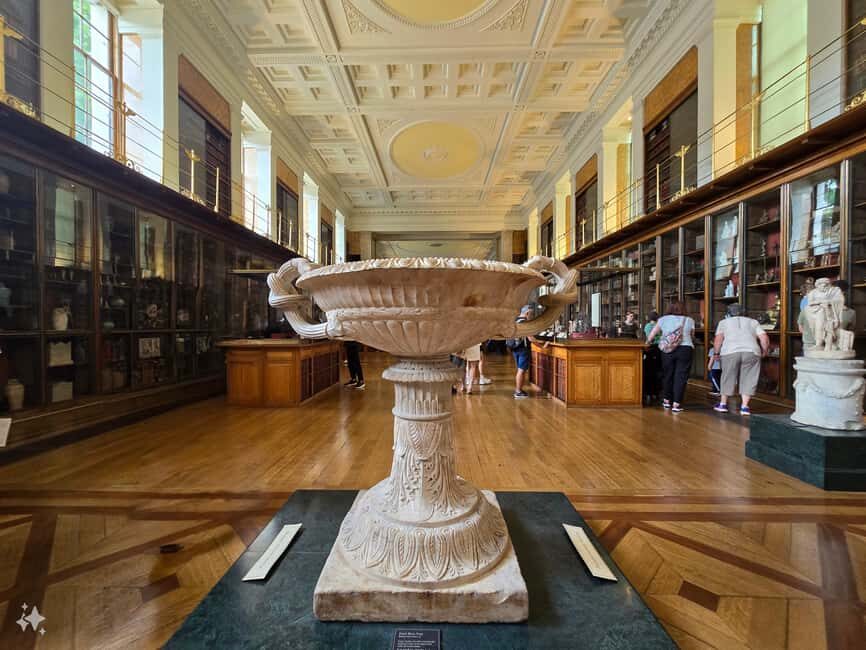
The Parthenon Sculptures, often called the Elgin Marbles, are the kind of object people recognize instantly—even if they can’t name a specific figure. A good guide turns that recognition into understanding.
What I like about this part of the tour is the balance: you’re shown the major pieces, but you’re also given context about what these sculptures represent in the larger story of ancient Greece. The tour approach makes the objects feel less like museum furniture and more like evidence—art made to last, with political and religious meaning baked in.
In a short visit, you won’t get a full lecture on Athenian history. Still, you’ll leave with enough background to notice details you’d otherwise miss—like the craftsmanship, the composition, and how the museum’s presentation frames the work.
Ancient Egypt highlights: mummies, Ramesses II, and the Rosetta Stone
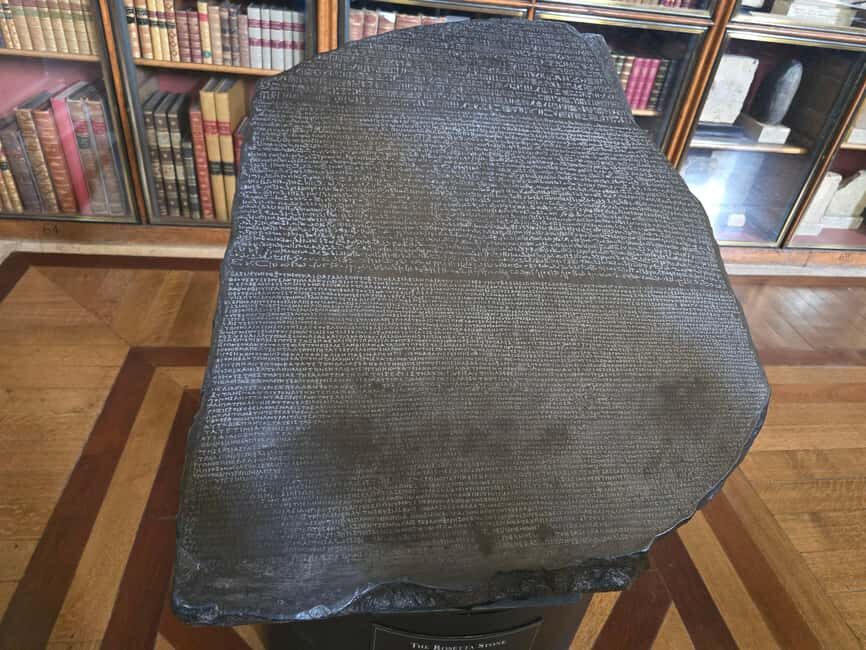
Egypt is where many visitors start to feel the “I need more time here” itch. This tour hits the emotional impact fast, with stops built around iconic objects and readable explanations.
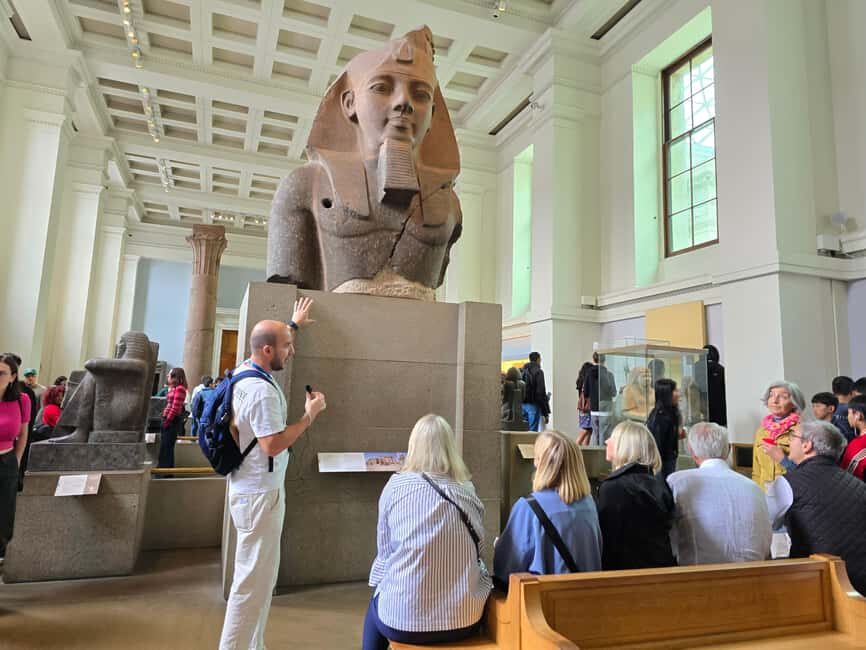
You’ll see Egyptian mummies, plus the Book of the Dead themes and objects connected with burial practices and religious beliefs. You’ll also focus on the awe-inspiring bust of Ramesses II, which is the kind of piece you keep staring at because it feels immediate—like a portrait that refuses to be distant.
Then comes the Rosetta Stone connection, which is a smart move in a 2-hour tour. The Rosetta Stone matters because it’s not just an artifact; it’s a key that helped unlock reading systems. When the guide connects it to the broader picture, the museum becomes less “wow objects” and more “how we learned what we learned.”
One note: if you’re sensitive to the idea of mummies or burial imagery, this tour still keeps it within a guided, educational framing. But it’s not a slow crawl through the Egyptian galleries either. You’ll get a focused hit.
You can also read our reviews of more museum experiences in London






Enlightenment Room and Asian collections: variety without chaos
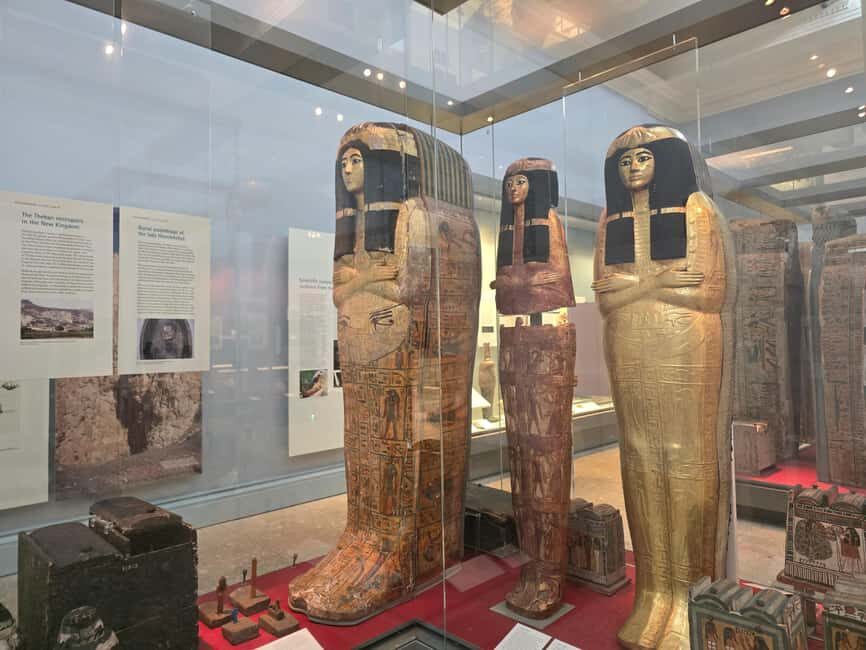
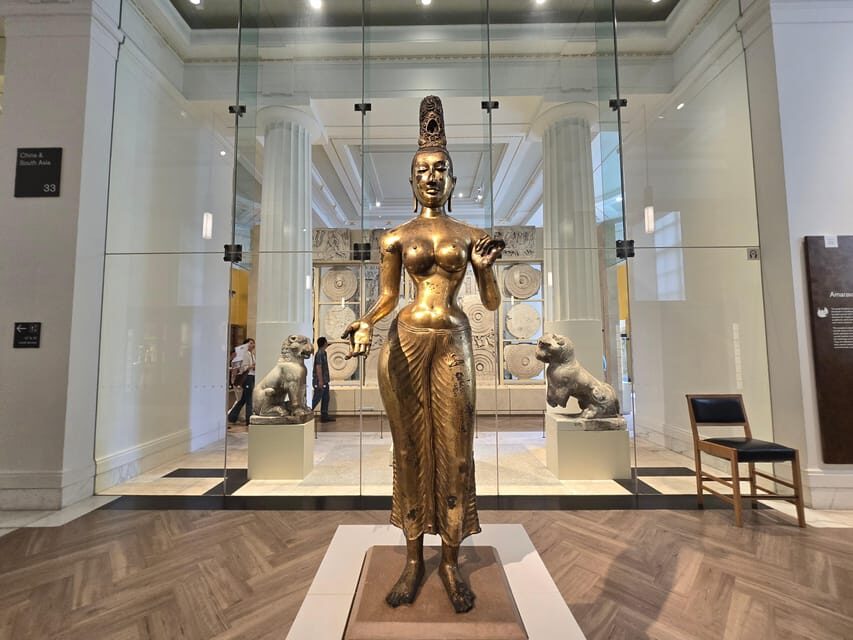
The British Museum isn’t only ancient worlds. This tour also makes time for later intellectual and cultural threads, including the Enlightenment Room and major pieces from Chinese collections and Southeast Asia.
This is valuable because it breaks the “one civilization per trip” habit. You get reminders that the museum holds both artifacts and ideas—scientific curiosity, collecting traditions, and how objects traveled and were studied.
The practical benefit: your brain doesn’t lock into one theme and burn out. After Egypt and Greece, the shift into the Enlightenment era and Asian collections feels like breathing after a sprint. The guide’s pacing also matters here, because too many stops can turn a tour into a blur. On this format, the highlights stay distinct.
Sutton Hoo ship burial: the early medieval finale
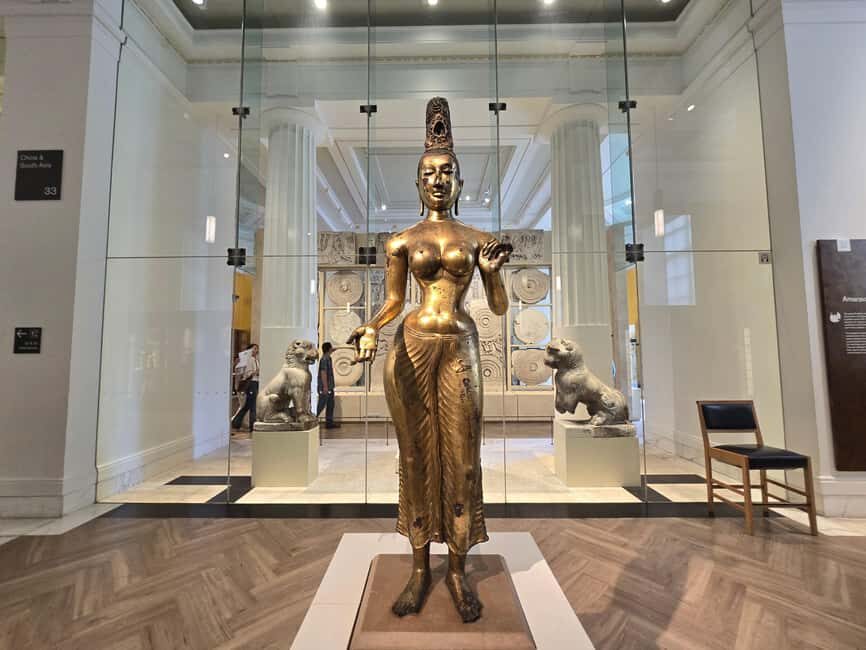
If you want one ending that feels dramatic, make it Anglo-Saxon treasures with a focus on the Sutton Hoo ship burial. This part often lands as a favorite because the objects are so specific and so craftsmanship-heavy.
You’ll see highlights like the intricately crafted helmet, plus the shield and other burial pieces tied to the Sutton Hoo story. Even in a time-limited tour, that level of detail makes the culture feel close—less like distant history, more like skill, status, and ritual translated into metal and design.
Guides typically make this section work by connecting the ship burial to the wider picture of early medieval England. It’s a strong finish because it’s not just another “ancient” stop—it’s a different world with its own materials and meaning.
Tour comfort that actually helps: headsets and crowd control
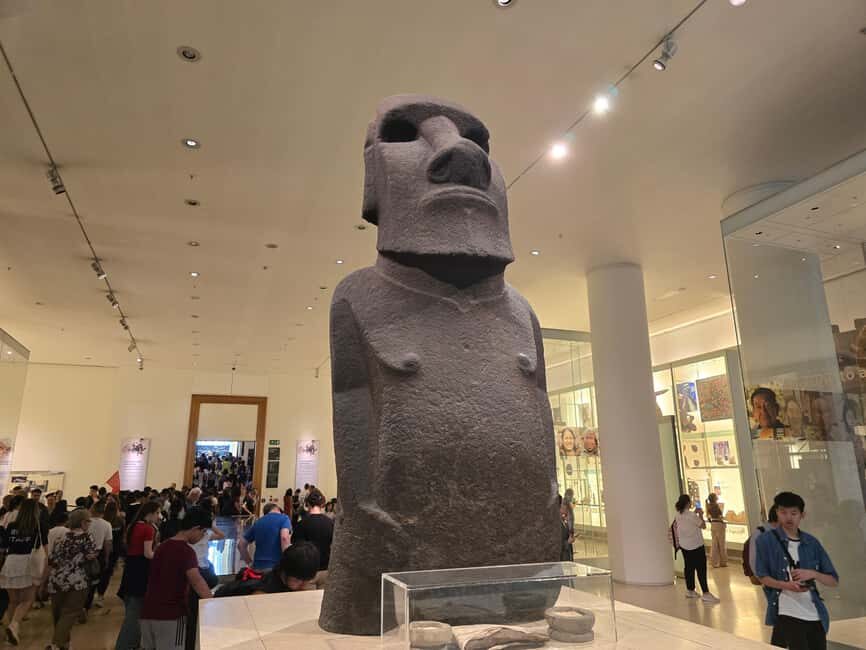
Two small things can make or break a museum tour: hearing and movement.
This experience includes headsets available, which helps you hear the commentary clearly even when the galleries get crowded. From the way guests talk about the tour, this isn’t a gimmick—headsets help you stay with the guide instead of constantly turning to check what you missed.
You also get a guide who keeps the group together in a busy building. Many guests highlighted how their guides made sure everyone didn’t get lost in the crowds—one big reason this is a good “first time” plan for the British Museum.
Language coverage is also a key comfort point. The guided commentary is available in English/Italian, and the tour format also lists Chinese among the live guide languages. If you’re traveling with mixed language needs, that matters.
And yes, it’s a small group available option. Smaller groups generally mean you can ask questions without shouting across the room.
Price and value: is $53.87 worth it?
At $53.87 per person for about 2 hours, you’re paying for three things:
1) a live guide who interprets the highlights
2) priority tickets with allocated timeslots
3) better odds of a smooth start in a crowded museum
If you visit the British Museum alone, you might still see some famous objects. But you’ll likely spend the first chunk of time figuring out where to go next—especially if it’s your first time. That’s where value gets real. Priority entrance reduces wasted time, and the guide reduces decision fatigue.
This price also makes sense if you want a “best-of” overview so you can build your own second day later. Several people emphasized that the tour is designed to cover the major eras and point you toward what to revisit. That’s a smart use of money for travelers who only have limited time in London.
Who should book this British Museum priority tour
This tour is a great fit if:
- it’s your first time at the British Museum and you want a clear route
- you’d rather pay for guidance than spend half your energy just choosing galleries
- you want a mix of Greek, Egypt, Enlightenment-era ideas, Asian collections, and Anglo-Saxon highlights
- you like asking questions and getting context while you look at the objects
It’s probably not your best match if:
- you want a slow, deep, room-by-room museum day
- you need an accessible route, since the tour is listed as not suitable for people with mobility impairments and wheelchair users
- you’re relying on audio support beyond what headsets provide (the listing says it’s also not suitable for hearing-impaired people)
Should you book this guided tour with priority entrance?
My take: yes, if you want a confident first visit. The Great Court orientation, the hit-list of major artifacts (Elgin Marbles, Egyptian mummies, Rosetta Stone context, Sutton Hoo), and the priority entry add up to a visit that feels efficient without feeling rushed.
If you’re the type who enjoys museums with a plan, you’ll love this. If you’re the type who drifts and reads every label for hours, book another day for self-guided time. This one is for getting your bearings fast and leaving the museum with a stronger sense of what you actually want to see more of.
FAQ
How long is the British Museum guided tour?
The tour lasts 2 hours.
Where does the tour start?
The meeting point is 52 Great Russell St. Your guide waits inside the museum next to the information desk.
What does priority entrance include?
You get priority tickets for the main entrance with allocated timeslots and access via a separate entrance to skip the main line.
Are headsets provided?
Headsets are available for use during the tour.
What languages is the tour offered in?
The tour includes live guide commentary in English, Italian, and Chinese.
What are the main highlights of the tour?
You’ll focus on major British Museum highlights, including the Great Court glass roof, Parthenon Sculptures (Elgin Marbles), Egyptian mummies and related objects, the Rosetta Stone, the Enlightenment Room, selected Chinese and Southeast Asia collections, and Sutton Hoo ship burial treasures.
Is flash photography allowed?
No. Flash photography isn’t allowed.
Is the tour suitable for wheelchair users or mobility impairments?
The tour is listed as not suitable for wheelchair users and people with mobility impairments.
What’s included in the price?
Included are a guided tour with commentary (English/Italian), priority tickets with allocated timeslots, and optional headsets.
What is the cancellation policy?
You can cancel up to 24 hours in advance for a full refund. Free cancellation is available based on that window.