REVIEW · LONDON
London: British Museum with Expert Guide.
Book on GetYourGuide →Operated by Strabo · Bookable on GetYourGuide
One guided hour, six ancient worlds. This British Museum tour is built for people who want the big-name objects and the meaning behind them, starting with the Rosetta Stone and moving through Egypt, Greece, Assyria, and Viking-age mystery.
What I like most is the way the guide keeps the museum moving without turning it into a lecture. Strabo’s focus on the key pieces means you spend your time where the story actually starts, and you get space to ask questions without losing the group. One thing to consider: with only 80 minutes, you’ll see highlights, not everything. If you want to linger in galleries, plan extra time after the tour.
In This Review
- Key moments you’ll get from this British Museum tour
- Why an 80-minute British Museum tour is a smart way to win time
- Where to meet: Montague Place entrance and the stone lions
- Stop-by-stop: Rosetta Stone and Egyptian hieroglyphs first
- Egyptian mummies and coffins: what the guide helps you notice
- Greece next: the Parthenon sculptures and the Elgin Marbles
- Assyria’s lion hunt reliefs: royal power in carved motion
- Lewis Chessmen: the Viking-age curveball that sticks
- How the guide keeps the pace right (and still answers questions)
- After the tour: how to use your remaining museum time
- Price and value: is $20.20 worth 80 minutes in London?
- Accessibility and on-site rules to keep your day smooth
- Should you book this British Museum tour with Strabo?
- FAQ
- How long is the British Museum tour?
- How much does it cost per person?
- Where do we meet for the tour?
- Is the tour wheelchair accessible?
- What language is the live tour guide?
- Are photos allowed during the tour?
- Can I bring food or drinks into the exhibition rooms?
- What does the tour include?
- Which major exhibits and objects are covered?
- What is the cancellation policy?
- Is there a reserve now and pay later option?
Key moments you’ll get from this British Museum tour
- Rosetta Stone context: how it ties to unlocking Egyptian hieroglyphs
- Egyptian afterlife objects: mummies and coffins explained with plain-language background
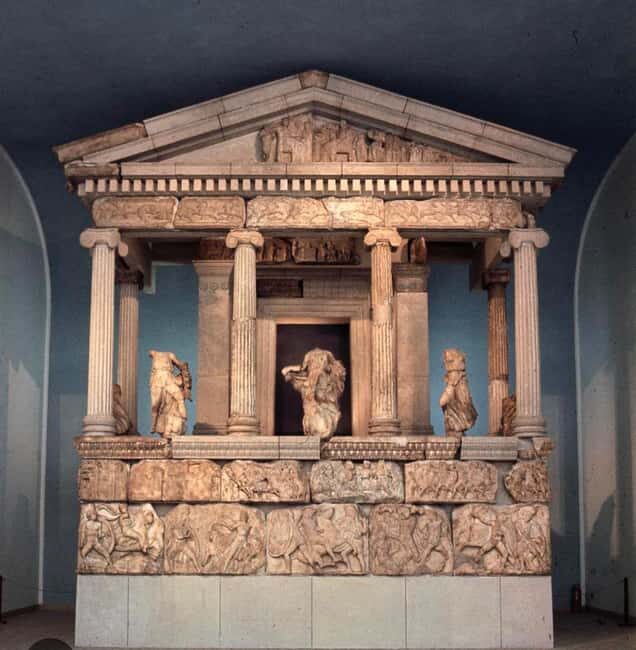
- Elgin Marbles essentials: 5th-century BCE sculptures from the Parthenon in Athens
- Assyria’s lion hunt reliefs: what those carvings say about royal power and style
- Lewis Chessmen mystery: how these carved pieces connect to medieval life and Viking culture
Why an 80-minute British Museum tour is a smart way to win time
The British Museum is enormous, and the faster you try to “see it all,” the more you end up speed-walking through rooms with no story. This tour solves that problem by picking a short list of objects and giving you the context you’d otherwise have to hunt down yourself.
In 80 minutes, you’ll get a guided path that links civilizations by theme: writing and meaning (the Rosetta Stone), beliefs about the afterlife (Egypt), myth and civic identity (Greece), royal imagery and control (Assyria), and a strange, charming detour into everyday play turned into history (Lewis Chessmen). That structure is great value if your time in London is tight.
You’re not just looking at famous items. You’re also learning how people back then thought, ruled, practiced belief, and even played games. That’s what makes a guided highlights tour feel different from wandering.
You can also read our reviews of more guided tours in London



Where to meet: Montague Place entrance and the stone lions
You meet outside the Montague Place entrance, by two stone lions. There are two entrances to the museum, so use the meeting point exactly as listed and don’t count on guessing once you’re inside.
This matters because the museum is busy, and it’s easy to lose time if you arrive and spend 10 minutes re-orienting. If you’re traveling with a group, build in a few minutes buffer so everyone stays calm.
Also note the practical rules for your visit: flash photography is prohibited, and food and drinks aren’t allowed inside exhibition rooms. If you’re doing this tour as part of a longer museum day, plan a snack and water outside the galleries or after your visit.
Stop-by-stop: Rosetta Stone and Egyptian hieroglyphs first
The tour starts with one of the most famous objects in the museum: the Rosetta Stone. The big idea to walk away with is simple: this object helped unlock the secrets of ancient Egyptian hieroglyphs and changed how people understand ancient Egypt.
Standing in front of the Rosetta Stone without context can feel like staring at a complicated slab. With a good guide, the lesson becomes clearer. You’re seeing how knowledge travels—how one object can become the key to translating a whole world of writing.
From there, the tour moves into Egypt’s life-after-death world. You’ll see Egyptian beliefs about the afterlife through mummies and coffins, along with the rituals and techniques connected to mummification. Even if you’ve heard basic facts before, the tour helps you connect those details into a bigger picture: death wasn’t only an ending. It was a process with meaning.
Why this stop order works: it builds from language to belief. Writing explains identity. The afterlife explains what people thought identity might become.
Egyptian mummies and coffins: what the guide helps you notice
This portion is one of the best reasons to do a guided route. Mummies and coffins can be visually striking, but the details that make them meaningful are easy to miss when you’re alone.
With a guide like Strabo, you’re set up to look for the “why” behind what you’re seeing. You get background on the rituals and the techniques used in mummification, which gives you a way to interpret objects rather than just admire them.
A useful mindset here: try to think like the people who made these choices. Ask yourself: What did they want to preserve? What did they believe would continue? The tour nudges you toward that kind of thinking, so the objects don’t stay abstract.
Greece next: the Parthenon sculptures and the Elgin Marbles
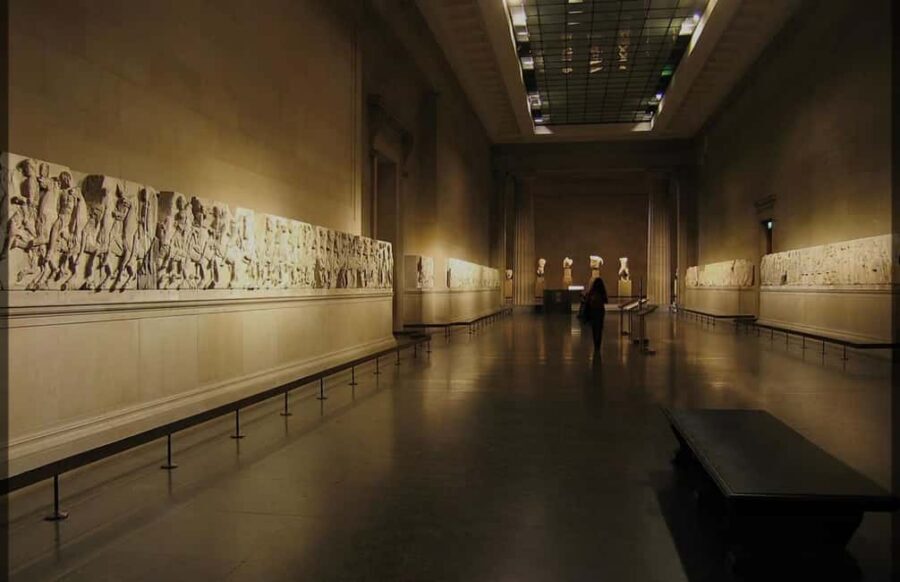
Then you jump to Greece through the Elgin Marbles, the Parthenon sculptures from Athens, dating back to the 5th century BCE. These aren’t random ancient statues. They’re tied to Greek myth and the grandeur of ancient Greece, with scenes that connect art to belief and storytelling.
The guide approach here matters. Greek sculpture can feel like “pretty stone” if you don’t know what to look for. With context, you start noticing how figures are arranged, how scenes communicate a narrative, and how the art reflects a culture that treated myth as more than entertainment.
If you like art history that actually explains why something was made, this stop is a good match. And it’s also a great checkpoint for your priorities. After Elgin Marbles, you’ll understand whether you want to spend more time in the museum’s art and classical collections on your own.
You can also read our reviews of more museum experiences in London






Assyria’s lion hunt reliefs: royal power in carved motion
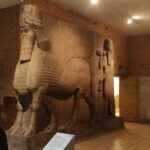
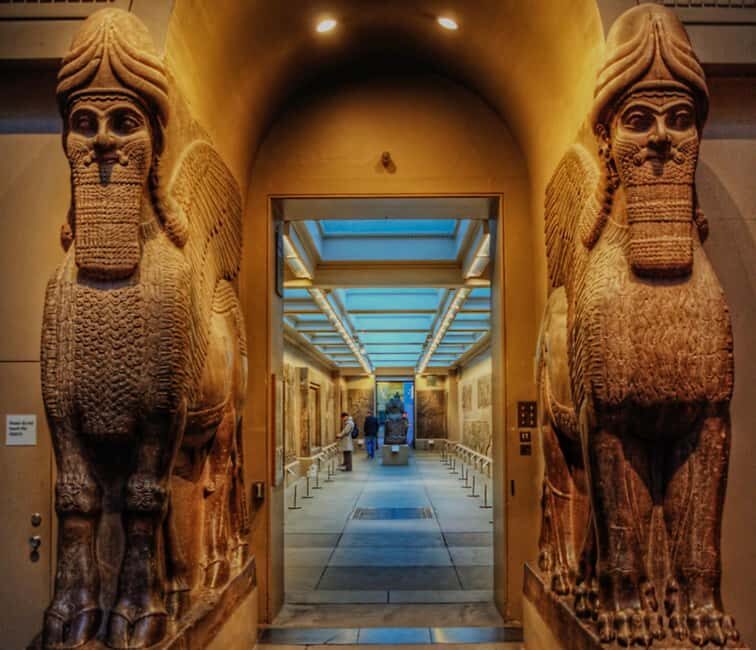
Next come the Assyrian Empire highlights, including lion hunt reliefs. These intricate carvings are famous for a reason: they show royal power through action, with a style that makes authority feel immediate.
Up close, reliefs can look like decoration. The guide helps you see them as messaging. A lion hunt isn’t only sport—it’s a visual claim about strength, control, and the ruler’s place at the center of the world.
The tour gives you the snapshot you need to appreciate the craft: carved detail, motion, and the way the scenes are organized. Even if you’re not an art specialist, you’ll leave with a clear takeaway: the image is doing political work.
Lewis Chessmen: the Viking-age curveball that sticks
One of the most fun parts of the tour is also one of the most unusual: the Lewis Chessmen. These are intricately carved chess pieces discovered on the Isle of Lewis in Scotland, and the guide connects them to their medieval story and significance in Viking culture.
Chess sounds too modern to feel ancient, and that’s exactly why it works. The tour uses these pieces to show how history survives in everyday things—game pieces that traveled from craft to discovery, then from discovery to interpretation.
Even if you only remember a few highlights, the Lewis Chessmen often become the one you talk about afterward. They’re tangible and specific: you can imagine the objects in a hand and think about the world that produced them.
How the guide keeps the pace right (and still answers questions)
A standout theme in the tour experience is the balance. The guide focuses on the key exhibits without overwhelming you with endless detail. Strabo’s style includes humor, which helps when a museum tour might otherwise feel heavy.
This kind of pacing is especially helpful if your group includes different attention spans. One review noted the tour felt right for a younger teenage member, which is a good sign you won’t lose the room halfway through. It’s also a sign the guide is paying attention, not just reciting facts.
And you’re not left guessing. The guide answers questions with ease, so you don’t have to pause your enjoyment to look up answers later.
After the tour: how to use your remaining museum time
The tour ends back at the meeting point, but you’ll likely want to keep exploring on your own. This is where the guided hour becomes a shortcut: it gives you a mental map of what matters most.
You’ll also have time to visit the museum gift shop afterward. It’s a practical stop because you can pick up books and replicas without having to hunt around mid-tour while your group is moving.
My advice: if you’re the type who likes museums with a plan, make a short list for your second pass. For example, pick one area you felt drawn to during the tour—Egyptian objects, classical sculpture, Assyrian relief work, or the chess-piece story—and return there while the context is still fresh.
Price and value: is $20.20 worth 80 minutes in London?
At $20.20 per person for an 80-minute guided tour, the value is mostly about time and interpretation. If you’re paying for anything here, you’re paying for the guide’s ability to translate major objects into a connected storyline—Rosetta Stone to hieroglyphs, Egypt’s afterlife beliefs, Greek myth through sculpture, Assyria’s royal imagery, and the Lewis Chessmen’s cultural thread.
If you planned to do this museum solo, you could still see many of the same pieces. But you’d spend more time figuring out what you’re looking at and less time understanding why it matters. This tour is designed to reduce that friction.
It’s also an easy call for first-time museum visitors because it gives you a “greatest hits” path that doesn’t leave you stranded in the scale of the building.
Accessibility and on-site rules to keep your day smooth
This experience is wheelchair accessible, though some areas may be challenging to navigate. If mobility is a concern, go in with realistic expectations: museums often have uneven layouts and tight turns.
Photography is allowed, but flash photography is prohibited. And remember: no food or drinks in the exhibition rooms. Plan water breaks outside the galleries so your time isn’t disrupted.
Finally, the tour is English and led by a live tour guide, so you’re getting real-time explanations rather than relying on text or audio.
Should you book this British Museum tour with Strabo?
I think you should book this tour if you want to see the museum’s biggest talking points without turning your day into a confusing maze. It’s ideal when you have limited time, want clear context for famous objects, and appreciate a guide who keeps things light and question-friendly.
You might skip it or pair it with extra time if you’re the type who loves long, quiet museum wandering and wants to control your own pace gallery by gallery. In that case, use the guided hour as a primer, then plan to return for deeper self-guided time where you can linger.
Given the focus on key exhibits, the smooth pace, and the guide’s humor, this is one of the more practical ways to experience the British Museum’s highlights in a single London morning or afternoon block.
FAQ
How long is the British Museum tour?
The guided tour lasts 80 minutes.
How much does it cost per person?
The price listed is $20.20 per person.
Where do we meet for the tour?
Meet outside the Montague Place entrance, by the two stone lions.
Is the tour wheelchair accessible?
Yes, it is wheelchair accessible, though some areas may be challenging to navigate.
What language is the live tour guide?
The live tour guide speaks English.
Are photos allowed during the tour?
Photography is allowed, but flash photography is prohibited.
Can I bring food or drinks into the exhibition rooms?
No. Food and drinks aren’t allowed inside the exhibition rooms.
What does the tour include?
It includes a guided tour of the British Museum, focused on the main highlights.
Which major exhibits and objects are covered?
The tour covers highlights such as the Rosetta Stone, Egyptian mummies and coffins, the Elgin Marbles (Parthenon sculptures), Assyrian lion hunt reliefs, and the Lewis Chessmen.
What is the cancellation policy?
Free cancellation is available up to 24 hours in advance for a full refund.
Is there a reserve now and pay later option?
Yes. You can reserve your spot and pay later to keep your plans flexible.