REVIEW · LONDON
London: National Gallery Guided Tour
Book on GetYourGuide →Operated by The Great Weekender · Bookable on GetYourGuide
Masterpieces feel friendlier in a group of eight. This 2.5-hour tour is designed for people who want the art, not a lecture. I like the small-group size (max 8) because it makes the guide’s attention feel personal, and I like the picture-by-picture explanations that help you actually see what’s happening in famous works. One thing to plan for: you’ll be on your feet a lot, so comfortable shoes are not optional.
If you’ve ever stood in a grand gallery and thought, where do I even start, this tour helps. You’ll be in the National Gallery at Trafalgar Square, with a certified English-speaking guide guiding you through a slice of the collection that reaches back to the mid-13th century. Expect a strong mix of key names and big “how did they do that” moments, including Leonardo da Vinci’s The Virgin of the Rocks, Raphael’s The Madonna of the Pinks, and Holbein’s The Ambassadors.
In This Review
- Key highlights that get the most praise
- Entering the National Gallery without the usual friction
- Meeting point at the Telephone Box: don’t overthink it
- Why a certified guide changes what you see
- The masterpieces: what you’ll likely focus on and why they matter
- Leonardo da Vinci: The Virgin of the Rocks
- Raphael: The Madonna of the Pinks
- Seurat: Bathers at Asnières
- Botticelli: Venus and Mars
- Holbein: The Ambassadors
- Jan van Eyck: The Arnolfini Portrait
- Plus: you might see other highlights
- How to get the most out of 2.5 hours
- Price and value: what $93 buys you
- Who this tour fits best (and who should check details)
- Should you book the National Gallery guided tour?
- FAQ
- How long is the London National Gallery guided tour?
- What group size should I expect?
- Where do I meet for the tour?
- Does the tour include a faster entry/security line?
- Can I take photos with flash, and can I bring a backpack?
- Is the tour wheelchair accessible?
Key highlights that get the most praise
- Max 8 people means questions are welcome and you’re not lost in a crowd
- Certified guide with clear, concise commentary that helps you notice details
- Express security check so you lose less time getting in
- Top masterpieces including da Vinci, Raphael, Seurat, Botticelli, Holbein, and Jan van Eyck
- Artwork availability may vary, so the guide’s priorities matter when works are on loan or restored
Entering the National Gallery without the usual friction
The National Gallery sits in a prime spot at Trafalgar Square, so the day starts with an easy mental image: you’re not trudging across London just to reach a museum. Instead, you’re walking into one of the city’s most famous art spaces, and the tour gives you structure fast.
The biggest practical win is the express security check. Big museums can eat up your morning with lines and slow entry, and that’s frustrating when your time is limited. Here, you get a quicker path through security, which means you can spend more of the tour time looking at paintings rather than waiting to look at paintings.
Also, this tour is built around a guided walking route inside the gallery. That matters because the National Gallery has many rooms. Without help, you can accidentally spend 90 minutes only seeing half the ideas you came for. With a guide, you’re nudged from one work to the next with context, so the visit becomes a chain of “oh, that’s why they painted it that way” moments.
One more point: you’re not just moving through space, you’re following a story. The guide is there to connect the art to the artists and to the way styles changed over time. You’re not required to be an art expert. You just need to show up with a decent level of curiosity.
You can also read our reviews of more guided tours in London


Meeting point at the Telephone Box: don’t overthink it
You’ll meet outside the Sainsbury’s Wing at the National Gallery, by the Telephone Box on the right-hand side of the building. It’s simple, but it’s the kind of meeting detail that can save you stress if you arrive a few minutes early.
There’s no hotel pickup or drop-off, so plan to be at the museum under your own steam. From a logistics standpoint, I like this setup because it keeps the day predictable. You know where you need to be, and the tour length stays focused on the gallery itself rather than travel time.
Once you find the meeting spot, you’re ready to move. The tour is 2.5 hours, so there isn’t wiggle room to wander before you start. I recommend bringing your basics right away: camera and water, plus comfortable shoes for the walking.
Quick note on what you’re allowed to bring: no backpacks, and no flash photography. That’s standard museum etiquette, but it matters here because the tour keeps you moving. If you show up with a backpack and need to deal with storage, you lose valuable time before the tour even begins.
Why a certified guide changes what you see
A guided tour doesn’t automatically make art “easier.” But the right guide can turn confusion into momentum. This tour leans hard on engaging insights into the art and artists, and that’s where you get the real value.
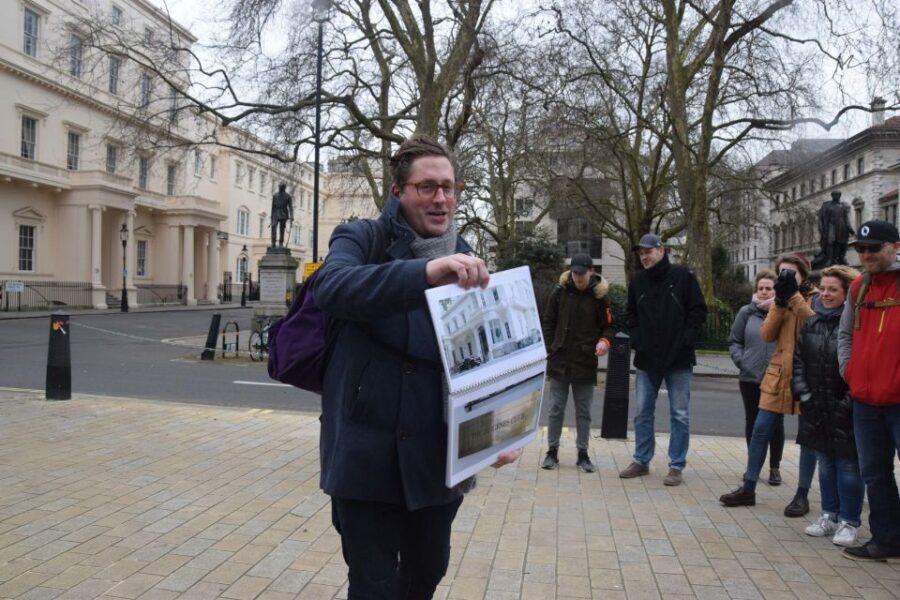
The strongest praise from recent guests focuses on the way the guide explains works carefully and quickly, without making things feel heavy. You’ll get concise commentary that helps you look longer at each painting and spot details you’d miss on your own. In one group, the guide Nick James stood out for being exceptionally clear and for making each work easier to understand without slowing everything down.
Here’s what that tends to mean for you in practice:
- You’ll learn what to look for (composition, figures, symbolism, or technique) instead of just being told what the painting is called.
- You’ll get short context that makes the next work click faster.
- You’ll have room to ask questions in a small group setting.
Also, the guide is English-speaking, and the tour is described as intimate. That’s helpful if you’re visiting with someone who wants specifics. It’s also helpful if you’re the person who feels a little intimidated by museum rooms and needs someone to translate the visual language into plain talk.
The masterpieces: what you’ll likely focus on and why they matter
This isn’t a “see everything” route. It’s a highlights path, and that’s smart in 2.5 hours. The guide will lead you through key works spanning major names, and the selection is built to show different ways artists approached religion, portraiture, myth, and everyday life.
Leonardo da Vinci: The Virgin of the Rocks
Leonardo is a name you’ve probably heard even if you don’t know the paintings. What makes The Virgin of the Rocks special is how it pulls you into mood and atmosphere. You’ll get help seeing the choices behind the faces, the gestures, and the scene setup—so you’re not just admiring the name.
You can also read our reviews of more museum experiences in London





Raphael: The Madonna of the Pinks
Raphael’s work tends to reward close looking. The Madonna of the Pinks is a great example of why a guide helps: you can focus on how the figures are arranged and how attention is directed through expressions and details. A good explanation here makes the painting feel less distant and more human.
Seurat: Bathers at Asnières
Georges Seurat is different from the big Renaissance names because his value is in technique and structure. If you’ve ever wondered why some paintings look sharply patterned or built up carefully, this is where you can start understanding the approach. The guide helps you look beyond the surface and see the method.
Botticelli: Venus and Mars
Myth scenes can feel like pure “storytime,” but Venus and Mars is where you learn what’s going on visually: posture, gaze, and how the composition guides your eye. The guide’s job is to make the myth legible through art choices, not just through background trivia.
Holbein: The Ambassadors
This is the kind of painting that can make you stop in your tracks. Holbein’s The Ambassadors is famous for its visual puzzle and its layered details. In a short tour format, the key is not memorizing every element, but learning the trick that makes the painting feel like it has more depth than you first notice.
Jan van Eyck: The Arnolfini Portrait
Portraiture is where you often learn to slow down. The Arnolfini Portrait rewards attention to objects, expressions, and the overall arrangement. A guide helps you interpret what you’re looking at without turning it into a complicated worksheet.
Plus: you might see other highlights
The tour lists additional highlights across the gallery, and it also notes that artwork availability can vary due to loans or restoration. That means you should go in expecting a best-effort highlights route. The guide’s guidance becomes even more important here, because they’ll keep the visit meaningful even if one work isn’t on display.
How to get the most out of 2.5 hours
Time is tight in any museum, but art museums are especially time-hungry. You’ll usually spend more time on the works you truly connect with, and less on the ones you don’t click with. This tour helps balance that by taking you to major pieces and giving you just enough context to spark interest.
Your best moves as the visitor:
- Wear shoes that work for long standing and walking. The tour strongly suggests this, and it’s true in real life.
- Bring a camera if you want one, but remember no flash.
- Have water on hand. You’re walking around and you’ll feel it after a couple rooms.
Also, since backpacks aren’t allowed, travel lighter than you would for a casual museum stroll. Think small day bag, then keep it off your shoulders if it’s bigger than you expect.
One more thing I appreciate about this tour design: it’s small enough that you’re not fighting for attention every time you look up. If you want to ask about a painting and not feel like you’re disrupting a conveyor belt, the format is right.
Price and value: what $93 buys you
At $93 per person for a 2.5-hour guided experience, you’re paying for a few things at once:
- A certified guide who helps you interpret the collection
- A small group capped at 8 participants, which reduces the “lost in the crowd” problem
- Express security, which is a real time-saver in a busy central London museum
If you’re the type who likes art but struggles with where to focus, the guide value tends to be higher for you. Without a route and context, you might spend a lot of time moving around and still leave with “nice, but what did I actually learn?” With this tour, you’re pushed toward specific works and given a way to look at them.
On the flip side, if you already know the collection well or you prefer long, self-paced wandering, you may feel like 2.5 hours is too short for your style. In that case, you’d likely be happier with a self-guided visit. This is best when you want an organized highlights plan with explanations.
Who this tour fits best (and who should check details)
This tour is a good fit if:
- You want major masterpieces in a guided highlights format rather than trying to plan a route yourself
- You enjoy learning art context through clear, concise explanations
- You’d rather ask a question than just read a label
- You prefer smaller groups and a more personal feel
It may be less ideal if you:
- Need minimal walking or have mobility limits that make moving between rooms difficult. The tour information includes a note that it is not suitable for some mobility impairments and also says wheelchair users. At the same time, it also lists wheelchair accessibility. That contradiction is worth checking directly before you commit, because the real question is how the tour route works for your specific needs.
If you’re traveling with kids, it could work if the kids are curious and can handle museum time. But nothing in the provided details suggests a kid-specific format, so you might want to treat it as an adult-focused art tour unless you know the group will engage with your family.
Should you book the National Gallery guided tour?
Yes, if your goal is to leave with clearer ideas than you started with. For $93 and 2.5 hours, the combination of express security, a certified guide, and a max-8 group is a strong setup for seeing the National Gallery’s highlights without getting bogged down.
You should also book it if you like structured looking—especially if you’ve ever felt overwhelmed by a museum’s size. The guide approach here is aimed at helping you see more in each painting, and that’s exactly what makes these tours worth it.
If you have mobility concerns, I’d make your decision only after you confirm how the tour route will work for you, since the information includes conflicting notes.
FAQ
How long is the London National Gallery guided tour?
The tour duration is 2.5 hours.
What group size should I expect?
This is a small-group tour limited to no more than 8 participants.
Where do I meet for the tour?
Meet by the Telephone Box outside the Sainsbury’s Wing at the National Gallery, on the right-hand side of the Gallery.
Does the tour include a faster entry/security line?
Yes. It includes express security so you can skip the line through the express security check.
Can I take photos with flash, and can I bring a backpack?
Flash photography is not allowed, and backpacks are not allowed.
Is the tour wheelchair accessible?
The details list the activity as wheelchair accessible, but they also state it is not suitable for wheelchair users and for some mobility impairments. Because of that, you should verify the route/setup directly with the operator before booking.