REVIEW · LONDON
London: Spitfire Cockpit Experience
Book on GetYourGuide →Operated by Royal Air Force Museum · Bookable on GetYourGuide
You will feel history under your hands.
The Spitfire Cockpit Experience is a tight, focused 15 minutes at the Royal Air Force Museum that lets you climb into the cockpit of a real World War II fighter—right in Hangar 3 near the Spitfire Mark XVI. An expert guide talks you through what you’re looking at and why this aircraft mattered, so you’re not just taking photos in the dark.
What I love most is the human side of it. You get a truly one-person, guided session, and the explanation is clear enough that even if your mind is more camera than aircraft, you still catch the story. I also like the photo opportunity inside the cockpit—it’s the kind of memory you can’t fake, because you’re actually inside the machine.
One drawback to plan around: the cockpit access is not wheelchair accessible, and the experience is inside the museum hangar (not outdoors). Also, one review noted that the slope used to get inside can get in the way for photos, so think about your camera angle before you scramble for the perfect shot.
In This Review
- Key highlights at a glance
- RAF Museum Hangar 3 and the Spitfire Mark XVI setup
- A one-person guided session with the coach in your ear
- Climbing into the cockpit: what you actually get to feel
- The Spitfire story your guide connects to the cockpit
- Photo time inside the hangar: best angles and quick lessons
- Timing that actually works: 15 minutes without the fog
- Price and value: is $33 worth it?
- Who this Spitfire cockpit experience is best for
- Should you book the Spitfire Cockpit Experience?
- FAQ
- Where does the Spitfire Cockpit Experience take place?
- How long is the experience?
- Is this a group tour?
- What language is the guide?
- Can I take photos inside the cockpit?
- Is it wheelchair accessible?
- Is free cancellation available?
Key highlights at a glance
- One-person cockpit access for an up-close experience that feels personal, not rushed with a crowd
- Expert guide time focused on what you’re seeing, plus the Spitfire’s wartime role and missions
- Hangar 3 at the RAF Museum with the cockpit experience held near the Spitfire Mark XVI
- Photo opportunities inside the cockpit so you leave with real proof, not just screenshots
- Only 15 minutes means you can fit this into a busy London day without losing half of it
RAF Museum Hangar 3 and the Spitfire Mark XVI setup
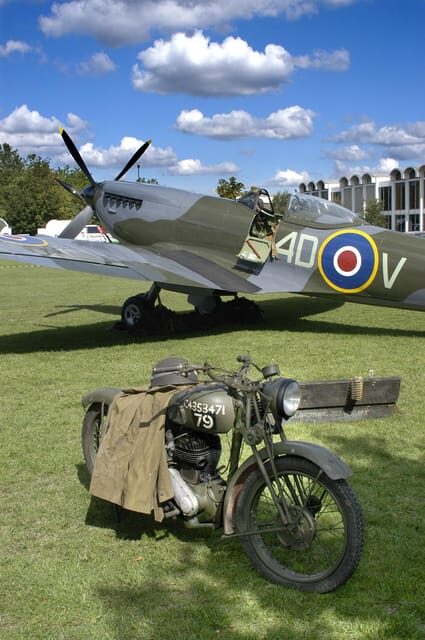
This starts at the RAF Museum London, in the Northwest London area (the meeting location is NW9 5LL). Your session happens in Hangar 3, near the Spitfire Mark XVI, which matters because the whole experience is built around getting you into the aircraft space fast and safely.
When you arrive, I strongly suggest you treat the 30-minute early arrival as part of the show, not paperwork. You’ll check in at the Admissions Desk, then the museum staff get you ready for your one-person session. With only 15 minutes on the clock, you want your brain calm and your camera ready before you’re at the cockpit door.
Also note the environment: you’re in an indoor hangar. That affects lighting and photo angles, and it can change what you expect if you’ve only seen preview visuals that look more open-air.
You can also read our reviews of more tours and experiences in London.



A one-person guided session with the coach in your ear
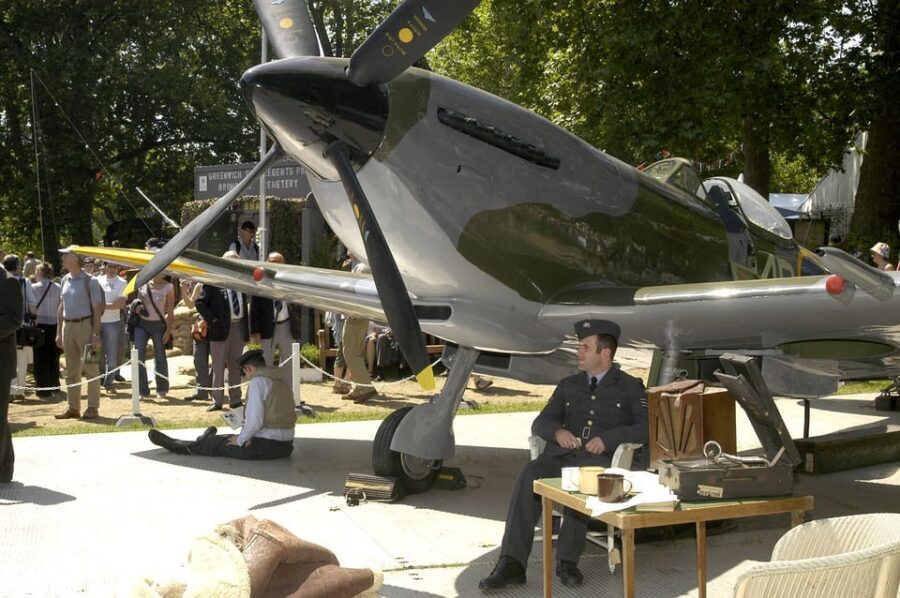
The biggest value here is how personal it feels. This is not a group parade where you watch others while you wait your turn. You’re in a private group format, and the cockpit time is effectively built as a one-person experience.
Your guide handles two jobs at once. First, they help you navigate what you’re about to experience—getting into the cockpit space, understanding what to look for, and keeping the experience respectful and safe. Second, they translate the aircraft into plain language: you’ll hear about the Spitfire’s role in the war, the technical brilliance behind it, and the daring missions it undertook. One review specifically praised a guide named Ashley for being friendly and very knowledgeable, with explanations that were clear.
I like this approach because it keeps the experience grounded. You’re not memorizing aircraft specs for an exam—you’re building a mental picture of why the cockpit looks the way it does and how that connects to the aircraft’s job during WWII.
Climbing into the cockpit: what you actually get to feel
This experience is built around physical access to a real Spitfire cockpit. That means you’re not watching a video, and you’re not just standing nearby and pointing. You get the rare thrill of sitting among the controls and seeing the cockpit environment the way a pilot would have had to.
What makes it memorable is the scale and closeness. Cockpits are tight, purposeful spaces. Even if you’re not an aviation nerd, you can usually feel that the design is about function under pressure—visibility, reach, and the way your body naturally positions itself around the controls.
You’ll also get time to look around before the session ends. The goal is that you leave feeling like you saw something real, not like you only touched one quick button and then it was over. The session is short, but it’s structured so that the cockpit moment stays central.
Tip: if you care about photos, think like a photographer, not a tourist. Before you start snapping, take a few seconds to decide where your camera should be positioned so you don’t fight the angle once you’re already in place.
The Spitfire story your guide connects to the cockpit
Sitting inside a fighter cockpit changes how history lands. It’s easier to understand why pilots needed confidence and why the design had to work in real conditions, not just on paper.
During your guided time, the focus stays on the aircraft’s meaning in WWII: your guide shares its role in the war, its technical strengths, and the kinds of daring missions it flew. I like that this is not a random facts-only lecture. The story is attached to what you’re seeing in front of you, which helps the cockpit feel like part of a bigger picture rather than a museum prop.
One practical benefit for you: the guide’s explanations help you know what you’re looking at. If you’ve ever toured aviation exhibits and felt lost in a sea of labels, this format helps solve that problem fast. Even in 15 minutes, the guide’s job is to connect the dots so you walk away with more than a set of photos.
If you want a preview, there’s also a virtual tour at the RAF Museum site:
https://www.rafmuseum.org.uk/virtual-tours/spitfire-cockpit/
It can help you spot what angles and viewpoints might work best when you’re there in person.
Photo time inside the hangar: best angles and quick lessons
Photography is a major reason people book this, and it’s one of the experience’s strengths. You get photo opportunities inside the cockpit, so your images come from the real interior space.
That said, treat the hangar setting as part of the challenge. One review noted that example images can look like an outdoor setup, but the real access happens indoors in the hangar. That’s not a deal-breaker, but it does mean you should expect different lighting and a different feeling of openness.
Another useful note from a review: the slope you use to get into the cockpit can be an obstacle for photos. So here’s what you can do to stay ahead of that:
- Pause and check your camera position before stepping fully into the shot area
- Take one or two wider shots first, then commit to close-ups
- If you’re going for close detail photos, prioritize the cockpit interior framing over the slope itself
- Keep your lens stable for quick bursts, since the session is time-limited
And yes, if you’re using a phone camera, wipe the screen and keep it ready. The best photo moment is often the first “settled” second, not the 30th frantic second.





Timing that actually works: 15 minutes without the fog
This is short by design: 15 minutes guided time. That can sound tiny on paper, but it’s the right length for cockpit access because you’re doing a physical action (getting in), a visual inspection (seeing the cockpit), a learning component (hearing the story), and a photo moment (capturing it).
The value is that you don’t get stuck in a half-day activity if your time is limited. If you’re also planning other museum stops, this format helps you keep your day moving and still add something genuinely unusual.
The key is to arrive prepared. Think about what you want most: cockpit photos, the story, or both. Since your session is one-person, the guide can pace the explanation to what you seem most interested in, as long as you’re ready to engage.
Price and value: is $33 worth it?
At around $33 per person, you’re paying for something very specific: access to sit in a real Spitfire cockpit with guided context and built-in photo time.
Here’s why that can be good value for many people:
- You’re not just buying entry to a museum exhibit; you’re buying cockpit access
- The experience is personal rather than a crowd-controlled “look but don’t touch” style
- You get a guide who explains what you’re seeing and why it matters during the WWII story
- The time is efficient, which can be a hidden value if London days are already packed
The main reason someone might feel it’s not worth it is if you only want general information and have no interest in cockpit access. If that’s you, a normal museum visit might satisfy you. But if you want the feeling of being physically inside the aircraft, the price is easier to justify.
In other words, this isn’t the cheapest museum moment. It’s a high-impact, short one—and that’s where the value usually lands for the right visitor.
Who this Spitfire cockpit experience is best for
I think this is ideal if you fit at least one of these profiles:
- You love aviation and want something more tactile than a display case
- You enjoy WWII history and like seeing how design connects to real missions
- You want one standout photo memory from your London trip
- You’d rather do something focused and personal than a long tour
It can also work well if you’re traveling with limited time. Fifteen minutes is manageable even when jet lag hits, as long as you can follow the check-in timing and handle the indoor hangar environment.
On the other hand, it’s not suitable for wheelchair users because of the cockpit’s physical access requirements. If mobility is a concern, you’ll want to consider other RAF Museum experiences that don’t require cockpit-specific access.
Should you book the Spitfire Cockpit Experience?
If you want a London museum moment that feels like more than a photo stop, I’d book this. The combination of real cockpit access, a one-person guided format, and inside-the-cockpit photos is rare. Ashley-style clear explanations (as praised in past sessions) help you leave with understanding, not just shots.
Book it if you’re the type who likes to see how things work, even in a short time. And if you care about photos, go in expecting an indoor hangar setting and think about your camera angle in advance.
Skip it only if you don’t care about cockpit access and you’d rather spend your time on exhibits that you can explore at your own pace.
FAQ
Where does the Spitfire Cockpit Experience take place?
It takes place at the Royal Air Force Museum London, with the meeting location at Hangar 3 near the Spitfire Mark XVI (NW9 5LL).
How long is the experience?
The session is 15 minutes guided access to the Spitfire cockpit.
Is this a group tour?
No. Each session is personalized as a one-person experience.
What language is the guide?
The live tour guide provides the experience in English.
Can I take photos inside the cockpit?
Yes. Photo opportunities inside the cockpit are included.
Is it wheelchair accessible?
No. The cockpit has physical access requirements and is not wheelchair accessible.
Is free cancellation available?
Yes. Free cancellation is available up to 24 hours in advance for a full refund.
If you want, tell me your travel dates and whether you’re more history-first or photos-first, and I’ll help you decide the best time window to fit this into a London day.