REVIEW · LONDON
London: Jack the Ripper Walking Tour
Book on GetYourGuide →Operated by Golden Tours - Gray Line London · Bookable on GetYourGuide
The streets of Whitechapel still whisper. This Jack the Ripper walking tour follows the trail from the Tower Hill area into the East End, where the 1888 murders became the world’s most famous unsolved case. In about 1.5 hours, you’ll hear how myths grew around the crimes—and how people try to separate facts from story.
Two things I really like: you walk a route anchored to specific locations, not vague “somewhere in Whitechapel” talk, and the guides bring the past to life with strong story craft. I’ve seen guides such as Marc, Alice, Robin, Matthew, Johnny, Brian, Elena, and Greta lead this walk, and their style shows up in reviews as personable, funny, and able to explain the case clearly.
One consideration: the meeting instructions can be easy to misread when you’re arriving near Tower Hill. Plan to arrive early and check you’re at the Golden Tours Open Top bus stop 9 by the Tower of London for the 3:30 PM start, or at the Tower Hill Tram area for the later departure.
In This Review
- Key points
- Why this Jack the Ripper walk hits differently in London
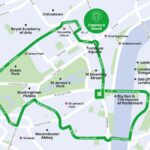
- From Tower Hill to the East End: your starting line
- Trader’s Gate: starting where the story feels real
- Aldgate High Street: following the trail with purpose
- Mitre Square: the stop tied to two claimed victims
- Goulston Street: the “vital clue” stop
- Commercial Street to Hanbury Street: Anne Chapman’s discovery
- How the guide handles myths, facts, and storytelling tone
- What you’ll do during the 1.5 hours (and why that’s enough)
- Price and value: is $20.20 for a Ripper tour worth it?
- Who this tour suits best (and who might think twice)
- Practical tips so your walk goes smoothly
- Should you book this Jack the Ripper walking tour?
- FAQ
- How long is the London Jack the Ripper walking tour?
- What times does the tour start?
- Where do I meet for the tour?
- Is the tour guided and in English?
- What is the price per person?
- Is food or drink included?
- Can children join the tour?
- Is there free cancellation?
Key points
- Tight 1.5-hour route that fits a packed London day
- Tower Hill start point near the Tower of London, easy to align with other sights
- Mitre Square stop tied to the claim of two victims
- Goulston Street clue talk where people focus on the most important lead
- Hanbury Street and Anne Chapman as a major turning point in the walk
- Guide-led storytelling that keeps the grim material understandable and paced well
Why this Jack the Ripper walk hits differently in London
This tour is built around one question: who was Jack the Ripper, and how did the murders unfold on the streets of Whitechapel? The core story begins in the early hours of 31 August 1888, when a man walking to work found a body near the gates—starting one of the most intense manhunts in history.
What makes this walk work is that it turns “case files” into street-level geography. You’re not reading about Whitechapel from afar. You’re walking the same kind of East End corridors where people at the time lived, worked, and moved through the dark.
And because the tour focuses on both myths and facts, it’s not just about repeating legend. You’ll hear how Ripperologists and amateur sleuths keep trying to identify the killer, even today, and how the mystery stayed unsolved.
You can also read our reviews of more walking tours in London



From Tower Hill to the East End: your starting line
The walk begins by the Tower of London area at the Golden Tours Open Top bus stop 9 (Tower Hill, opposite), with a 3:30 PM start. If you’re booked on the later 6:00 PM departure, you exit Tower Hill Underground Station and wait at the Tower Hill Tram, by the ice cream stand next to the station exit.
This matters because Tower Hill is a busy junction of transit and tourist buses. If you arrive right on the minute, you can lose time figuring out which corner is the right one. I’d treat this like any city meeting point: give yourself cushion, then settle in so you can start the walk focused instead of stressed.
Also, this is an English-language live guide tour. That’s a plus if you want the story explained as you go, not summarized in a brochure.
Trader’s Gate: starting where the story feels real
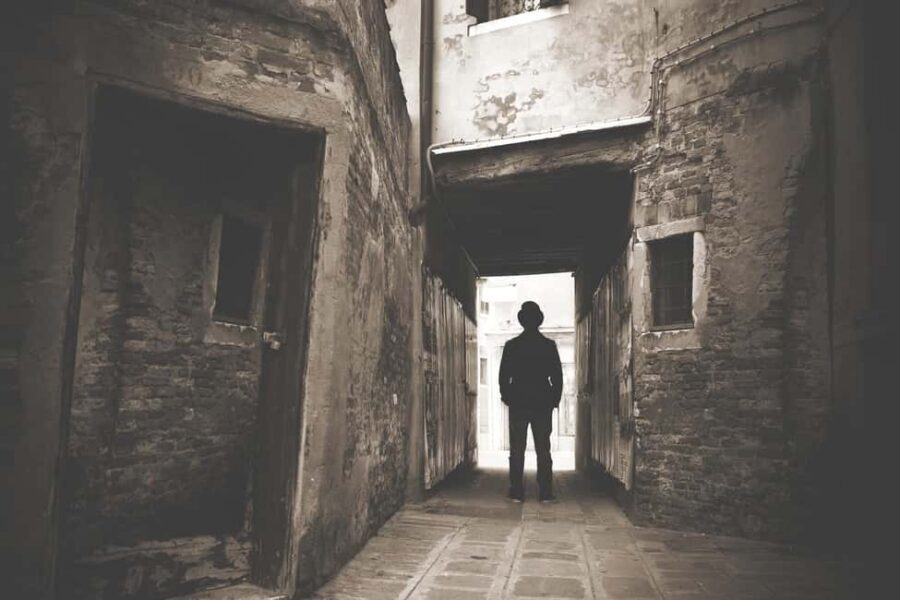
The first stop is Trader’s Gate, and that’s a smart choice. It gives you an early “entry point” into the East End story, so the tour doesn’t start in the middle of nowhere or with a generic orientation.
From there, the route continues through the neighborhood streets that connect the case to everyday London life. The guides tend to set up the mood with clear timelines—31 August 1888 is your anchor—and then they keep linking each new location to what happened or what investigators later obsessed over.
You’ll be walking through parts of the East End where the case is still discussed, which is exactly why this works for first-time visitors. It’s not just a history lesson. It’s a location-based way to see how London’s shape influences its stories.
Aldgate High Street: following the trail with purpose
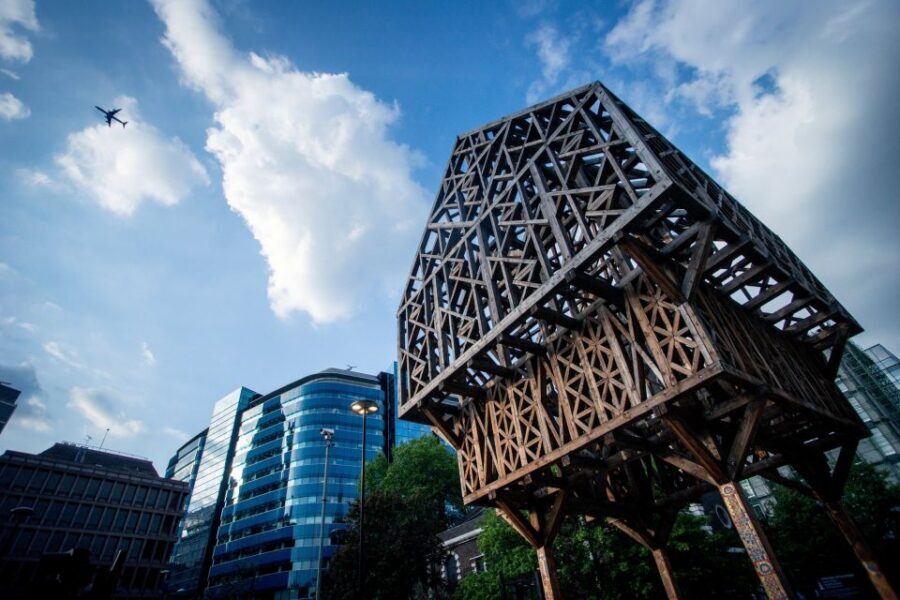
Next up is Aldgate High Street. In a walking tour like this, the street-to-street connection is the whole point. Each block helps you understand how someone could move through the area in a way that made the case explode into a major manhunt.
The tour doesn’t treat the crime scenes like museum exhibits. It treats them like places with routes, angles, and movement—so you can picture the timeline in your head as you walk.
One thing I like about this section is the balance between atmosphere and explanation. You get the sense of an East End at night, but you’re also getting context for what each location means in the Jack the Ripper story.
Mitre Square: the stop tied to two claimed victims
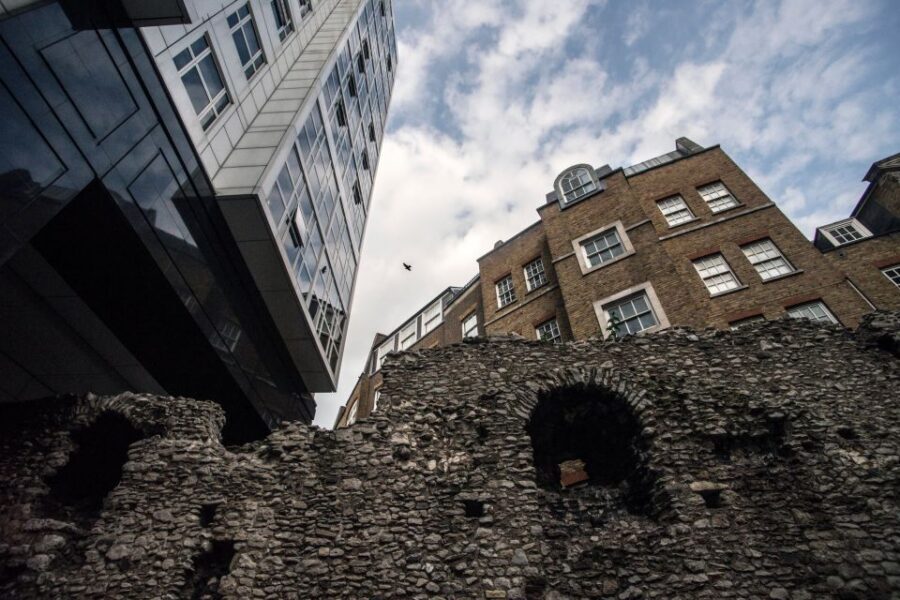
A key highlight comes at Mitre Square. This is where the tour focuses on a particularly infamous detail: the site is described as a place where Jack claimed not one, but two victims.
That claim is part of what made the case so enduring. Even now, people argue about identity and authorship of the letters and messages tied to the murders. The tour uses Mitre Square as a focal point in that ongoing debate—why it’s mentioned, why it’s remembered, and why it matters to the story arc.
If you’re the type who likes your mysteries organized, this stop usually feels like a checkpoint. You’ll understand what the tour wants you to notice, and then you move on with that idea in mind.





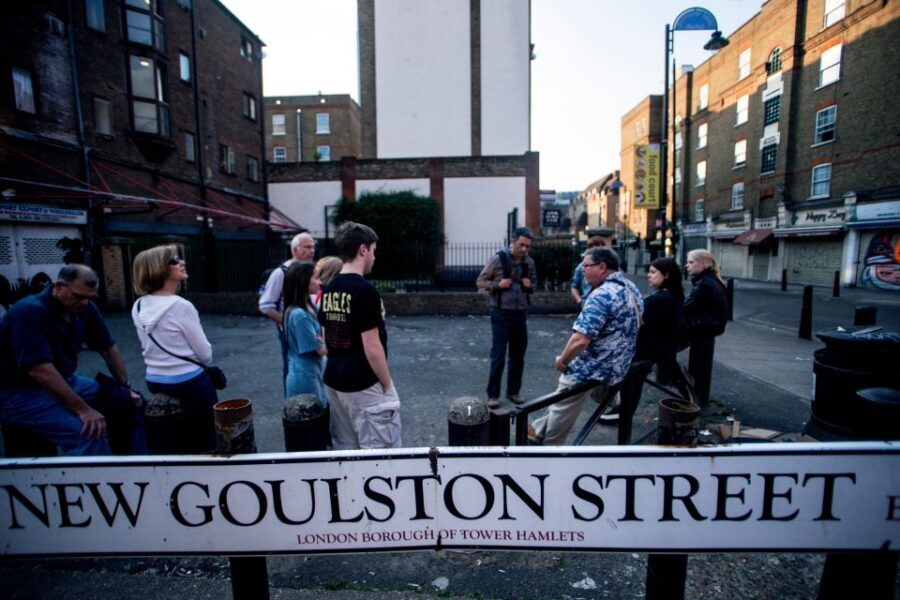
Goulston Street: the “vital clue” stop
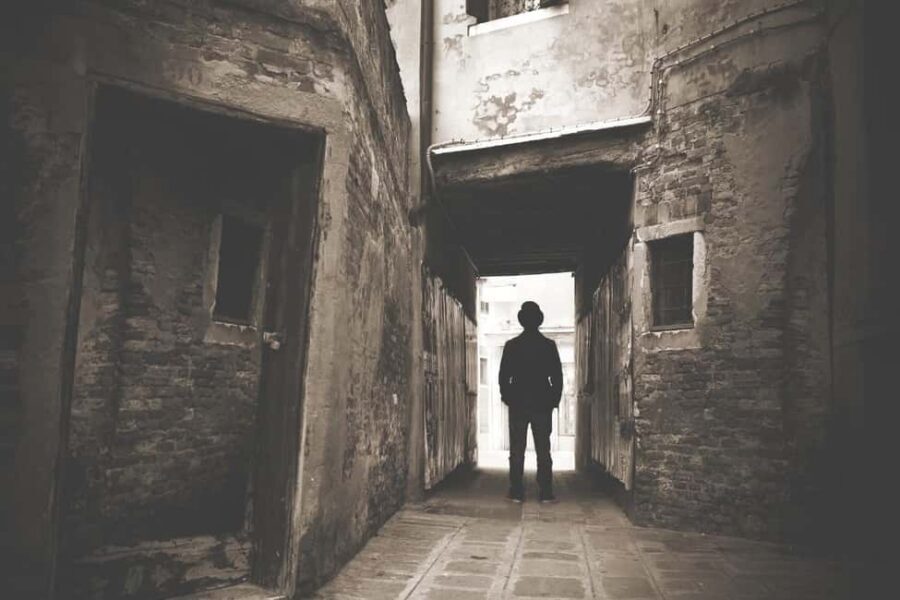
Then comes Goulston Street, often described as a place where what some people view as the most vital clue may be found. That phrase is important: the tour presents it as a leading possibility rather than a neat solved fact.
That approach is valuable. For an unsolved case, pretending you know everything isn’t helpful. Instead, the walk helps you see why certain spots grab attention from amateur detectives and researchers: they feel like where the story could tip toward an answer.
As you stand and walk through this stretch, you’re really learning how clues are treated in real time and later on by investigators—how people build theories when the identity never arrives.
Commercial Street to Hanbury Street: Anne Chapman’s discovery
The route continues via Commercial Street, then heads to Hanbury Street, which the tour highlights as the discovery location for Anne Chapman.
This is the emotional center of the walk for many people, because Anne Chapman is named directly, and the description is blunt about the violence involved. The tour’s value here is how it keeps the story clear and tied to place, rather than turning it into shock tourism.
If you want to understand how Whitechapel’s story became a global legend, Hanbury Street is where the tour helps you see the case as a sequence of real events in real streets. It also helps explain why the name “Jack the Ripper” stuck so hard: the murders were shocking, but the uncertainty afterward made everything last.
How the guide handles myths, facts, and storytelling tone
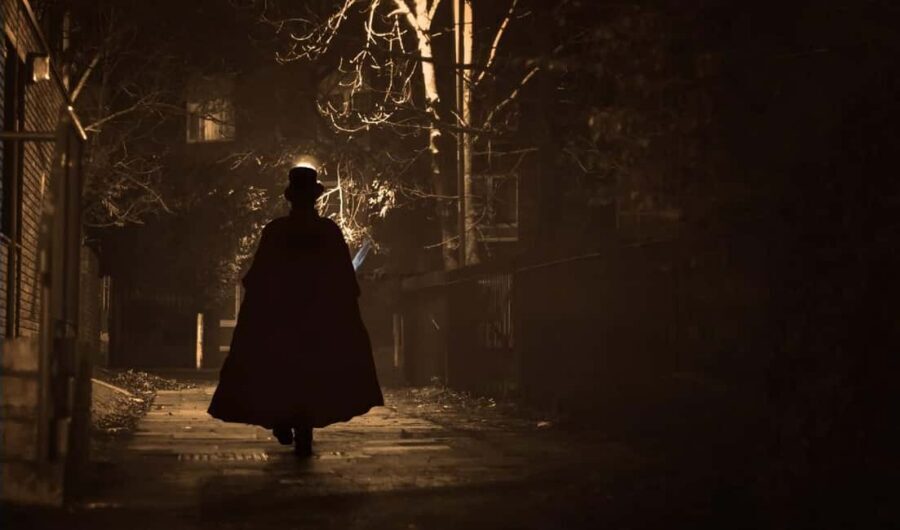
What you’re really buying with this tour is the guide’s ability to explain a messy mystery without losing the thread. The best guides set the scenes of Victorian-era life and use strong story craft to make connections as you walk.
That show up in reviews as people praising guides for being friendly, funny, and able to make the murders feel real without losing clarity. Names that come up often include Marc and Alice, along with guides like Robin, Matthew, Johnny, Brian, Elena, and Greta. Greta also appears in at least one Halloween-themed run as a costumed skeleton, which tells you the guide team isn’t afraid to match the mood to the moment.
A small word of advice: the walk is tightly focused on the case route. One review notes that the tour could mention some passing sites even if they are not directly tied to the topic. So if you crave extra neighborhood color at every stop, you might wish for a bit more of that. Still, most people come here for the Jack the Ripper plot, and the guide keeps it centered.
What you’ll do during the 1.5 hours (and why that’s enough)
The total time is about 1.5 hours. For this kind of story, that length is a sweet spot. It’s long enough to cover multiple major locations—Trader’s Gate, Aldgate High Street, Mitre Square, Goulston Street, Commercial Street, and Hanbury Street—without rushing.
But it’s also short enough that you can keep your energy up. Whitechapel walking tours cover streets and corners quickly, and if you’re also doing museum stops or afternoon sights, 90 minutes is manageable.
Timing also affects the mood. Your departure windows include a 3:30 PM start and a 6:00 PM start, so sunset lighting could change the feel of the streets from one run to the next.
Price and value: is $20.20 for a Ripper tour worth it?
At $20.20 per person, you’re paying for a live guided experience that covers a structured route tied to the case. This isn’t an attraction ticket package. The tour includes the guide, but it does not include food or beverages, and it does not include admission to attractions.
That’s actually a value signal. You’re not spending extra money on entries or timed tickets. Your cost goes toward someone walking with you, explaining the case as you go, and giving you the context that you likely won’t get from your phone alone—especially when the key details (like why Goulston Street is singled out) matter.
Also, the tour gives you a “second perspective” on London. Even if you know a few facts about Jack the Ripper already, walking through the East End locations helps you understand how the city’s layout shaped the story.
Who this tour suits best (and who might think twice)
This is best for you if:
- you like crime history told as a route through a neighborhood
- you want a focused story with clear location stops
- you enjoy guides who can keep a grim subject paced and understandable
It’s also a good fit for solo travelers and couples because it’s a straightforward walking format. And children under 16 can join at a parent’s discretion, so it can work for families who are comfortable with the topic.
If you’re very sensitive to violence-related details, you might want to think carefully. The tour describes brutal crimes and specifically references the discovery of a murdered and mutilated woman. You’ll still get context and explanations, but the subject is not light.
Practical tips so your walk goes smoothly
A few simple moves make a big difference:
- Wear comfortable shoes. You’ll be walking in an urban neighborhood for roughly 90 minutes.
- Arrive a little early so you can find the meeting point calmly (Tower Hill can be confusing).
- Bring water if you think you’ll need it. Food and beverages aren’t included.
- If you like photos, plan to step aside during stops. The tour is location-based, so rushing your shots can slow your group.
If you’re the type who wants to learn fast, come ready with at least one question: is your focus on identity, the letters and claims, or the sequence of events? A good guide can shape the story around what you’re curious about.
Should you book this Jack the Ripper walking tour?
If you want the Jack the Ripper story in a way that feels grounded—street by street—this is an easy yes. The route connects major locations you’ll recognize from the case, and the guides (including Marc, Alice, Robin, Matthew, Johnny, Brian, Elena, and Greta) consistently show up as strong story tellers who can explain the mystery without turning it into chaos.
Book it if you have 90 minutes and you’d rather walk the East End than just read about it. Pass or at least reconsider if you need more flexible neighborhood sightseeing outside the case route, or if the subject matter makes you uncomfortable.
Bottom line: for $20.20 and a well-led, location-based story, this is a solid value way to spend an afternoon in London—on the trail of an unsolved mystery that still pulls people in.
FAQ
How long is the London Jack the Ripper walking tour?
The tour runs for about 1.5 hours.
What times does the tour start?
The meeting information is listed for a 3:30 PM start and a 6:00 PM start. You should check availability to see any additional starting times.
Where do I meet for the tour?
For the 3:30 PM start, you meet at Golden Tours Open Top bus stop 9, Tower of London, Tower Hill, opposite the Tower Hill Station tourist bus stop area. For the 6:00 PM tour, you exit Tower Hill Underground Station and wait at the Tower Hill Tram by the ice cream refreshments stand next to the station exit.
Is the tour guided and in English?
Yes. It is a live guided tour in English.
What is the price per person?
The price is listed as $20.20 per person.
Is food or drink included?
No. Food and beverages are not included.
Can children join the tour?
Children under 16 can join at their parent’s discretion.
Is there free cancellation?
Yes. You can cancel up to 24 hours in advance for a full refund.