REVIEW · LONDON
London: Street Art and Graffiti Guided Walking Tour
Book on GetYourGuide →Operated by Alternative London · Bookable on GetYourGuide
Street art turns into a real story here. This East London walking tour connects what you’re seeing on walls to the culture that made it happen, moving from Old Spitalfields Market area toward Brick Lane and Shoreditch. You’ll track around 40 acclaimed street artists, with names like Banksy showing up in the mix, plus a steady stream of smaller works that you’d miss at normal walking speed.
I love how the guide doesn’t just point at art. Many of the guides in this series, including people like Gabby, Eva, Josh, Laura, and Ava, add history of the East End alongside the techniques—so you understand what stickers, tags, murals, and styles are trying to say.
I also like the pace. It’s built for a relaxed walk through shifting scenes, and even when it’s listed at 2 hours, guides often keep it moving at a comfortable rhythm (some groups have finished in about 1.5 hours). One thing to consider: street art changes all the time, and you’re walking outdoors, so bring rain gear and be flexible about exactly which pieces are on view that day.
In This Review
- Key things that make this tour worth your time
- Meeting Under the White Goat: Old Spitalfields Market as Your Launch Point
- The Walk from Spitalfields to Brick Lane: Reading East London on Walls
- Shoreditch Stops and the Street-Art “You’d Never Notice That” Moments
- The 40-A rtist Roll Call: Banksy, ROA, Invader, and More
- How the Guides Turn Paint Into Meaning (Gabby, Eva, Josh, Laura, Ava)
- What You’ll Actually See: Hidden Pieces, Murals, Stickers, and Technique
- $33 for 2 Hours: Does This London Street Art Tour Feel Like Value?
- Rain Gear, Comfortable Shoes, and How to Pair the Workshop
- Should You Book This Street Art and Graffiti Walking Tour?
- FAQ
- Where is the meeting point for the tour?
- What is the closest tube station?
- How long is the guided walking tour?
- How much does it cost?
- What can I expect to see during the walk?
- Is there a workshop option as well?
- What ages can join the workshop?
- Is the tour wheelchair accessible?
- What should I bring?
Key things that make this tour worth your time

- 40+ artists across Spitalfields, Brick Lane, and Shoreditch, so the route covers more than one neighborhood bubble
- Banksy plus scene regulars like ROA, Invader, Shepherd Fairy, and Stik
- Hidden details: guides are good at spotting tiny works and unusual placements you’d walk past
- East End context: the story behind the walls is part of the experience, not extra homework
- Photo-friendly pacing: you stop often enough to actually look, not just glide by
- Refreshingly changeable content: the tour evolves as the street art evolves
Meeting Under the White Goat: Old Spitalfields Market as Your Launch Point
Your tour starts in a very “this is real London” spot: under the White Goat Statue on Brushfield Street, just outside Old Spitalfields Market. The closest tube stop is Liverpool Street Station, and the directions are simple: exit Liverpool Street onto Bishopsgate, go left, then right onto Brushfield Street (between Pizza Express and the RBS building), walk about 100 meters, and look for your guide under the statue with the white goat on top.
I like this meeting setup because it makes the tour feel grounded fast. Old Spitalfields Market sits right at the edge of the City’s polished business world, while the streets around it carry the older grit of the East End—perfect for street art, which thrives on that mix.
Practical tip: arrive about 10 minutes early. It sounds basic, but you’ll avoid the stress of catching up when your guide is getting everyone oriented for the route and the first set of artworks.
You can also read our reviews of more walking tours in London



The Walk from Spitalfields to Brick Lane: Reading East London on Walls
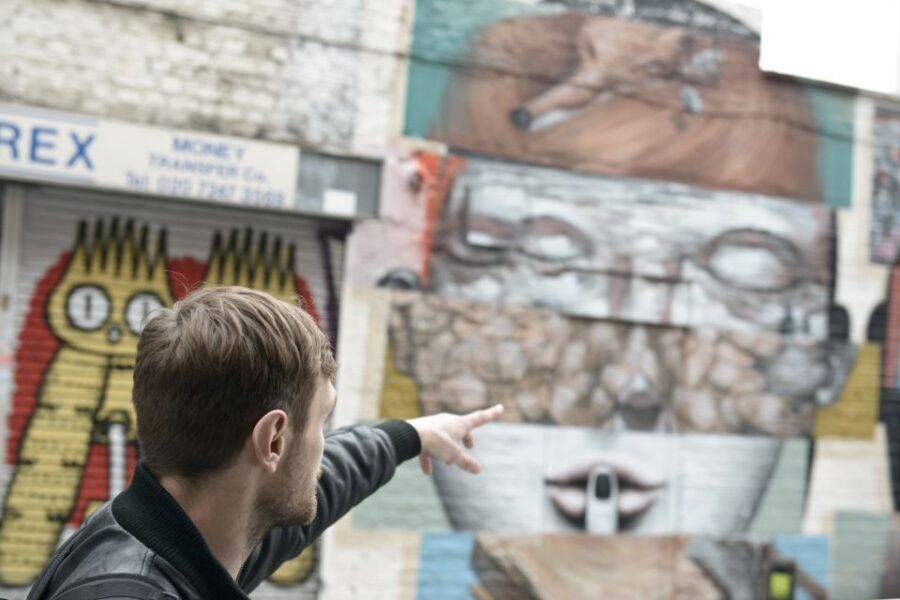
Once you’re moving, the tour’s heart is the way it turns a normal walk into a map you can actually read. You’ll start from the Spitalfields side and head toward Brick Lane, using streets covered in street art as your classroom. The goal isn’t to memorize artist biographies. It’s to notice patterns—styles, materials, and themes—and then connect them to what’s happening in East London as a place.
Brick Lane is a major draw because it’s one of those East End corridors where street art isn’t just decoration. It’s a voice, sometimes political, sometimes playful, often personal, and always responding to the neighborhood. As you walk, you’ll see everything from tiny hidden pieces to larger murals with different materials and techniques, so the art doesn’t stay in one visual category.
Here’s what you should pay attention to: how each piece changes the mood of the street around it. A small sticker can feel like a secret handshake. A big mural can dominate the whole block. Your guide helps you pick up on the difference—and explains why that matters.
Shoreditch Stops and the Street-Art “You’d Never Notice That” Moments
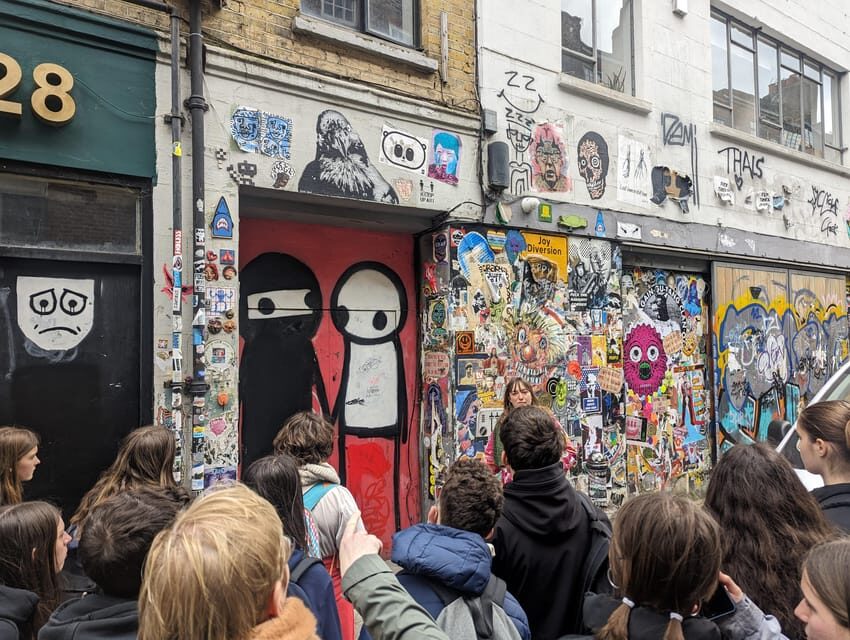
As the route continues into Shoreditch, you’ll shift from simply spotting art to learning how people look at it. Shoreditch has a reputation for street art, but what makes this tour useful is that it doesn’t treat the area like a theme park of famous murals. You still get guided attention on the smaller stuff: tags, signs, and pieces that look temporary because they often are.
Several guide styles stand out in the reviews. For example, Natalie’s tour approach (as described by one visitor) included pointing out artworks not only on walls, but also on signs, roofs, and even the floor. That’s the kind of “slow down and look again” habit the tour builds. Even if you’re not chasing famous artists, you’ll leave with a better eye for what’s there.
This is also where the East End history starts to feel less like a lecture. Your guide weaves it into what you’re seeing—how the neighborhood’s changes affect the kinds of art that appear, and how street artists respond to local culture.
The 40-A rtist Roll Call: Banksy, ROA, Invader, and More
You’re not just getting a generic street-art sampler. The tour is built around a set of acclaimed artists (about 40 mentioned in the experience), including Banksy and other big names like ROA, Invader, Shepherd Fairy, and Stik.
The practical value here is context. When you learn what a style usually signals, you start recognizing similar intentions across different pieces. Your guide also helps you understand how street art moves through the scene—how artists gain visibility, how techniques spread, and how themes repeat in new forms.
Even better: the tour doesn’t stop at famous names. It’s common for guides to steer attention toward the works that carry meaning even if they aren’t the headline artist. And because street art shifts over time, the tour evolves. So you’re not stuck with the exact same route-day template forever.
How the Guides Turn Paint Into Meaning (Gabby, Eva, Josh, Laura, Ava)
This tour earns its strong rating because of the guides. Across the feedback, you see the same pattern: the best part is how the guide talks while you walk—keeping it friendly, answering questions, and making the artwork feel connected to real people and real moments.
In the reviews, I saw guides like Gabby, Eva, Josh, Laura, and Ava described as enthusiastic and engaging, with a clear ability to explain both the artistic side and the background culture. Some guides go further and discuss the technical side too—how different forms work, how stickers function in the scene, and why tagging and graffiti have their own rules.
One small detail that matters: you don’t have to be an expert going in. Several comments mention how first-timers came away with a brand-new way to look at street art. You’re guided toward questions, then given answers in a way that doesn’t make you feel left behind.
Also, pace and group feel matter. One review praised how a guide could tailor the walk to audience interests on the fly. That’s worth it if you’re bringing friends with mixed levels of interest—some may want art history, others want technique, and others just want the best photo stops.
You can also read our reviews of more guided tours in London





What You’ll Actually See: Hidden Pieces, Murals, Stickers, and Technique
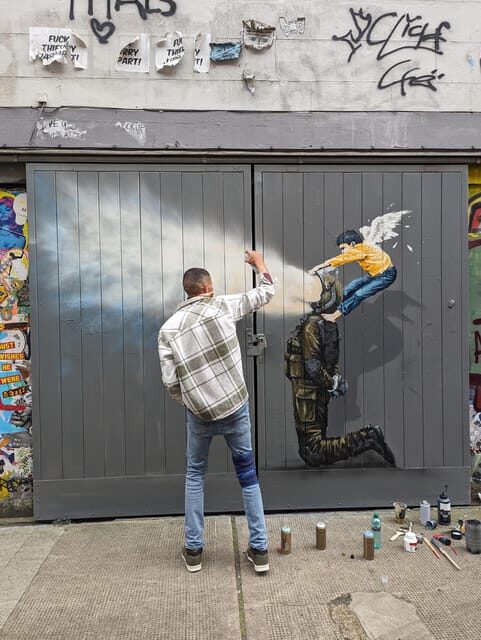
Street art isn’t one thing, and this tour makes that obvious through variety. You’ll cover an assortment of sizes and styles: small finds tucked into overlooked corners, murals that take over walls, and works that use different techniques and materials.
Stickering comes up in the feedback as a standout topic—one visitor said they learned something new about stickers and liked that added angle. That tells you the tour is not only about the biggest, most obvious pieces. Your guide’s job is to point out the visual language of the area, including the “in-between” art that creates the neighborhood’s texture.
If you enjoy close looking, you’ll probably like this format. It’s built around stopping enough to study details and still keep the overall pace moving. And because street art is constantly changing, your route can feel fresh even if you’ve seen photos of East London street art before.
$33 for 2 Hours: Does This London Street Art Tour Feel Like Value?
At about $33 per person for a 2-hour guided walk, the real question is what you’re paying for. You’re paying for a guide who can connect the dots: artist styles, East End history, and the reasons behind what you see on the street.
That value lands well for two reasons:
First, the tour covers more than one neighborhood. You get Spitalfields/nearby start points, then you move into Brick Lane and Shoreditch, which means fewer “just one area” limitations.
Second, the guide helps you see more than what’s famous. If you’ve ever tried to street-art wander on your own, you’ll know the problem: you can find something, but you can’t easily decode it. Here, you’re actively learning how to read the work as you go.
So is it a bargain? For a guided experience that points out art across dozens of artists and layers, it’s priced in a way that makes sense for most visitors—especially if you’re in London for a short window and want a concentrated East End focus.
Rain Gear, Comfortable Shoes, and How to Pair the Workshop
This is a walking tour outdoors, so plan like it’s London: wear comfortable shoes and bring rain gear. The tour information specifically flags rain gear, which is your reminder that you’re not touring museums behind glass.
Also, there’s a connected option for creativity: the experience can be part of a Walking Tour and Street Art Workshop. A shorter workshop runs daily for ages over 10 (about 45 minutes to 1 hour), and there’s also a longer version for ages over 12 (2 hours with a break). If you’re traveling with teenagers who want to make something, that workshop add-on can turn the tour from “watching art” into “trying the process.”
One practical suggestion: if you’re the kind of traveler who likes getting your bearings first, do the walking tour as your anchor, then choose the workshop if you still want more. That way the second half of your day isn’t forced—it feels like a continuation.
Should You Book This Street Art and Graffiti Walking Tour?
Book it if you want East London street art with context, not just sightseeing. You’ll see work tied to a line-up of major artists—Banksy included—and you’ll learn why pieces show up where they do and how the neighborhood’s history shapes what appears on the walls.
Don’t book it if your ideal London day is quiet, indoor, and schedule-free. This is a walking tour and it’s outdoors. You also have to enjoy the idea that street art is changeable, so you might not see the exact same pieces every time.
If you’re unsure, here’s an easy decision rule: if you like looking closely at everyday streets and you enjoy stories behind what you see, you’ll probably love this. If you want a single famous mural photo and you’re done, skip it and save your energy.
FAQ
Where is the meeting point for the tour?
You meet under the White Goat Statue on Brushfield Street, outside Old Spitalfields Market.
What is the closest tube station?
Liverpool Street Station is the closest station.
How long is the guided walking tour?
The duration is listed as 2 hours.
How much does it cost?
The price is $33 per person.
What can I expect to see during the walk?
You’ll explore East London street art and graffiti across Shoreditch and Brick Lane, seeing art from around 40 acclaimed street artists, including Banksy.
Is there a workshop option as well?
Yes. The activity is available as a combined Walking Tour and Street Art Workshop, with a shorter option (45 minutes to 1 hour) and a longer option (2 hours with a break).
What ages can join the workshop?
The shorter workshop is for ages over 10. The longer version is for ages over 12.
Is the tour wheelchair accessible?
Yes, it’s listed as wheelchair accessible.
What should I bring?
Rain gear is recommended.