REVIEW · LONDON
London: Jack the Ripper Guided Walking Tour
Book on GetYourGuide →Operated by London Mystery Walks · Bookable on GetYourGuide
Jack the Ripper stories hit differently in Whitechapel. I like how this walk mixes real street geography with period photos so the area feels lived-in, not museum-quiet. You’ll see cobbled lanes, stop by places tied to the Jewish poor, and get a guide who connects the crimes to everyday hardship.
I particularly enjoy the small-group feel (up to 10 people) and the way the guide frames the atmosphere—poverty, policing pressure, and why the murders were so hard to solve. One thing to consider: the tour can include warnings around more graphic material, so it’s not for everyone.
In This Review
- Key things that make this tour worth it
- Getting to Aldgate (and the right station exit)
- The East End streets: why this tour works in 90 minutes
- Paul Mansfield (and other guides): the style behind the story
- Historic photos, victims, and suspects: what you’ll see on the walk
- Pubs from 1721 and the texture of everyday life
- Victorian bath house and a Jewish soup kitchen for the poor
- Whitechapel photo stop: pausing to see more than streets
- The wider East End context: Dickens, Marx, the Elephant Man, and more
- What the guide says about policing and why so many murders mattered
- Pacing and group experience: small group, but some variation
- Practical value: why $26 feels fair for what you get
- Weather, footwear, and who should skip it
- Should you book this Jack the Ripper walking tour?
- FAQ
- Where is the meeting point for the tour?
- How long is the Jack the Ripper guided walking tour?
- What is included in the price?
- Is there food or drinks included?
- What should I bring?
- What languages is the tour offered in?
- Is the tour suitable for young children?
- Is the tour wheelchair accessible?
- Is the tour dependent on the weather?
Key things that make this tour worth it
- Small group of up to 10 keeps the pace conversational rather than herded.
- Aldgate meeting point puts you close to the East End streets without complicated transfers.
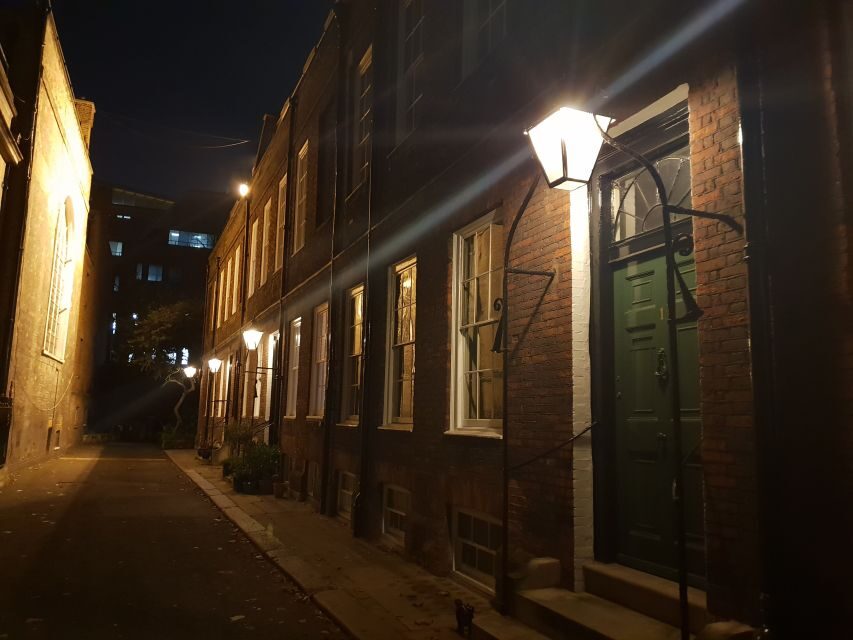
- Cobbled alleyways of Whitechapel give you a real sense of how narrow and dark some areas feel.
- Historic photos of victims and suspects add context beyond the legend.
- East End landmarks and backdrops include pubs dating back to 1721 plus a Victorian bath house.
- Meeting poverty and crime head-on: you’ll hear why people lived cheaply and how policing struggled.
Getting to Aldgate (and the right station exit)
Start at Aldgate Underground station—and do yourself a favor by using the Circle line and Metropolitan line exit you’re directed to. There’s another station nearby called Aldgate East, and the info is clear that you shouldn’t go there.
If you’re coming by Tube, plan a few extra minutes. The tour is only 1.5 hours, so you want to be standing with your group when it starts, not texting a friend while you sprint the last block. This is also a walking tour in real streets, so you’ll get more out of it if you arrive ready to walk rather than scrambling.
You can also read our reviews of more walking tours in London



The East End streets: why this tour works in 90 minutes
Once you’re moving, the guide keeps the focus on how Whitechapel looked and functioned in the time period. The walk is described as taking you through cobbled alleyways and dark streets in East London, and that matters. You can read about crime history all day, but standing in the kind of lanes where people once lived makes the story feel grounded.
You’ll also be part of a small group, which makes a difference for a tour like this. In a larger crowd, you’d lose details. Here, you’re more likely to catch the connections—between the famous names and the lived reality around them.
The tone also aims to be balanced: it’s spooky in mood, but it’s not just jump-scare storytelling. You’re watching how the guide explains the area and why it led to what happened.
Paul Mansfield (and other guides): the style behind the story
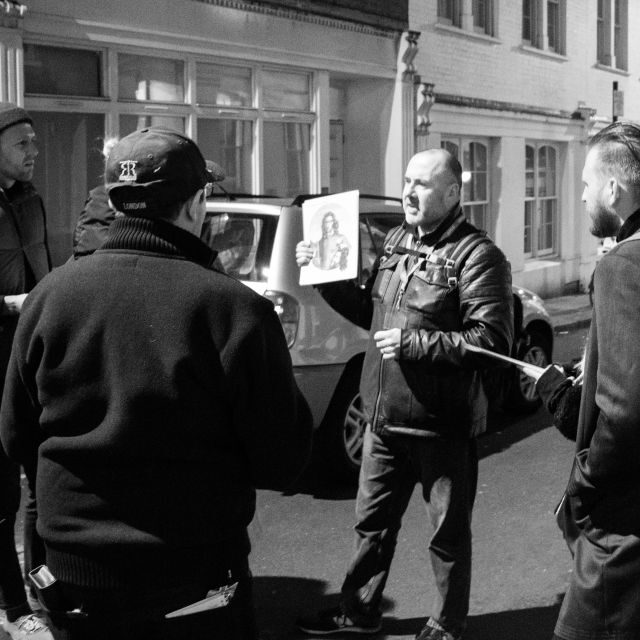
The tour info highlights Paul Mansfield, described as a Ripperologist for over 18 years. That background shows up in how he ties together crime, city life, and what the streets meant for ordinary people.
A real-world bonus: one review mentions a guide named Mick who brought a strong sense of humor while staying informative. So even if your departure has a different guide, the goal seems to stay consistent: clear storytelling, period context, and a group-friendly pace.
In practice, that means you’re not just hearing a list of suspects. You’re getting the “why here, why then” explanation—plus visuals.
Historic photos, victims, and suspects: what you’ll see on the walk
A signature part of this tour is the inclusion of photos—including photographs of victims and suspects. That’s a big reason this experience isn’t only about the legend. Seeing images tied to the case helps you separate folklore from how people actually documented events.
There’s also a heads-up from the tour notes: the guide provides warnings if the material turns more graphic. One review specifically says the guide warned the group with more graphic images. So if you’re sensitive to that kind of content, plan accordingly and listen closely to the guide’s pacing cues.
Also note a practical point: at least one review mentions the guide speaks English quite fast. If English isn’t your first language, keep your attention locked in—don’t multitask with your phone during stops. A tour like this depends on you catching the key details as they’re explained.
Pubs from 1721 and the texture of everyday life
The walk doesn’t treat Whitechapel as a blank stage for murders. You’re given sights that point to daily living—especially the area’s older fabric. One highlight called out is pubs dating back to 1721.
That’s not just trivia. It’s a clue about continuity: the East End wasn’t invented for the Ripper era. People were already gathering, talking, working, and getting through their days in older spaces. When your guide points out places like that, it helps you understand how quickly an infamous story could spread through a community that already had its own routines.
It’s also a nice change of pace from crime-only narration. You’re learning the neighborhood as a neighborhood.
You can also read our reviews of more guided tours in London





Victorian bath house and a Jewish soup kitchen for the poor
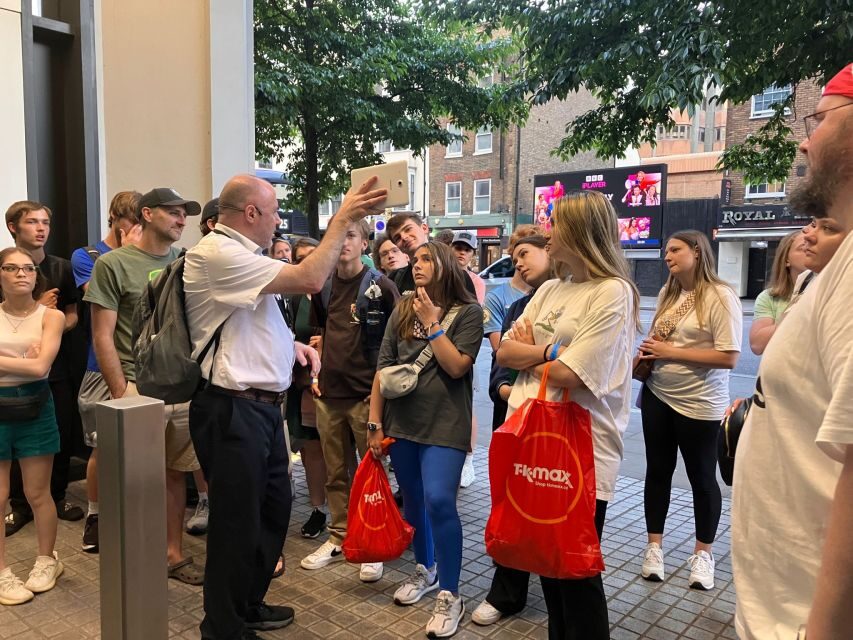
Some of the most meaningful stops are tied to what the area could provide—and what it couldn’t. The tour notes mention a Victorian bath house and a Jewish soup kitchen for the Jewish poor.
If you care about “historical context that matters,” this is where it lands. The Jack the Ripper case is often presented as something removed from real lives. But places like these bring the focus back to basic needs: hygiene, food, and survival in overcrowded conditions.
The guide’s job here is to connect the crime story to the social reality around it. And the information provided suggests you’ll also hear broader associations with the area—like Charles Dickens and Oliver Twist, plus Karl Marx—so the neighborhood becomes more than a rumor mill.
Whitechapel photo stop: pausing to see more than streets
There’s a dedicated Whitechapel photo stop, which is exactly what you want on a walking tour. You’re not rushing past everything and hoping it sticks. You get a moment to look, listen, and let the visuals reinforce the story.
This is the kind of stop where your guide’s pacing matters. If the group is small, you’re more likely to hear explanations clearly and see what they point to. It’s also a good break for your feet—because yes, you’re walking comfortable-shoe distance in East End streets.
One practical thing: don’t plan an elaborate outfit. You’ll want shoes that handle uneven ground and cobbles without discomfort. It makes the tour feel much more enjoyable.
The wider East End context: Dickens, Marx, the Elephant Man, and more
The tour frames Whitechapel not just as a crime scene, but as an area tied to other famous names and stories. You’ll hear references to Oliver Twist and Charles Dickens, Karl Marx, the Elephant Man, the Bodysnatchers, and the Krays.
Here’s why that context helps you, even if you only came for Jack the Ripper. These references show how East London’s reputation evolved over time. It wasn’t a one-incident neighborhood. It became a magnet for attention—through literature, history, and later criminals.
It also helps you understand how stereotypes form. When you know the area had famous connections before and after the murders, you can better separate what’s documented from what’s repeated.
What the guide says about policing and why so many murders mattered
A key part of the tour is the explanation of how difficult policing was during the period. The tour info calls out that the police were overworked and not solving many crimes, and it describes the Whitechapel area as having about twenty murders a night.
That’s a strong statement, and it’s worth understanding as part of the tour’s overall point: the environment was chaotic and stressful. If you’re picturing the case as a tidy mystery with one clean breakthrough, this tour works against that idea.
The guide’s approach (with period photos and local context) helps you see the murders as something that happened in a city under pressure, not in a vacuum. That perspective is one of the reasons the walk feels different from a purely spooky experience.
Pacing and group experience: small group, but some variation
You’ll walk for about 90 minutes, and the tour returns to Aldgate Tube Station. Because time is limited, the guide needs to keep momentum. One review notes the ending felt a bit rushed and suggests more discussion of murders and suspects would have been nice.
So here’s your expectation-setting tip: this is designed to be an overview with visuals and context, not a full courtroom-style investigation. You’ll learn a lot, but you won’t leave with every theory sorted into neat folders.
Still, the group size of up to 10 participants should help the overall experience feel personal. If you like asking questions and getting answers in the moment, this setup supports that.
Practical value: why $26 feels fair for what you get
The price is listed as $26 per person for a 1.5-hour guided walk that includes 90 minutes with a professional guide and photos. No, it won’t replace a museum visit, and it won’t cover meals or transport.
But for what you’re actually buying—someone with long Ripper-focused experience, plus period visuals, plus a structured walk through specific neighborhood spots—the value is pretty reasonable. You’re not paying for a generic “ghost story.” You’re paying for interpretation: how to read the streets, what to notice, and which details matter.
If you’re the type who likes to get your bearings on a first London night, this is also a smart pick. It turns a regular evening stroll into something with a clear theme and a guided pace.
Weather, footwear, and who should skip it
The tour takes place whatever the weather. That’s great because it reduces plan-flailing, but it also means you should dress like you’re walking the streets, not like you’re going to a theater.
Bring comfortable shoes. You’ll be walking cobbled and uneven streets, and the tour isn’t designed for bare feet or anyone who shows up unprepared.
It’s also not suitable for young children under 10, and it’s noted as not suitable for people with heart problems. If that’s you or someone in your party, treat the “health not suitable” note as the real deal.
Finally, there are clear rules: no drones, no intoxication, and no alcohol and drugs. And the tour doesn’t run for bachelor or bachelorette party groups. That usually helps keep the tone respectful and focused.
Should you book this Jack the Ripper walking tour?
Book it if you want an East End experience that feels specific, not vague—especially if you like period photos, short-and-sharp street stops, and a guide who can connect crime history to real neighborhood life. The small group size and the focus on places like the bath house and soup kitchen make it more human than just “who did it.”
Skip it (or be cautious) if you’re looking for a long, blow-by-blow deep investigation of every suspect. This tour is designed to move through the area and give you a strong framework in 90 minutes, with warnings if material gets graphic.
If you’re comfortable walking for about 90 minutes and you like history with an edge, this is a strong way to spend a night in London’s East End.
FAQ
Where is the meeting point for the tour?
You meet at Aldgate underground station exit (Circle line and Metropolitan line). The instructions specify not to use Aldgate East station, which is nearby but different.
How long is the Jack the Ripper guided walking tour?
The tour lasts 1.5 hours.
What is included in the price?
The tour includes a professional tour guide for 90 minutes with photos.
Is there food or drinks included?
No. Food or drinks are not included.
What should I bring?
Bring comfortable walking shoes.
What languages is the tour offered in?
The tour is conducted in English.
Is the tour suitable for young children?
No. It is not suitable for children under 10.
Is the tour wheelchair accessible?
Yes. The tour is listed as wheelchair accessible.
Is the tour dependent on the weather?
It takes place whatever the weather.