REVIEW · LONDON
The Original London Street Art Tour (French)
Book on GetYourGuide →Operated by Alternative London · Bookable on GetYourGuide
Street art in London has a pulse.
This French-led walking tour focuses on East London walls you can actually read—tags, murals, and the street-level stories behind them. It’s a practical way to understand the art scene without needing to know every artist name before you start.
I especially like two things. First, the tour covers 40+ street artists in about 1.5 hours, so you get a fast, satisfying sampler. Second, the guides bring strong storytelling: in particular, Laura and Gabriel are praised for mixing passion with humour and clear explanations that connect the art to the neighborhood.
One consideration: street art changes, and that’s the point—but it means what you see can differ from what you expected to spot online.
In This Review
- Key things to know before you go
- Why East London street art feels different around Spitalfields and Brick Lane
- Meeting at Old Spitalfields Market: getting your bearings in minutes
- Spitalfields streets: history you can actually spot on walls
- Brick Lane: seeing ROA, Invader, Banksy, and the rest up close
- Shoreditch alternative scenes: why graffiti culture is more than decoration
- How the 1.5-hour walk really feels (and why it can be short)
- French guide experience: humour, clear history, and adapting to the group
- The artist coverage: 40+ works, not just a couple of murals
- Price and value: why $26 can be fair for this kind of tour
- Who should book this London Street Art Tour (French)
- Should you book it?
- FAQ
- What’s the tour duration?
- Where do I meet the guide?
- What language is the tour in?
- What can I expect to see?
- Which artists are mentioned on the tour?
- Is the tour wheelchair accessible?
- How much does it cost?
- What’s the cancellation and payment setup?
Key things to know before you go
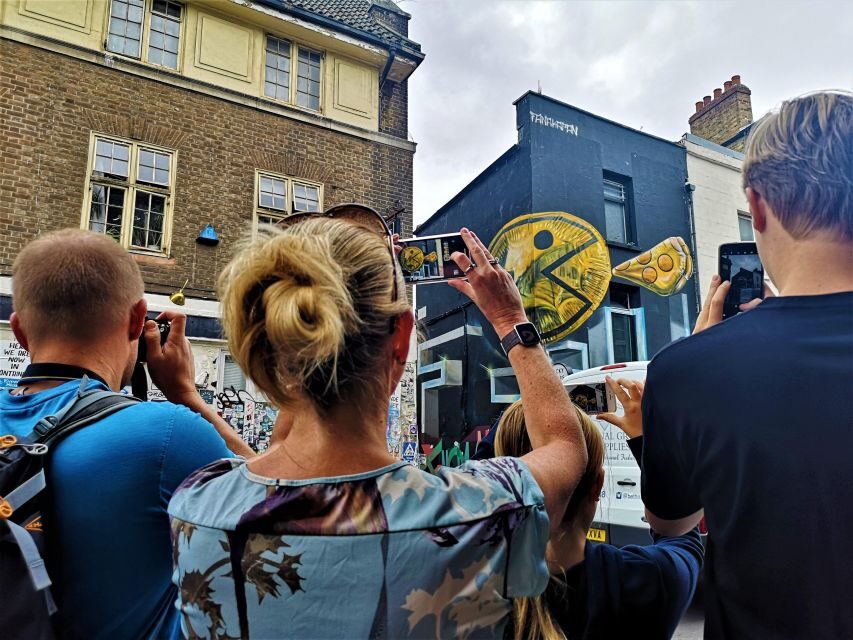
- 40+ artists across Shoreditch, Brick Lane, and nearby streets
- Icon references like Banksy, ROA, Invader, Shepherd Fairey, and Eine
- Meet at Old Spitalfields Market, by the statue with a white goat on top
- French-speaking guide with clear, story-driven commentary
- Short format: 1.5 hours can feel tight if you love stopping to look
Why East London street art feels different around Spitalfields and Brick Lane
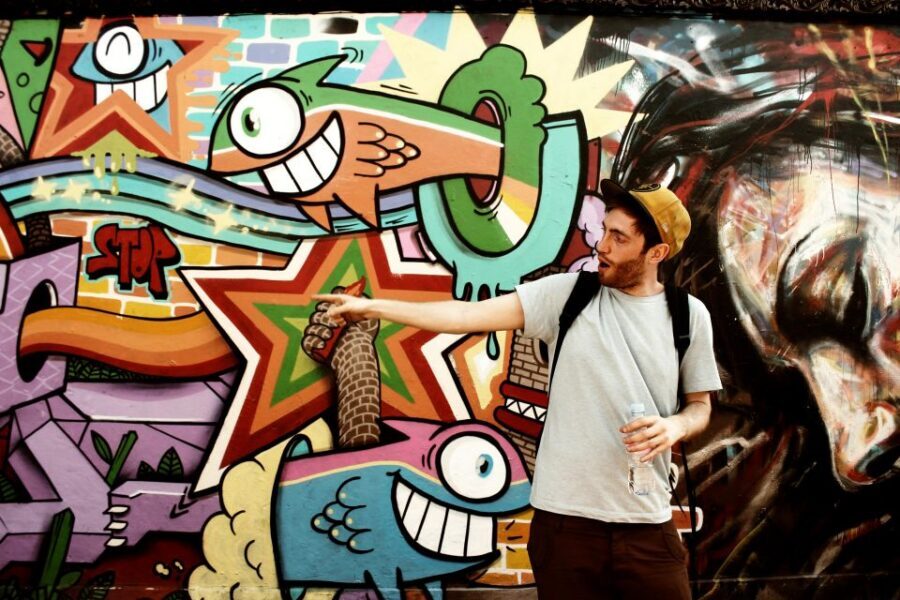
If you only do the big-ticket London sights, you miss a whole visual language. Around Spitalfields, Brick Lane, and Shoreditch, the walls aren’t decoration—they’re communication. You’ll see tags and pieces that sit right next to everyday storefronts and apartment doors, which changes how the art hits. It’s less museum, more street conversation.
I like that this tour treats graffiti culture as something you can learn in the real world. The guide’s focus isn’t just name-dropping. You get context for why certain styles show up where they do, and how artists use public space to say something—sometimes political, sometimes personal, often clever.
And yes, street art changes constantly. That’s why tours like this stay interesting: the route and the works you catch can evolve over time, so you don’t get a static checklist.
You can also read our reviews of more tours and experiences in London



Meeting at Old Spitalfields Market: getting your bearings in minutes
The tour starts by Old Spitalfields Market, outside the City of London. That location matters. You’re right at the edge between London’s official, historic finance world and the East End’s more alternative creative life.
Your meetup point is specific: go to the statue with the white goat on top. It’s the kind of meeting spot that works well when you’re traveling solo and want the day to run smoothly. I’d suggest arriving a few minutes early, not because the tour is chaotic, but because London signage and crowd patterns can slow you down.
This is a live guided walk in French, and the pace is designed for seeing a lot without feeling rushed. You’ll also be moving between neighborhoods—so comfortable shoes are a must.
Spitalfields streets: history you can actually spot on walls
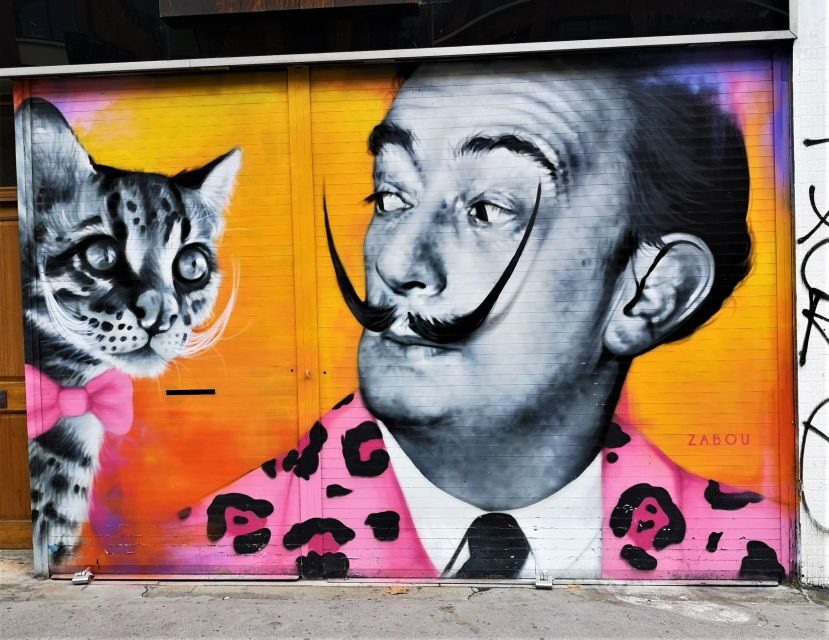
Right from the start, you walk through the East End as the guide connects the neighborhood to what you’re seeing on the street. This is one of the strongest parts of the experience because it turns random graffiti into something you can interpret.
You’ll notice how the guide points out the difference between simple tags and larger pieces, and how artists build a recognizable visual identity over time. Tags are quick signatures; murals often tell a longer story. When you understand that, you stop viewing the wall as background and start reading it like a timeline.
This leg is also where the humour and tone from guides like Laura can really help. When someone explains the art clearly and with good energy, you don’t feel like you’re being tested. You’re just learning how to look—and London rewards that.
Brick Lane: seeing ROA, Invader, Banksy, and the rest up close
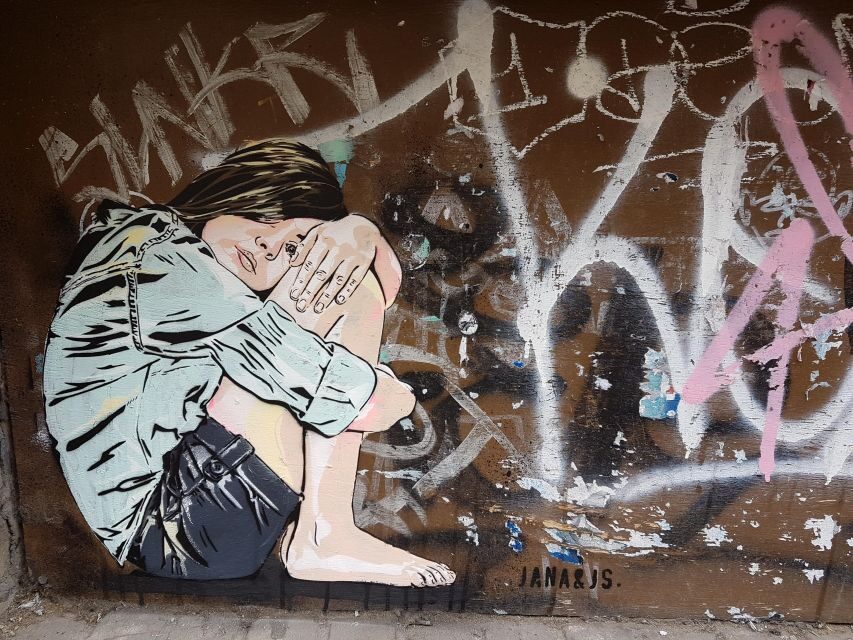
Brick Lane and its surrounding streets are a magnet for street art. This tour uses that energy to cover a long list of artists without turning it into a lecture.
You’ll learn about major names such as:
- Banksy
- ROA
- Invader
- Shepherd Fairey
- Eine
You’ll also see and talk about other artists mentioned as part of the tour’s typical lineup, like Stik, Borondo, and Cranio. The guide’s job is to translate what these names mean on the street—how their styles are recognized, and what they’re doing visually (and sometimes culturally) where they paint or install.
Here’s what I think makes this stop work for you: instead of treating these artists like celebrities, the tour frames them as part of a living street ecosystem. That changes the way you experience their work. Even if you only half-know their reputations, you’ll still know what to look for.
Also, because street art changes, you might catch different examples than someone else did on a different date. That’s not a problem here. It’s part of why the tour stays fresh.
Shoreditch alternative scenes: why graffiti culture is more than decoration
After Brick Lane, you shift toward Shoreditch. This is where the tour becomes about more than art technique. You start noticing the whole alternative scene—fashion, attitudes, and the way creative work lives in everyday places.
The guide walks you through the neighborhood with an “art + place” lens. That means you’ll get explanations about street art and graffiti culture, not just artwork names. You’ll also learn how “the scene” influences what gets painted and how artists choose locations.
One comment from past participants stood out to me: the guides are often young artists themselves. That matters. When your guide is actively part of the creative world, you tend to get explanations that feel grounded, practical, and not stiff. It also helps for beginners because the guide can describe techniques and street art choices in a way that makes sense, not in a way that sounds like a textbook.
And if you’re traveling with kids or teens, this is one of those tours that can work surprisingly well. The art is visual and the explanations are paced for a walking group, so it doesn’t drag.






How the 1.5-hour walk really feels (and why it can be short)
The tour is listed at 1.5 hours, but you’ll also see the idea of a roughly two-hour walking experience. Either way, the spirit is the same: it’s a condensed, high-impact route.
That’s good for value. You cover a meaningful chunk of East London while staying within a time window that’s easy to fit into a day of sightseeing.
It can also feel short if you’re the type who wants to stand still for a long time and re-read every tag. The payoff is that you get the basics and the best “starter context.” Then you can wander afterward and keep your new way of looking going on your own.
Practical tip: bring a phone with enough battery. Street art details are worth snapping, but London walks add up fast.
French guide experience: humour, clear history, and adapting to the group
This is a French-language tour, guided by a live person. The reviews give a consistent picture of what that feels like on the ground.
Laura gets praised for telling details of street art with passion and humour. Gabriel is highlighted for being very interested in the topic and for explaining things clearly with history. Another nice point: guides adapt to the group, so you’re not stuck listening to one tone all the way through.
Even if your French isn’t perfect, street art tours often work because the visuals do half the job. Still, the best experience comes when you can catch the explanations—especially when the guide is linking art styles to the neighborhood’s story.
The artist coverage: 40+ works, not just a couple of murals
One of the biggest strengths here is the sheer breadth. You’re not getting two big photos and a goodbye. You’re walking through streets where you can encounter art by more than 40 acclaimed street artists and learn about major influences.
When a tour is this short, coverage matters. It’s how you avoid the common disappointment of paying for a guide who only stops at a handful of spots. Here, the guide uses the walking time to point out patterns and artists repeatedly, so you start seeing how the scene connects.
I also like that the tour explicitly references the “urban art” world beyond the headline names. You hear about different techniques and styles, and you get a sense of how tags, murals, and signatures work together in public space.
Price and value: why $26 can be fair for this kind of tour
At $26 per person for 1.5 hours, the cost works out to roughly $17–18 per hour. That’s not just a number—it matches what you’re buying here: a guided walk through multiple neighborhoods with a focus on street art culture and recognizable artist names.
You’re also getting a live guide rather than a self-guided audio thing. Live guidance is what turns a street into a lesson. It’s the difference between looking at graffiti and understanding why certain pieces show up, what to notice, and how to read the style.
The other value angle: street art tours are constantly changing. So the experience isn’t a one-time “set” like some indoor attractions. It’s a living street gallery, and your guide’s explanations help you understand what you’re seeing today.
Who should book this London Street Art Tour (French)
This tour is a great fit if you:
- want a focused, beginner-friendly way to understand street art and tags in East London
- like modern, urban creativity more than traditional landmarks
- want to cover Shoreditch + Brick Lane + Spitalfields area with one guide in a short time
- appreciate a guide who can explain with humour and context
It’s less ideal if you’re trying to build a deep, academic understanding of the entire UK street art scene in one go. This walk is designed as a starter course with strong on-the-street examples.
Should you book it?
Yes, I’d book it if you want a smart, efficient London experience that helps you look at the city differently. The combination of 40+ artists, French live guidance, and the strong review pattern around guide energy (Laura and Gabriel are especially praised for clarity and humour) makes it a reliable choice.
If your main goal is slow, gallery-style attention to every detail, you might find the time tight. But if your goal is street art literacy plus a great East London route in a single morning or afternoon window, this is a strong bet.
FAQ
What’s the tour duration?
The tour is listed at 1.5 hours.
Where do I meet the guide?
Meet at Old Spitalfields Market by the statue with the white goat on top.
What language is the tour in?
The tour is guided in French.
What can I expect to see?
You’ll explore East London street art and graffiti, including tags and urban art across the Shoreditch and Brick Lane area.
Which artists are mentioned on the tour?
The tour includes information about street art by Banksy, ROA, Invader, Shepherd Fairey, and Eine, plus additional artists such as Stik, Borondo, and Cranio.
Is the tour wheelchair accessible?
Yes, it’s listed as wheelchair accessible.
How much does it cost?
It’s priced at $26 per person.
What’s the cancellation and payment setup?
You can cancel up to 24 hours in advance for a full refund, and you can reserve now and pay later.