REVIEW · LONDON
London: East End Instagrammable Street Art & Graffiti Tour
Book on GetYourGuide →Operated by Tours by Foot · Bookable on GetYourGuide
Street art in London can feel random. This tour makes it make sense.
You start at Whitechapel Gallery and work your way through the streets that built London’s modern reputation for wall art and graffiti. You’ll learn how pieces get made, why certain artists are famous, and how the neighborhood itself shapes the work. I like that this isn’t just a photo chase. It has stories, angles, and context.
Two things I love: the photo-friendly stops that are actually placed for the right sightlines, and the chance to make your own street art so you’re not just watching. One consideration: you’ll be walking on tight streets and in lanes where crowds can make shoulder room a little… British.
If you want London without the usual postcard loop, this is a fun way to see the East End up close—rain or shine. Just come with comfy shoes and a camera you don’t mind getting splashed by the weather.
In This Review
- Key points to know before you go
- Entering the East End at Whitechapel Gallery (and why it matters)
- Spitalfields and Shoreditch: street stories you can photograph
- Brick Lane: the right angle is half the art
- The narrow yards and street-level surprises (from 7 Stars to Princelet Street)
- Dray Walk and Allen Gardens: broccoli, color, and walls that change
- Ebor Street and the letter-makers: neon and bold type
- Rivington Street: Banksy’s influence and Thierry Noir’s edge
- Spotting street art on hotel walls: art’otel London Hoxton
- Ending near Liverpool Street Station: Shoreditch High Street and the Graffiti Wars
- Price, timing, and how to get value from the 2-hour walk
- Who should book this street art tour (and who should consider another plan)
- Should you book this London East End Instagram Street Art & Graffiti Tour?
- FAQ
- Where does the tour start?
- How long is the tour?
- Is the tour always outdoors?
- What language is the tour guide?
- Is it wheelchair accessible?
- What’s included besides seeing street art?
- Where does the tour end?
Key points to know before you go
- Whitechapel to Shoreditch on foot: a compact route with big-name street art along the way
- Guides set the photo angle so you can see the work the way it was meant to be seen
- Artists and styles you’ll recognize: Banksy, Thierry Noir, Ben Eine, and more
- Small, specific details matter (broccoli tags, balloon imagery, oversized letters)
- Walls change fast in places like Allen Gardens, so timing helps your photos
- You’ll create something too, not just admire it
Entering the East End at Whitechapel Gallery (and why it matters)
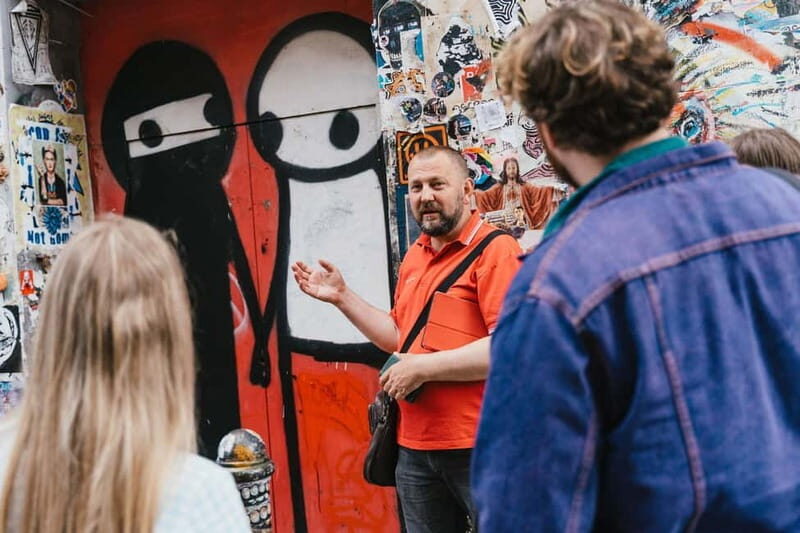
I like starting at Whitechapel Gallery because it anchors the whole walk. Whitechapel sits right at the crossroads of old London and newer, louder street culture. Even the idea of “street art” here isn’t only about murals. It’s also about how this area keeps rewriting itself—art, community, and even memory.
The tour includes time that connects the East End to its past too, including Whitechapel (made famous by the Whitechapel murders). That matters because it gives you contrast. You’re not just looking at fresh paint; you’re watching how people mark the city—sometimes violently remembered, sometimes creatively claimed.
And then the guide shifts gears into what street art does best: it turns blank walls into public conversation.
You can also read our reviews of more tours and experiences in London



Spitalfields and Shoreditch: street stories you can photograph
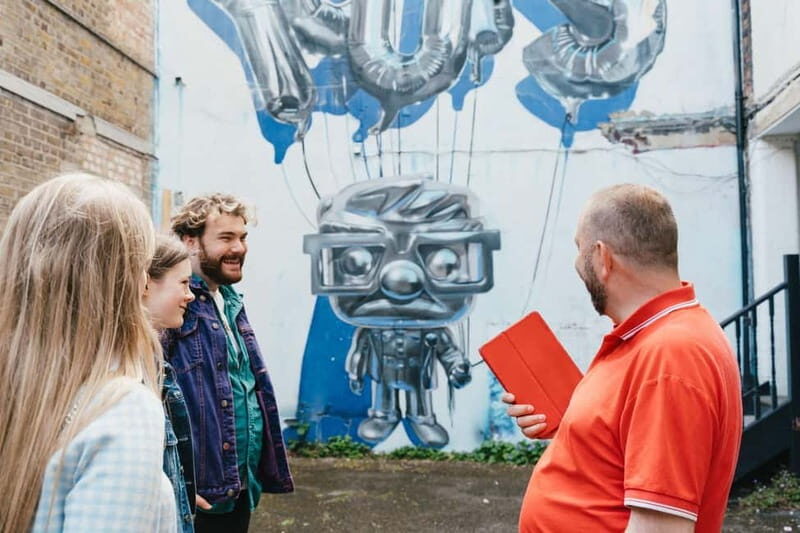
From Whitechapel you move toward Spitalfields, then into the Shoreditch orbit. This is the part where I think the tour earns its money: the walk isn’t only about naming artists. It helps you notice scale, layout, and placement—how a piece works when you’re standing right in front of it.
You get a photo stop style pacing early on, and that’s useful. It gets you oriented fast. Instead of wandering later, you’ll already know what makes a mural “read” correctly: distance, height, street width, and the angle between buildings.
Shoreditch is also where the tour starts weaving in the idea that graffiti here isn’t just decoration. It has local stakes. The route ends with a story about the Graffiti Wars, and those final minutes land better because you’ve spent the first part training your eye.
Brick Lane: the right angle is half the art
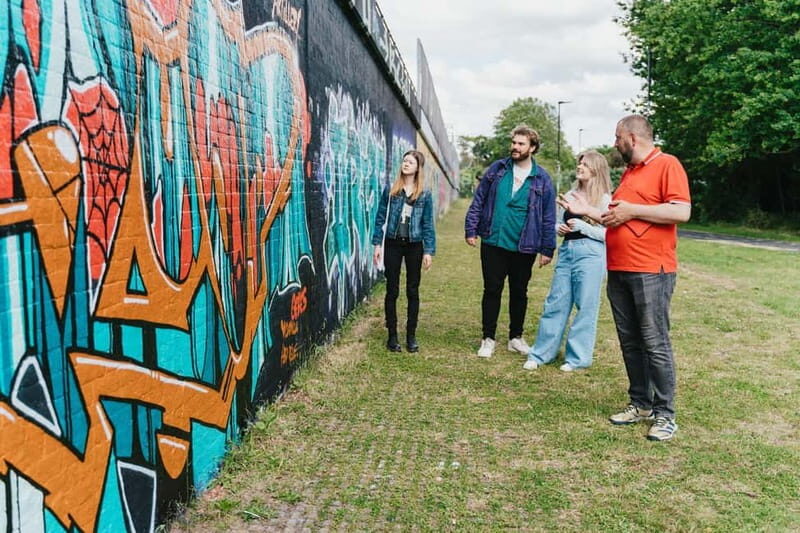
Brick Lane is where the tour earns its reputation as an Instagram-friendly walk—yet it’s more than that. The key thing I’d tell you is this: on Brick Lane, you may need more than one viewpoint to fully appreciate what you’re seeing.
Sometimes you’ll spot large pieces that reward you for stepping back. Other times you’ll see smaller work that only pops when you crane your neck or move one street corner over. The guide’s job here is practical: they’ll point you to where to stand so the art doesn’t look “almost right” in your photos.
A few specific works come up around the Brick Lane area, including:
- A slim-creature style piece by Phlegm
- Silver balloons by FanakaPan
- Collaborations where multiple artists share a wall, so the piece becomes a conversation instead of a single statement
There’s also a sense of theatre to the route. At least one moment feels intentionally designed to make you slow down: look up, shift position, and suddenly the whole wall clicks into place.
The narrow yards and street-level surprises (from 7 Stars to Princelet Street)
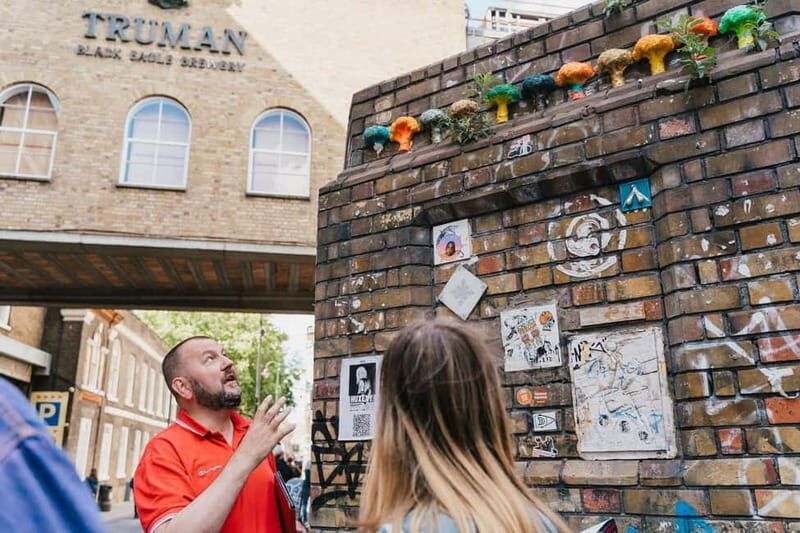
Not every stop is wide and easy. Some are intentionally tight. If you’re picturing only open plazas, prepare for narrow lanes where you’ll get close enough to see brushwork and layered repainting.
One example is 7 Stars Yard. It’s described as a narrow yard that can feel a bit scary at first glance—but that’s precisely why it works. The guide brings you through it like a mini photo studio: you’re not there to admire from afar. You’re there to notice the details at street level. If you’re traveling with kids or you don’t love enclosed spaces, do give yourself a quick moment of comfort before stepping into the narrowest sections.
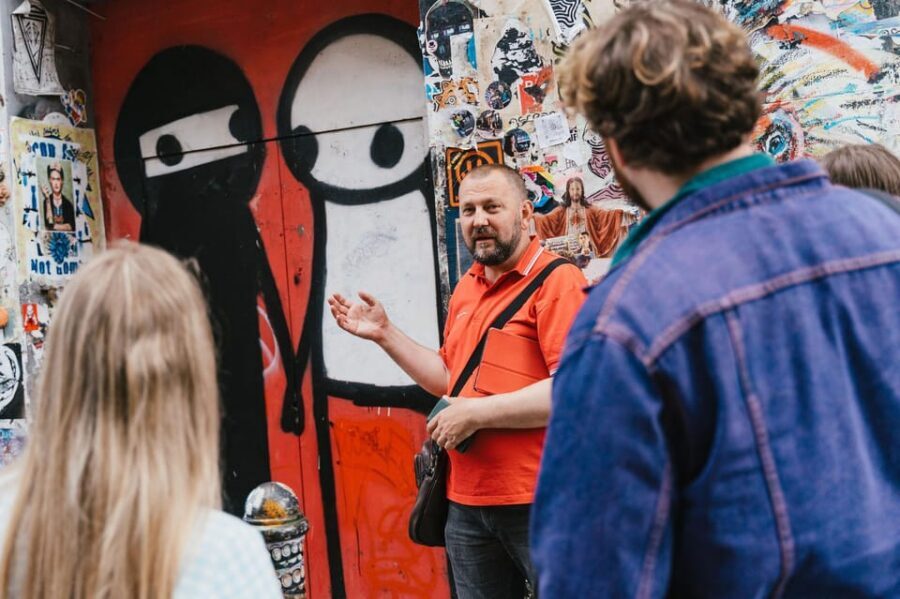
Then you reach Princelet Street, where the work ties directly to a community story. A piece by Stik is dedicated to the Muslim community and reflects a long connection to the area. It’s been defaced and repainted a few times, which adds a real sense of resilience. In other words: the art isn’t frozen. It’s in motion, like the neighborhood itself.
Dray Walk and Allen Gardens: broccoli, color, and walls that change
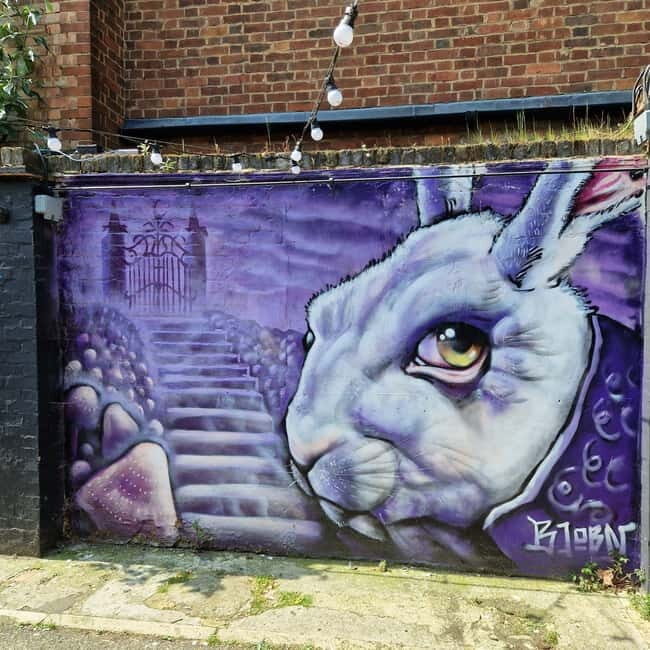
This is the part of the tour I’d call the “eye candy with meaning” stretch.
On Dray Walk, you’ll see broccoli characters. Some are realistic; others show up in rainbow colors. It sounds funny until you realize graffiti culture loves recurring symbols. The guide explains how the trend started (and why that matters), so the broccoli isn’t random. It’s part of a wider language.
Then you head to Allens Gardens, which is one of those places you’ll want to photograph quickly. Here, you’re surrounded by many walls full of graffiti, and the key point is that the art changes often. That means your photos have a built-in “this week only” quality. You’re capturing a moment, not a permanent museum piece.
One practical tip: if you’re serious about photos, bring an empty memory card and keep your phone battery charged. Allen Gardens is the kind of stop where you’ll want repeats—wide shot, close-up, and a few angle variations.






Ebor Street and the letter-makers: neon and bold type
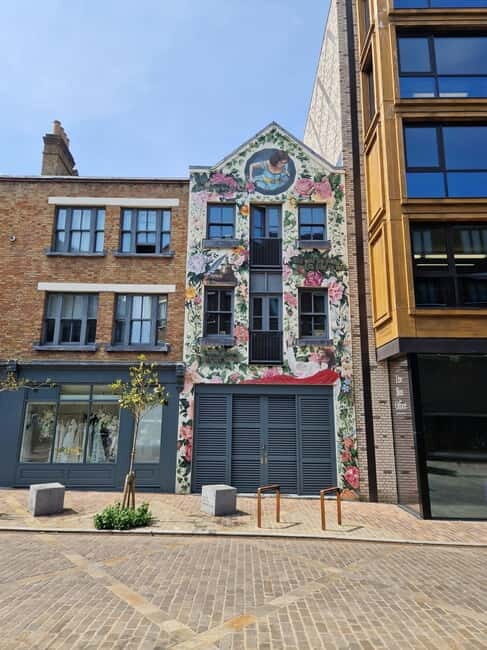
The tour also includes the Ebor Street area, where you get a different flavor of street art. Instead of only big murals, you’ll notice:
- Large-format adverts repainted by graffiti artists
- Smaller pieces by Neon
- Ben Eine’s big, bold letter work
This is useful because it shows street art isn’t one style. It’s typography, rebranding, and attitude. If you’re the type who likes “graphic design” more than paint, this stretch will feel like a playground.
The guide’s explanations help too. Even if you only catch fragments at each wall, you start seeing patterns: who uses bubble letters, who uses stencils, who layers like a collage, and who chooses bright colors for instant readability.
Rivington Street: Banksy’s influence and Thierry Noir’s edge
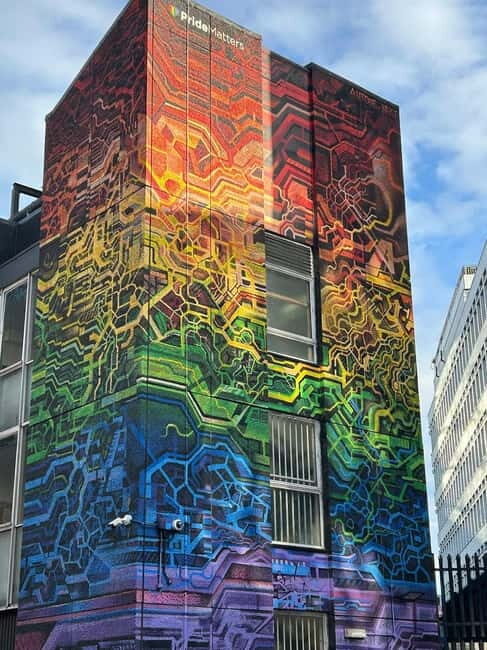
No street art walk in London feels complete without Banksy, and this tour builds that in with a stop around Rivington Street. You’re shown a secret place where you can see Banksy’s work.
I like how the tour handles Banksy: it doesn’t treat the piece like a trophy. Instead it ties the art to the wider street art “rules”—how recognition spreads, why some locations become legendary, and how artists use the city’s contradictions.
On the same street stretch, you’ll also hear about Thierry Noir. He’s known for work connected to the Berlin Wall in the 1980s, but he also left his mark in London. That context matters. It turns the London piece from a cool mural into part of a larger story about protest, politics, and public space.
And yes, you’ll likely feel that “I can’t believe this is on a random street” moment. Street art does that on purpose.
Spotting street art on hotel walls: art’otel London Hoxton
One of my favorite practical ideas here is that you don’t need a hotel stay to enjoy some street art. The tour includes art’otel London Hoxton, where an older Banksy piece is now part of a more modern hotel setting.
This is a good reminder of how London changes. A wall becomes a landmark, then the neighborhood evolves around it. You’re not only seeing art. You’re seeing how the city absorbs and reframes it.
If you like walking in places where “new London” sits directly next to “old street logic,” this stop will click for you.
Ending near Liverpool Street Station: Shoreditch High Street and the Graffiti Wars
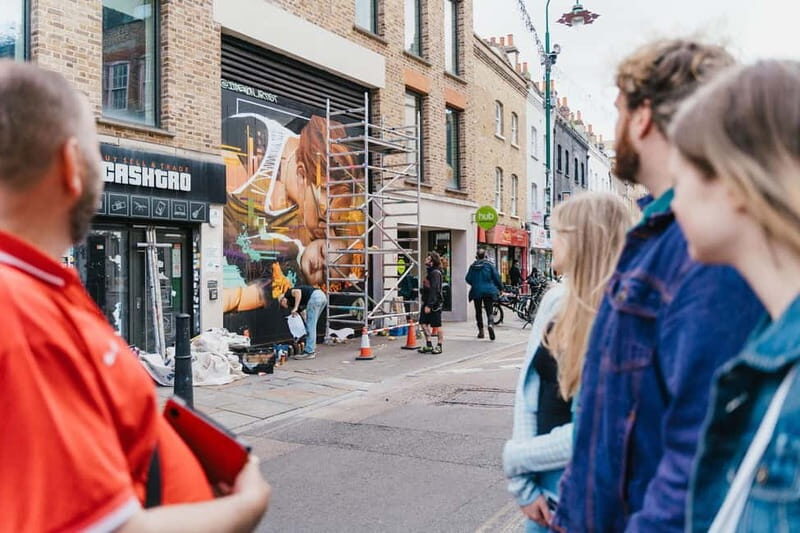
You finish near Liverpool Street Station (Stop G). That ending point is handy because it connects you quickly to the rest of London without backtracking.
Before the finish, you get one last story connected to Shoreditch High Street and the Graffiti Wars. The tone here is important: it sounds dramatic, but the guide keeps it grounded—so you understand why it happened and why the art that came from it still feels powerful today.
By the time you’re done, you’ll have a clearer sense of what street art is doing in London:
- building identity in public
- sparking debate without needing permission
- and turning ordinary streets into a living gallery
Price, timing, and how to get value from the 2-hour walk
At $49 per person for about 2 hours, you’re paying for two things: guided direction and time saved. Street art hunting on your own is fun, but it’s also hit-or-miss. This tour gives you planned stops, photo points, and explanations that help you understand what you’re seeing right away.
The 2-hour length is also the sweet spot. You get a solid run through the East End without turning your day into a full-on walking marathon. And because the tour runs rain or shine, you’re not stuck waiting for perfect weather.
What I’d do to maximize value:
- bring a fully charged phone/camera
- wear shoes you can walk in for a couple hours
- keep your schedule light afterward, because you’ll want time to look at photos and re-check details you missed while moving
Who should book this street art tour (and who should consider another plan)
This fits best if you:
- want iconic street art without planning a route yourself
- enjoy learning the why behind what you photograph
- like walking neighborhoods rather than sitting in museums
- want a family-friendly activity pace (the tour is designed to work across ages)
It might be less ideal if you:
- hate tight side streets or enclosed yards
- need tons of free time to wander without a guide nudging your path
- prefer art in a traditional indoor setting only
Should you book this London East End Instagram Street Art & Graffiti Tour?
If you like street art but don’t want guesswork, I’d book it. The route is built around the East End’s big recognizable artists and the small “street-level” surprises that make photos actually look good. The guide focus on placement and stories turns the walk into more than sightseeing.
And the real kicker for value: you get photo stops plus a chance to make your own street art. That’s a rare combo for a city walk—so you come home with images and something you created, not just memories.
FAQ
Where does the tour start?
The guide meets you directly outside the Whitechapel Gallery, at 80 Whitechapel High Street.
How long is the tour?
The experience runs for about 2 hours. Starting times vary, so you’ll need to check availability.
Is the tour always outdoors?
Yes. The tour runs rain or shine, and you’ll be walking the streets the whole time.
What language is the tour guide?
The live guide speaks English.
Is it wheelchair accessible?
Yes, the tour is wheelchair accessible.
What’s included besides seeing street art?
You get guided time focused on street art and photo opportunities, plus time to make your own street art.
Where does the tour end?
It ends near Liverpool Street Station (Stop G), though the exact finish point can change depending on what’s happening with the art in the area.