REVIEW · LONDON
Women in art – National Gallery
Book on GetYourGuide →Operated by BestTours · Bookable on GetYourGuide
Art changes when you look through women’s eyes. This Women in Art tour uses a women-centered lens to connect famous paintings to real roles, power, and representation across centuries. I love how the guide turns big-name works into clear, human stories, and I love that you get a tight 1.5 hours with focus on must-see masterpieces rather than wandering aimlessly.
There is one trade-off to plan for: you’ll only cover a handful of standout artworks, not every room in the National Gallery. If you also want time to browse on your own, build extra time before or after so this doesn’t feel rushed.
In This Review
- Key highlights before you go
- Women in Art at the National Gallery: what the framing actually does
- Your 90-minute plan: how the timing works in practice
- Meeting outside: where to start and how not to lose time
- Stop-by-stop: the art and what you’ll look for in each scene
- Leonardo da Vinci’s Madonna of the Rocks: women at the center of sacred meaning
- Michelangelo’s The Entombment: grief, witness, and power in emotion
- Raphael’s St Catherine: sainthood, intellect, and the politics of virtue
- Rubens’ The Judgement of Paris: myth, image, and how women become the stakes
- Van Gogh’s Sunflowers: women, agency, and looking beyond the obvious
- Price and value: $404.10 for a private group up to 6
- Who this tour fits best (and who might prefer something else)
- Practical tips so you get the most out of the hour and a half
- Should you book the Women in Art tour?
- FAQ
- Where is the tour meeting point?
- How long is the Women in Art guided tour?
- Is this a private group tour?
- What is the price for the tour?
- What languages is the live guide available in?
- Is the tour wheelchair accessible?
- Is the tour suitable for children?
- Does the tour focus on specific artworks?
- What is the cancellation policy?
- Can I reserve and pay later?
Key highlights before you go
- A guided, women-focused interpretation of classic masterpieces
- Portraits and scenes that show women’s presence, power, and vulnerability
- Star works on the route, including Leonardo, Michelangelo, Raphael, Rubens, and Van Gogh
- Private group format up to 6, so questions and pacing feel personal
- English or Russian live guide for real-time explanations
- Strict timing with on-the-clock finishing, so everyone gets a proper end
Women in Art at the National Gallery: what the framing actually does
The National Gallery is huge, and most museum visits go one of two ways: either you rush past the famous paintings, or you get stuck staring at a single piece with no context. This tour takes a third path. It’s built around the question of how women appear in art, how they’re portrayed, and what those portrayals tell us about society at the time.
That framing matters because it changes what you notice. Instead of just asking, What is the subject? you start asking, Who is given the spotlight, who is implied, and whose story is being told. Even when you’re looking at religious scenes or mythological moments, you can track the same themes: expectation, agency, suffering, and status.
The guide’s job is to keep you moving but not to keep you confused. You’ll get explanations that connect the painting to how women were viewed in that era, and you’ll have time to ask questions. One strong example from this tour’s reputation is the guide’s ability to make paintings feel alive, not like museum labels stapled to the wall.
You can also read our reviews of more museum experiences in London



Your 90-minute plan: how the timing works in practice
This tour runs about 1.5 hours, which is a very workable length for the National Gallery. The museum is dense, so a shorter format is actually a gift. You can cover several major works with enough time to see details, not just glance at brushwork from across the room.
Because it’s a private group (up to 6 people), the pacing feels steadier. You’re not competing with a crowd for hearing space. If you have a few strong questions—about symbolism, roles of women in the scene, or why certain figures are emphasized—the guide can usually steer the conversation in that direction.
One timing note: punctuality really matters. The tour is designed to finish on time, and if people are lingering, the guide adjusts the itinerary to protect the schedule. So try to arrive a few minutes early and don’t plan a tight connection right afterward.
Meeting outside: where to start and how not to lose time
You meet in front of the National Gallery and the tour ends back at the meeting point. That simplicity is underrated. No guessing room numbers, no complicated handoffs. Just show up, find your guide, and you’re off.
If you’re traveling with a group, keep your whole party together. The tour is only 1.5 hours, so a late arrival can slice into the time you were counting on. Also, when you book, make sure you give an active contact phone number so the guide can reach you if anything needs adjusting.
Stop-by-stop: the art and what you’ll look for in each scene
Leonardo da Vinci’s Madonna of the Rocks: women at the center of sacred meaning
Leonardo’s Madonna of the Rocks is one of those paintings that rewards careful looking. A women-focused tour changes how you see it. Yes, it’s a famous religious scene, but the key question becomes: how does the artist give the woman a role that feels both human and symbolic?
As you look, don’t only track faces. Pay attention to gestures and placement. In scenes like this, the woman’s position often guides the whole meaning of the image—almost like a visual anchor. On this tour, the guide helps you connect that visual structure to how viewers would have read femininity in sacred art: tenderness, authority, and devotion at the same time.
This is a great first stop because it sets the tone. You start learning the tour’s core method: notice what’s emphasized, then ask why it’s emphasized.
Best reason to care: you’ll practice the women-focused way of seeing right away, before the tour moves into more complex stories.






Michelangelo’s The Entombment: grief, witness, and power in emotion
Then comes Michelangelo’s The Entombment, a work where emotion isn’t background noise—it’s the subject. Women’s roles in these religious narratives often shift depending on what the artist wants the viewer to feel. Here, you’ll be trained to look for expression and posture as evidence of witness and grief.
Michelangelo is dramatic, and the emotional intensity can be overwhelming if you don’t have a guide framing it. The tour’s approach helps you separate two things: what you’re seeing in the scene, and what that scene would communicate to people at the time.
You’ll also get help connecting the women in the work to the theme of representation. Are they passive mourners? Are they witnesses with moral weight? The guide pushes you to think beyond stereotypes and into meaning.
Possible drawback at this stop: if you’re the type who wants to spend a long time alone with a painting, this one can feel time-boxed. Still, in 1.5 hours, the goal is to learn how to look, not to camp out.
Raphael’s St Catherine: sainthood, intellect, and the politics of virtue
Next is Raphael’s St Catherine, and it’s a strong choice for a women-in-art tour. St Catherine is not just a figure in a religious painting. She’s often associated with ideas about learning, faith, and moral conviction. The guide’s explanations help you read that symbolism in a practical way: what details point toward her identity, and how the painting communicates her importance.
This stop is also useful if you’re trying to understand how women’s roles in art can be both spiritual and socially loaded. A saint can be a symbol that reaches into education, gender expectations, and cultural authority. Raphael’s work is often neat and balanced visually, so you can see how the artist constructs meaning carefully instead of just using emotion.
You’ll leave this stop with a clearer sense of how “women represented as ideals” works in practice.
Rubens’ The Judgement of Paris: myth, image, and how women become the stakes
Then you hit Rubens’ The Judgement of Paris, which shifts the mood from sacred story to myth. That change is important. It shows you that women in art aren’t only portrayed through religion. Mythological scenes also shape how people think about women’s beauty, choice, and consequences.
In a women-focused tour, this painting becomes a lesson in framing. The Judgement of Paris is basically a decision scene where women are the prize—or the pressure. The guide helps you see the mechanics: how the composition points the viewer toward the women as objects of choice, and what that says about gendered power.
This is where the tour starts feeling more modern. Even if you don’t bring today’s debates into the museum, you’ll naturally notice how the painting turns women into a narrative device for male choice. The guide tends to connect historical meaning to modern perception, which helps you understand why these images still land.
Van Gogh’s Sunflowers: women, agency, and looking beyond the obvious
Finally, Van Gogh’s Sunflowers offers a different kind of lesson. It’s not a women-in-representation story in the same direct way as a saint portrait or a myth scene with female figures. So why is it on the list? Because women-focused interpretation is also about context: who is behind the scenes of art-making, how subjects were valued, and how perception changes what we think the artwork is “about.”
This stop works well when the guide helps you separate two layers:
1) what you see in front of you (the flowers, the color, the attention to form)
2) what the painting asks you to consider socially (art and value, attention and demand, and how audiences shape meaning)
It’s a reminder that women’s influence in art history isn’t always shown in the literal subject matter. Sometimes it shows up through collecting, patronage, and the way art became a market of taste. The guide’s commentary nudges you into that wider view without getting lost in theory.
Price and value: $404.10 for a private group up to 6
The listed price is $404.10 per group up to 6. That’s the part that makes this tour feel either like a steal or like a splurge, depending on how you travel.
Here’s the practical math:
- If you fill all 6 spots, you’re roughly at about $67 per person for 1.5 hours of live guiding.
- If it’s just 2 people, it rises to about $202 per person.
So the value is best when you’re traveling with friends, a small family, or another couple and you can spread the cost. It’s also a solid option if you care more about getting explanations than “collecting sites.” A private guided format saves time and energy, especially in a museum where self-guided visits can turn into random wandering.
Also consider the quality signals in the tour’s reputation: the guide approach is praised for making the paintings feel real, for answering questions thoroughly, and for connecting art history to how we think today. In a museum setting, that kind of guidance is often what turns a good visit into a memorable one.
Who this tour fits best (and who might prefer something else)
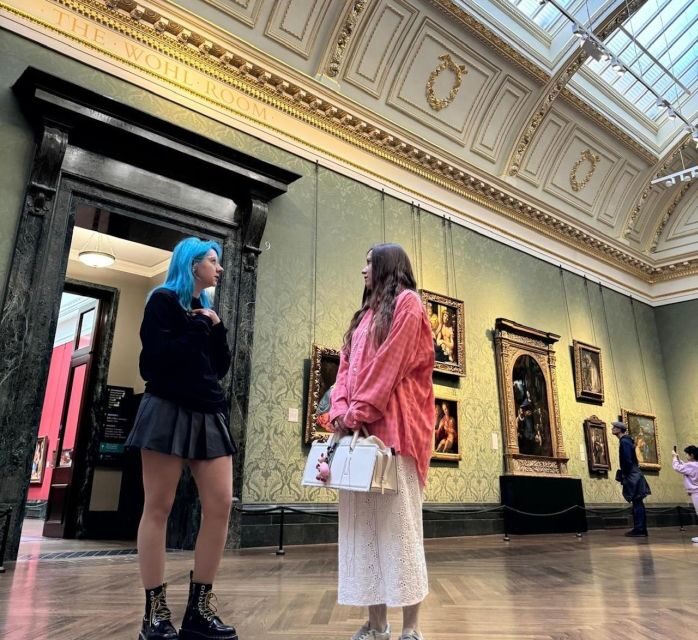
This is a great fit if you want:
- a focused, women-focused story inside a major museum
- a guide you can ask questions to, in real time
- a private setup with a small group size
- a 90-minute structure that avoids museum fatigue
It may be less ideal if:
- you want to spend hours browsing at your own pace
- you’re traveling with kids under 6, since it’s not suitable for children under 6
- you’re expecting a full, room-by-room survey of the entire National Gallery
Practical tips so you get the most out of the hour and a half
- Arrive a little early at the meeting point in front of the National Gallery so you’re not rushing when the tour starts.
- If you’re booking with friends, agree on your main interests beforehand: symbolism, women’s roles in religion, myth themes, or art-making context. That helps you steer questions.
- Wear shoes you can stand in. Even with a guided route, museum time adds up fast.
- If you’re going to a different museum or attraction right after, give yourself a buffer. The tour aims to end on time, and you’ll want your next plan to breathe.
Should you book the Women in Art tour?
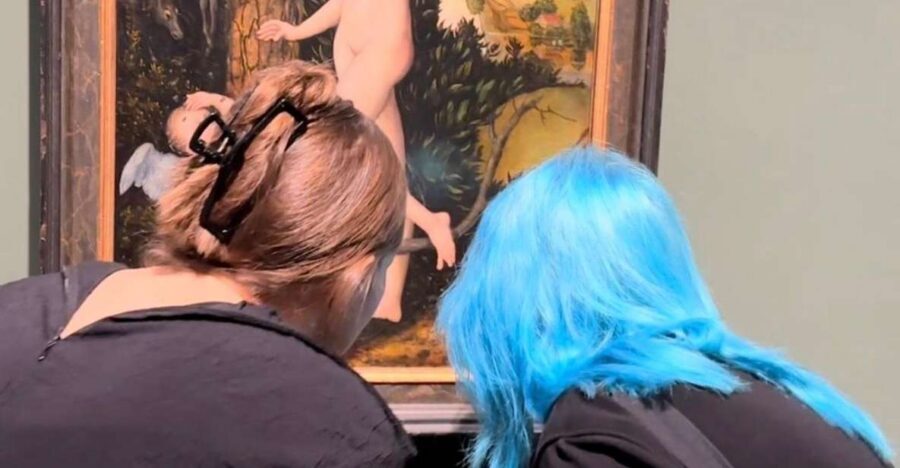
I think it’s a smart booking if you like your museum time to come with meaning, not just names. The women-focused framing turns familiar masterpieces into fresh stories. The private group format helps you actually talk to the guide, and the artworks on the route cover a broad range—from sacred scenes to myth and beyond.
Skip it only if you want a long free-form gallery day. This is not a browse-all-day ticket. It’s a curated, time-boxed guided experience with a strong emphasis on how women are represented and why that representation matters.
FAQ
Where is the tour meeting point?
The tour starts in front of the National Gallery and ends back at the meeting point.
How long is the Women in Art guided tour?
The duration is 1.5 hours.
Is this a private group tour?
Yes. It’s a private group with a group size of up to 6.
What is the price for the tour?
The price is listed as $404.10 per group up to 6.
What languages is the live guide available in?
The live tour guide is available in English and Russian.
Is the tour wheelchair accessible?
Yes, it is wheelchair accessible.
Is the tour suitable for children?
It is not suitable for children under 6 years.
Does the tour focus on specific artworks?
Yes. The highlights include Leonardo da Vinci’s Madonna of the Rocks, Michelangelo’s The Entombment, Raphael’s St Catherine, Rubens’ The Judgement of Paris, and Van Gogh’s Sunflowers.
What is the cancellation policy?
You can cancel up to 24 hours in advance for a full refund.
Can I reserve and pay later?
Yes. You can reserve now & pay later to keep plans flexible.