REVIEW · LONDON
London: Guided Tour of the Natural History Museum
Book on GetYourGuide →Operated by Golden Tours - Gray Line London · Bookable on GetYourGuide
That first whiff of science is real.
This London Natural History Museum guided tour is built to cover the museum’s biggest “stop-and-stare” halls in about 2 hours, with a live guide connecting the dots between fossils, animals, oceans, and geology. I especially like the way the tour steers you toward the museum’s signature moments fast, instead of leaving you to wander and guess what matters most. You’ll also appreciate the focus on evolution and earth science themes, with stops that make the museum feel like one story.
I’m also drawn to the front-of-museum welcome: even the entry process sets the mood, and you get pulled into the collection right away with dramatic skeletons and design details. One thing to think about, though: some bookings report guide timing issues, including instances where the guide didn’t show or didn’t wait, so punctuality and a clear meeting plan really matter.
And if everything is on time, this is a solid way to see a lot of the museum without turning your visit into a scavenger hunt.
In This Review
- Key things to know before you go
- Natural History Museum 101: what this 2-hour tour is really for
- Meeting at South Kensington: the details that keep you on track
- Entry momentum: bag check, contactless donations, and a giraffe first impression
- Dinosaur Gallery: Diplodocus and the thrill of scale
- Mammals Gallery: taxidermy variety and why it’s not just decoration
- Marine Life Gallery: the blue whale skeleton overhead
- Human Evolution Gallery: fossil evidence and life-sized models
- Earth Sciences Gallery: Volcanoes and Earthquakes, plus gemstones and rocks
- The tour wrap-up at the café and gift shop
- Price and value: is $40 for a 2-hour guided loop worth it?
- Who this tour fits best (and who should skip)
- Should you book this Natural History Museum guided tour?
- FAQ
- How long is the London Natural History Museum guided tour?
- How much does the tour cost?
- Where is the meeting point?
- What time should I arrive?
- Is transportation included?
- Is food or drink included?
- Is this an official Natural History Museum tour?
- What language is the guide?
- Is the tour wheelchair accessible?
- What are the cancellation and payment options?
Key things to know before you go
- A fast, guided route through major galleries so you’re not stuck choosing between dinosaurs, whales, and geology
- Blue whale skeleton moment in the Marine Life area, where the scale hits you immediately
- Evolution and human origins stops that connect fossils and models to the big idea of life changing over time
- Geology learning in one gallery via the Volcanoes and Earthquakes-focused earth sciences exhibits
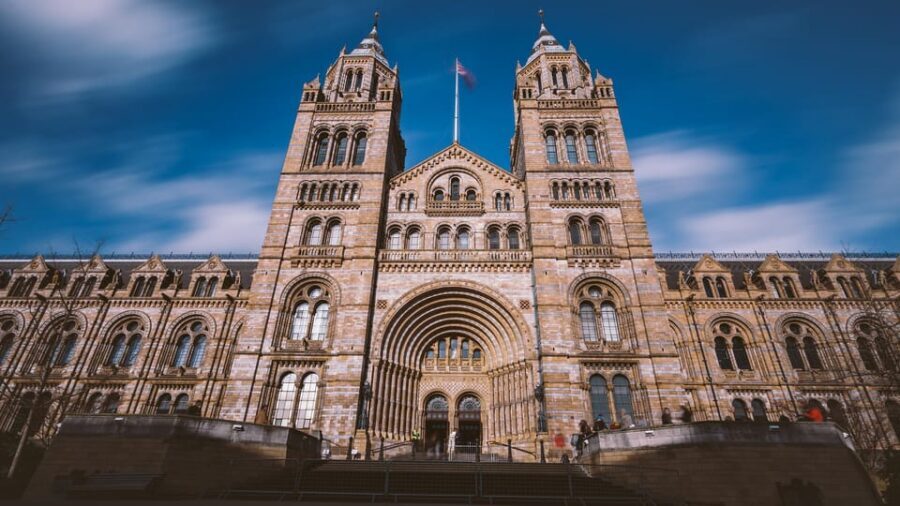
- Museum “grand hall” details like terracotta arches and playful sculptural touches that frame the science
Natural History Museum 101: what this 2-hour tour is really for
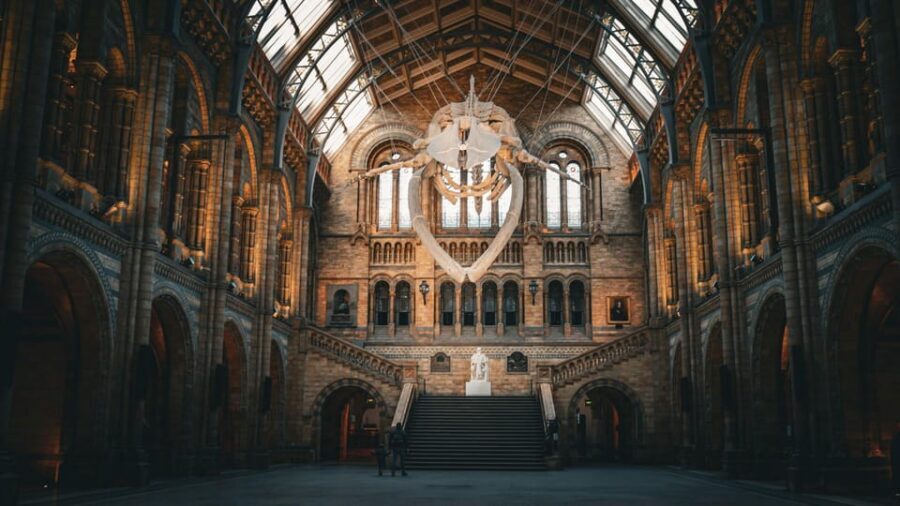
This is not a slow, museum-at-your-own-pace visit. It’s more like a guided tour with a plan: hit the headline exhibits, get context while you’re there, and wrap up at the café and gift shop so you can keep exploring afterward on your own.
At $40 per person for about 2 hours, the value is less about the museum being expensive (it’s not) and more about saving your brainpower. With a guide, you spend less time wondering what to prioritize and more time making sense of what you’re seeing.
You can also read our reviews of more guided tours in London



Meeting at South Kensington: the details that keep you on track
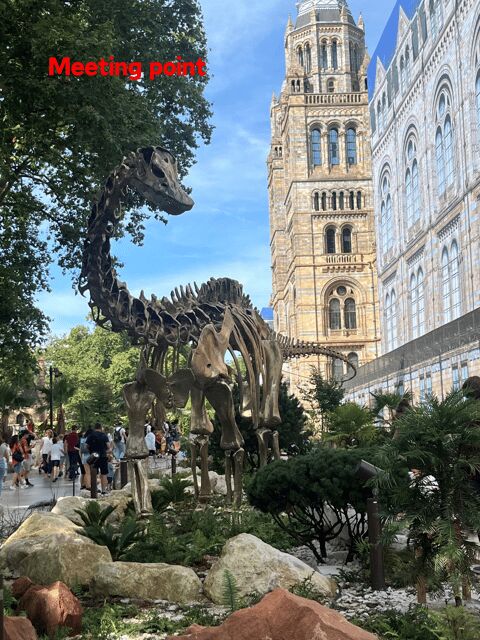
This Golden Tours experience is not run by the Natural History Museum itself, so you’re matching a tour meeting point for the provider. Plan to arrive at least 15 minutes early, then follow signs for the main entrance to the museum.
Your key landmark: in the Evolution Garden, look for the large bronze statue of a long-necked dinosaur. Golden Tours puts the guide opposite that bronze skeleton, holding a blue and white Golden Tours umbrella. That umbrella color matters, especially because this area can feel busy and confusing when you’re early.
Why the fuss? Because the tour reviews include some serious start-time problems. Some people report the guide didn’t arrive, and others say the guide didn’t wait when they were only a minute or two late. So give yourself a cushion, and if you’re stuck en route, don’t assume everything will automatically be flexible.
Entry momentum: bag check, contactless donations, and a giraffe first impression
The tour starts at the Natural History Museum and moves right through the entry flow. You’ll pass the Bag Check and the Contactless Donations queue, and that’s where the museum grabs you with a big visual cue: a giraffe skeleton standing tall next to a taxidermy giraffe.
It’s a small moment, but it matters. The museum’s collection isn’t just animals behind glass. It’s also dramatic display choices—real bones and posed specimens set up in a way that makes you look twice before you even reach the galleries.
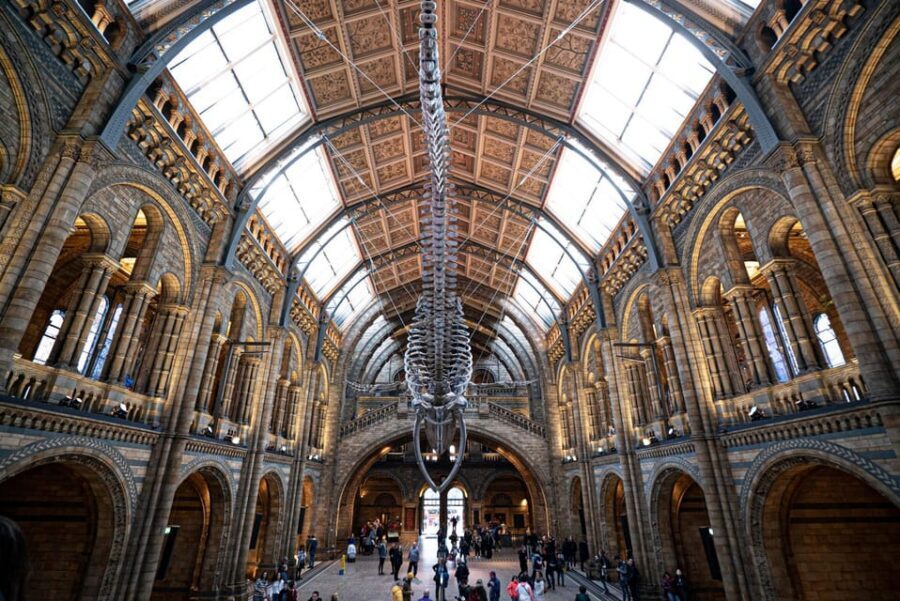
And as you step into the grand hall, keep an eye on the building itself. The space features terracotta arches and columns, plus playful terracotta monkeys on the walls—an allusion to the rivalry between Sir Richard Owen and Charles Darwin. Even if you’re not a history buff, it helps you understand that this museum is partly about how people have argued and learned over time.
Dinosaur Gallery: Diplodocus and the thrill of scale
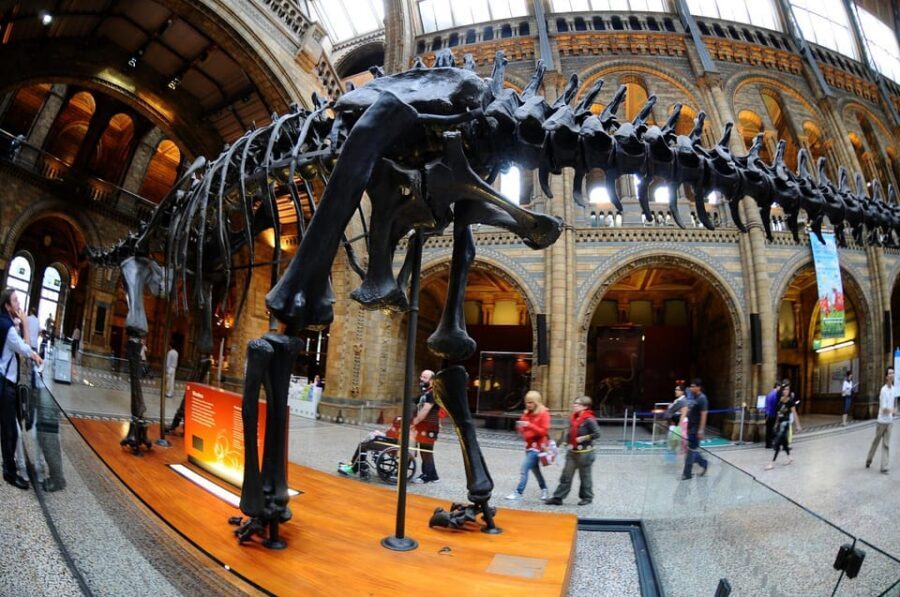
Your first gallery stop is the Dinosaur Gallery, where prehistoric skeletons take over the room. The tour highlights the iconic Diplodocus, and that’s smart: it’s one of those names that sounds famous, but seeing the size in person is what makes it stick.
The practical benefit here is timing. If you’re going to spend only part of a day at the museum, dinosaurs are the easiest sell for anyone—kids, adults, and even people who think they don’t care about fossils. A guide also helps you look past the wow factor and notice what fossils can actually tell you.
Mammals Gallery: taxidermy variety and why it’s not just decoration
Next comes the Mammals Gallery, with a wide spread of taxidermy specimens and skeletons. The tour spotlights animals like African elephants and cheetahs, and you’ll likely see plenty more in that same style—some creatures presented as full specimens, others shown as skeletal evidence.
This is where you start getting the evolution thread in a concrete way. You’re not just admiring bodies; you’re seeing how different forms relate to survival, environment, and how species change. A good guide can make those connections feel logical instead of random.
One note: taxidermy can be emotional for some people. If you feel strongly about it, decide what level of viewing works for you before you go in.
You can also read our reviews of more historical tours in London





Marine Life Gallery: the blue whale skeleton overhead
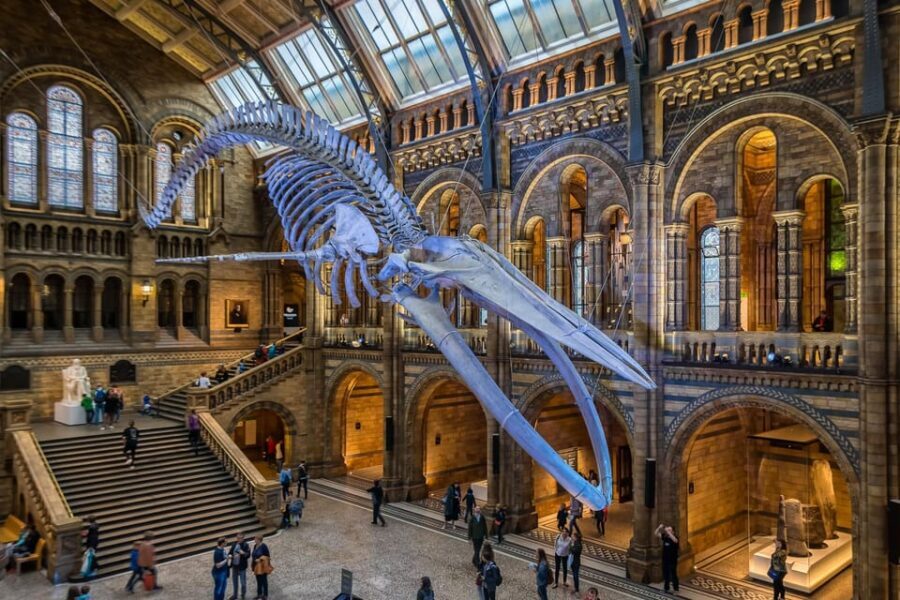
The tour’s Marine Life stop is built around one headline exhibit: a blue whale skeleton suspended overhead. This is one of those moments where you look up and your brain automatically switches into scale mode.
It also ties back to “biodiversity” in a way that’s easy to understand. The sea looks endless from far away, but the museum shows it as a world of specific creatures and adaptations. If you’ve ever been curious why evolution works so well in ocean environments, this is a strong place to see the result.
Human Evolution Gallery: fossil evidence and life-sized models
After the oceans, you shift to the Human Evolution Gallery. Here, the tour focuses on life-sized models and fossilized remains that sketch out the story of our ancestors and how life changes over generations.
This part can be the most meaningful for adults because it’s about evidence and interpretation. Instead of just naming stages, you’re walking through how humans fit into the broader idea of evolution—related to other life, not separate from it.
If you like learning through visuals, this gallery’s mix of models and fossils can help your understanding feel more grounded.
Earth Sciences Gallery: Volcanoes and Earthquakes, plus gemstones and rocks
Finally, the tour heads into earth sciences, where the museum’s geology collection takes center stage. You’ll cover the Volcanoes and Earthquakes Gallery and see geological wonders like gemstones and volcanic rocks.
This stop is valuable because it turns “earth science” from vague interest into concrete examples. You get to connect processes you hear about in the news—quakes, eruptions—to real materials and the kind of evidence museums preserve.
For some people, this is the favorite part because it feels less like memorizing animals and more like understanding the planet’s behavior.
The tour wrap-up at the café and gift shop
The guided portion ends near the museum’s café and gift shop. That’s a smart finishing point because it gives you space to decompress, grab a snack if you planned to, and choose whether you want to keep exploring independently.
You’ll also have the chance to appreciate the museum architecture and the detailed wall carvings one last time as you head out. When you’re leaving after a tight tour, those visual details help the whole visit feel like more than just “a list of exhibits.”
Price and value: is $40 for a 2-hour guided loop worth it?
At $40 per person for 2 hours, you’re paying mainly for a structured route and on-the-spot explanations. Transportation and food aren’t included, so you should plan your day with those costs in mind. The museum visit itself is what makes the price make sense; the guide is the tool that helps you get more out of it in less time.
Here’s how I’d judge value:
- If you want a plan and you like having someone point you to the museum’s key galleries, the guide time can feel worth it.
- If you prefer total freedom, you may decide a self-guided museum day gives you better control over pace and interests.
The biggest value risk is not the price—it’s reliability. Because some bookings describe guide non-arrivals or sudden early endings, I’d treat this as a “go in prepared” tour. Arrive early, find the umbrella-and-statue meeting point, and be ready to pivot to self-exploration if the guide situation is messy.
Who this tour fits best (and who should skip)
This tour suits you if you want:
- A tight 2-hour museum route with English interpretation
- The big, memorable exhibits: dinosaurs, whales, human evolution, and geology
- Wheelchair accessibility, since the experience is wheelchair accessible
It might be a weaker fit if:
- Your schedule is inflexible and you can’t tolerate uncertainty around guide timing
- You want a long, slow museum experience where you roam and linger without any time pressure
If you’re visiting with mixed ages, the mix of dinosaurs, whales, and geology usually lands well because it hits different kinds of curiosity.
Should you book this Natural History Museum guided tour?
I’d book it only if you can handle a “best effort” start and you’re comfortable using the museum on your own if the guide is late or the group doesn’t form smoothly. The museum’s major galleries—especially the blue whale skeleton and the evolution-focused sections—are the real payoff, and the tour is designed to get you to those quickly.
If your top priority is a flawless, dependable guide experience, pause and consider other options. With the start-time problems showing up in the feedback, this is one of those tours where preparation beats optimism.
FAQ
How long is the London Natural History Museum guided tour?
The duration is 2 hours.
How much does the tour cost?
The price is $40 per person.
Where is the meeting point?
Follow signs for the main entrance to the Natural History Museum. In Evolution Garden, look for the large bronze long-necked dinosaur statue; the Golden Tours guide will be located opposite it with a blue and white Golden Tours umbrella.
What time should I arrive?
Arrive at least 15 minutes before the tour time.
Is transportation included?
No, transportation is not included.
Is food or drink included?
No, food and drink are not included.
Is this an official Natural History Museum tour?
No. It is organized and operated by Golden Tours and is not the official tour provided by the Natural History Museum.
What language is the guide?
The live tour guide is in English.
Is the tour wheelchair accessible?
Yes, the tour is wheelchair accessible.
What are the cancellation and payment options?
You can cancel up to 24 hours in advance for a full refund, and you can reserve now and pay later.
If you want, tell me your travel dates and whether you’re visiting with kids or focusing on geology vs evolution. I can suggest how to structure the rest of your Natural History Museum day around this 2-hour window.